


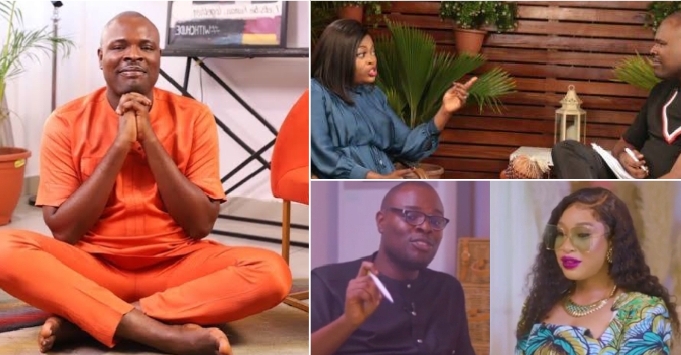
The studio feels suspended in breath. Between the soft hum of air-conditioning and the low throb of cameras, there is a pause — a pause that stretches, not awkwardly, but intentionally. It is in that hush that Chude Jideonwo listens hardest. His eyes soften, his shoulders lean forward, his voice recedes into empathy. Across from him, a guest — sometimes a celebrity, sometimes a stranger — gathers courage to speak again. It is in that instant, when words hesitate and truth trembles on the edge of sound, that Chude Jideonwo becomes something larger than a host. He becomes a vessel.
There are moments on With Chude when even the cameras seem to hold their breath. The pauses carry more weight than the speech. These are the silences that audiences replay in their minds, long after the episode fades. They are the moments when pain becomes audible — not in language, but in the spaces where language fails. In those pauses, Jideonwo does not rush to fill the gap. He lets the silence expand, letting it carry the memory of grief, regret, or redemption.
That art — to stay quiet when others would speak — has become the most distinctive signature of his interviewing style. It is not performance. It is a philosophy, born from years of studying people and stories, from his transition through journalism, psychology, and faith. It is an act of listening that insists: human stories are sacred, even when fractured.
For Chude, silence is not emptiness. It is architecture — a cathedral in which people rebuild themselves, one confession at a time.
Each pause draws him further into the soul of his guest, into the quiet corners where truth hides before it learns to speak. From that stillness, the story unfolds — not as an interview, but as a pilgrimage into what it means to be seen, to be heard, and to heal in front of the world.
Becoming Chude: The Making of a Listener
Long before With Chude became a sanctuary for emotional truth, Chude Jideonwo was already shaping the sound of a generation’s conversation. Born in Lagos in 1985, he grew up with an instinct for words — not just their rhythm, but their impact. A graduate of law from the University of Lagos, he veered quickly from legal practice into journalism and media production, drawn to the way stories could shape culture. By his early twenties, he had co-founded RED Media Africa and The Future Awards Africa with Adebola Williams — platforms that amplified youth voices, leadership, and social innovation across the continent.
As host of Rubbin’ Minds on Channels Television, Jideonwo refined the skill of steering public dialogue. He learned to navigate Nigeria’s sharp political debates and the subtler currents of generational change. But even then, his curiosity went beyond politics or celebrity. He was fascinated by what lay beneath the surface — by the emotions that shaped behavior, the pain that powered ambition, the quiet dreams behind every public success. His early years in media were a laboratory of empathy, teaching him how people reveal themselves when they feel seen.
Over time, Chude’s focus deepened from influence to introspection. His postgraduate studies at the London School of Economics exposed him to frameworks of governance and development, but it was his immersion in psychology and spirituality that altered his trajectory. Through Joy, Inc. — his emotional intelligence enterprise — he began exploring the intersection of happiness, resilience, and meaning in modern African life. The question shifted from “How can we lead?” to “How can we heal?”


It was that transformation — intellectual, emotional, and spiritual — that birthed With Chude. No longer content to merely interview, he sought to understand. His biography, then, is less a résumé than a roadmap: from youthful idealist to cultural therapist, from commentator to confessor, from storyteller to listener. Each phase prepared him for the silences that now define his art — silences he learned not to fear, but to trust.
The Therapist Behind the Camera
Chude Jideonwo’s evolution from media entrepreneur to emotional storyteller cannot be understood without his background in psychology and social impact. Trained as a lawyer but drawn to the emotional sciences, he has long treated storytelling as a form of healing. His platform, Joy, Inc., emerged not as a corporate venture, but as an extension of his personal theology: that joy is both a discipline and a calling.
His interviews mirror therapeutic principles — empathy, mirroring, containment. When a guest speaks of trauma, he listens with posture, not pity. When they stumble, he steadies the energy of the room without words. It’s a choreography of compassion that few journalists master. The camera, under his direction, doesn’t zoom in for tears. It lingers at a respectful distance, giving pain room to breathe.
Behind the screen, Chude’s purpose is deeply rooted in faith. He has spoken of how spirituality informs his curiosity — that every story is a search for grace in human brokenness. To him, silence is not awkwardness but surrender: a way of saying, “Your truth matters more than my question.”
The result is an interview format that feels both journalistic and priestly. It asks not just what happened, but how the soul survived.
Lagos, Media, and the Modern Confessional
In Nigeria’s bustling cultural economy, where reality shows and gossip blogs dominate public discourse, With Chude stands apart. It is neither entertainment nor activism. It is the meeting point of both — a moral countercurrent to the noise of trending content. Lagos, the city that raised him, thrives on spectacle. But Jideonwo’s Lagos is quieter, more interior. He draws from its contradictions: the chaos of its streets, the stillness of its churches, the tension between vulnerability and performance.
Every interview filmed in that city carries its pulse. You can hear the honking from outside the studio, the distant murmur of a megachurch choir, the restless spirit of a people who feel too much but say too little. It is in this context that Chude’s silences gain power. He offers Nigerians what they rarely find — permission to feel publicly.
The confessional tone of With Chude has redefined what talk television can mean in Africa. It merges therapy with theology, psychology with performance. It offers visibility to pain in a culture where stoicism is often mistaken for strength. And by doing so, Jideonwo has transformed the studio into a sanctuary.
Here, fame and faith coexist. The celebrity becomes the supplicant. The interviewer becomes a witness. And Lagos — loud, loving, relentless — becomes the background hum of healing.
From Rubbin’ Minds to With Chude
Before With Chude, there was Rubbin’ Minds, a youth-focused talk show that shaped an entire generation’s understanding of media conversation. On that platform, Jideonwo learned how to lead national dialogue — politics, pop culture, identity — with urgency and youth-driven insight. But it was also there he realized that conversations, no matter how sharp, rarely changed people unless they reached the emotional root.
That realization became the seed of transformation. Moving from political dialogue to personal confession was not retreat; it was evolution. He had seen the limits of debate and the emptiness of applause. What he sought next was authenticity — the kind that doesn’t trend but transforms.
With Chude was born in the age of streaming and self-disclosure, but its soul belonged to an older tradition: oral storytelling, where griots and elders preserved history through feeling. In each episode, he channels that lineage. His guests’ stories become modern parables, and his silences — the pauses between sentences — become the rhythm of collective healing.


In this new chapter, Jideonwo is not just a journalist. He is an archivist of emotion, documenting how a generation learns to speak its pain aloud.
When Pain Finds Language
There are interviews where laughter fades into tears — moments when a guest, perhaps remembering a childhood wound or a broken marriage, can no longer maintain composure. Chude does not interrupt. He lets the emotion settle like fog. Then, with the gentlest cadence, he asks: “What did that moment teach you?”
That question is his bridge between pain and meaning. It acknowledges suffering without exploiting it. In those exchanges, Jideonwo performs what therapists call “active witnessing.” He does not fix pain; he honors it. And in doing so, he transforms television into something deeply spiritual — a confessional space where Nigeria’s most visible figures become human again.
When actress Tonto Dikeh sat before him, recounting her battles with heartbreak and public ridicule, the silence after her words became the real conversation. The same was true when Funke Akindele reflected on her divorce, or when Denrele Edun revisited his complex relationship with fame. These were not interviews — they were moments of cultural catharsis. And Jideonwo, the listener, stood quietly at the center of it all.

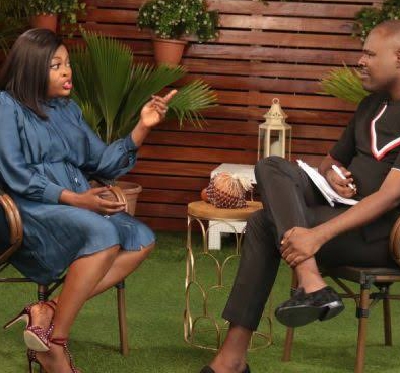
Pain, in his world, is not entertainment. It is evidence of humanity’s resilience. He does not sensationalize it. He studies it — as one would study light through broken glass.
The Cultural Weight of Vulnerability
In Nigerian society, vulnerability is often treated as weakness. From Lagos to Enugu, from television screens to boardrooms, showing pain is frequently equated with failure. Chude Jideonwo, however, challenges that notion. He frames vulnerability as courage. In his interviews, a pause is not emptiness; it is an act of defiance against a culture that prizes stoicism over honesty. To let someone sit with their grief, to hear their silence, is to honor their lived experience in a society that rarely allows such permission.
This cultural tension becomes particularly visible when guests recount public scandals or personal trauma. The audience, conditioned to voyeurism, expects drama, yet Chude insists on reflection. His style re-educates viewers, training them to see beyond spectacle. Through his lens, the Nigerian celebrity is no longer a figure to idolize or mock — they are human beings negotiating their own pain amid relentless public scrutiny.
He does not ask his guests to perform vulnerability. Instead, he invites them to recognize it, to allow it to surface organically between sentences. This approach transforms television into a social laboratory where empathy, not judgment, governs the conversation. The silence becomes a mirror, reflecting both the guest’s inner life and the audience’s unspoken fears.
The impact of this method extends beyond the studio. Viewers, many encountering a rare moment of introspection on national media, often carry these lessons into their own lives. By witnessing authentic pain handled with dignity, they learn that silence can be a language of strength, that listening can be as powerful as speaking.
Story as Healing
Storytelling has always been a cornerstone of healing. In Yoruba and Igbo traditions, narratives are sacred vessels carrying history, wisdom, and moral instruction. Chude Jideonwo taps into this ancient principle, modernizing it for contemporary media. Each guest story, each tremor in a voice, becomes a bridge between lived experience and collective understanding. The pauses are intentional, allowing grief or joy to settle and transform, like clay in the hands of a sculptor.
This therapeutic quality is deliberate. Guests often emerge from the interview transformed, able to name their emotions and contextualize their pain. For example, a musician recounting a public scandal may begin in anger, but by the episode’s end, they articulate lessons learned, resilience discovered, and hope reclaimed. The process mirrors psychotherapeutic techniques: validation, reflection, and the gentle unfolding of narrative.
The act of storytelling also impacts the audience. Viewers witness an intimate emotional exchange, and through that observation, they process their own unspoken traumas. The silence between sentences allows them to inhabit the guest’s experience, bridging empathy across public and private spaces. Television, in this sense, becomes a collective mirror of human emotion.
By prioritizing healing over entertainment, Jideonwo transforms media from a distraction into a space of introspection. Each story told in measured, empathetic pauses becomes a subtle lesson in emotional literacy, teaching audiences that pain, when acknowledged and honored, can lead to growth.


Faith, Empathy, and the Nigerian Soul
Faith permeates Jideonwo’s work, not in sermons but in the structure of his listening. The act of sitting quietly with someone’s pain resembles spiritual attentiveness — a prayer rendered in silence rather than words. In a country where religion shapes daily life, this subtle integration of spirituality into media resonates profoundly. It offers viewers a space where moral reflection and emotional honesty coexist.
Empathy, in Jideonwo’s framework, is both practice and discipline. He trains his gaze, his voice, and his timing to meet the guest’s emotional frequency. When a celebrity trembles recounting public betrayal or private loss, Chude matches that vulnerability with attentiveness rather than interjection. This alignment creates trust, allowing stories to emerge that might otherwise be suppressed or sanitized.
The Nigerian soul, shaped by resilience, communal ties, and historical pain, finds affirmation in these interviews. By acknowledging both cultural pride and personal fragility, Jideonwo crafts a platform where identity and vulnerability coexist. His guests, often icons of success or fame, reveal that even the most admired figures carry wounds, doubts, and unspoken questions.
Through this integration of faith and empathy, With Chude becomes more than media; it becomes cultural commentary. It models a new way for Nigerians to engage with emotion: not as shame, but as a portal to insight, connection, and shared humanity.
The Power of Emotional Listening
Listening is deceptively simple. Most assume it is passive, yet true listening is active, even transformational. Chude Jideonwo has made this the backbone of his craft. He trains himself to notice micro-expressions, shifts in tone, and the barely audible cracks that signal deeper truths. In these subtle cues lies the essence of the human story, waiting to be heard.
The effect on guests is immediate. They sense the presence of someone who does not just ask questions but truly registers their answers. In a world dominated by surface-level commentary and sensational headlines, this experience can be almost shocking. A celebrity might begin an interview with rehearsed talking points, only to abandon them halfway, guided by the patient gravity of Jideonwo’s listening.
Emotional listening also has societal ramifications. Audiences learn through observation that silence is not a vacuum but a conduit for truth. They see that giving space to pain is not indulgence but respect. In a culture where speaking over each other is common, the discipline of attentive listening becomes revolutionary.
By elevating listening to an art form, Chude reframes the entire interview process. The camera captures not just words but emotional resonance. Each pause, each measured breath, communicates more than scripted dialogue ever could, reminding viewers that understanding often lives between the sentences.


Between Journalism and Ministry
Chude Jideonwo inhabits a rare intersection: journalism shaped by spiritual and ethical frameworks. His work transcends reportage, resembling ministry without dogma. Interviews are not sermons, yet they carry moral gravity. They are platforms where truth meets care, where curiosity meets compassion.
This duality is visible in every frame. He approaches stories with journalistic rigor: research, context, verification. But he balances it with the gentleness of a guide. The result is a format that feels intimate yet credible, personal yet socially responsible. Viewers are drawn into the conversation not just to learn, but to feel.
His method reflects a conscious effort to humanize media. In Nigeria, the line between news and opinion often blurs; celebrity interviews are usually staged or sensationalized. Jideonwo rejects this. His focus on silence, emotional nuance, and reflection transforms his platform into something closer to a sanctuary than a studio.
Between journalism and ministry, he creates a hybrid space: one where truth is pursued with rigor, yet emotion is honored with reverence. It is a model increasingly rare in global media, and uniquely potent in the Nigerian context.
Legacy in the Age of Noise
In the digital era, where attention spans are fleeting and virality reigns, Chude Jideonwo’s style is countercultural. His commitment to patience, silence, and depth builds a legacy that challenges media norms. Legacy, in his framework, is not about accolades or followers; it is about influence on the human heart.
Future journalists and storytellers will inherit this methodology: that interviews can be spaces of emotional education, that silence carries meaning, and that the measure of a question is not its cleverness, but the truth it evokes. In an age dominated by spectacle, this is a radical form of cultural stewardship.
Jideonwo’s legacy is also relational. Guests who have appeared on his show often remark on the experience’s humanity. They speak of being seen, understood, and respected — a testament to the power of intentional listening in a world that rarely slows down. His influence extends beyond the studio, shaping how Nigerians — and perhaps Africans more broadly — perceive storytelling, empathy, and public discourse.
In the silence he cultivates, a new standard emerges. It is a standard that prizes depth over immediacy, reflection over reaction, and humanity over headlines.
Leaving With This: The Echo After the Silence
When the lights fade and the cameras stop rolling, what remains is not the sound of applause, but a stillness that stretches far beyond the studio walls. It is the silence that follows truth — the kind that humbles both the teller and the listener. For Chude Jideonwo, this silence is not absence; it is evidence. It proves that something sacred has been shared, something beyond language has passed between souls.

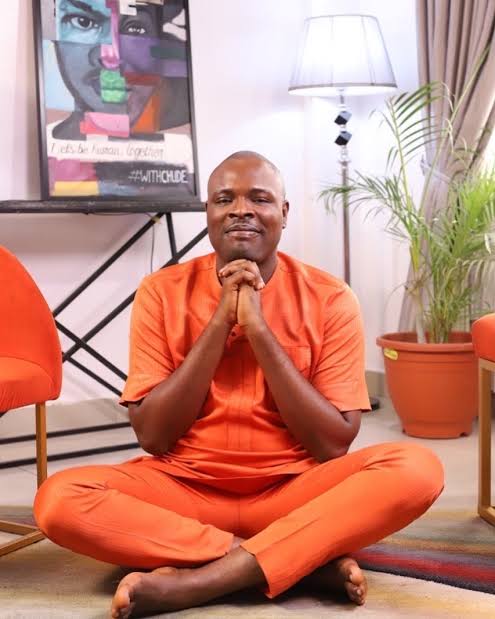
That is the real legacy of With Chude: it teaches us that listening is a moral act, that empathy is a kind of courage, and that silence — handled with care — can be the loudest form of understanding. Every pause he holds, every question he withholds, is a quiet rebellion against a world that rushes to respond but forgets to feel. Through his restraint, he gives permission — to grieve, to confess, to become.
And when his guests leave, carrying their stories like fragile offerings, the silence they leave behind becomes the audience’s inheritance. It asks a question of everyone watching: When was the last time you listened deeply enough to hear what wasn’t said?
Because that — more than the fame, the tears, the applause — is where Chude Jideonwo’s work truly lives: in the sound of the human heart, speaking softly beneath the noise, waiting for someone patient enough to hear it.