


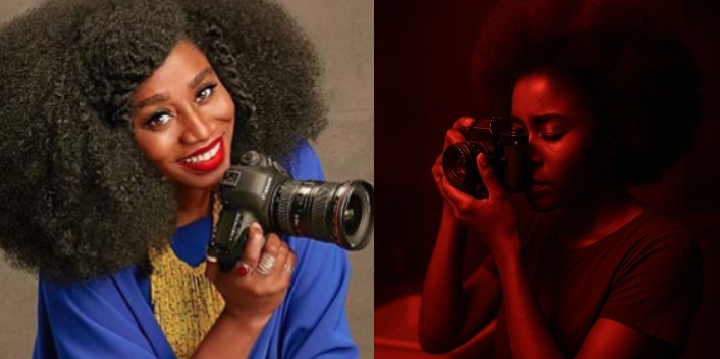
The streets of Yaba in 1998 were a symphony of chaos and rhythm—motorbikes revving, vendors shouting, footsteps echoing against sunbaked pavement. Yet, in the midst of the city’s ceaseless motion, a teenage girl moved with quiet purpose, carrying a camera that was more than a tool—it was a key. TY Bello, barely twenty, slipped into the shadows of alleyways and dimly lit studios, drawn by a force she could not yet name.
Inside a red-lit darkroom, the hum of chemical baths and the faint smell of developer became her sanctuary. There, in that delicate silence, she learned to wait for light to reveal itself, to trust that patience could produce clarity, and to recognize that the world could speak in whispers if only she listened closely. Each photograph emerging from the tray was more than an image; it was a revelation, a subtle encounter with something larger than herself.
That year in Yaba was a crucible—a collision of curiosity, discipline, and faith. Every shadow she observed, every fleeting human gesture she captured, planted seeds that would grow into artistry, spirituality, and purpose. It was a beginning, a place where a teenage photographer first learned to see life not just as it appeared, but as it could be felt.


And as her fingers traced the edges of each developing print, a story quietly unfolded—a story that would stretch beyond the streets of Lagos, beyond music and fame, beyond the camera itself. This is the story of TY Bello, of a teenage girl in a darkroom who discovered light in unexpected places, and of a journey that would forever intertwine faith, artistry, and vision.
About TY Bello
Toyin Sokefun-Bello, known to the world as TY Bello, was born on January 14, 1978, in Ogun State, Nigeria, into a family where creativity and storytelling were as natural as breath. Her brother, Remi Sokefun, a Creative Director, planted early seeds of curiosity and vision, teaching her that life itself could be framed like a scene in a film — every moment layered with light, shadow, and emotion.
From a young age, TY moved through life like a quiet observer, her eyes tracing patterns and details that others might overlook. At the University of Lagos, where she studied economics, the world could have easily reduced her to numbers and graphs — but she gravitated instead toward stories hidden in faces, in fleeting gestures, and in the spaces between words. Journalism gave her a taste of narrative, yet photography and music became the languages through which she truly spoke.


Her early career was marked by harmonies and collaboration, most notably as a member of the gospel group Kush, where she learned to weave sound, rhythm, and emotion into storytelling. But photography became her sanctuary, a place where patience, light, and silence converged to reveal truths invisible to the casual eye. Through her lens, ordinary moments gained the weight of significance, and the unseen contours of human dignity became visible.
First Camera, First Lessons
TY Bello’s first camera was a modest 35mm film model, gifted by an uncle who recognized her fascination before anyone else did. It felt heavier than she expected, its weight a constant reminder of responsibility. She treated it with reverence, cleaning its lens, adjusting its settings, and memorizing the subtle sounds it made—the click, the wind of the film, the shutter’s decisive snap. Every photograph became a study in patience, observation, and, increasingly, introspection.
The camera was more than a tool; it was a companion through long walks down Yaba’s bustling streets. Market sellers would greet her with curious eyes as she framed shots of baskets stacked high with tomatoes or the worn faces of elders sitting beneath awnings. Children playing in dusty alleyways sometimes froze mid-laugh, unsure whether she captured mischief or innocence. She learned quickly to blend into the world she sought to document, to become invisible yet wholly present, an intermediary between life and image.
In these moments, TY Bello began to understand the moral weight of photography. She could choose what to reveal and what to leave in shadow, and with that choice came responsibility. It was not just about framing a perfect picture; it was about truth, about finding light where others saw only darkness. And as she developed these images in the red glow of her darkroom, she sensed the presence of something larger than herself, a force guiding her eye and steadying her hand.


Her teenage friends were largely uninterested in her obsession, preferring music, gossip, and soccer matches. But for TY Bello, these solitary explorations with her camera were formative. Every click, every frame, became a meditation. The camera taught her that seeing was an act of devotion, a discipline requiring patience, humility, and faith. It was here, in the delicate interplay between life and lens, that her understanding of God began to entwine with her art, creating a rhythm she would carry into adulthood.
Mentors in Shadows
TY Bello did not navigate her teenage artistic journey alone. Behind the bustling streets and crowded classrooms, she found mentors who saw her potential before she fully recognized it herself. One of these mentors was a local photographer who ran a small studio tucked in a narrow Yaba alleyway. He noticed the quiet intensity in her eyes and the way she lingered over her negatives with almost religious patience. He offered guidance, not instruction—teaching her to read light as others read scripture, to understand exposure as a metaphor for patience, and composition as a lesson in perspective.
Under his watchful eye, she began to experiment with portraiture, learning how to coax the personality of a subject into a single frame. He taught her that photography was more than mechanical skill; it required empathy, intuition, and the courage to confront life’s rawness. Many afternoons were spent in silence, broken only by the sound of a shutter or the gentle splash of chemicals. These quiet lessons impressed upon TY Bello a profound respect for craft and discipline, and subtly, for the divine order she began to perceive behind creation itself.
Her mentors also exposed her to Nigerian visual culture in ways that textbooks could not. They shared stories of photographers whose images had shaped public consciousness, whose art carried social responsibility alongside aesthetic beauty. TY Bello absorbed these lessons like a sponge, gradually weaving them into her own perspective. Every photograph she produced began to carry layers: the tangible narrative of the streets, and an invisible undertone, almost like a prayer, connecting human experience to something sacred.

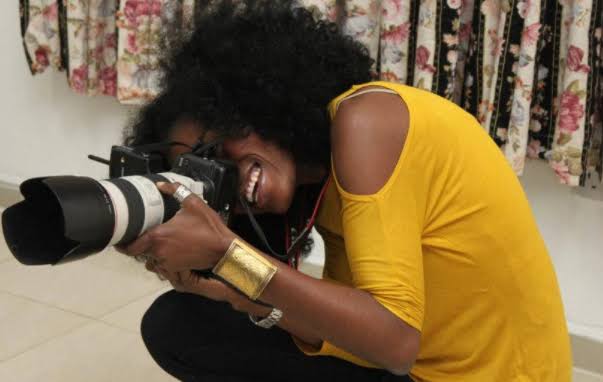
In the interplay between her mentor’s guidance and her own instincts, TY Bello discovered a rhythm: observe, understand, capture, reflect. Each step mirrored a spiritual discipline. By the time she left the studio after her first months of mentorship, she was no longer merely a teenager with a camera. She was a young artist in formation, her faith and vision quietly entwined, her path illuminated by both streetlights and a deeper, inner light that the darkroom had first revealed.
Teenage Life Between Streets and Shadows
Being a teenager in Yaba was a study in contrasts. On one hand, there were the ordinary demands of school—assignments, exams, and the teasing banter of classmates. On the other, there was the quiet pull of the darkroom and the streets, calling her to see, to capture, to interpret life in a way that was invisible to most. TY Bello’s world was split between these realities, and she learned early that navigating both required discipline, courage, and resilience.
Friends often invited her to join afternoon soccer matches or evening hangouts, but she found herself drawn instead to the alleys and marketplaces where life moved unedited. She observed moments that were fleeting yet profound: a mother balancing a tray of akara on her head, children weaving through traffic like dancers, elders sitting in conversation that felt timeless. Each scene became a lesson in empathy and awareness, shaping her vision and teaching her patience, a virtue that extended beyond photography into life and faith.
There was tension in these dual worlds. Some teachers thought her obsession with photography frivolous, and some peers dismissed her as aloof or overly serious. Yet TY Bello pressed on, often walking home late, the camera slung over her shoulder, eyes constantly scanning for light, shadow, and composition. In these solitary walks, the city became a companion, a mentor of its own, and the discipline she cultivated during these hours became a template for everything that would follow in her life and career.
By learning to balance teenage pressures with her artistic calling, TY Bello began to understand sacrifice and devotion. She realized that pursuing a passion demanded more than talent; it demanded presence, attention, and a willingness to prioritize what nourished the soul over what entertained the ego. And in this realization, the darkroom became more than a workshop—it was a sanctuary, a space where discipline met faith, where life’s chaos could be distilled into something meaningful and eternal.
The Darkroom’s Baptism
The darkroom smelled of fixer and developer, an acrid perfume of transformation. Light was a threat here, and shadows were allies. TY Bello learned quickly that patience was non-negotiable; the smallest misstep could erase hours of careful composition. Every roll of film was a mystery waiting to be unveiled, a story that existed in invisible tones until the chemicals coaxed it into life. In this alchemy, she found something profoundly spiritual.
Her hands trembled slightly as she dipped the first negatives into trays of chemicals, watching the images emerge like prayers answered. Faces, hands, the curve of a market basket—every detail that had gone unnoticed in daylight now revealed itself as deliberate and sacred. It was as if the darkroom itself had a heartbeat, and her heartbeat synced with it. In the quiet, she began to hear God’s presence not as a distant abstraction but as a tangible companion to her craft.
This revelation did not arrive like a lightning bolt; it was a slow, creeping awareness. She noticed how the smallest slivers of light could alter perception, how shadows could conceal and reveal simultaneously. In learning to manipulate light, TY Bello discovered a metaphor for life: the divine was often hidden, yet constantly present, waiting for those patient enough to see. The act of creation became an act of devotion, and the darkroom, a sanctuary.
By the end of the week, she would emerge from that small room with photographs that seemed to hum with life. Each print was a testimony, a silent sermon on beauty, patience, and unseen forces at work. Her friends called her obsession unusual; her teachers saw it as a promising talent. But to TY Bello, the darkroom had become a temple where she first learned that seeing the world differently could lead to seeing God differently—and that revelation would shape the course of her entire life.
First Assignments, First Lessons in Faith
TY Bello’s first paid photography assignments were modest: portraits of families, school events, and occasional local gatherings. But each opportunity was a test of skill, intuition, and moral judgment. She quickly learned that the camera could both reveal and obscure, and that with the power to frame a scene came the responsibility to honor the truth. Each assignment became a meditation on integrity, patience, and, increasingly, divine guidance.

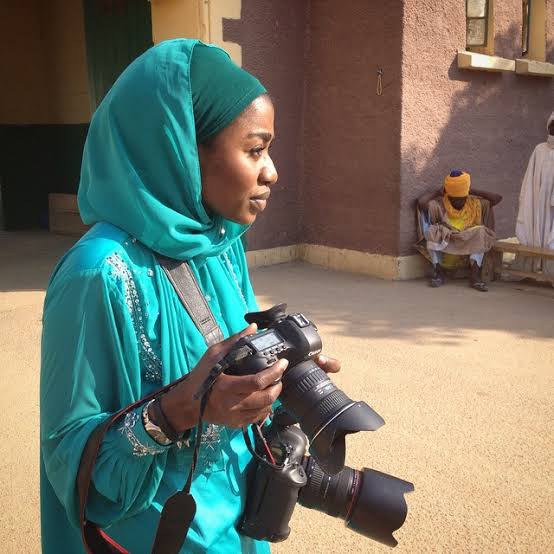
At a small church event in Yaba, she photographed a choir mid-performance. The image that emerged was more than just a frozen moment; it was a reflection of her own spiritual awakening. She realized that the light streaming through stained glass, the expressions on the choir members’ faces, and the raw emotion in the room could all be captured in ways that spoke to both human and divine presence. In that moment, photography and faith merged seamlessly, reinforcing her understanding that her craft was also a calling.
Not all assignments were easy. Some demanded long hours, patience with difficult subjects, and repeated trial and error. The darkroom became the arena where mistakes were transformed into learning, where every misstep was an opportunity to refine not just technique but also perspective. TY Bello began to see that the act of capturing life was inseparable from the act of honoring it—a principle that would shape both her career and her spiritual life.
By the end of her first year taking assignments, she had developed an unspoken credo: photography was an act of service, a way to illuminate truths others might miss. It was in this period that her teenage curiosity evolved into a mature sense of purpose. Each frame she developed, each scene she captured, strengthened a bond between creativity and devotion, and taught her that sometimes the most profound revelations arrived quietly, in moments that no one else noticed.
Yaba as Teacher
Yaba was more than a backdrop; it was a teacher. Its chaotic streets, vibrant markets, and hidden alleys offered lessons that no classroom could. TY Bello observed life in its unfiltered forms: laughter shared despite poverty, resilience woven into daily labor, and fleeting gestures of kindness that passed unnoticed by the broader world. Each observation informed her photography and deepened her understanding of human dignity, patience, and faith.
The city’s contradictions fascinated her. Yaba was simultaneously beautiful and harsh, lively and unforgiving. Teenage TY Bello learned to navigate its unpredictability, discovering that her camera was not merely a tool for art but a lens for understanding life itself. She photographed vendors balancing trays of food with practiced ease, street musicians coaxing joy from battered instruments, and children improvising games in narrow alleys. Through her lens, she saw the extraordinary embedded in the ordinary.
This period also sharpened her sense of responsibility. Photography was no longer just a personal pursuit; it became a medium to honor the lives she encountered. She realized that to capture someone’s image was to acknowledge their existence, their struggles, and their triumphs. In doing so, she found herself reflecting on her own life, her own faith, and her place in a world much larger than Yaba’s boundaries.
By the end of her teenage years, the lessons of Yaba were deeply embedded in her identity. She had absorbed patience from its quiet corners, resilience from its crowded streets, and a sense of reverence from the moments others overlooked. These experiences forged an artist and a believer, someone whose work and life would forever carry the imprint of 1998 Yaba—a city that whispered wisdom to those willing to listen.
Music, Photography, and the Divine
Even as photography consumed much of her attention, TY Bello’s life was inseparable from music. In Yaba, melodies seemed to float through the air like dust motes in sunlight, drifting from street performers, radios, and distant churches. She discovered that music and photography were mirrors of one another—both demanded rhythm, timing, and an acute sense of observation. Notes and images, sound and silence, light and shadow—they intertwined, shaping her perception of the world and her own sense of self.
In the darkroom, she sometimes played soft gospel music while developing photographs. The hymns seemed to synchronize with the emerging images, each print echoing the melodies in subtle, unseen ways. Faces captured in film felt alive in a way that mirrored the emotion of the songs: joy, pain, hope, longing. TY Bello began to recognize a pattern in creation, a harmony that suggested God’s presence in even the most mundane details of life. Photography became prayer, music became meditation, and the two together taught her that artistry was inseparable from spirituality.
Her teenage friends were fascinated by her dual devotion to camera and song, though most could not fully comprehend it. For TY Bello, music provided context to what she photographed, while photography grounded the ephemeral beauty of song in tangible form. This interplay became a private ritual, one that reinforced her connection to God and to the world she was learning to read through the lens. Each assignment, each song, each quiet evening in the darkroom was a step in her ongoing apprenticeship—not just to photography or music, but to life itself.
By the time she left her teenage years behind, TY Bello had internalized a profound truth: creativity, whether visual or auditory, was an act of communion. The camera and the song were tools, but more importantly, they were conduits. Through them, she glimpsed something beyond the self, something eternal. Her art had become a mirror reflecting both the beauty of the world and the divine hand she now believed guided her every step.
Transition into Public Career
As TY Bello left her teenage years behind, the city of Yaba had already shaped the contours of her artistic and spiritual identity. The streets, markets, and darkrooms had instilled in her a discipline and sensibility few of her peers possessed. Opportunities began to present themselves—not in grand announcements, but in quiet, incremental ways: small commissions, invitations to photograph local events, and word-of-mouth recognition among teachers, mentors, and community figures. Each assignment was a stepping stone, a validation of the patience, intuition, and devotion she had cultivated since 1998.
Her work began to catch the attention of larger studios and emerging media outlets. Photographers, musicians, and artists recognized a distinct depth in her images—a sensitivity that transformed mundane moments into evocative stories. Yet TY Bello remained grounded. Even as professional opportunities multiplied, she returned often to the principles of her teenage years: observation, patience, and reverence for life’s details. Every photograph she took was a continuation of lessons learned in the quiet, red-lit confines of a Yaba darkroom.
During this period, music and photography continued to intertwine. Collaborations with local choirs, gospel artists, and friends in the creative industry became more frequent. Her photography was not just documentation; it was narrative, infused with rhythm and emotion. In this period of professional transition, TY Bello discovered that faith and artistry were not separate paths—they were parallel, mutually reinforcing journeys. Her early experiences had given her a compass, guiding choices and shaping a career built on authenticity, empathy, and spiritual awareness.
By the early 2000s, TY Bello had begun to emerge as a public figure, though her roots in Yaba remained visible in every frame. The careful observation, patience, and devotion honed in those formative years continued to inform her creative process. The teenage girl who had once found God in a darkroom was now an artist with a growing platform, yet she carried the quiet humility of those early days with her, a constant reminder that true vision is cultivated in silence, struggle, and attentive love.
Echoes of 1998 in Later Work
Even decades later, the influence of 1998 Yaba reverberates through TY Bello’s work. Her photographs carry a human intimacy and spiritual depth that many trace back to her formative experiences in the city’s streets and darkrooms. The patience learned developing negatives, the empathy cultivated observing life unnoticed, and the intertwining of faith and craft—all became hallmarks of her style. She never sought to impose her vision; rather, she sought to illuminate the unseen, the subtle, the sacred, in ways others might overlook.

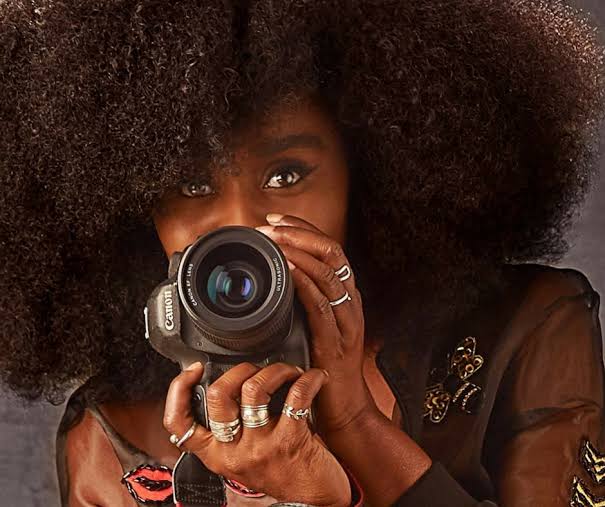
Her work in photography and music began to reflect a dual commitment: to beauty and to truth. Images of families, children, street life, and spiritual gatherings bear witness to the nuances of human experience, reminding viewers that art can be both reflective and revelatory. Observers often remark on the sense of stillness and reverence in her images, as if time slows down under her gaze. These qualities are direct echoes of a teenage artist navigating Yaba’s streets, learning patience under the watchful tutelage of light, shadow, and faith.
Beyond the technical mastery, TY Bello’s work carries an ethical dimension. She learned early that photographing life was an act of responsibility, and that lessons from 1998 were not only aesthetic but moral. Her images honor dignity, resilience, and presence, embodying the silent sermons she first absorbed in the darkroom. Music, too, became a complementary vessel for these principles, reinforcing messages of hope, devotion, and interconnectedness. Each note and frame echoed the lessons of her formative years, linking artistry with spirituality in ways that resonated deeply with audiences both in Nigeria and internationally.
In interviews, TY Bello often reflects on 1998 as the foundational year that shaped her approach to life and work. The discipline, observation, and attentiveness she cultivated in Yaba’s streets and darkrooms became the framework for all her professional endeavors. The echoes of that time are evident in the subtlety of her portraits, the narrative depth of her photographs, and the reverent approach she takes to both subjects and craft. In essence, her early experiences continue to serve as the moral and creative compass guiding her career.
Through her later work, it becomes clear that the lessons of Yaba were not merely technical; they were spiritual and ethical. Each photograph carries a sense of dignity, respect, and intentionality that stems directly from the young girl who learned to wait, watch, and honor life in all its complexity. Her images are, therefore, not only artistic achievements but also enduring testaments to a formative environment that emphasized mindfulness, faith, and human connection.
Ultimately, the echoes of 1998 are a reminder that the origins of artistic vision are inseparable from personal experience. TY Bello’s early immersion in Yaba instilled in her a lifelong commitment to seeing the world with empathy, integrity, and spiritual awareness—a foundation that continues to inform her creative journey and inspire those who encounter her work.
Closing Reflection: Shadows, Light, and Discovery
In that narrow darkroom in Yaba, 1998, TY Bello didn’t just learn to develop photographs — she learned to listen to silence. The hum of chemicals, the red glow, the slow emergence of light on paper — these became her first hymns. There, the sacred and the ordinary blurred; each frame whispered that beauty often hides in places we overlook. Photography became her prayer, her dialogue with the unseen, her way of touching what could not be spoken.
The streets of Yaba, noisy and restless, contrasted with the stillness inside that room. Yet both spaces taught her the same truth: that creation begins in quiet obedience — in waiting, in watching, in believing that something invisible will appear if you stay long enough to see it. What TY found in that darkness was not merely a profession but a revelation — that every act of art is also an act of faith.
And perhaps the question lingers for every observer: how many of us have yet to enter our own “darkroom,” to pause in quiet spaces where ordinary moments transform into something profound? TY Bello’s story is a reminder that in stillness, in attention, and in devotion, we may glimpse the extraordinary — and maybe even the divine — hidden in plain sight.