


There are days when sound carries history, when silence becomes a form of protest, and when a man’s anger stops being personal and starts becoming symbolic. Lagos had seen chaos before, but that day in December 2004, the city’s noise felt different. The air at Murtala Muhammed Airport was thick with celebrity arrival energy — camera flashes, loud laughter, bodyguards with earpieces — yet somewhere in that crowd, something ancient stirred: pride, defiance, a ghostly echo of the voice that once roared through Kalakuta Shrine.
Eedris Abdulkareem, already infamous for his unfiltered lyrics, wasn’t supposed to be the face of a rebellion that night. He was scheduled to perform alongside 50 Cent and other G-Unit members on a Nigerian tour that promised to “connect global hip-hop.” Instead, the event would become a test of identity — a silent referendum on dignity and place. The spirit of Fela Kuti, restless and uninvited, hovered over Lagos again, not through music this time, but through a clash of manner and meaning.
By dawn, headlines across Nigeria screamed variations of the same phrase: Eedris Abdulkareem fights 50 Cent. But what unfolded on that tarmac and in those back lounges wasn’t merely a fight. It was a collision between two different worlds — one representing American industry arrogance and the other, African artistic selfhood still clawing for space in its own land.
No one knew that the confrontation, brief and physical as it seemed, would ignite a twenty-year debate about pride, power, and respect — or that, in that moment, two musical empires collided, and Fela’s spirit found a modern echo in a rapper’s defiance.
Before the Flight: Lagos in the Age of Imported Fame
By 2004, Lagos was already morphing into a new capital of aspiration. Hip-hop had found its way into Nigerian streets — not through industry machinery, but through satellite television and pirated CDs. The MTV Base revolution had begun; Western swagger became the new accent of success. Nigerian artists, from Modenine to Ruggedman, were finding their voices, yet the shadow of American hip-hop still loomed like a gold-plated standard.


Eedris Abdulkareem stood at the edge of this cultural shift. Known for Nigeria Jaga Jaga, his voice was as raw as it was political — a street prophet who rapped about broken systems and unbroken pride. He wasn’t the most polished rapper, but he was the most confrontational. And in a music scene still defining its courage, that mattered.
When 50 Cent, the global superstar fresh off the success of Get Rich or Die Tryin’, announced his tour stop in Lagos, it was billed as a unifying spectacle — “American meets African.” In truth, it was about dominance. The corporate sponsors saw prestige; the fans saw validation; but Eedris saw hierarchy. Behind the glossy press conferences, he sensed a deeper problem: Africans performing in their own country as support acts for foreigners, even on local soil.
The stage was already set long before the plane. What awaited at the airport was merely the spark — the moment two egos and two histories would find themselves sitting in the same aircraft, each believing the other was out of place.
The Airport Lounge: Where Respect Became a Battlefield
That days, as the artists gathered at the private terminal, witnesses recalled a strange tension. The Nigerian crew had been told they would fly with the American entourage. But when they arrived, something shifted — the G-Unit security detail insisted the Nigerian acts should take another section of the plane.
Eedris refused.
The details vary depending on who tells it — some say it began with a seat; others say it began with tone. But the essence remains constant: a Nigerian artist stood his ground against an American superstar’s handlers. Voices rose. Security tightened. And in that pressurized moment of ego and air travel, Eedris Abdulkareem found himself embodying an entire continent’s grievance.

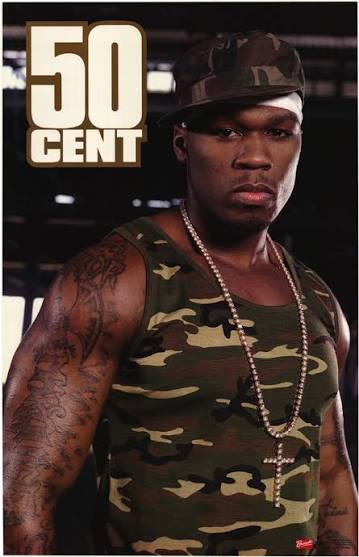
It wasn’t about comfort anymore. It was about respect — the invisible currency of global art. To Eedris, the request to move was a quiet insult, a reminder that even at home, African artists were expected to yield. His refusal was instinctive. His anger, ancestral.
Witnesses say 50 Cent, confused at first, tried to stay above the noise. But when the confrontation escalated, the atmosphere snapped. By the time they reached the runway, chaos replaced coordination. The pilot reportedly refused to take off with the rising commotion on board. 50 Cent and his team disembarked. The Nigerian artists followed later. The tour, already tense, began to unravel before it began.
And Lagos, watching, whispered a truth no headline printed yet: that this wasn’t about a rapper and a superstar. It was about empire and echo — a centuries-long struggle over who owns the stage when the spotlight lands in Africa.
The Spirit of Fela: A Ghost in the Jet Cabin
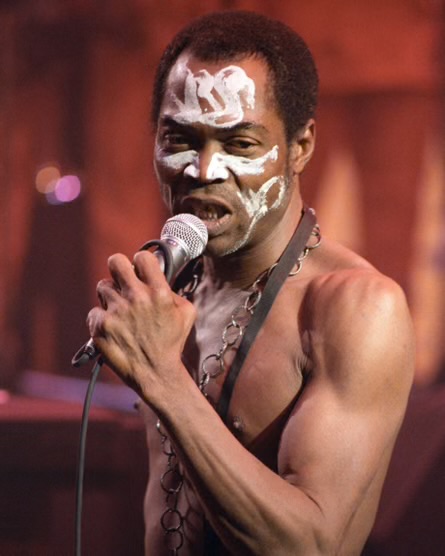
Fela Kuti had died seven years earlier, but his defiance had never left Lagos. His music, still banned in some circles, was a language of rebellion — a grammar of refusal. To many Nigerians, Eedris’s outburst was reckless; to others, it was the resurrection of Fela’s energy, translated into hip-hop form.
Eedris grew up listening to Fela’s records — Zombie, Shuffering and Shmiling, Water No Get Enemy. Those weren’t just songs; they were protest manuals. Fela’s unyielding posture toward colonial remnants had shaped generations of Nigerian artists. And though Eedris was no saxophonist and no philosopher, he carried the same conviction that music must speak truth to power — even if it costs the musician his peace.
So when he clashed with 50 Cent, it wasn’t about celebrity hierarchy. It was about the unspoken expectation that African art should always defer. In that airplane aisle, Eedris wasn’t just confronting a man; he was confronting a global system of creative subordination.
In the days that followed, the Nigerian press divided sharply. Some called him arrogant, others hailed him as brave. But underneath the noise, a quieter narrative brewed: maybe this was the moment Fela’s ghost officially crossed into hip-hop, trading sax for swagger, lyrics for confrontation.

America in Lagos: The Corporate Stage That Backfired
The organizers had envisioned a flawless concert — 50 Cent as headliner, Nigerian stars as support. Sponsorship banners covered Eko Hotel, promising “a celebration of unity.” But the marketing language hid an old pattern. For years, Western acts had been paid astronomical fees to perform in African cities, while local legends received symbolic crumbs.
When news broke that 50 Cent’s team had clashed with Eedris, the sponsorship narrative unraveled. The concert in Port Harcourt was canceled. Lagos murmured with outrage and pride in equal measure. The Western press barely noticed, but within Nigeria, the story became legend: a rapper had dared to demand equality on home soil.
For the Nigerian industry, this was a cultural audit. Artists began to question why they were billed beneath foreign names in their own country. It wasn’t jealousy; it was reclamation. The clash forced a reckoning about who defines prestige in African music — the Western institutions or the African audiences.
In the months that followed, the Lagos entertainment scene hardened its self-awareness. Eedris’s confrontation became a shorthand — a moral reminder whispered in green rooms and press interviews: “Don’t forget what happened that night.”
The Backlash: When the Hero Became a Villain
Courage rarely comes without consequence. After the altercation, Eedris Abdulkareem’s career faced silent sabotage. Some promoters blacklisted him. International collaborations evaporated. Even within Nigeria, his peers distanced themselves, wary of being labeled “difficult.”
He wasn’t jailed, but he was isolated. Interviews dwindled; airplay dropped. The media painted him as volatile, ungrateful. But time would show that what he fought against wasn’t personal. It was systemic — an imbalance of respect that still shadows African creative industries.
In later interviews, Eedris admitted regret, but not for his stance — for his approach. “I should have channeled it differently,” he said years later. But even then, his words carried the undertone of justified anger.
50 Cent, on his part, moved on without public reflection. For him, it was an unfortunate tour gone wrong. For Nigeria, it was a moment of awakening — a mirror that revealed how imported glamour can still kneel before native pride, even when misunderstood.
Between Music and Meaning: The Politics Beneath the Lyrics
Every generation of Nigerian music has a protest hidden inside it. From Fela’s political sermons to Burna Boy’s global activism, there’s always a trace of resistance in the rhythm. What Eedris did, whether impulsively or intentionally, was to make that resistance visible — raw, unedited, unfiltered.
His clash with 50 Cent foreshadowed a new confidence that would define Afrobeats years later. By the 2010s, artists like Wizkid, Davido, and Burna Boy no longer sought validation; they commanded collaboration. They didn’t open for American stars — they headlined global festivals.
Eedris wasn’t the architect of that change, but he was the warning siren. His defiance cracked the wall of cultural inferiority. What was once seen as arrogance was, in hindsight, the early sound of artistic sovereignty. The spirit of Fela had whispered again — not in melody, but in defiance.
The Human Aftermath: Silence, Recovery, and Legacy
Years later, as Eedris battled kidney disease, public sympathy returned. Old interviews resurfaced, and so did old respect. People began to see the man behind the myth — not just a hot-headed rapper, but a pioneer who had dared to confront a system that treated African stardom as secondary.
When news of his illness broke in 2022, tributes poured in — many referencing that 2004 clash. “He spoke when no one else would,” one fan wrote. “He took the slap for all of us.” That sentiment captured the strange, tragic symmetry of Eedris’s legacy: a man punished for pride, yet remembered for courage.
In his recovery interviews, he often reflected with calm wisdom. “That day was not about me,” he said, “it was about us.” And in that “us,” he carried generations of African musicians who had been told to know their place — and refused.
The Global Ripple: How One Defiance Changed the Tone of African Music
In retrospect, the Lagos incident became a hinge moment for African self-perception. It marked the end of the era when Western validation defined local success. Within a decade, the global music map tilted — suddenly, Africa wasn’t a satellite; it was a source.
From Beyoncé’s Lion King: The Gift to global Afrobeats domination, the roots of that confidence can be traced to moments of resistance like Eedris’s. He wasn’t polished, but he was prophetic. His anger articulated a future in which African artists would negotiate as equals.
50 Cent, perhaps unknowingly, became a foil for that transformation — the empire that needed to be challenged so that another could rise. And Fela’s spirit, restless as ever, seemed to nod in approval from the cultural horizon.
Two Empires, One Flight: The Symbolism of a Collision
It’s poetic how history loves confined spaces. The cabin of a jet, the backstage corridor, the narrow corridors of power — these are where civilizations often collide. The Eedris–50 Cent clash wasn’t an accident of temperament; it was destiny compressed into a few square feet.
One empire represented wealth, machinery, and media. The other represented culture, dignity, and rhythm. When they collided, it wasn’t noise; it was narrative — a rewriting of the African performer’s position in global entertainment.
And in the middle of it all stood one man — angry, unyielding, misunderstood — carrying the ghost of a revolutionary who had died seven years earlier. In Eedris’s voice, Fela’s spirit spoke once more: Africa no go carry last.
The Echo that Never Died
Two decades later, that moment still vibrates through Nigeria’s music culture. Each time Burna Boy walks onto a global stage unapologetically African, or when Wizkid rejects Western categories, you can hear faint echoes of that 2004 defiance.

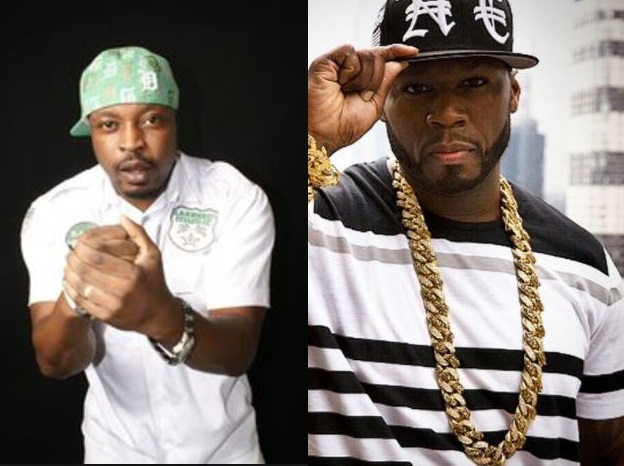
Eedris Abdulkareem remains a complex figure — not saint, not villain, but vessel. His anger birthed a question that still hangs over African pop culture: how much dignity must be lost for validation to be gained?
The night he stood against 50 Cent, the world saw a clash of egos. But history, with its patient eyes, saw something else: two empires colliding — one declining in moral weight, the other awakening in cultural power.
And through the tension, the spirit of Fela laughed softly — not in mockery, but in triumph — because somewhere between that jet and that anger, Africa finally refused to be small again.