


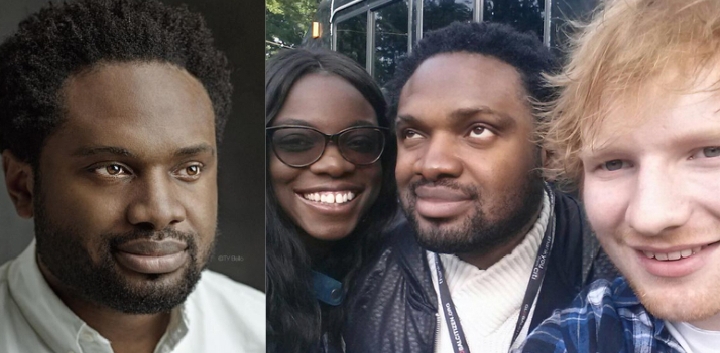
The first thing you notice about Cobhams Asuquo is not his blindness. It’s the certainty of his hands. They move across the piano like men who know the road, never hesitating, never wandering. His fingers seem to remember what the world forgets — that music begins before sound, that creation begins before sight.
In the studio, lights flicker over tangled cables and blinking consoles, but he is somewhere else entirely. He leans forward, nodding to a rhythm that hasn’t yet been recorded. A melody forms, then breaks, then reforms, as if guided by a compass only he can feel. Around him, engineers whisper, waiting for instruction, but he’s already a few steps ahead — sculpting an emotion that hasn’t been named yet.
When the track finally plays back, there’s an energy in the room that borders on disbelief. It’s not just music — it’s translation. Somehow, a man who has never seen a sunrise can make you hear one. He takes the invisible and gives it shape; he takes what others call limitation and turns it into language.
That is the mystery of Cobhams Asuquo — not that he makes music without sight, but that he makes the unseen audible. His blindness, far from darkness, became the grammar of light. And in a world obsessed with what can be seen, he reminds us that vision, at its deepest, has never required eyes.


From here, the story unfolds — of a boy born without sight in Jos who learned to hear his way through the world; of a young man whose faith and discipline turned perception into power; of an artist who taught a nation to listen again. This is not the story of blindness overcome, but of vision revealed — the journey of how Cobhams Asuquo transformed the absence of sight into the presence of purpose.
The Child Who Heard the World Before He Saw It
Cobhams Emmanuel Asuquo was born on January 6, 1981, in Jos, Plateau State — a city known for its calm hills and musical temperament. He entered the world blind, though no one around him yet knew what that blindness would come to mean. His parents, devoted and grounded, refused to see it as limitation. They saw, instead, a test of interpretation — how to raise a child whose senses rearranged the order of understanding.
At home, his mother described sounds in stories. The whistle of the kettle became a bird; the wind against the window became God’s whisper. In those early years, Cobhams did not miss sight; he replaced it with detail. He could recognize footsteps from across the room and distinguish one knock from another. When most children played with color, he played with rhythm. His toys were spoons, cups, and the steady beat of his own heartbeat.
He attended Pacelli School for the Blind and Partially Sighted Children in Lagos — a place where imagination was not a supplement to education but its foundation. There, music was not just a subject but a survival language. Students learned to navigate the world through sound — a tap on the table, a shuffle of shoes, the pitch of a friend’s voice. In that community, Cobhams discovered not difference but communion.
It was also at Pacelli that his musical genius began to stir. Teachers noticed he could reproduce melodies on the piano after a single listen. He didn’t just play notes — he rearranged them until they told stories. The blind boy from Jos was becoming something else entirely: a translator between the seen and the unseen.
Lagos, the City That Sang Back
When Cobhams moved through Lagos as a teenager, the city seemed to pulse in his veins. The honk of buses, the chatter of traders, the crackle of distant radios — everything sounded like a rehearsal. The city was chaotic, yet within that chaos, he heard rhythm. Lagos, for him, was both teacher and orchestra.
He joined the choir at church, experimenting with harmonies and arranging songs by ear. There, he learned that music was both spiritual expression and emotional refuge. Every Sunday, he felt the congregation transform as voices rose — imperfect, human, full of yearning. Those moments taught him what no formal training could: that sound has power not because it is flawless, but because it is sincere.
As a young man, he began tinkering with borrowed keyboards and basic recording gear. His early tracks were made in small rooms thick with humidity and faith. Friends recall how he would adjust a mix by counting seconds between echoes, sensing delay through vibration. The process looked ordinary; the outcome was miraculous.


In the late 1990s and early 2000s, Nigerian music was shifting — moving from analog innocence to digital experimentation. Amid that transformation, Cobhams stood quietly, building bridges between eras. He was the rare artist who could make technology sound human.
When the World First Heard His Vision
The year Asa released “Fire on the Mountain”, the Nigerian music scene paused. The song’s simplicity — a clean guitar riff, minimal percussion, and a haunting vocal — felt unlike anything else. Behind that sound was Cobhams Asuquo. The public began to ask who he was. And when they learned he was blind, they didn’t just hear the song; they began to see the story.
“Fire on the Mountain” was more than a hit — it was a parable. Through Asa’s voice and Cobhams’ production, the track captured the tension between Nigeria’s potential and its pain. It was as though his own condition had taught him to sense what others ignore — the invisible undercurrents beneath a nation’s noise.


With that single, Cobhams entered cultural consciousness. Suddenly, he wasn’t just a producer; he was the invisible hand shaping Nigeria’s new sound. His touch was subtle — more about feeling than force. Songs he produced carried balance: warmth without clutter, message without sermon.
The music world saw blindness as limitation. Cobhams turned it into a filter, a way of removing distractions until only truth remained. Each note became a confession. Each silence, a declaration. From then on, his career was not about success — it was about stewardship of sound.
The Hidden Producer
Producers often live in the shadows of their artists. For Cobhams, that shadow became his sanctuary. He was comfortable letting others occupy the spotlight while he crafted emotions behind the curtain. Yet, his influence grew — shaping projects for Banky W, Bez, Omawumi, Darey, and several others whose music defined mid-2000s Nigerian pop.
He approached production like storytelling. Before a recording, he’d ask artists not what they wanted to sound like, but what they wanted to feel like. The sessions became therapy rooms, where vulnerability found rhythm. For him, producing was not about perfection; it was about honesty.
Even his studio — famously minimal — reflects that philosophy. No walls lined with gold records, no blinding LED displays. Just a man, a piano, and a soundboard configured by memory. He can reach each knob, each cable, by instinct. Assistants describe how he senses the air shift when someone enters; he can tell who it is by their silence.
In an industry obsessed with visibility, Cobhams’ invisibility became mystique. His blindness, once considered barrier, became the veil that preserved focus. He saw no audience to impress — only sound to serve.
Faith as Frequency
If Cobhams’ music has one recurring note, it is faith. Not in the performative sense, but as the pulse beneath his being. Raised in a Christian home, he often refers to grace as the organizing principle of his life. His blindness, he insists, is not punishment; it is placement — a divine appointment to hear what others overlook.
His faith seeps into his lyrics, even in secular songs. Tracks like “Ordinary People” or “One Hit” reveal a theology of perseverance — that greatness is not in sight or sound, but in service. For him, creativity is a form of worship: to compose is to converse with God in melody.
In interviews, he often speaks of contentment — of learning to trust timing, to surrender control. This surrender shapes his music’s patience. Unlike the fast, looping hooks of modern Afrobeats, his compositions breathe. They linger. They remind listeners that beauty requires stillness.


Faith also gives him humor. He jokes about tripping over equipment, about learning to parent without seeing facial expressions. That levity disarms people who expect tragedy. His faith, in the end, is not spectacle. It is steady rhythm — unseen but undeniable.
Blindness and the Modern Machine
Technology has rewritten how we perceive ability. For Cobhams, digital tools are not charity; they are freedom. His studio now integrates adaptive software, tactile mixers, and speech-guided systems that allow him to engineer with precision. He navigates complex production suites faster than many sighted professionals.
But his relationship with technology runs deeper. In an age of artificial intelligence and visual overload, he embodies the counterpoint — that true creativity begins in the unseen. Where others rely on screen interfaces, he relies on mental composition. The absence of sight forces imagination to do the work of vision.
He often speaks about the danger of overproduction — of music becoming a visual algorithm rather than an emotional act. His blindness inoculates him against that temptation. He doesn’t see trends; he hears truth. That’s why his sound endures beyond seasons.
In a digital era obsessed with filters and metrics, Cobhams’ process remains tactile and timeless. He doesn’t just produce songs; he builds sonic environments where emotion breathes naturally. In his hands, even technology becomes humble — a servant to humanity, not its master.
The Architecture of Sound
For most people, sound is background. For Cobhams, it is geography. Every noise — the murmur of conversation, the creak of wood, the flutter of a curtain — sketches the outline of space. He constructs entire landscapes through resonance. To sit beside him when he listens is to realize that hearing, in his world, is an act of seeing with patience.
He once described how sound carries texture. Metal clangs sharply, wood resonates warmly, and human voices bloom in layers like petals. He hears proximity, distance, and direction as one hears melody and harmony. It is this multidimensional listening that later defined his production style — the warmth of live instruments, the human imperfections left unpolished, the spaces between notes that feel like breaths.
In Yoruba philosophy, there is a belief that sound connects the physical to the spiritual — that drums speak and chants travel between worlds. Though Cobhams’ upbringing was Christian, his music often carries this ancestral awareness: rhythm as language, silence as prayer. Every beat he creates feels like a dialogue between faith and physics.
To him, blindness is not void. It is precision. It forces the mind to build blueprints of sound and emotion. Where others hear music, he hears design — the architecture of feeling made audible. Each studio session becomes a cathedral, and each song, a window.
The Family That Sees for Him
Marriage, for Cobhams, was not rescue but resonance. His wife, Ojuolape, met him not as an icon but as a man. Their union reflects a partnership grounded in humor, honesty, and shared faith. She has often described him as “the calm in any storm.” Together, they navigate a world that often underestimates difference.
Parenthood deepened that harmony. When their children arrived, Cobhams spoke of learning to interpret laughter, cries, and silence differently. He cannot see their smiles, but he hears them — the quick intake of breath before a giggle, the soft exhale of sleep. These sounds, to him, are portraits.


Family also anchors his creativity. Many of his songs carry the tone of gratitude and domestic joy — not glittery success, but quiet contentment. He records late into the night, but home is his morning rhythm. His blindness requires teamwork, but his independence is total — he cooks, moves confidently, and insists on doing what he can unaided.
Their love story reminds listeners that intimacy is not built on sight but perception. Where many relationships strain under visibility, theirs thrives in understanding.
Sound, Silence, and the Secret of Joy
Cobhams often says that joy and silence are twins. Joy, for him, is not excitement but equilibrium — the moment music aligns with meaning. His compositions are meditations disguised as pop. Listen closely, and you’ll hear pauses that feel like breathing spaces for the soul.
His creative process is immersive. Before recording, he listens to silence, allowing his mind to locate the song’s emotional center. He once described silence as “the canvas on which God paints sound.” That belief permeates his work. Even upbeat tracks carry reverence — a sense of something sacred behind the groove.
For him, sound is memory. A minor chord recalls loss; a trumpet blast feels like sunrise. Every song becomes a translation of human experience into acoustic language. This is why his music transcends genre — gospel, pop, soul, and jazz coexist naturally.
The secret of his joy is gratitude. Blindness may have closed one door, but it opened a hundred windows. His joy is not denial of struggle; it is mastery over it. In that, Cobhams has built not just a career, but a philosophy of listening — to the world, to oneself, to God.
Between Two Worlds: Nigeria and the Global Stage
By the 2010s, Cobhams Asuquo was no longer just Nigeria’s quiet genius; he was a global voice. His performances at the United Nations and collaborations with international artists reflected a new phase — artistry as diplomacy. His music carried messages of inclusion, hope, and dignity.
Yet, fame never distorted him. Even while working with major acts abroad, he remained rooted in Nigerian soil — producing local artists, mentoring young talents, and investing in music education. He saw in every sound engineer and backup singer the possibility of transformation.


The world began to see him as a symbol of possibility — proof that disability could be a different kind of strength. Documentaries, interviews, and tributes multiplied, but he never traded sincerity for spectacle. His humility, like his blindness, became a kind of shield against ego.
He now stands between two worlds — the intimate and the international, the spiritual and the sonic. And in bridging them, he offers something rare: a reminder that greatness does not shout; it resonates.
Blindness as Light (Conclusion)
Cobhams Asuquo’s story ends the same way his songs begin — not with an explosion, but with awakening. He has built an empire of feeling in a world that worships the visible, and in doing so, he has quietly redrawn the boundaries of what it means to see. Every piano note, every lyric, every pause is proof that clarity is not always born of light. Sometimes, it grows out of faith, out of trust, out of a darkness that learned to listen.
There are musicians who chase applause, and there are those who build sanctuaries. Cobhams belongs to the latter. His legacy is not written in chart numbers but in the way his music softens the noise of life — teaching us that listening is an act of courage. When the world rushes toward spectacle, he leans toward meaning. Where others use sound to fill emptiness, he uses it to reveal depth.
To witness his life is to understand that blindness was never his obstacle — it was his vocabulary. Through it, he crafted a universal language of resilience and grace, reminding us that genius often hides in plain humility. In Cobhams’ universe, vision is not measured by the eye’s reach, but by the heart’s comprehension.

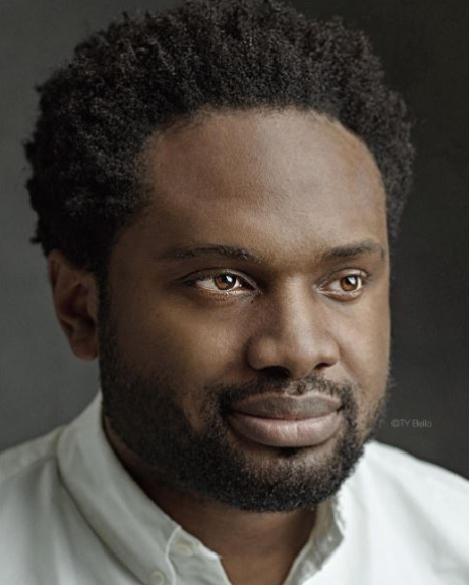
So when the last chord fades and the room exhales, something lingers — not the sound itself, but what it awakens in us. He has turned the unseen into art, the ordinary into revelation. And in that transformation lies his true gift to the world: proof that light does not always need to be seen — sometimes, it only needs to be heard.