


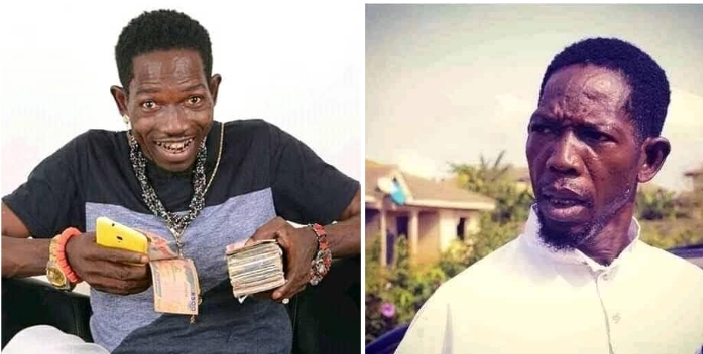
There are sounds that refuse to leave a room. Echoes that linger long after their source has vanished. In certain corners of Lagos, in the flickering glow of a television screen, and in whispered stories among old friends, a particular laughter persists—soft, mischievous, almost spectral. It belongs to no one alive, yet it touches everyone who remembers. Some call it memory; others call it a ghost. Either way, it moves like wind through familiar streets, leaving an unsettling joy in its wake. This is the laughter of Dejo Tunfulu, the man whose presence now exists more in echoes than in flesh, yet who continues to make hearts bend toward joy.
People speak of Dejo Tunfulu’s laughter in hushed tones, as if naming it aloud could make it vanish. It is not the laughter of frivolity alone—it is layered, subtle, charged with the peculiar intimacy of someone who understood how to make the world pause just long enough to breathe, to smile, to remember that joy is fleeting but unforgettable. It arrives unexpectedly, in mundane moments, and yet it carries the weight of something eternal, almost uncanny.
The laughter of Dejo Tunfulu does not belong to one scene or one frame. It drifts through houses and cinemas, settling on shoulders with a strange tenderness. It is both comforting and haunting, a paradox that defies easy explanation. Those who know it well speak of it as if encountering a presence—a presence that refuses to be forgotten, that refuses to yield to the silence of absence.
And yet, that laughter had a beginning. It was born in the streets and homes where Dejo Tunfulu first discovered the strange alchemy of humor—where mischief met empathy, and observation became performance. Every chuckle, every mischievous grin, every sudden burst of comic timing traces back to a story, a life, a series of moments that shaped the man behind the laughter.
To understand the ghost, one must first follow the boy, the young man, the performer whose work would one day haunt hearts long after the lights dimmed. And that story begins not on a stage, nor on a screen, but in the quiet corners of Lagos where Dejo Tunfulu first learned to make the world laugh.
The First Echoes of Laughter
On May 31, 1972, the city of Lagos whispered its usual symphony of market cries, footsteps, and distant horns. Amid this urban orchestra, Kunle Makinde Adetokunbo, later immortalized as Dejo Tunfulu, was born. From Ikija, near Abeokuta, his family carried the heartbeat of Yoruba tradition, a lineage steeped in stories, songs, and laughter that resonated like an unbroken drumbeat. It was in this confluence of sound and rhythm that the first echoes of Dejo’s signature humor were formed—a laughter waiting patiently to unfurl into the world.


Even as a boy, Dejo’s presence bent the ordinary into the extraordinary. A glance, a twitch of the lips, or a mimicry of an elder could ignite a room like sparks catching dry leaves. Family gatherings and street corners became his classrooms; the city itself, his rehearsal space. Every observation, every small absurdity of human behavior, he stored like secret treasure, ready to transform it into the gift of laughter—a gift that would later linger long after he was gone.
School corridors were no different from the bustling alleys outside. Classmates remember the boy whose laughter could ripple through tension like a gentle wind bending stubborn branches. Teachers noted a rare fluidity in his antics, a combination of precision and spontaneity, as if he were both composer and instrument in a silent symphony of humor. Dejo was learning early that laughter was more than amusement—it was influence, a subtle power that could shape moods, heal rifts, and unite strangers.
Yet beneath the levity, there was a quiet resilience that fed his humor. Life in Lagos was not without hardship, and even in mischief, Dejo’s laughter carried an undertone of understanding—a recognition that joy could be fleeting, but also that it could leave marks as enduring as sorrow. From crowded markets to intimate family rooms, from schoolyards to street corners, the seeds of the laughing ghost were being sown: a humor that would haunt screens and hearts, long after the boy had grown into a legend.
Breaking Into Nollywood: From Shadows to Spotlight
In 1987, a young Dejo Tunfulu stepped onto a new stage—not the streets of Lagos where he had honed his craft, but the world of Yoruba television and emerging Nollywood cinema. His first credited appearance was in the drama series Apere Ijongbon, produced by the Kolawole International Theatre Group. For a boy who had grown up translating everyday moments into humor, the camera became both a challenge and a canvas. Every gesture, every glance, was now magnified, recorded, and scrutinized—yet Dejo’s instinctive rhythm for comedy allowed him to turn the constraints of the lens into a playground for his talent.
What distinguished Dejo even in these early days was the precision of his timing. Where others relied on flamboyant gestures or boisterous antics, he discovered that humor could be quietly devastating—an arched eyebrow, a carefully measured pause, a sudden stutter that mirrored life’s unpredictability. Audiences didn’t just laugh at his characters; they recognized themselves in them. Dejo had learned, even before his first major film, that comedy could be both mirror and escape: a way to expose human folly while offering relief from it.
Soon after, he appeared in the film Omo Oran (Lalude), acting alongside established actors like Fatai Adetayo. Here, Dejo’s improvisational skill and ability to blend subtle exaggeration with genuine emotion caught the attention of directors and audiences alike. Even minor scenes became memorable moments because he could inhabit them fully, turning lines on a page into living, breathing slices of human experience. By observing everyday life in Lagos—the gestures of shopkeepers, the quirks of neighbors, the rhythm of children at play—he infused his roles with authenticity, creating a comedic language that was uniquely his own.
These early years were both trial and laboratory. Dejo Tunfulu experimented with expression, cadence, and character, constantly refining what would later become his signature style. His humor was rooted in empathy and observation, a bridge between the mundane and the extraordinary. Each role, whether a fleeting television appearance or a supporting part in film, was a stepping stone, shaping an actor who could make audiences laugh without ever seeming forced, who could command attention quietly yet unmistakably. By the time he began to appear in more prominent productions, the foundations of a career defined by wit, timing, and relatability were already firmly laid.
Rise in Nollywood: Crafting His Signature Comedy
As the 1990s unfolded, Dejo Tunfulu began to step out of the shadows of minor roles and into the spotlight of Yoruba cinema. His talent, honed in street performances and early television, now found fuller expression on film sets where he could explore the intricacies of character and timing. Each new role was an opportunity to deepen his comedic vocabulary, to experiment with expressions, pauses, and inflections that would become trademarks recognizable to audiences across Nigeria.
His breakthrough came with films such as Ile Olorogun, Ajani Ogun, and Arewa, where Dejo’s characters were no longer peripheral—they carried scenes, drove humor, and sometimes even stole them entirely. In these works, he demonstrated a gift for blending slapstick with subtle observation, turning ordinary situations into laughter that felt inevitable yet always surprising. Audiences began to anticipate his entrances, the flicker of his smile, the twitch of an eye, and the laughter would follow naturally, almost instinctively.

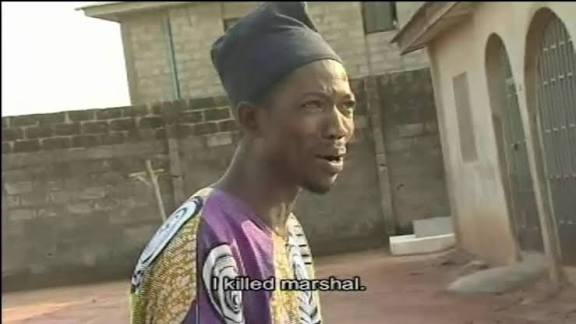
What made Dejo exceptional was his ability to root comedy in relatability. He did not play caricatures for cheap laughs; instead, he reflected the quirks, frustrations, and joys of everyday life. Market women, neighborhood gossip, wayward children—each inspired a nuance in his performance. Even in dramatic narratives, his presence offered levity, a way to humanize and balance stories without undermining them. Directors began to seek him out, recognizing that a scene with Dejo Tunfulu gained texture and depth simply through his timing and presence.
By the late 1990s and early 2000s, Dejo Tunfulu had cemented his place as a central figure in Yoruba comedy films. His appearances in Agba Osugbo and later Okanjua sketches displayed his versatility, blending improvisation with the demands of structured scripts. With each performance, his reputation as a master of timing and expression grew, and audiences came to know that a Dejo Tunfulu scene promised laughter grounded in authenticity—a humor that resonated because it mirrored the humanity of everyday life.
Peak Fame: Dejo Tunfulu’s Prominent Roles
By the turn of the millennium, Dejo Tunfulu’s presence in Yoruba cinema had become impossible to ignore. Each appearance on screen, whether in Idajo Mi (1998) or Iya Oju Ogun (2001), carried the weight of experience honed from years of observation and performance. He had moved beyond fleeting television spots to films where his craft could be fully realized, and audiences began to recognize a rhythm unique to him—a cadence of humor that felt both natural and inevitable.
Dejo’s performances in Omo Olomo (2003), Ayaba Oju Ogun (2004), and Aiyekooto (2005) demonstrated his growing versatility. He did not rely solely on exaggerated gestures; instead, he mined subtle expressions, pauses, and shifts in tone to create comedy that mirrored life. In each role, he observed human behavior closely, translating the ordinary—gestures, speech quirks, small frustrations—into moments that elicited laughter grounded in truth.
Collaboration became a defining feature of this stage of his career. Working alongside seasoned Yoruba actors, Dejo refined his ability to navigate ensemble casts, adding levity without overwhelming the story. Each scene became a canvas for his timing and expression, whether he was delivering a quick-witted remark or reacting to another character’s antics. His work in these films confirmed him not just as a performer, but as a craftsman shaping Yoruba comedy with precision.
By the mid-2000s, Dejo Tunfulu had fully earned his place in the Yoruba film industry. The characters he portrayed, grounded in everyday experience yet elevated by his craft, made him a familiar presence to audiences. His films from this era remain reference points for his style—humor delivered with subtlety, timing honed to perfection, and a deep understanding of the rhythm of life that resonated on and off the screen.
Later Career and Legacy: The Enduring Influence of Dejo Tunfulu
In the latter part of his career, Dejo Tunfulu continued to appear in Yoruba-language films and television productions, including Apere Ijongbon revisits and other notable works that carried forward his signature comedic style. His presence on screen remained consistent, a familiar pulse in the heartbeat of Yoruba cinema that audiences had come to anticipate. Even as newer actors emerged, Dejo’s craft set a benchmark, illustrating how subtlety, timing, and observation could transform ordinary characters into unforgettable figures.
Beyond his own performances, Dejo Tunfulu’s work influenced a generation of younger comedians. Many emerging actors have cited his ability to convey humor through minimal gestures and naturalistic dialogue as a guiding example. He demonstrated that comedy was not only about loud laughter or exaggerated antics—it was about nuance, empathy, and timing. His roles became templates for others, showing how to balance levity with the integrity of the story, and how to earn audience connection without forcing it.
Dejo’s impact was not limited to the screen. His collaborations with directors, producers, and fellow actors helped shape the professional environment of Yoruba cinema. By consistently delivering performances grounded in observation and authenticity, he raised expectations for comedic performance, subtly influencing scriptwriting, character development, and even casting choices. He became a reference point for excellence, a standard against which comedic timing and character believability were measured.
Final Days: The Passing of Dejo Tunfulu
On April 1, 2022, the laughter that had once filled rooms and screens fell silent. Dejo Tunfulu, born Kunle Adetokunbo on May 31, 1972, passed away at the age of 50. His death was the result of complications from malaria and low blood levels, and reports indicate that he had been admitted to a hospital for a blood transfusion, where he unfortunately succumbed during the procedure. The news rippled through Lagos and the wider Yoruba film community, leaving colleagues and fans grappling with the sudden absence of a presence that had felt so familiar.
Even in his final days, Dejo had remained a figure of vitality, appearing at public events and connecting with fans. The contrast between his enduring energy and the fragility of life underscored the human vulnerability behind the laughter. His passing served as a reminder that even those who bring joy to others are themselves bound by the same impermanence, a truth made starker by the suddenness of his departure.


The announcement of his death came through social media, with fellow actors expressing disbelief and grief. His body was laid to rest in the Agbowa area of Ikorodu, Lagos State, the same day, allowing friends, family, and colleagues to honor him in a ceremony marked by both mourning and celebration of a life dedicated to comedy and performance. The streets, theaters, and homes that had echoed with his humor now carried a quiet weight, a reflective pause in the rhythm of everyday life.
Though Dejo Tunfulu had left the world of the living, the mark of his artistry endures. Films, television appearances, and stage performances remain, each a vessel of his timing, expression, and insight into human nature. In the silence that followed his death, the memory of his craft continues to speak, reminding audiences that while life ends, the echoes of laughter and the traces of talent persist, shaping generations that come after.
The Laughing Ghost: How Dejo Tunfulu Lives On
Even after his passing, Dejo Tunfulu’s laughter continues to resonate. It is remembered by fans and colleagues alike, a distinctive sound that could turn ordinary moments into joy. Those who worked with him often speak of his ability to make a scene come alive, how his timing and expression left a lasting impression that endures long after the cameras stopped rolling.
Audiences frequently recall his laughter, repeating lines and expressions he delivered with such precision. In conversations, social media posts, and gatherings, people find themselves laughing at his unique gestures, remembering the warmth and spontaneity he brought to every performance. That laughter has become a form of presence, a way his personality continues to engage people even after his death.
His influence goes beyond the moments he shared on screen. Younger actors and comedians often cite him as an inspiration, noting how his style of timing, reaction, and comic delivery set a standard in Yoruba cinema. In this way, the echo of his humor shapes contemporary performances, ensuring that his contributions remain part of the creative landscape.
The “laughing ghost” represents the enduring essence of Dejo Tunfulu’s work. It is the memory of his craft, the joy he inspired, and the way he connected with audiences. Though he is no longer alive, the laughter he brought to others continues to exist, leaving a lasting imprint on both the industry and the people who loved his work.
Enduring Echo: The Unseen Stage of Dejo Tunfulu
Even as the cameras have stopped rolling and the lights dimmed on Lagos stages, Dejo Tunfulu’s presence remains tangible. He exists in the pauses before laughter erupts, in the subtle expectation that a moment might shift into humor at any instant. His artistry was not only in performance but in shaping anticipation—an invisible rhythm that teaches audiences how to wait, to listen, and to find delight in the smallest gestures.
Dejo’s influence extends beyond the realm of entertainment; it resides in the courage of storytellers who now approach comedy with nuance and restraint, inspired by his ability to evoke laughter without forcing it. He demonstrated that humor could be layered, intelligent, and profoundly human—a tool for reflection as much as for amusement.


In a world that often rushes past the ordinary, Dejo Tunfulu reminded us to observe, to notice, to connect. Each recollection of his timing, each shared memory of his expressions, serves as a quiet testament to a life that understood the value of presence, even in absence. His work continues to teach, to inspire, and to provoke joy in ways that cannot be captured in a single scene or a single line.
Ultimately, the lasting impression of Dejo Tunfulu is not in the roles he played or the laughter he elicited—it is in the enduring sense that comedy, when crafted with attention, patience, and insight, can become a thread that ties generations together. In remembering him, audiences experience a presence that refuses to vanish, a reminder that artistry leaves echoes longer than life itself.