


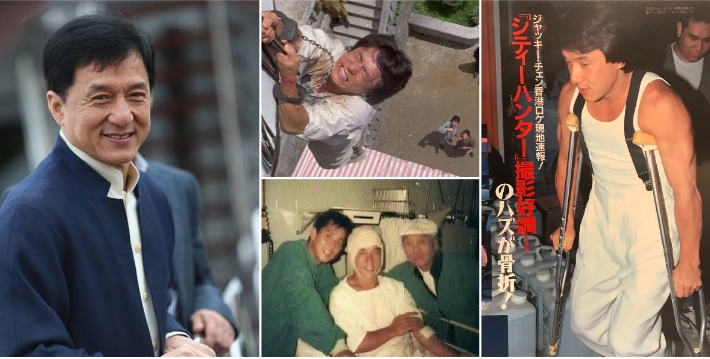
For most of us who grew up watching Jackie Chan, his movies were more than action—they were joy in motion. The blend of laughter and danger, comedy and chaos, felt like magic stitched into every punch and fall.
We didn’t just watch his films; we grew up inside them, cheering through the near-misses, gasping at the leaps, and laughing at the moments he turned pain into play. Jackie Chan blessed an entire generation’s childhood with the illusion that pain could be funny and danger, somehow, delightful.
But behind that illusion was a body that rarely told the truth. Beneath the wide grin and dazzling acrobatics lived a story written in fractures, bruises, and silent recoveries. While fans around the world celebrated his daring, Jackie carried a private record of endurance—injuries so severe, many were hidden for decades.
His screen presence made him seem unbreakable, almost superhuman. Yet, away from the set lights, he was just a man negotiating the limits of his own body—one injury, one recovery, one more take at a time. The same hands that waved at cheering fans were the ones that quietly reset dislocated bones.
This is not the story of an action hero—it’s the anatomy of devotion, the hidden cost of wonder, and the price of giving the world a fearless legend. Because sometimes, what we remember as childhood magic was born from someone else’s unseen pain.
Early Sequences: The Formative Pain of a Martial Arts Child
Jackie Chan’s journey into the world of cinematic violence began at an age when most children are still discovering playgrounds. As a pupil at the China Drama Academy, he endured grueling martial arts training that demanded both precision and pain tolerance. Every kick and block was a lesson not only in skill but in resilience, often leaving him with bruises and fractures that became routine companions rather than anomalies. The physical intensity was compounded by the harsh discipline of his mentors, who saw vulnerability as weakness. Jackie’s early exposure to pain instilled a paradoxical relationship: the body as both instrument and adversary.

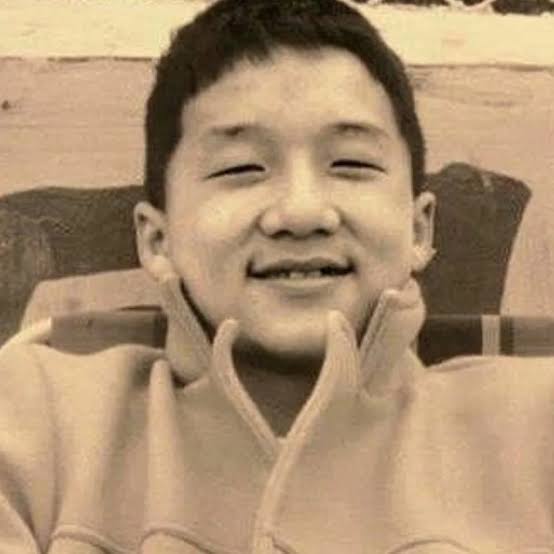
In those early years, injuries were formative. Fingers fractured during acrobatics, elbows scraped raw from endless falls, and wrists sprained during backflips became invisible markers of dedication. These were not injuries that warranted sympathy; they were badges of commitment. Yet beneath the toughness was a young man constantly negotiating fear and perseverance. Each bruise carried lessons in patience, each fractured bone a conversation with inevitability. Pain became a currency, traded silently for mastery and eventual cinematic excellence.
One of the lesser-known aspects of these formative sequences is the cumulative effect of repeated trauma. Jackie’s body, even as a teenager, began to harbor chronic issues—joint instability, ligament weakness, and early signs of degenerative conditions that would follow him for decades. These injuries were rarely discussed publicly, and even within the studio, they were regarded as par for the course. Yet for Jackie, they were deeply personal reminders that each stunt carried stakes beyond the lens of the camera.
By the time he transitioned from child actor to stuntman in the Hong Kong film industry, Jackie’s understanding of injury was nuanced. He knew the exact threshold between a stunt that could thrill audiences and one that could permanently alter his body. This knowledge, borne from countless early sequences, shaped a career-long philosophy: the illusion of invincibility must be seamless, the suffering invisible. Early pain was not just endured—it was mastered, rehearsed, and woven into the very fabric of his performance style.
Breakthrough Sequences: Bruises Behind the Laughter
As Jackie’s career moved into leading roles in the 1970s and 1980s, the physical demands of stunts escalated exponentially. Movies like Snake in the Eagle’s Shadow and Drunken Master showcased unprecedented agility, combining martial arts choreography with comedic timing. Audiences laughed, but behind the humor lay injuries that would leave even seasoned stunt performers in awe. Broken ribs, torn muscles, and dislocated shoulders were common, though rarely reported. Jackie’s public persona demanded levity, yet the private reality was far grimmer.
Each sequence was a negotiation with gravity and momentum. In one infamous scene, Jackie attempted a backflip over multiple obstacles, miscalculating a landing by mere inches. The result was a fractured cheekbone and a dislocated shoulder—injuries that required months of silent recovery. On set, filming never paused; he hid his pain behind wit and improvisation, masking agony with humor. It is in these moments that Jackie’s resilience became both a legend and a secret burden.
Audiences were unaware of the silent endurance because Jackie transformed injury into artistry. Limping subtly, shifting weight mid-jump, and executing stunts despite fractures became trademarks of a performer who refused to let pain dictate presence. Every sequence became a coded message: “I survived this, and I remain unbroken in spirit, if not in body.” These injuries, kept hidden from the public eye, added layers of tension and danger that elevated the cinematic experience without betraying the reality behind it.

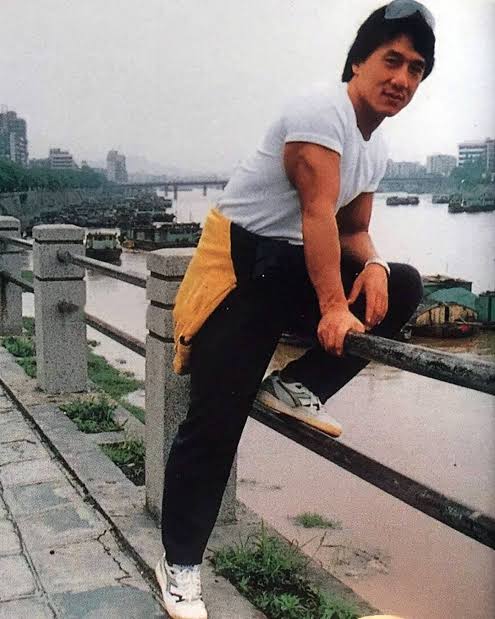
The human cost of these breakthrough sequences extended beyond physical pain. Chronic injuries began accumulating in the joints, spine, and knees. While his laughter suggested ease, each stunt exacted long-term tolls that would haunt him in decades to come. The paradox was cruel yet poetic: Jackie Chan’s joy on screen was inseparable from the suffering that sculpted it. Every smile concealed silent screams, every successful landing a quiet triumph over the fragility of flesh.
Mid-Career Sequences: The Cost of Perfection
By the late 1980s, Jackie Chan had become synonymous with high-octane stunts that combined martial arts, humor, and extreme physicality. Films such as Project A and Police Story showcased feats that pushed his body to the limit. Every sequence was a calculated risk, yet the unexpected always lurked behind the choreography. Broken bones, concussions, and torn ligaments became routine, though few ever learned the extent. Fans cheered for the spectacle; Jackie absorbed the suffering quietly.
One of the most infamous incidents occurred during Police Story when Jackie slid down a pole coated in lights, intended as a seamless visual climax. The pole fractured his spine, shattered his heels, and left him with injuries that would reverberate for decades. Despite the trauma, he returned to the set, masking his pain behind humor and relentless energy. This was no mere stuntman’s bravado; it was a testament to a personal ethos that prioritized art over comfort, performance over self-preservation.
The psychological toll mirrored the physical. Jackie lived with constant awareness of fragility, every fall and flip carrying a potential catastrophe. Each bruise and fracture was a quiet negotiation with mortality, a reminder that mastery has a cost that audiences rarely witness. He transformed the limitations of the body into choreography, shaping pain into spectacle, turning vulnerability into a silent performance of resilience.
Chronic injuries began accumulating in this period: knees destabilized, shoulders repeatedly dislocated, and back muscles torn from extreme impact. While the films earned acclaim and cemented his status as a global action icon, the ledger of injuries grew heavier. Every laugh, every flip, every near-impossible landing was an entry in a secret journal of human endurance—a narrative of survival hidden behind cinematic triumph.
Near-Fatal Moments: Dancing With Mortality
As Jackie’s career progressed, stunts grew more elaborate and perilous. High-rise jumps, vehicular crashes, and fire sequences were no longer optional—they defined the action genre he helped create. Behind the camera, these moments became literal tests of survival. In one near-fatal incident during Armour of God, a jump from a cliff miscalculated his landing, resulting in a fractured skull. He spent months recovering in secrecy, returning to filming only when fully determined to maintain the illusion of invulnerability.
Fans saw the agility and humor, but the reality was more harrowing. Each stunt was an engagement with mortality itself, a gamble played with precision yet subject to the chaos of chance. Jackie’s body, already marked by years of injury, became a vessel of defiance against gravity, fate, and the very laws of physics. What appeared as effortless comedy masked the reality of near-death experiences that would have ended careers—or lives—for many others.

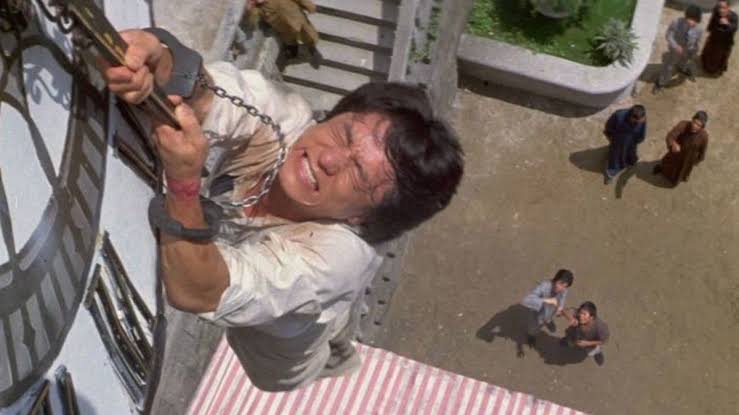
Even after surviving such moments, the cumulative effects of repeated trauma were unavoidable. Head injuries, torn ligaments, and crushed bones were patched with surgical intervention and personal discipline, yet the scars lingered invisibly. He learned to navigate life with chronic pain, often performing stunts with fractures and injuries not publicly acknowledged. Each near-fatal experience heightened his awareness of risk, yet never diminished his drive to innovate or entertain.
These moments of extreme danger reveal a side of Jackie Chan rarely discussed: the intimate knowledge of one’s own mortality and the courage to face it repeatedly. Where audiences saw humor, he confronted pain; where they celebrated leaps and flips, he calculated survival. The near-fatal incidents became a silent narrative thread, linking decades of work with a deep, human story of resilience, sacrifice, and defiance against physical limits.
Hollywood Breakthrough: Pain Goes Global
Entering Hollywood in the 1990s, Jackie Chan faced a new challenge: adapting his high-risk style to international productions with different safety protocols. Films like Rumble in the Bronx and Rush Hour showcased his signature stunts, but the global stage demanded higher spectacle—and the injuries intensified. Crushed toes, ruptured discs, and shoulder separations followed, often concealed to maintain his cinematic persona. In Hollywood, the stakes were not just physical—they were professional, reputational, and financial.
The cultural shift did not lessen the toll. Stunt coordinators, insurance requirements, and union regulations attempted to mediate risk, yet Jackie often ignored conventions, performing sequences that defied standard safety measures. In one action sequence during Rush Hour, a miscalculated fall left him with severe back trauma, yet filming continued after minimal rest. Audiences celebrated the flawless execution; only Jackie knew the silent agony it had cost.
This era also brought long-term consequences. Years of repeated trauma compounded into chronic pain: spinal compression, knee deterioration, and shoulder instability became daily companions. Yet Jackie’s work ethic, combined with humor and charm, continued to mask the suffering. Each scene executed flawlessly on camera was a testament to endurance and human perseverance, but behind the camera, his body silently registered the cost of fame.

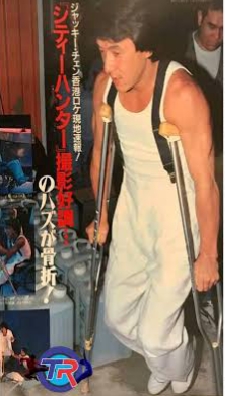
Hollywood exposure elevated both his fame and the stakes of his injuries. Every stunt carried the weight of expectation, every fall was scrutinized, and every misstep had professional repercussions. Jackie Chan’s injuries were no longer private—they were hidden in plain sight, a secret known only to him, forming an invisible backbone to an international career defined by risk, spectacle, and resilience.
Late-Career Sequences: The Body Betrays the Legend
Entering the 2000s, Jackie Chan’s stunts took on a different character. No longer the lithe teenager or young acrobat, he faced a body burdened with decades of cumulative injuries. Each flip, each fall, each fire jump carried not only immediate risk but decades of wear and tear. Yet Jackie’s dedication never wavered—he continued to perform, often modifying stunts subtly to protect fragile joints, while preserving the illusion of fearless agility.
Audiences marvel at his action sequences, rarely realizing that even “light” stunts required extraordinary negotiation with his own frailty. Knees, hips, and spine had become vulnerable regions, with cartilage thinning and previous fractures weakening bones. Jackie adapted, but the invisible ledger of injuries dictated every movement. On the outside, he remained a symbol of invincibility; inside, he navigated pain with the precision of a surgeon, calculating angles, timing, and force to minimize catastrophe.
Some stunts pushed the limits of what even seasoned performers would attempt. In The Foreigner and Kung Fu Yoga, high falls and vehicular stunts risked reinjury to old fractures, torn ligaments, and fused bones. Jackie often executed these stunts with minimal padding, relying on instinct honed over decades. Behind the cameras, medical staff were sometimes aware, but the true scale of his physical sacrifices remained concealed. The legend of invincibility, carefully maintained, was powered by relentless self-discipline and unspoken endurance.
Late-career injuries were not just physical—they carried psychological weight. Jackie faced the dual challenge of entertaining millions while accepting the limitations imposed by age and trauma. The body that had once been a fountain of explosive motion was now fragile, yet he persisted, finding creativity in adaptation and resilience in restraint. Each stunt was a quiet testament to human determination, a reminder that even legends are flesh and blood, negotiating pain, mortality, and art simultaneously.
Reflections on Aging: The Body That Refuses to Yield
As Jackie Chan entered his 60s, the body that once performed gravity-defying feats became a landscape of scars, creaks, and limitations. Aging introduced new constraints: slower recovery, increased susceptibility to reinjury, and a heightened awareness of mortality. Yet Jackie’s spirit remained unbroken. The same resilience that drove him to climb poles, crash through glass, and leap from rooftops now guided him in adapting stunts to a body that demanded respect.
Each sequence in later life became a negotiation between ambition and prudence. Where once he might have risked spinal injury for cinematic effect, he now calculated angles, reinforced safety measures, and relied on ingenuity rather than sheer force. Fans continued to see brilliance and daring, unaware of the careful orchestration that masked vulnerability. The comedy, the acrobatics, the lightning-fast reflexes—all remained, yet were executed with a newfound wisdom born of experience and survival.

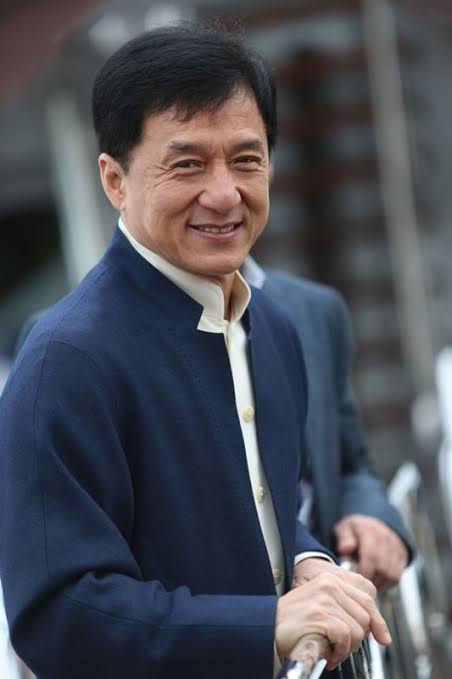
Aging also brought introspection. Jackie began to consider the human cost of his craft—not only for himself but for the generations of stunt performers inspired by his work. He spoke indirectly about fear, endurance, and the delicate balance of ambition and self-preservation. Behind the laughter and spectacle was a man acutely aware of his own mortality, yet determined to redefine what it meant to continue performing in the face of inevitability.
The story of Jackie Chan in his later years is one of adaptation, humility, and mastery of self. The body may betray, fatigue may set in, but the mind and spirit continue to negotiate, innovate, and inspire. In every careful flip or modified fall, the audience witnesses not just the legend of Jackie Chan, but the enduring human will that refuses to yield to time.
Mortality and Legacy: The Human Behind the Legend
Legacy, for Jackie, is intertwined with survival. It is not measured solely in box office figures or awards, but in the artistry made possible by enduring and concealing pain. Generations of performers have learned from his ingenuity, audiences have laughed and gasped at his daring, and yet the human cost remains largely invisible. The true story is in the silent victories over injury, the courage to face pain repeatedly, and the wisdom to adapt without surrendering passion.
Even in retirement or selective appearances, Jackie’s influence is profound. His approach to risk, his commitment to craft, and his mastery of human endurance serve as a blueprint for performers, artists, and anyone seeking to transform vulnerability into strength. The hidden injuries that once threatened to define him now elevate his legend, revealing a man whose courage lies as much in surviving pain as in performing spectacularly.
Jackie Chan’s story is ultimately human: laughter intertwined with suffering, triumph built on endurance, and joy inseparable from sacrifice. The audience sees the spectacle, but the invisible ledger of injuries tells the deeper truth: the man who made the impossible look effortless did so at the cost of his own body, quietly, tirelessly, and heroically.
Closing Reflection: The Quiet Echo After the Applause
Long after the credits fade and the crowd’s laughter dissolves, something of Jackie Chan still lingers—not just in the films, but in us. He gave our childhoods rhythm, courage, and laughter that masked the quiet truth of what it cost him to make us smile. Those flying leaps and bruised landings were his unspoken gift to the world—a language of motion that turned pain into poetry.
He never asked for sympathy, only understanding—that behind every gasp and every laugh was a man who believed in giving everything, even when it meant giving more than he had left. His story endures not because he survived the falls, but because he kept standing, long after he didn’t have to.

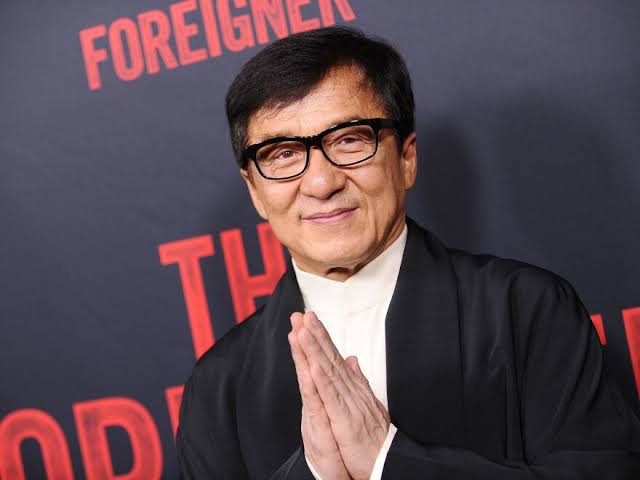
Now, when the lights go down and we remember those wild, fearless scenes, we see them differently—not as tricks, but as truths. Jackie Chan’s legacy lives between the laughter and the silence that follows it, reminding us that some heroes don’t wear capes. Some just fall, rise, and keep moving—until their body becomes the story itself.