



Some songs arrive quietly, almost imperceptibly, only to lodge themselves in the marrow of memory. “Seun Rere,” sung by Christy Essien-Igbokwe, was one of these rare arrivals. It did not announce itself with fanfare; there were no glittering premieres or headlines. Yet, it became a constant companion in the backyards, living rooms, and school corridors of Lagos and beyond. Children hummed it between lessons, parents whispered it as counsel, and its cadence threaded through the invisible architecture of growing up.
The song’s voice carried more than melody; it carried authority. It spoke of morals, consequences, and hope, yet it never dictated. Instead, it coaxed, nudged, and lingered, leaving echoes in the spaces where innocence met curiosity. It was, in essence, a map of the unseen city of childhood—a terrain of lessons, small victories, and first betrayals, illuminated by rhythm and song. Every note seemed deliberate, as though Christy Essien-Igbokwe had charted the moral contours of youth before a single child would stumble through them.
But the story of “Seun Rere” is not merely about its notes or lyrics. It is about the people it touched, the invisible lessons it encoded, and the cultural weight it bore in a time when music was more than entertainment—it was a guide, a mentor, and sometimes, a lifeline. This song encapsulated both the tenderness of parental guidance and the sharp edges of discipline, wrapped in a harmonic embrace that was both comforting and challenging.
By tracing its origin, its rhythms, and its meaning, one begins to uncover the layers of biography and history that make “Seun Rere” more than a song. It becomes a portal into the lives of children who learned right from wrong before they fully understood the world around them, and into the heart of a society that relied on music to codify values, celebrate life, and navigate complexity.
Christy Essien-Igbokwe: A Life Framed in Song
Christy Essien-Igbokwe was born on 11 November 1960 in Lagos, Nigeria, a city that hummed with the rhythm of its own contradictions—modernity colliding with tradition, youth colliding with expectation. She grew up in a household where music was not just entertainment but a medium for communication, storytelling, and moral instruction. Her early exposure to church music, folk rhythms, and the bustling Lagos street sounds created a symphony of influence that would later define her artistry.
By the time she was a teenager, Christy had already begun performing in local events and talent shows, absorbing the cadences of her environment while refining a voice capable of both instruction and empathy. It was in these formative years that she recognized music as a vehicle for social commentary, personal reflection, and guidance. Every note she sang carried an imprint of Lagos streets, family wisdom, and the spiritual currents of her Yoruba and Igbo heritage.


Her career was marked not just by awards but by a consistent devotion to storytelling through song. She imbued her work with the kind of gravitas that transcended performance. “Seun Rere” was not a spontaneous creation; it was the culmination of decades of observation, experience, and engagement with the lives of Nigerian children and their parents. It is in her biography—the walks along Lagos alleys, the evenings in church halls, the conversations overheard at family gatherings—that one finds the seeds of moral and emotional complexity woven into her music.
By examining Christy’s life, one begins to understand the deliberate choices that informed “Seun Rere.” Her upbringing in Lagos, her exposure to the city’s social rhythms, and her early professional experiences created a fertile ground where music could both entertain and instruct. In every verse, every harmonic rise, one can trace the imprint of a childhood that was both ordinary and extraordinary, filled with the textures of everyday morality and the poetry of lived experience.
Recording “Seun Rere”: Lagos, Studio, and Time
The song “Seun Rere” was recorded in London in 1982, , a city alive with cultural ferment, where music studios were crucibles of creativity and experimentation. Though exact studio logs are sparse, accounts from contemporaries and industry veterans indicate that Christy worked closely with session musicians who understood the subtleties of Lagosian tonalities and rhythmic sensibilities. The recording was more than technical—it was a ritual of intention, designed to preserve both the melody and the ethical weight it carried.
In the studio, the process was meticulous. Christy’s vocals were layered carefully, with harmonies crafted to evoke reflection and emotional resonance. Engineers recall her insistence on precision—not just in pitch but in expressive delivery, ensuring that each phrase communicated moral guidance as clearly as musicality. “Seun Rere” emerged not merely as a song but as a living archive, capturing the tensions, hopes, and lessons of childhood and parenthood.
The studio setting itself contributed to the song’s atmosphere. London in the 1980s was a city of contrasts: street sounds, church choirs, schoolyard games, and market chaos all formed the ambient soundscape that colored the recording. Musicians recall the pauses in recording where Christy would reflect on phrasing, insisting that the song carry both discipline and warmth, echoing the dualities of childhood instruction—sternness balanced by love, caution tempered by hope.
Time, too, played a role. Recording sessions stretched over days, sometimes weeks, allowing Christy to embed layers of intention into each note. The result was a track that transcended its era, a song that could be heard decades later and still carry the same instructional gravity, ethical resonance, and emotional intimacy. In listening, one can almost sense the hands of Lagos parents guiding children through every harmonic rise and fall, a testimony to a recording process suffused with purpose and care.
Invisible Lessons: Dissecting the Lyrics of “Seun Rere”
“Omo mi s’eun rere ti e a dara o / Omo mi gbo t’emi ti e a dara o”
The opening lines are both a blessing and a directive, encapsulating a parent’s hope for ethical growth. Literally translating to “My child, do good and you shall be well / My child, hear my words and you shall prosper”, these phrases introduce the listener to the song’s core theme: morality transmitted through parental guidance.
In Lagosian households of the 1980s,, where formal education was just one part of growing up, songs like this acted as everyday lessons, repeating ethical frameworks in a rhythm that children could internalize. The phrasing and cadence turn simple advice into a musical imprint, creating a memory map for behavior that lasts far beyond childhood.
This is not merely a song for amusement—it is an archive of parental aspirations, reflecting Christy’s understanding of family as a moral nucleus. By framing the child as the primary actor in the moral narrative, Christy positions listeners to reflect on responsibility, consequence, and respect for wisdom, echoing the societal emphasis on filial duty. The melodic repetition ensures the lesson is engrained as both aural and ethical memory, a technique that ties music to daily life and personal growth.


“Iya mi ma s’eun rere gb’adura fun mi / Baba mi ma s’eun rere gb’adura fun mi”
Here, the song emphasizes intergenerational blessings, portraying parents not only as instructors but as spiritual mediators. The act of prayer (gb’adura) underscores a cultural principle in Nigerian families: moral guidance is inseparable from spiritual support. Children learn that their actions carry consequences not only in the material world but also within a moral and spiritual universe.
Christy’s careful repetition of this line mirrors the way parents reiterate their hopes and values—through daily instruction, story, and ritual. In doing so, the song serves as a pedagogical tool, a moral compass delivered in melody. Each cadence resonates with care, ensuring that the child internalizes the importance of virtue, reverence, and reciprocity within the family and society at large.
“T’omode ba wuwa buruku w’aan ni iya re lo ko / T’omode ba wuwa buruku w’aan ni baba re lo ko”
Discipline emerges as a central motif here. Translated as “When a child behaves badly, the mother will correct / When a child behaves badly, the father will correct”, these lines underscore the dual responsibility of parents in moral formation. Christy Essien-Igbokwe captures a universal truth: ethical development requires both guidance and correction, balancing love with accountability.
In the historical and societal context of Nigeria, this balance reflected the communal approach to child-rearing. It was common for children to witness not just familial correction but social observation and mentorship. Through these lines, the song memorializes a system of structured moral learning, presenting discipline not as punishment but as instruction, integral to becoming a good citizen and an empathetic human being.
“Iya mi f’ona to da han mi l’aye / Baba mi f’iwa to da han mi l’aye”
These lines translate to “My mother showed me the right path in life / My father demonstrated the right conduct in life”, emphasizing teaching by example. Christy’s lyrics highlight a timeless principle: children often learn more from observed behavior than from verbal instruction. Here, the song becomes a historical document, reflecting Nigerian family structures where moral modeling was central to upbringing.
The phrasing creates a sense of living memory, allowing listeners to recall not only the words but the feelings associated with parental guidance. It is a bridge between biography and communal history, showing how one generation’s practice of virtue informs the next. Christy captures the invisible architecture of childhood lessons, transforming everyday guidance into song, rhythm, and memory.
“Aye ti mo wa yi ko ma ye mi o / Eyin ni olorun keji mi l’aaye”
Translated as “The world I live in is hard to understand / You are my God’s second on earth”, this lyric situates parents as moral intermediaries, nearly sacred in their guidance. The child’s recognition of parental wisdom as both divine and practical reflects the societal reverence for elders in Nigeria, where moral and spiritual education intertwines.
Christy’s careful cadence here emphasizes both respect and aspiration. Children learn that navigating life’s complexities requires attention, reflection, and adherence to principles conveyed by trusted figures. Through melody, repetition, and phrasing, the song renders the invisible moral city tangible, making ethical learning a living, memorable experience.
Chorus: “Iya wa e s’eun rere / Baba wa e s’eun rere / Tiwa a daara o”
The chorus, repeated throughout the song, is the moral heartbeat of Seun Rere. Each iteration reinforces ethical instruction and communal continuity. Literally: “Our mother, do good / Our father, do good / We shall do well”. It is both a blessing and a contract: children hear, internalize, and aspire to act well.
The repetition here is deliberate and pedagogical. Christy transforms melodic reinforcement into ethical reinforcement, embedding the moral structure into memory. The chorus also serves as a bridge between private guidance and public affirmation, allowing the song to resonate across households, schools, and communal spaces. By the end of the song, the listener carries not just a melody but an ethos, a set of principles codified in music.
Beyond “Seun Rere”: Charting a Career of Sound and Values
Christy Essien‑Igbokwe’s journey through music was like a river carving its path through a city—sometimes gentle, sometimes forceful, but always shaping the landscape around it. Her first professional flows began in 1977 with Freedom, a debut that carried both the promise of a new voice and the weight of a generation eager for songs that spoke to life’s truths. Each subsequent album—Patience (1978), Time Waits For No One (1978), and One Understanding (1979)—was a tributary feeding the same moral current, deepening the resonance of her message.
With 1980’s Give Me a Chance, she invited listeners into the intimate corridors of aspiration, urging responsibility and reflection through melodies that lingered long after the record stopped spinning. The release of Ever Liked My Person? in 1981 became a landmark, not just in sales, but in the subtle insistence that music could instruct as it entertained. Christy’s songs were teachers clothed in harmony, guiding listeners through ethical landscapes as deftly as any parent or elder might.

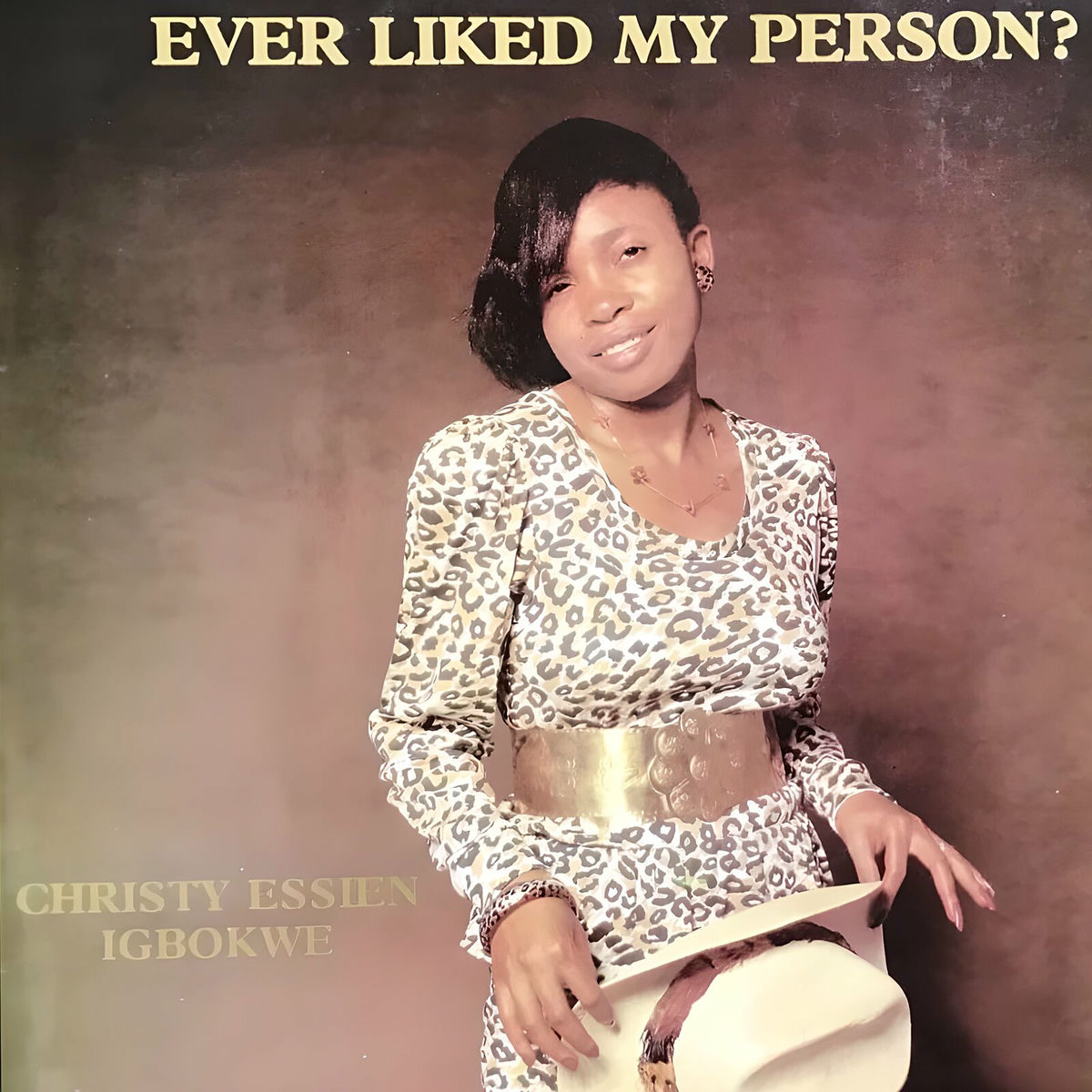
Her music continued to grow, flowing into It’s Time (1982), Taking My Time (1986), Hear the Call (1990), and Mysteries of Life (1992). Each album layered experience upon experience, a musical palimpsest where love, discipline, hope, and societal conscience intertwined. Her compositions were maps for living, showing children and adults alike that values were not abstract—they were lived, sung, and remembered. Across languages—English, Igbo, Yoruba, Hausa, Ibibio—her message remained steadfast: a song can be both a melody and a moral compass.
Christy’s artistry was not only in the notes she sang but in the way she lived the craft. She became a bridge between generations, a mentor to younger musicians, and eventually the first female president of the Performing Musicians Association of Nigeria. In every decision—whether in studio precision, lyrical clarity, or public leadership—she anchored professionalism to principle, proving that music, like life, is most powerful when it carries integrity as its pulse.
In listening to Christy Essien-Igbokwe, one does not merely hear music; one steps into a river of sound and values, a current that educates, uplifts, and endures. Seun Rere was only the opening stanza of a life-long composition, each album and song adding depth, each performance echoing with the ethical and cultural weight of a life dedicated to harmonizing artistry and moral guidance.
Cultural Legacy and Societal Influenced
Her influence extended beyond individual households. Schools and community gatherings adopted her music as a subtle form of education. Singing Seun Rere became a ritual, a ceremony of moral orientation, where children learned obedience, respect, and ethical reasoning without lectures, only melody. Christy’s ability to anchor societal principles in music turned her art into a communal conscience, a vessel through which Nigerian cultural norms could travel across generations.
In an era when formal child psychology was not widely disseminated, Christy’s songs acted as psychological scaffolds, teaching patience, empathy, and cause-and-effect thinking. Listeners internalized lessons on human behavior and societal expectation almost unconsciously, proving that music could shape both heart and mind simultaneously.
In this sense, her legacy is invisible yet pervasive. Christy Essien-Igbokwe’s work did not merely chart a career in the industry; it crafted a moral architecture within Nigerian culture, embedding ethical literacy into rhythm, repetition, and melody. Long after the final note faded, her music continues to resonate in the ethical memory of a nation, proving that artistry and social conscience can coexist, and even guide, society quietly but indelibly.
Personal Life and Marriage: Foundations Behind the Music
Christy Essien-Igbokwe was married to Nnamdi Essien-Igbokwe, and together they had children. While much of her family life remained private, it is known that she balanced her career with her responsibilities as a mother and spouse, a challenge common to many professional women in Nigeria’s music industry. Her ability to maintain both public artistry and private family commitments contributed to her image as a disciplined and dedicated professional.
Her children grew up during a period when she was actively recording and performing, suggesting that the values expressed in her songs—respect for parents, ethical behavior, and guidance—were mirrored in her lived experience. Interviews with colleagues and retrospectives confirm that she often prioritized family alongside her professional obligations, integrating personal life and career in practical ways.
Christy’s marriage and family environment provided context for her socially conscious music. While her songs like Seun Rere addressed broader societal and moral lessons, the private example of her own household reinforced the themes she communicated publicly. This alignment between personal life and professional output underscores her commitment to consistent moral and cultural values in both spheres.
Even in later years, she remained a figure whose life bridged public performance and private responsibility. Her ability to maintain a career spanning decades while nurturing a family reflects the practical realities of balancing artistic ambition with personal commitments, offering a factual framework for understanding the lived experiences behind her music.
Mentorship and Influence on Younger Musicians
Christy Essien-Igbokwe’s impact on Nigerian music extended beyond the recording studio, flowing like a quiet river of guidance through the careers of younger artists. When she became the first female president of the Performing Musicians Association of Nigeria (PMAN) in 1989, she did not merely occupy a title—she became a moral compass and professional lodestar, steering fledgling musicians through the turbulent waters of the industry.
Her mentorship took many forms: a word of advice in a bustling studio, a patient correction during rehearsals, and a public insistence that artistry must walk hand in hand with integrity. She emphasized that songs are more than sound—they are vessels of cultural memory, and that every lyric carries responsibility. Emerging artists learned from her example that deadlines, collaboration, and ethical professionalism were as essential as harmony, melody, and rhythm.
Christy’s influence was not loud or ostentatious; it was woven into the very fabric of the music scene, like threads of gold running through a tapestry. Artists of the 1980s and 1990s often spoke of her presence as a stabilizing force, a model of discipline, respect, and creative conscience. She taught that success was not merely measured in applause or record sales, but in the ability to touch lives, uphold values, and inspire the next generation.
Even after her tenure with PMAN, Christy continued to guide the industry through collaborations, interviews, and quiet counsel. Her mentorship became a living echo, influencing the ethos of Nigerian music long after the notes of her songs faded. In shaping young artists, she extended her moral and musical architecture outward—a legacy of ethics and artistry flowing seamlessly into the next generation, ensuring that Nigerian music remained both vibrant and virtuous.
Awards, Recognition, and Historical Significance
Christy Essien-Igbokwe’s career was punctuated by accolades that recognized both her artistic mastery and cultural impact. In 1980, she won the First Prize at the African Music Festival in Dakar, Senegal, a moment that signaled her emergence not just as a Nigerian icon, but as a voice capable of traversing the continent. Her success at the festival reflected a blend of technical brilliance and moral resonance, qualities that would define her entire career.


Throughout her decades-long career, Christy received numerous national honors and industry recognitions, including being celebrated as one of Nigeria’s leading female musicians of the 1970s and 1980s. These accolades were not simply for vocal prowess—they acknowledged her commitment to embedding social values into music, pioneering professional standards for female artists, and shaping the cultural ethos of her generation.
The awards, honors, and historical milestones of her career, like pebbles cast into the waters of Nigerian music, created ripples that continue to influence artists, audiences, and cultural institutions. Each recognition became a marker not just of talent, but of responsibility and integrity, a testament to the life-long dedication Christy poured into her craft. Today, her legacy is remembered not only through albums and songs but through the lasting cultural and ethical architecture she helped construct in Nigerian music.
Final Reflections: Christy Essien-Igbokwe’s Timeless Voice
Christy Essien-Igbokwe’s music is a silent mentor in every home, a moral compass in every note. With Seun Rere, she transformed ordinary moments into spaces of reflection, embedding wisdom in melody so subtle it seeps into memory before thought. Her voice did not merely entertain—it charted invisible maps of childhood, of conscience, of societal care, leaving trails that generations continue to follow.
In an industry often swayed by fame and fleeting trends, Christy remained anchored in integrity and purpose. Every song was a deliberate act of guidance, a bridge connecting the personal and communal, the intimate and historical. She showed that artistry carries responsibility, and that music, at its most potent, is both teacher and witness.
Her legacy is not measured solely in awards, albums, or accolades—it is felt in the hum of a child learning respect, in the pause of a parent offering guidance, in the inspiration of an artist choosing values over vanity.
Christy Essien-Igbokwe’s voice lingers beyond airwaves; it is woven into the very moral and cultural fabric of Nigeria, a timeless echo that continues to instruct, console, and illuminate.