


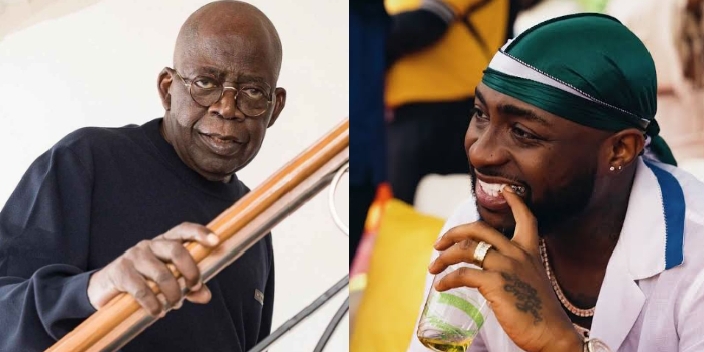
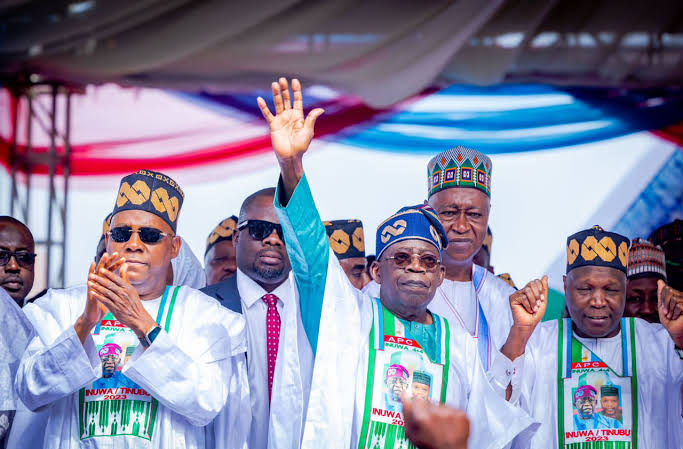
The crowd never really changes; only the stage does. In one corner of Nigeria’s sprawling cultural theatre stands a man in designer shades, smiling into the flashlights of a thousand smartphones. In another, a statesman raises his hands toward a sea of supporters, the air thick with chants that blend faith and politics into a single national rhythm. Between Davido and Bola Ahmed Tinubu lies a mirror — one that reflects the subtle dance between fame and authority, the spectacle and the system, charisma and control.
In both music and politics, dominance in Nigeria rarely comes from force alone. It comes from what can be felt but not seen — the ability to shape emotions, create symbols, and command loyalty through connection rather than coercion. It is the art of soft dominance: a mastery of influence that transcends the microphone and the ballot box.
Davido sings to millions across borders, yet his audience behaves with the fervor of a political movement. Tinubu, once the godfather of Lagos politics, built an empire of allegiance so enduring that his name became shorthand for strategic permanence. They operate in different universes — one lit by stage lights, the other by the glow of power — but both understand the same psychological equation: visibility equals control, and narrative equals survival.
The question, then, is not how different they are, but how alike. In a country where charisma often trumps structure, Davido and Tinubu embody two sides of Nigeria’s enduring truth — that to rule hearts or systems, one must first master the performance of belonging.
The Currency of Visibility
In Nigeria, to be seen is to exist. Visibility is not just fame; it is survival currency. It defines who gets heard, who gets funded, and who shapes national conversation. Both Davido and Tinubu have mastered this visibility, though through vastly different mediums.

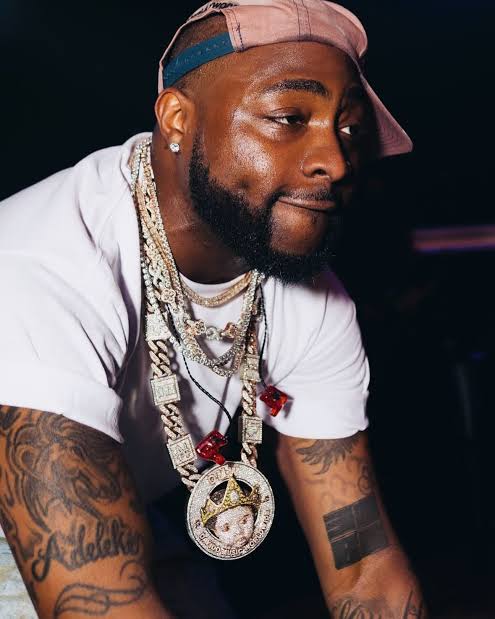
Davido’s world runs on spectacle. Every song release, every tweet, every philanthropic gesture becomes a public ritual of relevance. He doesn’t just perform music; he performs identity. His openness — the laughter, the generosity, the occasional public conflict — all form part of an emotional economy where his audience feels they own him. The power in that intimacy is immeasurable.
Tinubu’s stage, by contrast, is older, slower, more architectural. His visibility is woven through institutions, media allies, and protégés strategically placed across Nigeria’s political landscape. Yet his mastery of soft dominance lies in his ability to project presence even in absence. He built Lagos as a brand — one that carries his imprint whether or not he speaks. When his face appears on television, it is rarely just him; it is the mythology of control he has cultivated over decades.
Both understand that in a society saturated with noise, presence is power. Davido achieves it through digital saturation — by being everywhere, all at once. Tinubu achieves it through structural embedding — by placing pieces of himself in every space that matters. Visibility becomes not just image, but architecture: a form of influence sustained through attention, loyalty, and emotion.
Networks as Kingdoms
Neither Davido nor Tinubu operates alone. Their success depends on a vast network of allies, loyalists, and enablers who translate personal influence into systemic control. These networks are their kingdoms — invisible empires built not with armies, but with loyalty and leverage.
Davido’s network thrives on social capital. His “30BG” — 30 Billion Gang — is not merely a brand; it is an informal institution of mutual elevation. From music producers to fans, every member feels emotionally attached to the Davido ecosystem. His generosity, both public and private, reinforces this bond. When he raised millions of naira for charity in 2021 through social media donations, he turned the act of giving into a demonstration of influence. People contributed not just out of goodwill but out of belonging.
Tinubu’s network, by contrast, is political architecture. It stretches from Lagos’s local government system to the presidency. For over two decades, he has built alliances that survive elections, crises, and betrayals. His protégés — from governors to senators — are extensions of his political DNA. Like Davido, Tinubu rewards loyalty with opportunity. His genius lies in converting personal relationships into institutional power, transforming gratitude into governance.
Both men understand the psychology of inclusion. To be part of their orbit is to gain status, protection, and visibility. In this sense, fame and politics operate identically: both rely on loyalty economies where the currency is not money but proximity. Their empires are not merely about followers or voters — they are about believers.

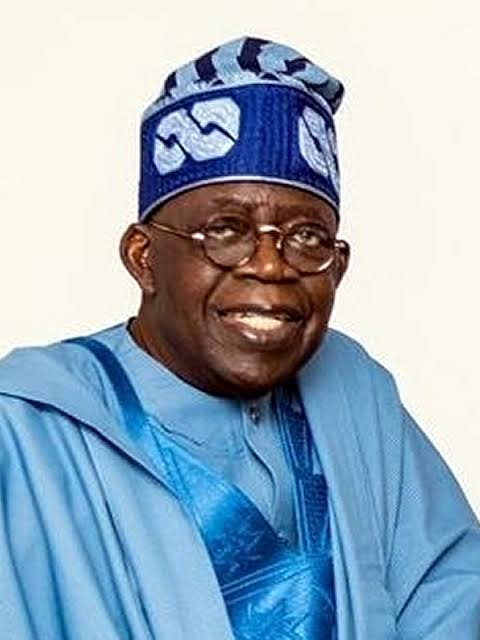
Emotional Engineering: The Subtle Power of Relatability
Soft dominance thrives on emotion. It is not enough to be admired; one must be felt. Both Davido and Tinubu cultivate relatability as a strategic weapon — the illusion that they are one of the people, even when their realities are far removed.
Davido’s relatability is rooted in contrast. As the heir of one of Nigeria’s wealthiest families, his fame might have been doomed by privilege. But he turned that privilege into paradox — the rich boy who still dances barefoot, who laughs loudly, who gives freely. His fans see not wealth, but warmth. His vulnerability — whether in personal loss or public feuds — becomes a bridge to empathy.
Tinubu’s relatability, though less emotional, operates on symbolic logic. His narrative as a self-made political strategist, persecuted yet unbroken, resonates deeply in a country that romanticizes resilience. His health struggles, often whispered about, are reframed as endurance; his silence, as wisdom. Like Davido’s music, Tinubu’s political presence is emotional theatre — every gesture calculated to project humanity within power.
This emotional engineering builds trust, and trust sustains dominance. Both men perform accessibility while maintaining control. They let people feel close, but never close enough to threaten the hierarchy. It is the oldest trick in the architecture of soft power: make the masses believe they are participants, not spectators.
The Architecture of Myth
Dominance requires mythology — stories that outlive the individual. Both Davido and Tinubu have mastered the art of self-mythologizing.
Davido’s myth is youthful invincibility. Every album, controversy, or tragedy becomes part of a larger narrative — a phoenix rising, again and again. His life mirrors the dramatic arcs of the Afrobeats generation: success built on emotion, resilience, and digital narrative control. His fans see him as living proof that authenticity can triumph over cynicism.
Tinubu’s myth is strategic immortality. His story is the Lagos model — a symbol of calculated survival in Nigeria’s most competitive political arena. Each political cycle renews his legend: the man who never really leaves the game, even when the board changes. His mythology feeds on ambiguity — the more unanswered questions about his origins or health, the more his legend deepens.
Both myths serve the same function: to turn flesh into symbol. In Nigeria, myths are not lies; they are tools of coherence. They make influence predictable, transferable, and expandable. Whether it’s a campaign rally or a stadium concert, both men perform not just as individuals but as symbols of continuity — Davido as the eternal youth, Tinubu as the eternal strategist.
Power, Philanthropy, and the Optics of Generosity
In Nigeria, giving is never just giving; it is a performance of control. Philanthropy, both in entertainment and politics, functions as a public ritual that reinforces hierarchy.
When Davido donated the N200 million he raised online to orphanages across Nigeria, he transformed personal goodwill into a national spectacle. His act blurred the line between charity and influence. For millions, it reaffirmed his image as Nigeria’s benevolent prince — a man whose wealth circulates, whose fame feels shared.


Tinubu’s philanthropy follows a more institutional route. From scholarships to micro-loans, his influence in Lagos politics has long been lubricated by benevolence. But behind every gift lies a strategic calculus: generosity as political insurance. Each act of giving sustains a network of gratitude that feeds back into loyalty.
Both men understand that the optics of generosity are more powerful than generosity itself. In Nigeria’s emotional economy, public kindness becomes a form of currency — a visible demonstration of worth. They don’t just give; they stage the act of giving, transforming empathy into influence.
The Digital Crown and the Political Throne
The twenty-first century has redefined dominance. Influence now thrives where attention lives — online. Davido’s kingdom is digital, his reach amplified by algorithms and fan militias who defend his brand with the zeal of political loyalists. He doesn’t need traditional media; his every post is a press release, every tweet a headline.
Tinubu, though older, has adapted to this terrain. His 2023 presidential campaign revealed a deep understanding of digital warfare — memes, viral hashtags, and youth engagement became part of his political strategy. His team understood that visibility on the internet equates to legitimacy in the streets.
Both operate within parallel ecosystems of digital loyalty. Davido’s “Stand Strong” becomes as symbolic as Tinubu’s “Emilokan” — catchphrases turned into collective psychology. In both cases, the people amplify their myth.
The digital age has thus dissolved the boundary between celebrity and politician. Influence now flows through the same channels — the screen, the algorithm, the story. Davido and Tinubu are avatars of the same principle: in a distracted world, whoever controls the narrative controls the people.

Legacy and the Illusion of Control
True dominance, however, is not in fame or power itself, but in how long one remains visible after absence. Both Davido and Tinubu are haunted by the same paradox: the fear of irrelevance.
For Davido, the challenge is creative reinvention. Fame ages quickly in the digital era. Each new artist threatens to rewrite the cultural order. Yet, like Tinubu, Davido survives by reinventing symbols — his family legacy, his grief, his success stories — into fresh emotional capital.
Tinubu’s struggle is physical and historical. Having ascended to the presidency, his dominance now faces the erosion that comes with scrutiny. Yet, his networked structure ensures continuity beyond self. Like Davido’s 30BG, his political machine is self-sustaining — designed to survive even if its leader fades.
Both understand that legacy is not memory; it is replication. They have each built systems — musical, political, digital — that reproduce their influence. Soft dominance, at its core, is the ability to remain present even when unseen.
Closeout — The Mirror of Power
When Nigeria looks at Davido and Tinubu, it sees not just two men but two reflections of itself — a nation where charisma is currency, where narrative replaces structure, and where visibility is the most enduring form of control.
Davido rules emotions; Tinubu rules institutions. One commands applause, the other commands allegiance. Yet both embody the same principle: the power to move people without touching them, to lead without overt force. That is the true art of soft dominance.
In a country where spectacle often precedes substance, their legacies intertwine like mirrored reflections — one dazzling with rhythm, the other anchored in strategy. Fame mirrors power, and in that reflection lies Nigeria’s ongoing story: a dance between visibility and control, performance and permanence.
For all their differences, both Davido and Tinubu understand the same ancient truth — that leadership, whether on stage or in politics, is ultimately about belief. And in Nigeria, belief remains the most powerful currency of all.