


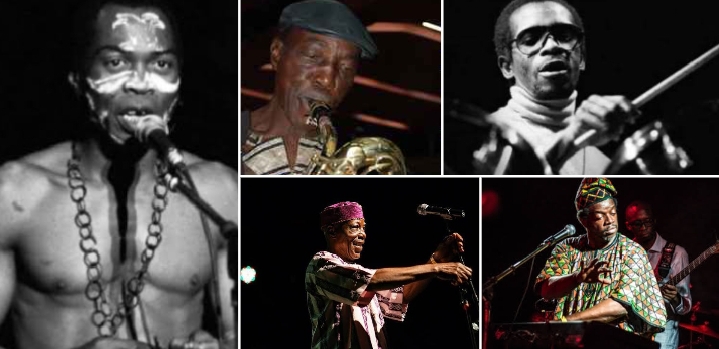
Lagos at dusk had a rhythm of its own—pulsing, uneven, alive. Streetlights flickered along the Third Mainland Bridge as the last ferryboats made their rounds, carrying men in sharp suits, women balancing baskets of food, and musicians carrying dreams heavier than their instruments. The air was thick with the scent of jollof rice, exhaust fumes, and the electric promise of music that could awaken a nation.
In the heart of the city, in dimly lit clubs along Victoria Island and the crowded apartments of Surulere, legends of Afrobeat converged, each bringing their own beat, their own story. This was not just a meeting of musicians—it was a collision of history, politics, and culture. Here, in the cracks of Lagos’ neon and dust, Afrobeat was born, contested, and immortalized.
Yet, what happened in these rooms was never fully chronicled. The collaborations, the confrontations, the unrecorded improvisations—these left a residue of memory, whispers of genius, and a waiting history that would shape generations. To understand Lagos at dusk is to understand the pulse of Nigeria itself: chaotic, brilliant, and unapologetically alive.
The Lagos Soundscape: City as Instrument
By the early 1970s, Lagos had become more than a city; it was a symphony of contradictions. Markets like Balogun and Onitsha bustled under the sun, while musicians retreated into backrooms, crafting sounds that would defy Western labels.

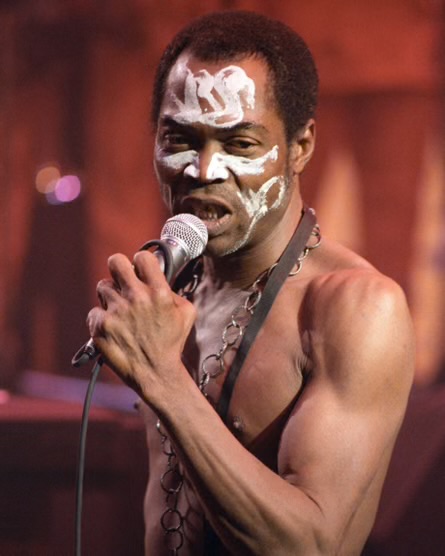
Fela Kuti’s apartment-turned-studio on Agege’s Lagos mainland became a rehearsal ground for experimentation. The clatter of car horns, the shouts of street vendors, and the relentless tempo of the city became more than background noise—they were part of the music itself.
Afrobeat thrived in the tension of Lagos. Tony Allen, Fela’s drummer, often described the city as both muse and adversary. Its unpredictability forced innovation. A missed gig due to power outages, a sudden military raid, or a chance encounter in a crowded nightclub could lead to an unrecorded riff that later became legendary. Musicians learned to listen not just to each other but to the city—the footsteps, the sirens, the laughter of children chasing soccer balls in the dusk light.
The clubs themselves were crucibles of history. Shrine, Fela’s own Lagos venue, was more than a nightclub. It was a political theater, a laboratory, a home for dissidents and dreamers alike. Here, ideas were exchanged with as much intensity as instruments. Conversations about corruption, revolution, and identity intertwined with saxophone solos and polyrhythmic drum patterns. For every legendary performance captured on record, dozens of ephemeral jams existed only in memory—fleeting, raw, and transformative.
By dusk, the Lagos skyline seemed to hum in harmony with Afrobeat. Neon signs flickered like staccato notes, ferries rocked in sync with basslines, and the smell of roasted plantains became a percussion of its own. The city didn’t just host Afrobeat; it was Afrobeat, and its streets were both stage and audience.
Fela and the Architects of Revolution
Fela Kuti was more than a musician; he was a force. In Lagos at dusk, his presence could be felt before he entered a room. A conversation with Fela was both intimate and interrogative—he demanded attention, respect, and honesty, often at the same time. The meetings he held with collaborators were rarely about fame; they were about crafting a sonic language capable of addressing political oppression and cultural identity.
The music reflected the times. Songs about corruption, poverty, and freedom weren’t abstract—they were lived experiences. And Lagos, with its sprawling chaos, provided the raw material. Fela’s lyrics often referenced the streets, the politicians, the everyday struggles of Nigerians, while the improvisational solos carried the emotions words could not capture. In this sense, every dusk in Lagos was a rehearsal for revolution, every jam session a blueprint for history.
The Nightclubs: Crucibles of Collaboration
The nightlife of Lagos in the 1970s and 1980s was both glamorous and gritty. Clubs like The Shrine, Crossroads, and Apollo became legendary not just for performances but for the conversations and confrontations that occurred offstage. Musicians, producers, and patrons mingled in a space where influence was as much about who you knew as what you could play.
At The Shrine, political dissidents rubbed shoulders with visiting artists from across West Africa. It was here that ideas of pan-Africanism, resistance, and modernity collided with the rhythms of highlife, jazz, and funk. Fela’s shows were long, often lasting four to six hours, yet every minute was carefully designed to evoke emotional and political engagement. Collaborators often arrived uninvited, bringing their own instruments, ideas, or improvisations, which sometimes led to explosive, once-in-a-lifetime performances.
These nights were incubators for innovation. Trumpet solos would shift tempo mid-song, drummers would respond to the crowd rather than the score, and dancers would create movements that musicians then echoed musically. In essence, Lagos became a living, breathing orchestra, with the club as conductor and audience as co-creator.
The city itself was an uninvited participant. Power outages, police raids, and sudden rainstorms would disrupt performances, forcing adaptation in real time. For Afrobeat legends, these challenges were not obstacles—they were opportunities to test creativity under pressure. By dusk, Lagos’ electricity flickered unpredictably, fans cheered in rhythm with streetlamps, and the music absorbed every vibration, every interruption, transforming adversity into art.
Crossroads and Encounters: Legends Beyond Fela

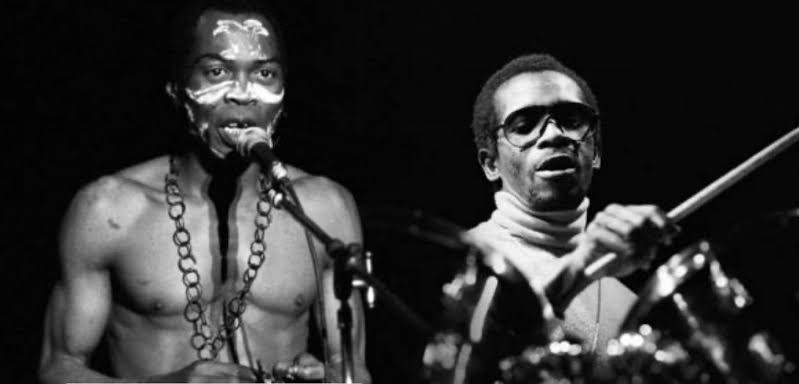
Lagos at dusk was more than a stage—it was a crucible where Afrobeat legends collided. Alongside Fela and Tony Allen, Orlando Julius’ arrival from Ibadan often sparked spontaneous collaborations.
Known for blending highlife with early Afrobeat rhythms, Julius brought melodic sensibilities that challenged Fela’s improvisational structures. One evening at The Shrine, a jam between Julius’ saxophone and Fela’s horn section produced a rhythm that reportedly inspired several unrecorded compositions—an example of Lagos’ serendipitous musical laboratories.

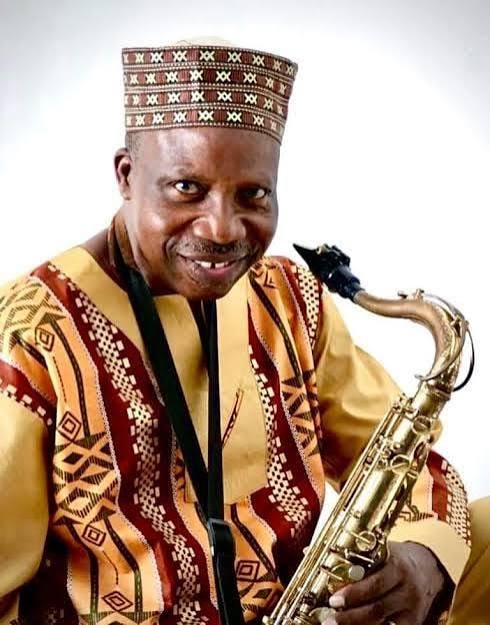
Seun Kuti, barely a teenager in the 1980s, often watched these sessions unfold from the wings. Though quiet and observant, he absorbed the tension, the energy, and the improvisational daring of the adult musicians. His father’s political fervor, combined with Tony Allen’s relentless drumming, became a blueprint for his later career. Stories from that era recount Seun sneaking onto the stage to mimic keyboard riffs, a gesture that symbolized the unbroken chain of Lagos Afrobeat knowledge passing from one generation to the next.

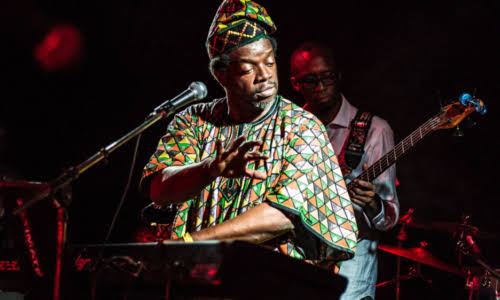
Dele Sosimi, another keyboardist of the era, added harmonic and melodic depth to the jam sessions. His fingerprints are all over Lagos’ improvisational culture: when Fela experimented with tempo shifts, Sosimi responded instantly, adjusting chord progressions mid-performance. Collaborations like these often went unrecorded, yet they were formative in defining the complex polyrhythms now recognized as Afrobeat’s signature.
Lekan Animashaun, who doubled as an arranger and performer, mediated many of these encounters. His meticulous attention to rhythm and harmony kept the chaotic energy of Lagos nights from tipping into disarray.

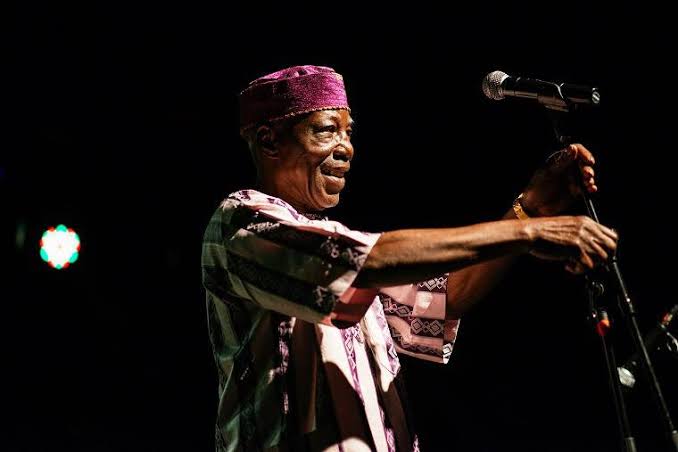
Female vocalists, though fewer in number, also contributed—pioneers like Bimbo Akintola added call-and-response textures, grounding the music in Lagos’ street vernacular. Each interaction, whether between giants like Fela and Julius or between a teenage Seun Kuti and a seasoned drummer, left a trace in the city’s cultural memory.
Improvisation as History: Unrecorded Moments with Multiple Voices
The improvisational essence of Afrobeat thrived precisely because it drew from multiple creative forces. A jam session in Surulere might feature Tony Allen laying a polyrhythmic foundation, while Dele Sosimi’s keyboards added a melodic counterpoint. Fela’s horn would slice through the texture, Orlando Julius’ highlife-infused riffs dancing around it, and Bimbo Akintola’s vocal lines punctuating the chaos. These were moments that history rarely captured, but the participants remembered vividly.
Improvisation was a living dialogue. One night, a sudden power outage in The Shrine forced musicians to play acoustically. According to oral accounts, the resulting session lasted nearly two hours, giving rise to rhythms and motifs that would later influence recorded tracks. Such events underscore that Afrobeat’s evolution was not just a matter of studio perfection—it was survival, adaptation, and expression under pressure.

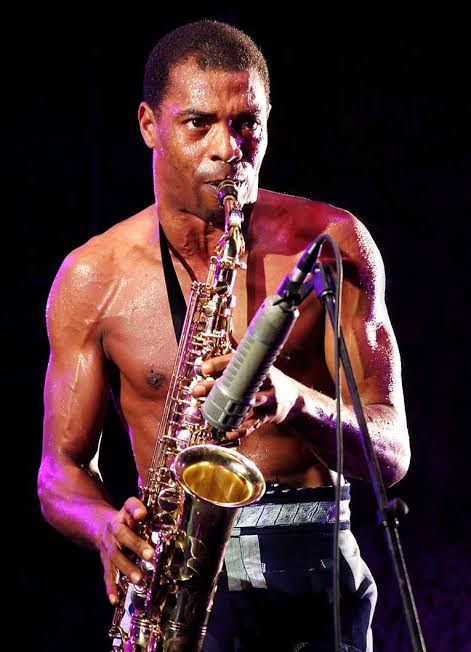
Even Femi Kuti, then in his formative years, learned to respond musically to political and environmental cues. A stray police patrol outside the club could trigger changes in tempo, dynamics, or lyrical emphasis. These sessions taught young musicians that improvisation was both an art and a strategy—a way to navigate the unpredictable rhythms of Lagos life while crafting music that resonated beyond the city’s limits.
Politics, Rebellion, and the Extended Lagos Dusk Ensemble
Political consciousness was inseparable from the music. Beyond Fela’s leadership, the ensemble of Afrobeat legends collectively shaped Lagos’ sonic resistance. Dele Sosimi later recalled nights when the band’s extended lineup would incorporate subtle references to corruption, government abuses, and pan-African unity into spontaneous musical motifs. The city itself seemed to respond, its chaos mirrored in the music’s intensity and unpredictability.
Femi Kuti’s early participation in these politically charged sessions demonstrated the intergenerational dimension of Lagos’ musical rebellion. He absorbed not only rhythms but the courage required to perform under constant threat of police raids. Orlando Julius’ contributions added a diasporic perspective, connecting Lagos to wider West African struggles. Female vocalists and background musicians reinforced the communal nature of resistance, proving that Afrobeat’s message was collective rather than individual.
The dusk soundtrack of Lagos became a political instrument. Each club performance, each street-side rehearsal, was a rehearsal for the real-life battles outside—the city’s streets, markets, and government offices. The music wasn’t merely entertainment; it was commentary, protest, and cultural assertion. The contributions of every legend in these moments reinforced the idea that Lagos itself was both muse and co-creator, shaping not just sound but social consciousness.
Legacy: Afrobeat’s Living Continuum
The impact of this extended constellation of legends is evident in contemporary Nigerian and global music. Burna Boy, Wizkid, Antibalas, and other modern artists openly acknowledge the influence of Tony Allen’s drumming, Fela Kuti’s political daring, Orlando Julius’ harmonic innovations, and Dele Sosimi’s improvisational mastery. These connections reveal that Afrobeat’s legacy is not static—it is continuously evolving, informed by the improvisations and collaborations that first echoed through Lagos at dusk.
Today, Lagos’ streets and clubs still vibrate with the spirit of those encounters. Young musicians absorb lessons once transmitted orally: how to adapt to chaos, improvise in real time, and incorporate political and social consciousness into music. These practices, rooted in decades of unrecorded sessions, are the true heritage of Afrobeat.
The city itself remains a living archive. Its dusk hours, when the neon flickers and ferries glide across the lagoon, still host the rhythm of improvisation. Every jam, every spontaneous collaboration, every political riff resonates in the modern cityscape, proving that Lagos’ Afrobeat history is alive, waiting, and ever-present.
Closing Thoughts: The Waiting History of Lagos’ Dusk
Lagos at dusk remains both witness and participant. It holds the traces of every unrecorded session, every chance encounter, every act of political defiance embedded in its streets, alleys, and nightclubs. The city’s pulse—chaotic, relentless, and alive—continues to shape musicians and audiences alike.
History, in Lagos, is not confined to books or recordings. It is layered in the sounds of horns and drums, the laughter of street children, and the hum of traffic that blends with every beat. Afrobeat legends met here, collaborated, clashed, and improvised, leaving behind not a static archive, but a living memory that continues to shape Nigerian music, culture, and identity.
The dusk may fade, but Lagos never stops listening. Every night, the city waits, ready to transform chance encounters into rhythm, conflict into harmony, and fleeting improvisation into history. In that sense, Lagos at dusk is not just a time or place—it is a living testament, where Afrobeat legends met and left history waiting.