



The applause is still echoing when the silence begins to roar. Every performer knows that moment—the shift from the blinding stage light to the dim corridor where the sound of your own breath becomes the only audience left. For Nigeria’s singer-actors, that silence is never simple. It’s heavy, alive, charged with the memory of all the versions of themselves they’ve had to play in a country where performance is both profession and survival.
In the blur of fame, they learn early that Nigeria does not let stars rest inside one box. You can sing, act, dance, host, influence—because the culture demands that talent must never sleep. Yet, what begins as versatility slowly becomes a fracture. The same face that belts out music about love and triumph must the next month embody heartbreak or betrayal on screen. The body becomes a corridor of contradictions, the mind a script rewritten by every role. Somewhere between melody and monologue, the real self starts to retreat.
It is easy to believe that the singer-actor lives a golden life: cameras flashing, collaborations multiplying, fans chanting names at airports. But beneath that public rhythm lies a quieter, more complicated beat. Nigeria’s entertainment world, vibrant as it is, breeds a peculiar form of exhaustion—one that does not come from overwork alone but from over-existence. To live twice in public, to perform twice for survival, means carrying two mirrors that never agree on which reflection is true.
And yet, beneath the glamour lies an ancient need—to be heard, seen, and believed. This story is not about fame; it’s about survival through the madness of visibility.
Origins of Dual Performance in Nigeria
Long before the rise of music charts and cinema screens, Nigeria was already a nation of born performers. The singer-actor, as we know them today, was not a modern invention but a cultural inheritance — a descendent of the griots, masqueraders, and traveling dramatists who stitched music, dance, and storytelling into one continuous act of survival. In pre-colonial Yoruba, Igbo, and Hausa societies, performance was not merely entertainment; it was language, history, and memory. Every song carried a story. Every story carried rhythm.
When Hubert Ogunde toured with his troupe in the 1940s, he was not just building Nigeria’s first commercial theatre — he was defining the first psychological template for the performer who lived many lives at once. Ogunde’s plays demanded song and dialogue, dance and drama, spirituality and satire, all bound in one living frame. Those who followed — from Duro Ladipo’s mythic epics to Moses Olaiya’s comedic genius — learned that to move a Nigerian audience, one must sing their truth and act their struggle simultaneously. The body itself became a bridge between narrative and melody.

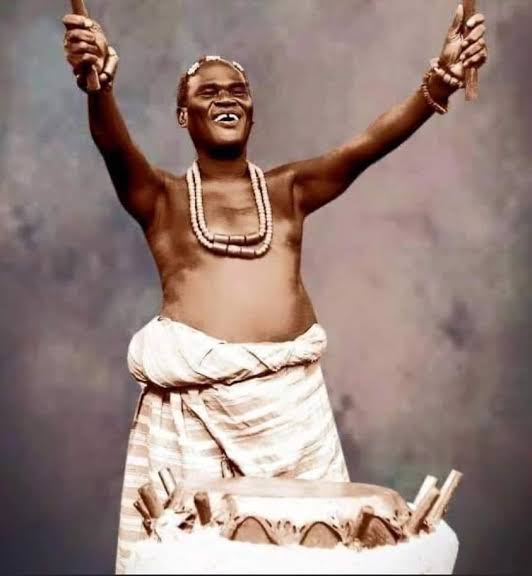
By the time television arrived in the 1960s and film in the 1990s, that legacy had evolved into something more commercial but no less spiritual. The Nigerian performer was expected to be total — a vessel of voice and expression, laughter and lament. For the Yoruba travelling theatre stars who transitioned to screen, like Baba Sala, singing was a natural extension of acting; for the later generation of singers like Onyeka Onwenu, Julius Agwu, and Pasuma, acting became the echo of their music. The two arts refused separation because the Nigerian imagination had never learned to separate them.
Even the church, one of the nation’s most enduring stages, contributed to the psychology of duality. The choir stand and the pulpit functioned like parallel theatres, where emotion was performed in song and story alike. Many of today’s singer-actors — from Banky W to Chidinma Ekile — found their earliest scripts between hymns and sermons. In those sacred beginnings, performance was still pure: a calling, not a career. But as the years unfolded and the industry expanded, that same calling began to demand constant proof. Fame became both affirmation and interrogation.
This dual legacy is not merely historical; it is emotional architecture. Every Nigerian singer-actor today stands on the shoulders of those early performers who blurred the line between song and story. But they also inherit the same burden — a beautiful curse passed down through performance itself. The expectation to be everything, everywhere, all at once.
And so, the stage keeps expanding, while the self keeps shrinking — quietly, invisibly, behind the applause.
The Performance That Never Ends: Identity and the Split Self
For the Nigerian singer-actor, the stage is not just a place of work — it is an endless mirror. Every performance multiplies the self, reflecting versions of the artist that the world clings to long after the act is over. The irony is brutal yet familiar: the more they perform, the less they belong to themselves.
In a society that demands resilience, visibility becomes a moral code. You must stay relevant, you must stay loud. You must post the studio session at midnight, then appear on set at dawn. You must give the illusion that fame does not exhaust you — that the applause is enough to feed the body and silence the doubt. But behind every performance, another version of the self lingers in shadow: the tired, unseen one who remembers when art was still joy and not endurance.


The human mind is not built to live in constant duality, yet Nigeria’s entertainment culture insists on it. The singer-actor’s day begins with melody and ends with monologue; the heart beats to both rhythm and dialogue. The voice that once sang freely now carries dialogue like an extra weight. Every creative act becomes an act of translation — emotion into performance, performance into survival. Somewhere in the middle, authenticity begins to erode.
Psychologists describe this as “identity diffusion” — the slow blur between one’s public and private selves. In the Nigerian context, it carries cultural weight. Here, identity is communal; the performer does not belong solely to themselves but to family, fans, sponsors, and even tribe. To step away from the spotlight is seen not as rest but retreat, almost betrayal. So the singer-actor learns to layer masks: the confident one for interviews, the humorous one for sets, the vulnerable one only when the script allows. They act even when the camera isn’t rolling.
Social media deepens the fracture. It transforms the stage into an eternal theatre with no intermission. Likes become applause; silence becomes failure. The Nigerian singer-actor cannot afford to vanish — because disappearance equals irrelevance, and irrelevance means the death of both careers. This psychological treadmill ensures that the self is never still. To pause is to fall behind. To rest is to risk being replaced. Every moment becomes performance; every breath rehearsed.
Some embrace it as destiny. Falz turns political satire into music and film, switching effortlessly between character and critique. Adesua Etomi-Banky W blends song and screen into one shared narrative of love and partnership. Others struggle quietly with the pressure of being multi-voiced, multi-faced. The performance becomes not expression but defense — a way of keeping the world from asking what lies beneath the smile.
It’s not that these artists don’t know who they are; it’s that they are forced to be so many things at once that the “who” becomes fluid, shifting. One moment, the nation’s sweetheart; the next, a misunderstood auteur. They must constantly recalibrate identity to match audience expectation. The Nigerian entertainment ecosystem thrives on reinvention — a beautiful, brutal cycle that rewards adaptability but punishes vulnerability.


This is the hidden psychology of the singer-actor’s fame: the stage never ends. Even when the scene cuts, even when the song fades, they remain inside the character — the public version that can’t stop performing. The self becomes a script written by others. The real person, the one who began this journey in a choir or classroom, is slowly edited out of the narrative.
And yet, within this constant fragmentation, something remarkable survives — a stubborn heartbeat that refuses to die out. Beneath the rehearsed smiles and curated feeds lies a human truth: they keep performing not just for fame, but to remember the feeling of being alive. For the Nigerian singer-actor, performance is both wound and medicine — the only language left for those who no longer have the luxury of silence.
The Loneliness of Dual Stardom
Fame, in Nigeria, is loud. It announces itself in flashing cameras, in the rhythm of crowd chants, in airport selfies and red-carpet lights. But the silence that follows it — that peculiar, echoing quiet when the crowd has gone — is far louder. For singer-actors, this silence can feel like an abyss. It is in this hollow space, between visibility and solitude, that the psychological cracks begin to show.
When the stage lights dim and the make-up is wiped off, what remains is not always peace. Sometimes it is a ringing emptiness — a kind of post-performance vertigo. The Nigerian singer-actor spends so much time becoming others that returning to themselves feels foreign. The applause that once affirmed them now lingers like a ghost, demanding repetition. The performance must continue, even when there is no audience left to watch.
Loneliness here is not simply the absence of company; it is the absence of genuine recognition. Nigeria’s entertainment ecosystem celebrates success but rarely intimacy. The singer-actor’s world is filled with people — managers, stylists, producers, fans — yet few of them truly see the person behind the persona. Friendship becomes conditional, conversation transactional. Even love begins to sound like dialogue from a script. Fame transforms relationships into performances too, and soon, every connection feels rehearsed.
The pressure to remain perfect deepens the solitude. Vulnerability is currency no one trusts. A moment of public weakness — a tear, a confession, a misstep — becomes headline fodder. So the singer-actor learns emotional discretion, hiding fragility beneath humour, style, or spirituality. They become fluent in evasion. In interviews, they smile and say they are “grateful,” even when the silence after each show feels unbearable. The world loves their strength, but it is their exhaustion that tells the truer story.
The paradox is cruel: the same visibility that elevates them also isolates them. The more successful they become, the smaller their circle of truth grows. Every room they enter is bright but airless, filled with people who know their name but not their ache. At night, the quiet can turn heavy — a reminder that applause fades faster than pain. Many retreat into their phones, scrolling through validation to replace connection, but the glow of the screen only deepens the distance between who they are and who they’re seen to be.
There’s also the cultural dimension — the unspoken expectation that Nigerian celebrities must always appear grateful, even under strain. To complain about pressure is to risk being called proud or ungrateful. The culture that built them also binds them; it glorifies hustle but rarely permits healing. Depression hides behind captions of joy. Anxiety dresses in designer fabric. The show must go on — not because they want it to, but because the industry punishes stillness.
Some find refuge in their art. Writing, composing, or acting becomes therapy in disguise — a space where the real voice can whisper beneath the character’s lines. Others retreat into faith, solitude, or even silence itself, trying to remember the first moment they fell in love with creation before fame turned it into a cage. Yet even there, the loneliness lingers — not as absence, but as an ever-present shadow that follows them from set to stage, from studio to screen.
The loneliness of dual stardom is not easily cured because it is woven into the structure of visibility itself. Every spotlight has a blind spot, and that is where many Nigerian singer-actors now live — between the noise and the nothing. It is there, in that half-lit place, that their truest selves wait quietly, wondering when it will be safe to be seen again.
Why Nigerian Stars Can’t Stop Performing
In Nigeria, talent alone does not sustain a dream — survival does. Beneath the glamour of fame lies a hard, relentless economy that never sleeps. Every show, every endorsement, every film role is more than creative expression; it is a transaction. To pause, to breathe, to rest — that is to risk invisibility. In a market as volatile as Nigeria’s entertainment landscape, singer-actors learn early that consistency is currency, and silence is a luxury few can afford.
Behind every performance is a calculation. A song must trend; a movie must go viral. The algorithm has replaced intuition, and content is the new audition. The Nigerian singer-actor wakes up thinking not only about melody or emotion but metrics — views, downloads, engagement. The art of creation is now entangled with the mathematics of survival. Every project must serve the next, every post must sustain the myth. The performance extends beyond the camera; it spills into social media, interviews, and daily life. Even authenticity has become a product — a brand of its own.


What few understand is the economic precarity hidden beneath celebrity shine. Nigeria’s entertainment industry, for all its cultural power, remains largely unstructured. Contracts are fluid, payments delayed, promises broken. For every superstar who commands millions, dozens more perform for exposure or unpaid credit. The singer-actor learns to diversify not out of ambition but necessity — to act because singing alone won’t pay the bills, to sing because film roles come and go like seasons. The dual identity becomes not just creative choice but survival mechanism.
Even at the top, the pressure never lets up. Luxury must be maintained — not for comfort but credibility. A star’s value in Nigeria often depends on how expensive they appear. Image becomes investment, lifestyle becomes marketing. Cars, clothes, and foreign vacations are not indulgences but insurance against irrelevance. To appear ordinary is to disappear. Thus, the performance continues — not only on stage but in life itself, as if every day were another scene in a film titled Success.
The economic script is also emotional. It demands stamina, adaptability, and constant reinvention. The Nigerian audience is passionate but impatient; today’s hero can become tomorrow’s meme. Trends shift faster than seasons, and public favour is a currency that depreciates overnight. To survive, the singer-actor must reinvent not just art but self. The danger is that after too many reinventions, one forgets who the original self ever was.
The industry’s informal structure intensifies this. Few systems exist for royalties, healthcare, or mental support. When a singer-actor falls ill or fades out of relevance, the descent is swift and merciless. Fame here has no pension plan. The applause is loud, but the silence that follows can be ruinous. The economic demands that pushed them into double careers — music and film — also push them to exhaustion. They must constantly be visible, constantly performing, or risk being replaced by someone hungrier, younger, louder.
Where Nigeria’s Singer-Actors Hide Their True Selves
Every performer builds a room inside themselves — a quiet, guarded space that no one else can enter. For Nigeria’s singer-actors, that inner room is both refuge and prison. It is where the person retreats after the applause, where the voice behind the character speaks in whispers. The question is not whether they hide their true selves, but where they do — and why.
They hide in their art. Ironically, the very thing that exposes them most completely is also their greatest disguise. When a singer-actor writes a song or steps into a role, they aren’t always trying to reveal truth; often, they’re trying to contain it. The melody becomes a coded confession, the script a veiled autobiography. Nigeria’s most versatile performer doesn’t always speak directly; they translate their pain into metaphor, their longing into lyrics, their confusion into character. Behind every upbeat song may lie fatigue; behind every heroic film role, a quiet plea for stillness. Their art becomes the safest place to tell the truth without being seen telling it.
They also hide in performance itself. For many Nigerian singer-actors, the act of becoming someone else is an act of survival. To be only one self in an industry that demands constant reinvention feels dangerous — almost obsolete. So they learn to wear identities like costumes: one for the public, another for the set, another for solitude. Over time, these layers fuse. They no longer remove the mask because they fear there might be nothing left underneath. The performance spills beyond the screen — into interviews, friendships, even faith. Authenticity becomes performance too, a rehearsed vulnerability designed to appear real but never too revealing.
Some hide in faith — not out of deceit, but desperation. Religion offers a script stronger than fame, a role that seems more permanent. The gospel singer-actor bows on stage, quoting scripture not only for belief but for balance. Faith becomes their way of managing contradiction — the dissonance between human fragility and public perfection. Yet even in worship, there is performance. The audience still watches. The camera still rolls. The confession still trends. In the end, even holiness can feel like another stage.
Others hide in noise — in endless productivity, in constant motion. To stay busy is to stay invisible in plain sight. Nigerian culture glorifies hustle, and so the singer-actor learns to bury exhaustion beneath achievement. Studio sessions replace therapy; film sets replace introspection. They drown themselves in work, because silence threatens exposure. The moment they stop moving, the buried self starts whispering again, asking questions they’re too tired to answer: Who am I when I am not performing? Who would love me if I stopped producing?
Some hide in the ordinary. You can see it in how they cling to moments of domestic simplicity — school runs, Sunday jollof, quiet corners of the house where fame cannot follow. They crave anonymity like oxygen, even if only for an hour. To walk through a market unnoticed, to buy bread without selfies — these become small miracles. Their true selves breathe best in the ordinary, in those rare moments when the world forgets their name.
But perhaps the deepest hiding place of all is memory. The singer-actor often stores their truest emotions in the past — in the childhood that existed before applause, before the world demanded performance. Nostalgia becomes a shield, a soft echo of who they were before ambition turned personal into public. In interviews, when they smile and say, “I’m just grateful for how far I’ve come,” what they often mean is, I miss who I used to be. That unspoken ache — that longing for the unbranded self — is the secret heartbeat of their art.
Yet for all this hiding, there’s still a strange honesty to it. Concealment, for them, is not deception; it’s preservation. In a culture where visibility is constant and opinions unforgiving, hiding is the only way to stay whole. The Nigerian singer-actor conceals their true self not because they are dishonest, but because they understand the danger of exposure in a world that consumes identity as entertainment. To remain fully visible would be to vanish.
And so, their hiding becomes ritual. Behind every glamorous shoot, every viral song, every emotional film role lies a quiet room — sometimes a prayer closet, sometimes a car parked outside a set, sometimes just the silence between two breaths — where they can finally drop the script. It’s there that the masks fall away, and the voice that belongs to no character, no audience, no algorithm, whispers: This is me.
But only for a moment. Then the phone buzzes, the crew calls, the camera light blinks. The show resumes. The mask slides back on. And Nigeria, applauding loudly, never notices the quiet miracle it just missed — the brief appearance of a real human being behind the performance.

Leaving With This – Where They Keep What the World Can’t Touch
In the end, Nigeria’s singer-actors don’t vanish behind their performances — they retreat into them. Their true selves are not lost, only stored in quieter rooms: in the pauses between songs, in the unspoken emotions behind each role. The camera captures everything except the person behind the gaze. What they give the world is spectacle; what they keep is soul.
They have learned that in a country where fame feeds on exposure, survival sometimes means concealment. So they hide not out of fear, but out of wisdom — keeping a fragment of themselves untouched by applause, unedited by fame. And maybe that’s the real art: not the songs, not the films, but the discipline of staying human in a world that demands performance.
Where Nigeria’s singer-actors hide their true selves is not in mystery, but in mastery — the quiet mastery of holding something sacred back, so that when the lights go out, there’s still someone left to come home to.