


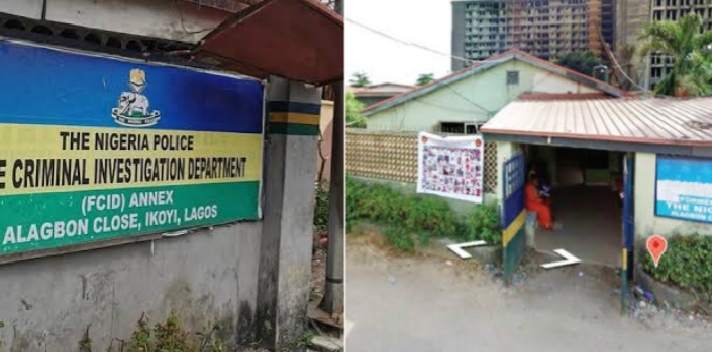
For decades, the very name of this place—Alagbon Close—was enough to drain color from a man’s face. It was not just an address on Ikoyi; it was a synonym for fear, whispered in markets, recited in newspapers, and etched into the folklore of Nigeria’s turbulent years.
In the 1980s and 1990s, if a black Peugeot or a police Land Rover pulled up outside your house, neighbors knew without asking: someone had been marked for Alagbon. Mothers clasped children tighter, traders adjusted their voices to lower tones, and writers, journalists, or activists reportedly disappeared into silence.
Alagbon Close was more than a building. It was a threshold—the line between freedom and a limbo where interrogators decided whether you would return home at all.
Human rights reports documented torture, journalists recounted lost weeks in its custody, and the public filled in the gaps with rumor. The mystery deepened because so few who entered spoke freely about their experience. Silence was both survival and sentence.
To understand Alagbon is to understand a darker chapter of Nigeria’s political history—one where fear was a weapon as sharp as any gun.
Today, its legend persists. To younger Nigerians, it is a name they’ve heard in fragments—through whispered family stories or scattered references in history books. To the older generation, it remains a scar, a reminder of nights when knocks on the door could mean a one-way trip.
And to the nation itself, Alagbon is a question mark, a mystery that still lingers: how could one address become the most feared interrogation center in West Africa?
This is the story of Alagbon Close—its rise, its shadows, its survivors, and the haunting silence that keeps its mysteries alive.
The Birth of a Fortress

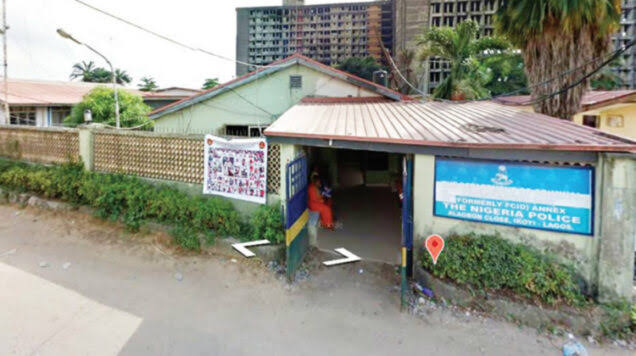
Alagbon Close did not begin as a nightmare. When the Nigerian Police Force moved its Special Investigation Bureau into the imposing building on Ikoyi in the 1970s, the intent was administrative. Lagos, then the federal capital, was expanding rapidly, and the state needed a central intelligence hub for financial crimes, political surveillance, and security investigations.
Ikoyi itself was a paradoxical setting. Known for its wealth, colonial-era homes, and proximity to the Atlantic Ocean, it was the enclave of Nigeria’s elite. To plant a security fortress here seemed, on the surface, symbolic of authority being embedded at the heart of affluence. Yet within a few years, the address Alagbon Close, Ikoyi, Lagos would transform into a name that struck fear far beyond the island’s gates.
The 1970s were years of both oil boom and political instability. Nigeria had just emerged from the civil war (1967–1970), and the military government was tightening control over dissent. Corruption cases, coup attempts, and ethnic suspicions ran through the bloodstream of the new nation. Alagbon became the state’s response—a node where intelligence and interrogation fused.
By the late 1970s, human rights lawyers and journalists began to notice a pattern: citizens detained without trial were being taken to Alagbon. Activists who opposed the military’s decrees disappeared for days or weeks into its cells. Though Nigeria returned briefly to civilian rule under President Shehu Shagari in 1979, the shadow of Alagbon remained. It was not tied to one regime; it became a permanent tool of state power.
The Military Years and the Culture of Fear
The 1980s were the decade when Alagbon Close reached the height of its infamy. Nigeria slipped into a cycle of coups, beginning with the overthrow of Shagari’s government in December 1983 by Major-General Muhammadu Buhari. The new military rulers promised discipline, a war against corruption, and national security. That war soon found its nerve center in Alagbon.
Under Buhari’s short but stern regime (1983–1985), Alagbon became a holding pen for political opponents, journalists, and critics. The infamous Decree No. 4, which criminalized any press report deemed embarrassing to the government, gave security forces legal cover to silence dissent. Journalists arrested under this decree often found themselves at Alagbon, facing interrogations designed less to extract truth than to instill fear.


But it was under General Ibrahim Babangida (1985–1993) that Alagbon became a household legend. Babangida’s rule was marked by political manipulation, annulled elections, and growing resistance movements. To crush opposition, his regime relied heavily on intelligence networks, and Alagbon Close stood at the center.
Detainees ranged from student union leaders and labor activists to suspected coup plotters and opposition politicians. Stories trickled out: men and women kept in dark, airless cells; beatings administered with electric cables; confessions extracted under duress. Organizations like Amnesty International began to document these abuses in their annual reports, placing Alagbon alongside notorious detention centers in other authoritarian states.
For ordinary Nigerians, the legend of Alagbon spread through whispered warnings. Parents cautioned their children against reckless political talk: “Be careful, or they will take you to Alagbon.” Traders invoked it when disputes got heated: “Do you want me to report you to Alagbon?” The building was no longer just an address; it had become an abstract weapon, a word that carried the weight of state violence.
Inside the Walls — Fact, Fear, and Folklore
Few places in Nigeria’s modern history occupy the same shadowy place in public imagination as Alagbon Close. Because so little was openly documented, rumor filled the vacuum.
Some detainees later spoke, cautiously, about their experiences. They described tiny concrete cells, sometimes windowless, with rusted iron bars and a single bulb that stayed on all night. Food was scarce, often a ladle of watery beans or rice. Medical care was minimal. Interrogation methods varied: some involved long hours of questioning under bright lights; others, physical intimidation.
Human rights groups alleged torture, though official records denied it. What made Alagbon truly terrifying was not just the conditions but the uncertainty. Many detainees were held without charge or trial, sometimes for months. Families often had no information on their whereabouts. Lawyers were routinely denied access. To disappear into Alagbon was to fall into a black hole of legality.
Folklore gave the place an even darker edge. Lagosians whispered that underground cells stretched beneath the Atlantic shoreline, that screams carried through pipes at night, that some who entered never came out. While many of these tales were likely exaggerated, they reflected the collective psyche: when secrecy shrouds a place of power, imagination fills the silence with horror.
The mystery deepened because even those released from Alagbon often spoke little. Some feared re-arrest; others carried psychological scars too heavy to unpack. Silence became part of its legacy.
Alagbon in the 1990s — Democracy Deferred
The 1990s were Nigeria’s most turbulent years under military rule, and Alagbon Close remained central. After Babangida annulled the June 12, 1993 presidential election—widely believed to have been won by Chief Moshood Abiola—resistance erupted nationwide. Activists, journalists, and opposition leaders were hunted, and many found themselves in Alagbon.
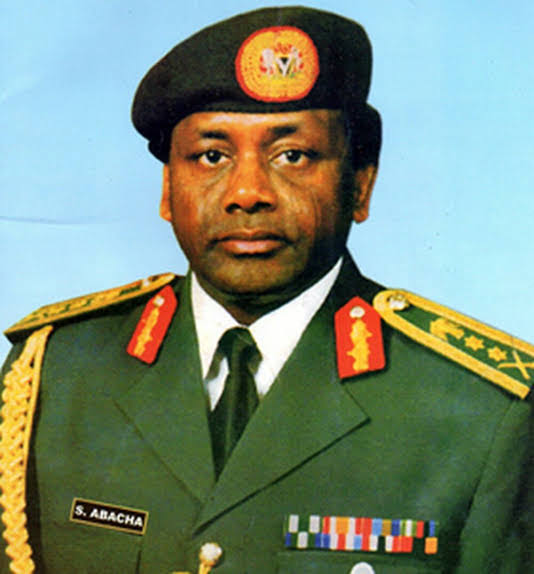
When General Sani Abacha seized power later in 1993, repression intensified. Abacha’s regime was infamous for its brutality, and Alagbon Close became one of its instruments. Members of pro-democracy groups like NADECO (National Democratic Coalition) were routinely detained there. Journalists from The Guardian, Tell Magazine, and The News were harassed, with some spending weeks in detention.
Abacha’s security forces often paired Alagbon with other notorious detention sites, including Kirikiri Maximum Prison and secret military barracks. But Alagbon’s reputation was unique: it was not simply a prison but an interrogation hub, a place where state paranoia was distilled into action.

International pressure mounted. Human Rights Watch, Amnesty International, and the U.S. State Department frequently cited Alagbon in their reports on Nigeria’s human rights abuses. Nigeria’s image abroad sank, yet at home, Alagbon’s walls stood unmoved.
The Transition to Civil Rule
When Abacha died suddenly in 1998 and Nigeria began its transition to democracy under General Abdulsalami Abubakar, followed by President Olusegun Obasanjo in 1999, expectations soared that Alagbon’s dark role would end.
To some extent, it did. The return to civilian rule meant greater press freedom, and Nigeria’s human rights record improved. Yet Alagbon Close did not vanish. Instead, it was repurposed. By the 2000s, it became associated less with political prisoners and more with financial crimes, fraud cases, and high-profile investigations.
The Economic and Financial Crimes Commission (EFCC) occasionally used the facility for interrogations, especially in its early years under Nuhu Ribadu. High-profile figures accused of corruption or advance-fee fraud (popularly known as 419) sometimes passed through its gates. For younger Nigerians, Alagbon’s name shifted slightly—from a house of terror to a house of financial scrutiny.
Still, for those who remembered the 1980s and 1990s, the name carried a chilling echo. No matter how many times it was rebranded, Alagbon could never escape its reputation as Nigeria’s most feared interrogation center.
Mysteries That Remain
Why does Alagbon Close still fascinate Nigerians today? Part of the answer lies in the mystery that surrounds it. Unlike prisons such as Kirikiri, which are widely documented, Alagbon operated in a twilight zone—officially an intelligence bureau, unofficially a dungeon. Its secrecy gave rise to myths that persist decades later.
Some mysteries include:
Disappeared detainees: Activists allege that some individuals taken to Alagbon never resurfaced. Records remain incomplete.
Underground cells: Rumors of subterranean chambers have never been conclusively proven or disproven.
Psychological scars: Survivors rarely speak publicly, leaving gaps in the narrative.
These mysteries ensure that Alagbon’s reputation endures not just as history but as folklore.
The Symbolism of Alagbon in Nigerian Memory

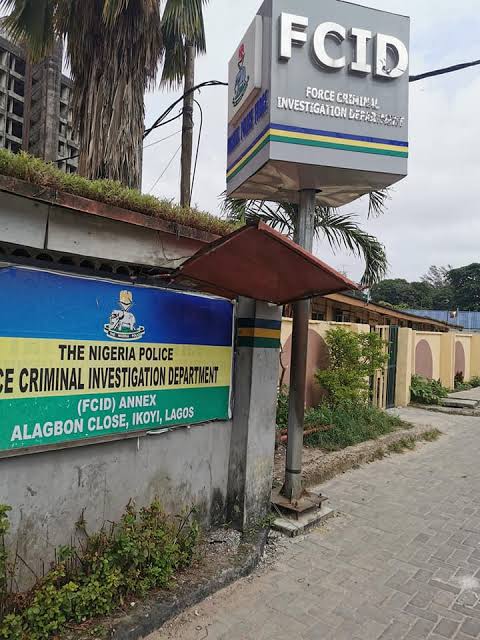
Alagbon Close symbolizes more than a building. It represents the intersection of state power, fear, and silence in Nigeria’s political history.
For scholars, it is a case study in how authoritarian regimes weaponize space. For ordinary Nigerians, it is a reminder of years when rights could be suspended overnight. For younger generations, it serves as a cautionary tale: a democracy is fragile, and places like Alagbon remind us what happens when power goes unchecked.
Closing Reflection: The Street That Still Whispers
Today, if you drive down Ikoyi and pass Alagbon Close, you might barely notice it. The street looks ordinary, lined with offices, cars, and pedestrians going about their day. The façade hides the weight of its past.
Yet for those who lived through Nigeria’s military years, Alagbon remains unforgettable. It is a scar etched into national memory, a reminder that behind quiet streets can lurk entire histories of fear. Its mysteries endure not just in documents and reports but in silence—in the stories untold, in the whispers of generations who still remember the knock on the door at midnight.
Alagbon Close may now be just an address, but its legend ensures that it will never truly fade from Nigeria’s story.