

It often begins in silence — the kind that thickens around twilight when one realizes that the familiar air may soon no longer belong to them. The room is half-packed, the mind half-ready, the heart divided between gratitude and fear. The flight ticket, printed days ago, sits quietly on the table like an unspoken promise and a confession all at once. No music, no laughter, just the dull hum of preparation and the muted sound of a life folding itself into a suitcase.
Departure, for many Nigerians, is not just travel — it is transformation. It begins as a whisper, a private resolve formed in the quiet ache of unmet dreams. Before the decision hardens, there are months — sometimes years — of imagining what life might look like elsewhere. Streets lined with order, jobs that pay on time, systems that function, nights without generators humming through sleeplessness. The idea becomes an anchor, something to hold onto when the air at home grows too heavy with disappointment.
As dusk turns to night, families gather for the inevitable farewell. There are smiles, some genuine, some rehearsed. Mothers pray louder than they ever have. Fathers say little, their silence often heavier than their words. Friends promise to stay in touch, to visit, to never forget. Yet everyone knows — and no one says — that something will change the moment the plane lifts off the Lagos runway. It’s not only a body that leaves; a part of identity departs too.


And when the plane finally ascends into the dim African sky, there is no applause. Only the low hum of engines and a cabin full of unspoken emotions. Some cry quietly; others stare through the window, tracing invisible maps of memory below. In that suspended moment above the clouds, a thousand stories of courage, fear, and faith begin — stories that will unfold in nights that whisper pain and days that hush hope.
Why Nigerians Japa
The word Japa carries more than its literal meaning — it has become the pulse of a generation seeking air beyond Nigeria’s borders. It encapsulates exhaustion, determination, and a paradoxical hope: the belief that leaving might be the only way to truly live. Behind every departure is a story of systems that failed to nurture dreams, of talent that found no soil deep enough to take root. For many, migration is not escape; it is self-preservation.
Economic hardship is the most visible reason, but not the only one. Inflation erodes dignity, unemployment mocks education, and insecurity gnaws at the edges of daily existence. The country’s brightest minds — doctors, engineers, artists, scholars — watch as effort yields little reward. The idea of “greener pastures” becomes less cliché and more lifeline, a bridge to stability and self-worth. It is a wager with destiny: to risk the unknown in exchange for the possibility of peace.
But there are quieter motives too — emotional fatigue, social pressure, and the weight of expectations. Many who japa are not merely chasing wealth; they are fleeing the suffocating predictability of stagnation. They want air that does not feel borrowed, a system that does not demand compromise at every turn. They long to wake each day believing that effort will meet opportunity, that integrity will not be punished, that merit will count.
Leaving, therefore, becomes an act of courage. It is the painful choice to unroot oneself from familiarity, to accept loneliness as the price of possibility. Behind every Instagram post of a new country lies a silent goodbye — to laughter-filled compounds, to street sounds, to the rhythm of a home that still beats within the heart. The journey begins not with footsteps, but with a decision to dream beyond borders.
Visa Processing and the Threshold of Hope
Before the plane, before the promise, there is the waiting room — that cold, fluorescent space where dreams are tested by paperwork. The visa process is not just a bureaucratic step; it is a psychological ordeal. Nigerians line up at embassies clutching folders of evidence — bank statements, certificates, letters — each page a plea for validation. Hope trembles in every heartbeat as faces meet the indifferent eyes of consular officers.
Every step of the process demands patience and precision. Application fees cost more than some monthly incomes. Appointment dates arrive months apart. Each missing document or misplaced word becomes a potential denial. The system is impersonal, but the emotions are not. Behind every form filled out in black ink is a human story: of a parent praying over receipts, of a student rehearsing answers, of a dream trying to prove its worth in a room that smells faintly of disinfectant and uncertainty.


The visa interview feels like judgment day. Questions are brief, yet loaded — “Why do you want to travel?” “Who will sponsor you?” “When will you return?” Every answer feels like a performance, every pause a threat. And then comes the verdict, delivered in a few words that can either set a life in motion or halt it entirely. Some walk out with smiles of disbelief; others leave with rejection slips that fold like heartbreak in their pockets.
When the approval finally comes, relief floods the soul. It feels like triumph, yet it is only the beginning. The process has already reshaped something inside — patience, humility, resilience. Those who make it through know the value of endurance. They step into the next chapter not as travelers, but as survivors of a system that demanded proof of their worth before granting them permission to hope.
Arrival into Silence
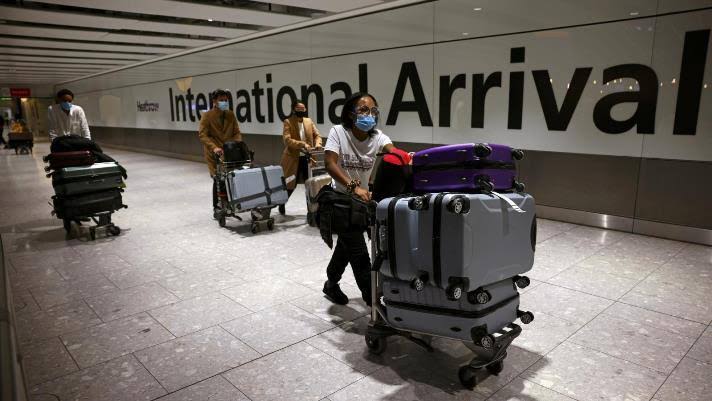
The first night abroad is always too quiet. No generators hum. No neighbors call your name. The air smells clean but cold, sterile in its perfection. The streets are organized, the lights obedient, yet something feels missing — that human chaos that once gave life texture. The silence is not peace; it is distance, the sound of being far away from everything that once defined you.
Airports abroad are deceptive in their brightness. The walls gleam, the signage is polite, the order intoxicating. Yet, beneath it all, a foreignness hums — every face unfamiliar, every word slightly delayed in comprehension. The first few days blur into a haze of paperwork, housing searches, and currency conversions. Each transaction feels like an initiation into invisibility.
Cultural shock sets in subtly, not as panic but as disorientation. The mind grasps for familiar cues — laughter, gestures, smells — and finds none. Even the sun, when it rises, feels different, colder, less intimate. The streets move with rhythm but not warmth. And somewhere in that quiet adjustment, loneliness begins to bloom, soft and persistent, like a background melody that refuses to fade.
In the early months, hope and fear coexist uneasily. There’s pride in surviving the journey, in proving something to oneself and to those back home. But there’s also the weight of realization: that the world abroad does not bend easily to one’s dreams. It observes silently, demanding adaptation without offering belonging.

Nights that Echoed Isolation
Loneliness abroad is not always dramatic; it often arrives in silence. It seeps into evenings spent scrolling through old photos or cooking meals that never taste quite right. The laughter of roommates or neighbors feels distant, disconnected. Every message from home becomes both comfort and wound — a reminder of presence lost and love stretched thin by miles.
In those nights, memory becomes a refuge. The mind wanders back to the familiar chaos of Lagos traffic, the scent of suya on roadside grills, the warmth of conversations that required no translation. Abroad, every smile must be learned, every social gesture studied. Even laughter feels foreign at first — too quick, too contained, lacking the fullness that once came naturally.
Some fill the void with work, some with study, others with endless video calls that can never replicate touch. The clock ticks differently in isolation — slower, heavier. The body adjusts to new time zones, but the soul lags behind, still anchored in the rhythm of home. And when the day finally ends, the silence becomes absolute, pressing against the walls until it feels almost physical.
Yet within that silence, something grows — endurance. The nights teach self-conversation, reflection, and strength. They whisper truths about vulnerability and resilience, about how survival is sometimes the loudest form of courage. In these quiet hours, Nigerians abroad begin to learn the delicate art of living unseen yet unbroken.
The Weight of Rejection
Rejection abroad doesn’t always arrive in harsh words; sometimes it wears politeness like perfume. The “we’ll get back to you” after an interview that never calls again. The “you’re overqualified” that really means “you’re foreign.” The resume that carries a name they cannot pronounce becomes a liability before it’s even read. Nigerians abroad learn that their accent can close doors faster than credentials can open them.
This rejection, subtle yet sharp, builds layers of fatigue. It’s not just professional disappointment — it’s existential erosion. The migrant begins to question not only their worth, but their belonging. How many times can one explain that English is not borrowed, but native? How often can one prove competence before being treated as equal?
Yet amid the quiet exclusions, there is also a kind of awakening. Nigerians abroad develop a second sight — an ability to read the coded language of acceptance and denial. They begin to dress, speak, and gesture strategically, mastering invisibility as survival. But each compromise leaves a small wound — another inch of self trimmed to fit a foreign frame.
Over time, rejection becomes routine. Not because it stops hurting, but because it becomes predictable. Still, within the ache lies an unbroken pride — the knowledge that the Nigerian identity, though bent, never snaps. To be Nigerian abroad is to learn endurance not as choice, but as heritage.
The Strain of Survival
Survival abroad often wears the mask of success. Nigerians post smiling pictures in winter coats, city lights in the background — not lies, but selective truths. Behind each image lies a hidden ledger: double shifts, skipped meals, shared apartments, endless side hustles. Every convenience comes with a cost.
The illusion of the “better life” dissolves when bills begin to speak louder than dreams. Rent consumes half a paycheck, transport takes another slice, and taxes demand tribute. Yet, somehow, money must travel back home — because every Nigerian abroad carries invisible dependents: siblings, parents, cousins, expectations. The migrant’s wallet becomes an umbilical cord stretching across oceans.
Work, in this context, is rarely just about ambition. It becomes identity. Nigerians abroad learn to measure their worth by productivity, to equate exhaustion with achievement. The body becomes collateral — trading health for hope. Some study by day, clean by night. Others drive through fog and fatigue just to keep afloat. Sleep, once rest, becomes luxury.
And yet, amidst this grind, there is dignity — the quiet pride of self-sufficiency. To send money home is not mere duty; it’s a declaration that one’s struggle has value. Nigerians abroad often whisper, “I can’t fail.” Not because failure is shameful, but because it feels communal — as though a nation is watching through their eyes.
Days that Hushed Hope
Morning abroad begins with alarm clocks, not roosters. The day rises not with warmth, but with discipline. Nigerians abroad often describe their days as mechanical symphonies — a loop of work, commute, exhaustion, and brief digital connection. The hope that once burned bright during the “japa” journey begins to dim, not from defeat, but from repetition. Life abroad teaches a quiet truth: sometimes survival itself becomes the dream.
The hushed hope isn’t always despair; it’s a muted kind of endurance. Nigerians learn to measure happiness differently — not in grand achievements, but in small stabilities. Rent paid on time. Health intact. Family still proud. Each day becomes a negotiation between expectation and gratitude. Hope no longer shouts; it hums. It doesn’t vanish; it adapts.


Yet, that adaptation carries a cost. Over time, ambition starts whispering less frequently. The fiery plans made back home — to earn, return, rebuild — start softening under the weight of survival. The system doesn’t necessarily reject dreams; it quietly exhausts them. Many Nigerians abroad confess to feeling like they are living paused lives — always preparing for the next visa renewal, the next paycheck, the next reason to stay.
Still, the soul refuses to die quietly. There are nights when laughter bursts through shared Nigerian dinners abroad — jollof simmering in foreign kitchens, Afrobeat vibrating through rented walls. In those moments, hope reawakens — soft, tired, but breathing. The day may hush it, but night always remembers its song.
Invisible Battles Within
There is a war that happens quietly within the Nigerian abroad — unseen, unspoken, often untreated. It’s not the battle of bills or paperwork, but of identity and belonging. Depression creeps in, camouflaged beneath productivity. Anxiety becomes routine. Loneliness grows into architecture, building invisible walls around the mind.
Mental health, for many Nigerians, carries cultural weight. Back home, sadness is often spiritualized, not medicalized. Abroad, the silence around it deepens. Few have the time or money for therapy; fewer still have the language to explain it. So they keep moving — believing that motion itself is healing. But sometimes, it isn’t. Sometimes, it’s just another disguise for pain.
The migrant psyche learns to compartmentalize. Homesickness is stored behind a smile. Panic is buried under work. Every small success — a promotion, a new car, a visa extension — becomes both relief and reminder: “You’re still not home.” The battle is not just about distance, but about disconnection — from community, from warmth, from the easy laughter that once cushioned existence.
Yet, in the cracks of this struggle, strength grows. Nigerians abroad develop emotional muscles few ever see. They learn to self-soothe through faith, to rebuild confidence through discipline, to carry both gratitude and grief in the same breath. Their hearts become resilient vessels — scarred, yes, but still pulsing with stubborn life.
The Quiet Resilience
There is a kind of grace in how Nigerians abroad survive. It’s not loud or heroic — it’s the everyday grace of endurance. The ability to keep showing up, even when unseen. The capacity to work under pressure without collapsing. The power to smile through rejection, to dance even when the heart limps.
This resilience is often mistaken for ease, but it’s anything but. It’s a learned language — one forged through late rent notices, cold bus rides, and quiet prayers whispered into foreign air. Nigerians abroad have turned adaptability into art. They rebuild community wherever they land: Sunday fellowships in basements, food deliveries turned friendships, cultural nights that smell like home. In these recreated pockets of belonging, the soul finds its rhythm again.
Resilience also means redefining success. It’s not always about the mansion or the car; sometimes, it’s just the ability to keep hope alive despite the odds. Nigerians abroad measure victory in small, sacred moments — in sending money home to aging parents, in getting one’s child into a good school, in being able to sleep without fear of deportation.
And even when exhaustion whispers surrender, resilience answers back: Not yet. It’s the same spirit that built villages from dust, the same defiance that survived dictatorship and despair. Abroad, it just wears a different face — quieter, humbler, but no less powerful.
Dreams Deferred, Yet Persistent
Every Nigerian abroad carries a dream — folded neatly inside their luggage, wrapped in the scent of palm oil and memory. Some dream of returning home; others of never having to. Over time, these dreams evolve — from urgency to patience, from fireworks to candlelight. The dream doesn’t die; it simply learns to wait.
But deferred dreams ache. They ache when birthdays are missed, when parents grow older in WhatsApp photos, when the homeland feels both too far and too changed to return to. The mind wonders: Was the sacrifice worth it? The question lingers but never quite lands. Because to admit regret is to unravel the scaffolding of purpose that keeps everything upright.
Still, the Nigerian dreamer abroad never truly stops dreaming. They pivot, they plan, they persist. Some invest in businesses back home, some mentor younger migrants, some simply hold on to the idea that all this toil must mean something. Even when success feels delayed, belief remains — quiet, wounded, but alive.
The persistence of dreams among Nigerians abroad is not delusion; it’s survival. To keep dreaming in exile is to claim ownership over one’s story. It is to say: This pain will not define me; it will refine me. And that, in itself, is its own form of return.
Homesick Heartbeats
No matter how far Nigerians go, the sound of home never leaves them. It’s in the rhythm of their laughter, the scent of pepper stew simmering in winter kitchens, the music that plays in ride-shares after long shifts. Home travels with them — in language, in humor, in prayer. Yet, it’s also the source of their deepest ache.
Homesickness is a peculiar grief. It doesn’t paralyze; it lingers. It visits uninvited — in supermarket aisles where plantain costs ten times its worth, in the moment a foreign friend mispronounces your name, in the pause after a video call ends. It is the awareness that you belong to two worlds and are fully at home in neither.
For Nigerians abroad, returning home is often as complicated as leaving was. The roads have changed, friends have moved on, and the country itself feels like an old photograph — familiar yet faded. The heart finds itself caught between nostalgia and newness. You go home, and realize home is now memory; you stay abroad, and realize you’re still searching for belonging.
But homesickness is not weakness — it’s proof of connection. It’s the echo of identity refusing to dissolve. Even in distance, Nigerians abroad remain tethered by an invisible heartbeat — one that syncs with the drums, languages, and laughter of home. No visa can sever that rhythm.

Summation – Nights That Whispered, Days That Hushed
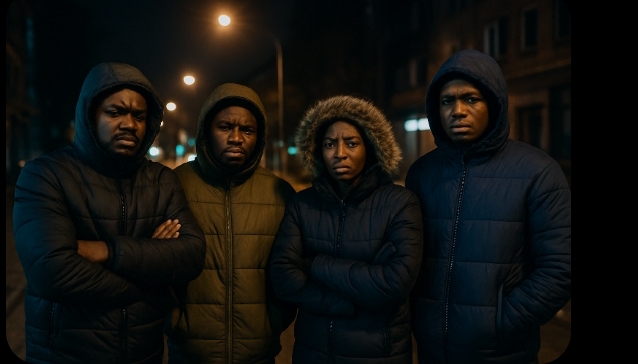
When you listen closely to the stories of Nigerians abroad, you hear two melodies woven together — one of pain, one of perseverance. The nights whisper not just sorrow, but remembrance; the days hush not just hope, but teach endurance. Between both lies a quiet symphony of survival.
Every migrant’s journey is a negotiation between what was lost and what was found. In chasing opportunity, many found themselves. In leaving home, they built new definitions of it. The struggle abroad — though bruising — carves character sharper than privilege ever could. Nigerians abroad may bend, but they do not break; they ache, but they do not vanish.
Their story is not tragedy; it’s testimony. It’s about a people who crossed oceans not just for money, but for meaning. About hearts that learned to breathe in two time zones, to love in two directions, to endure through a silence that only they can translate.
And so, the headline lives on in truth: Nigerians Abroad — Nights that Whispered Pain, Days that Hushed Hope.
Because even in their quietest hours, they remain the sound of resilience — the kind of hope that no border, no visa, no night can silence.