


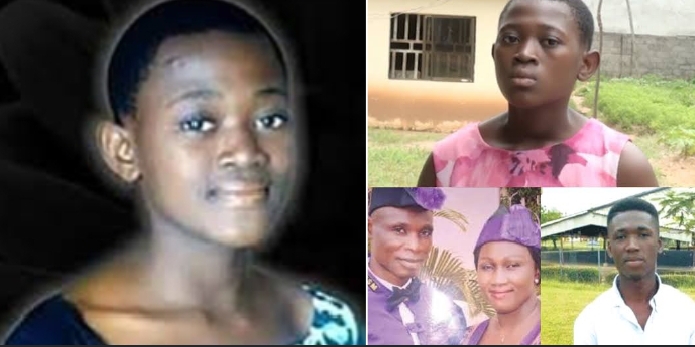
There are pains that don’t scream; they breathe. They wait. They live in corners of memory where sound is forbidden, where words are swallowed before they form. In one quiet Benue town, a young girl once lived inside that silence — a silence so heavy it bent her small body into years of unspoken fear. Her name was Elizabeth Ochanya Ogbaje, a 13-year-old student at the Federal Government College, Gboko, whose story shook the conscience of a nation.
What follows is drawn from court documents, police reports, and public records. This is not a tale told to inflame; it is told to understand — to explore how power, fear, and neglect can intertwine until even a child’s cry becomes inaudible.
The air around her was ordinary — laughter from neighboring homes, the smell of evening pap, the hum of family life that looked safe from the outside. But what Elizabeth saw was not what others saw. Behind one compound’s walls, her childhood began to fade.

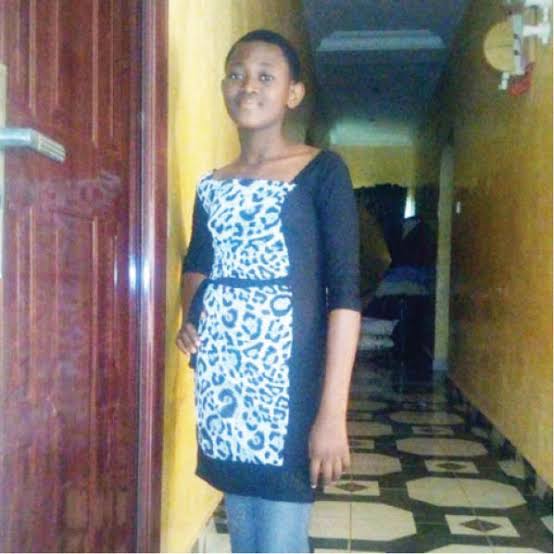
This is the story of what she allegedly endured, what her body remembered when her voice failed, and what Nigeria discovered too late about the psychology of pain.
Inside the Quiet House — When Innocence Met Power
Before tragedy attached itself to her name, Elizabeth was simply Ochanya: bright, shy, eager to learn. Her parents lived modestly in Ogene-Amejo village, in Okpokwu Local Government Area of Benue State. When she was about seven, they entrusted her care to relatives who lived in Makurdi, believing she would find better schooling and stability there.
Among those relatives was Mr. Andrew Ogbuja, a senior lecturer in the Department of Catering and Hotel Management at Benue State Polytechnic, Ugbokolo. To the family, Andrew was respectable — educated, disciplined, a man whose profession suggested responsibility. Elizabeth stayed in his household while attending school. It seemed a stroke of fortune.
But over time, that home — which should have been a sanctuary — allegedly became a place of fear. According to testimonies later presented in court, the lecturer and his son Victor Ogbuja began to violate the child’s trust and body. The acts, prosecutors claimed, continued for years, hidden by authority and silence.
When a child is harmed by those meant to protect, the mind fractures in quiet ways. Psychologists call it betrayal trauma — the moment safety collapses under the weight of love misused. For Elizabeth, the betrayal allegedly began in familiar rooms, between daily routines that looked ordinary to outsiders. She learned early that pain could wear a family face.

Grooming and the Architecture of Fear
Grooming is never loud. It begins with affection, with the illusion of care. The abuser learns the rhythm of a child’s trust — when she laughs, when she hesitates, when she obeys. Soon, gifts replace boundaries; secrecy replaces safety.
Court filings suggested that both Andrew and Victor used their proximity to Ochanya to establish control. The senior figure’s authority and the son’s youth formed a psychological trap: one commanded respect, the other feigned friendship. She was taught that silence was loyalty and that resistance was disrespect.
In the sociocultural landscape of rural Nigeria, such conditioning is powerful. Children are raised to honor elders absolutely. Questioning an adult, especially a guardian, feels like rebellion. Thus, fear finds fertile ground not only in threats but in culture itself.
By the time Ochanya understood that what was happening was wrong, the grooming had evolved into full dependency. She would remain in the house, still performing chores, still attending school — her pain invisible beneath routine.
Psychologists explain this as learned helplessness — when victims, trapped repeatedly without escape, stop believing rescue is possible. They adapt, not because they consent, but because the mind must survive.
When the Body Speaks What the Mouth Cannot
Years passed. The abuse allegedly continued. Eventually, Elizabeth’s body began to tell the story her voice could not. She grew sick — not with fever or infection, but with injuries no one her age should have.
Doctors later diagnosed her with Vesicovaginal Fistula (VVF), a medical condition in which an abnormal passage forms between the bladder and the vagina, causing constant leakage of urine. It is often seen after traumatic childbirth, not in a schoolgirl. Her condition became a physical record of prolonged violation.
At the Benue State University Teaching Hospital, medical staff began to piece together the mystery. They treated the symptoms; then they listened. Her family members, shocked by the diagnosis, sought answers. Slowly, Elizabeth found fragments of courage. She told her aunt and her father what had happened. The weight of years was finally shifting from her small shoulders onto a nation’s conscience.
But the body that had carried that pain could no longer recover. Her organs were failing. She was transferred for advanced treatment, yet the damage was irreparable. On October 17, 2018, at just thirteen, Elizabeth Ochanya Ogbaje died.
Her death certificate listed medical complications, but the real cause lived beneath the words — the long shadow of abuse, silence, and systemic neglect.
The Nation Hears Her Name
News of her passing broke through social media first, then radio, then national television. Her name — Ochanya, “Light” in the Idoma language — filled the air with grief and fury. The story felt personal because it revealed how easily respectability can mask evil.
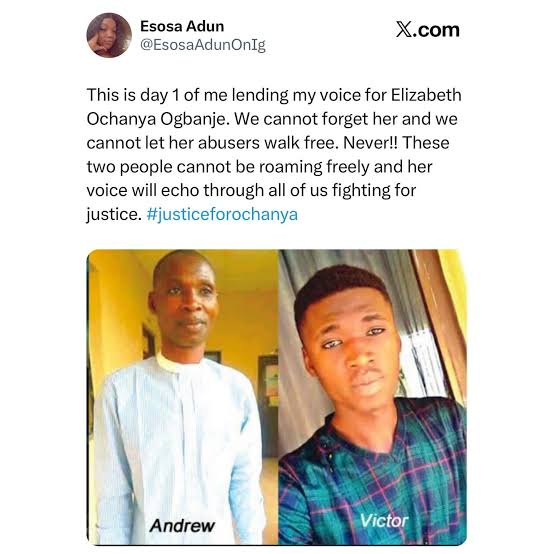
Civil-society groups like the WomenAids Collective (WACOL) and the National Council of Women Societies joined local activists to demand prosecution. The #JusticeForOchanya campaign spread across Nigeria’s digital landscape, drawing attention from lawmakers, journalists, and clergy.
But beneath the outrage was a quieter reckoning. People asked themselves how such acts could continue for years under so many watchful eyes — teachers, neighbors, relatives. Sociologists called it the culture of denial: when communities choose not to see what disturbs their sense of order.
Within days, the Benue State Police Command arrested Andrew Ogbuja. His son Victor Ogbuja fled, prompting a nationwide manhunt. The lecturer was charged with rape and culpable homicide, while Victor faced charges in absentia.
The case began, but the pain was far from over. For Elizabeth’s family, the legal process became another labyrinth — one built not of fear this time, but of bureaucracy.
Courtrooms and Delays: The Weight of Nigerian Justice
The first hearings opened in 2019 at the Makurdi High Court, with the Benue State Ministry of Justice leading prosecution. Lawyers presented medical reports, witness statements, and confessional details from hospital staff. Yet the proceedings moved slowly.
Adjournments became routine. Key witnesses relocated; files were re-entered; judges were reassigned. The emotional cost to the Ogbaje family was immeasurable. Every postponement felt like a re-wounding, as if the country itself was reluctant to look directly at its guilt.
Legal analysts often describe Nigeria’s justice system as overburdened and under-protected. Sexual-offence cases face cultural resistance, procedural gaps, and the persistent stigma surrounding victims. For Ochanya, even in death, these forces conspired to delay closure.
Her story appeared repeatedly in national papers — The Guardian, Vanguard, Premium Times — each article marking yet another adjournment. Activists refused to let her memory fade. Marches were held in Abuja, Makurdi, and Enugu. The message was simple: Children deserve safety; victims deserve speed.
The Judgment That Arrived Too Late
Nearly five years after her death, on March 28, 2023, Justice Justice Wilfred Kado of the Benue State High Court finally delivered the verdict. The court found Andrew Ogbuja guilty of rape, citing overwhelming medical and testimonial evidence. He was sentenced to life imprisonment.
The judgment, while celebrated, carried the ache of belated justice. The second defendant, Victor Ogbuja, remained at large. His alleged role lingered like an unfinished sentence in the nation’s conscience.
Outside the courtroom, supporters wept. Members of WACOL described the ruling as a “milestone for child protection.” Yet the victory felt hollow. The light they sought to honor had been extinguished long before the system found its courage.
Still, for Nigeria’s fragile fight against sexual violence, the conviction marked progress. It proved that even entrenched power could be held accountable, that the silence surrounding domestic abuse could be broken — if only after years of persistence.
Media, Outrage, and the Birth of a Movement
The Ochanya case in October 2025 ignited a broader conversation across Nigeria. Mainstream media dedicated columns to the epidemic of child sexual abuse. Social networks became battlegrounds of empathy and anger. Celebrities like Kate Henshaw, Hilda Baci lent their voices to the campaign, amplifying her story beyond Benue.
In Parliament, legislators debated bills aimed at strengthening child-protection frameworks. The Violence Against Persons Prohibition (VAPP) Act, already law in Abuja, gained new urgency for adoption in all states. By 2024, more than 30 states had domesticated versions of the act, partly spurred by the awareness her case created.
Yet public memory is fickle. As new scandals emerged, hashtags faded. Activists warned that justice must be systemic, not event-based. They reminded the public that thousands of unnamed children still suffer in silence, without the nation’s cameras turned toward them.
Benue’s Burden — Culture, Gender, and Silence
Benue State, often called the “Food Basket of the Nation,” is also a mosaic of cultures bound by respect for tradition. In such spaces, deference to elders is moral law. That virtue, when distorted, becomes a shield for abusers.
After Ochanya’s death, elders in her community admitted to noticing signs — fatigue, frequent illness, emotional withdrawal — but said they feared “interfering in another man’s household.” That hesitation illustrates what sociologists label collective neglect: harm perpetuated not by cruelty but by politeness.
Gender norms deepen this neglect. Girls are raised to endure quietly, to protect family reputation above personal pain. Sexual education is minimal; shame, maximal. Thus, when abuse occurs, victims internalize guilt rather than seek help.
In post-trial interviews, women’s-rights groups in Makurdi described the case as “Benue’s mirror.” It forced communities to confront uncomfortable truths — that innocence isn’t safe merely because tradition says it should be.
The Psychology of Pain — What the Body Remembers
Psychologists explain that prolonged abuse, especially by trusted figures, alters a child’s neurological pathways. The body stores sensations of terror long after the conscious mind forgets details.
In trauma research, this is called somatic memory — the body’s way of remembering when the brain refuses. Survivors often describe flashbacks not as images but as feelings: the tightening of the throat, the smell of a room, the sound of footsteps. Ochanya’s VVF was more than a medical condition; it was the literal collapse of the body’s boundaries, mirroring the collapse of her psychological ones.

When she was silent, she wasn’t complicit. She was surviving. The nervous system of a child under constant threat prioritizes safety over speech. Every quiet day was a calculation: stay still, stay invisible, stay alive.
This is why, even in her absence, discussing her pain matters. Because the body may have been buried, but the story remains alive in the national psyche — a case study of how societies shape the psychology of pain through silence.
Psychological Ripples — The Families, the Nation, the Lessons
Trauma doesn’t end with the victim; it echoes through everyone connected. Elizabeth’s parents, Mr. and Mrs. John Ogbaje, live with the dual agony of loss and guilt. In interviews, they expressed disbelief that their daughter’s supposed guardians could commit such acts. The pain reshaped their faith, their relationships, their trust in institutions.
For the Ogbuja family, the conviction shattered a legacy. Colleagues of Andrew described a man who once lectured about ethics and responsibility. Students now cite his downfall as proof that education without empathy is dangerous power.
Nationally, policymakers began confronting the psychological cost of silence. NGOs introduced trauma-informed training for teachers and parents, teaching them to recognize behavioral changes in children — withdrawal, sudden aggression, fear of certain adults. Psychologists began visiting rural schools, bridging the gap between academia and survival.
These initiatives cannot resurrect Ochanya, but they can rewrite the social script that allowed her suffering to persist.
When Justice Becomes Memory
By 2025, the house in Makurdi where the alleged abuse occurred stands mostly empty, its walls aging in quiet irony. Neighbors pass by and lower their voices. The compound has become both evidence and metaphor — a place where trust died.
Each year on October 17, small vigils light up corners of Makurdi, Ugbokolo, and Abuja. Candles are arranged in circles, children’s photographs placed beside them. Her name is read aloud — not in anger, but in solemn commitment.
Psychologists say remembrance is a form of healing. By naming the pain, a society rewires itself. Every mention of Ochanya becomes both confession and promise: Never again.
Eternal Echo: The Enduring Light
The tragedy of Elizabeth Ochanya Ogbaje is no longer confined to Benue. It lives in textbooks, NGO reports, and the whispered warnings parents give their children. She has become, unwillingly, a teacher — one whose lessons came at unbearable cost.
The psychology of her pain forces a broader question: How many more children are living inside similar silences right now? The answer lies in how a nation listens.
Ochanya’s name means Light. In the end, perhaps that is what remains. Not the darkness that consumed her, but the illumination her story cast on hidden rooms, hidden cultures, and hidden fears.
Pain, when spoken, loses part of its power. And though the voice that should have told this story is gone, the echo remains — a fragile reminder that compassion is the only justice time cannot delay.