


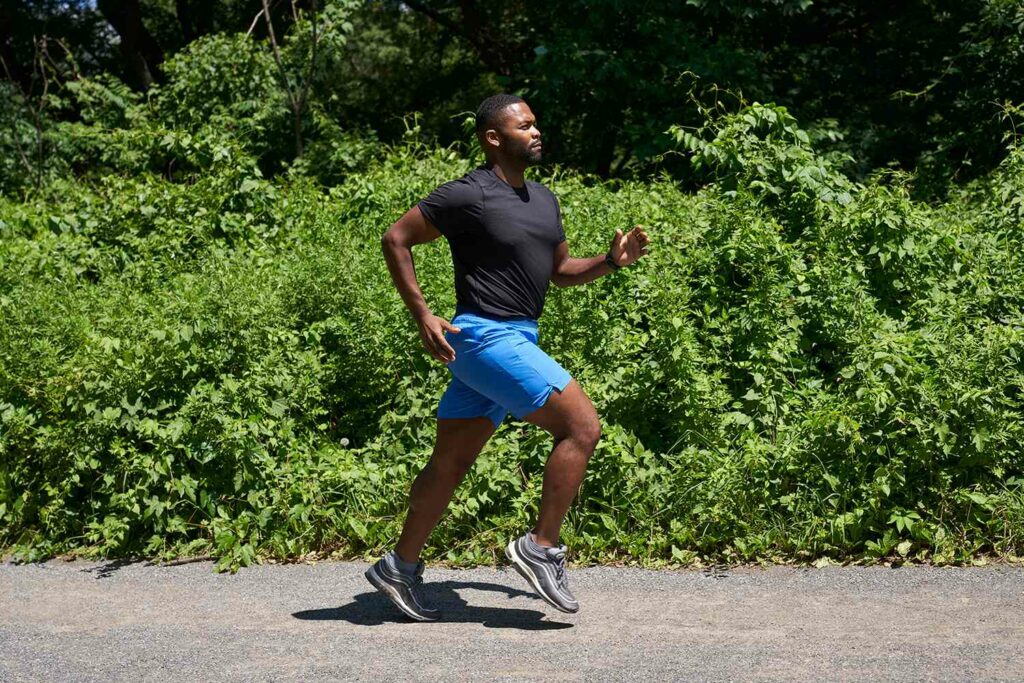
Improving your running form is key to better performance and less injury risk. Studies show that good form makes you run faster and longer and reduces the harm caused by bad techniques.
It is crucial to keep your posture straight and land your feet right under your body’s centre. These tips will boost your speed and protect you from injuries.
Research finds that a forward head posture can increase injury risk by 50%. Fixing imbalances like ‘hip hike’ can lower injury chances. It is also important to aim for 180 steps per minute.
For tailored advice, consider working with a professional. They can help you fine-tune your running technique. Now, you’re ready to explore how to improve your running form.
The Importance of Proper Running Form
Proper running form is key to a great running experience. It boosts performance and lowers injury risk. Good form also helps the body use energy more efficiently, leading to more stamina and quicker times.
Many beginners don’t value proper form, which can cause extra tiredness and injuries. Important parts include posture, alignment, and body movement. For example, standing tall and slightly leaning forward helps absorb energy well.
A good tip is to practice a cadence of 170-180 steps per minute. This lessens joint impact and lowers injury risk. It is also strength exercises and keeping arms relaxed at 90 degrees is crucial.
For new runners, setting achievable goals is smart. Don’t try to be like experienced runners too soon. Focus on building leg strength and flexibility. Deep breathing, inhaling through the nose and exhaling through the mouth, also helps.
Different running styles require differentm adjustments. KnowProperm is important for all activities. Exercises like core strength, midfoot striking, and better breathing improve performance. These steps help understand and improve running form, leading to better efficiency and less injury.
Key Elements of Optimal Running Posture
Getting the right running form is all about how your body lines up with each step. Knowing the key parts of running posture helps you run better and safer. It also makes your runs more efficient.
- Foot Positioning: Landing on the outside edge of your foot is better for your body. Try to land mid-foot or forefoot, especially at faster speeds. Heel striking can slow you down.
- Shoulder Placement: Keep your shoulders relaxed and even. This helps your arm swing, which supports your whole run.
- Hip Alignment: Your hips are key for power. A forward lean from the ankles, not the waist, helps you move faster and stronger.
- Knee Position: Run with your knees a bit apart. This makes your stride smoother and safer, which is very important.
Correct posture lets you run better without getting too tired. Many studies show that fixing your running form can make you faster. With the right training and shoes, you can improve your running. This turns wasted energy into speed and efficiency.
How to Improve Your Running Form Effectively
It would be best if you had a mix of strategies and regular practice to improve your running form. One key step is to engage your core. A strong core helps keep your body stable, leading to better control and posture.
Keeping a steady pace is also crucial. Research shows that a 5% increase in stride frequency makes you feel lighter. This change also reduces the impact on your joints.
- Focus on executing proper foot strikes; landing softly can help absorb shock and maintain rhythm.
- Incorporate drills such as high knees and leg swings to reinforce correct movements.
- Pay attention to your posture; standing tall and relaxed facilitates better breathing and energy efficiency.
It’s important to control your breathing. Matching your breath with your effort improves your performance. Also, working on your hips and ankles can reduce stress on your back and knees.
Using technology, like wearable devices, can offer insights into your form. These tools provide feedback to help you correct your gait. Working with a fitness expert can also help, offering tailored plans for consistency.
Practice regularly. Use these running technique tips and slowly increase your runs. You’ll see big improvements in your running form with focus and consistency.
Running Technique Tips for Enhanced Performance
Try these technique tips to get the most out of your runs. Paying attention to how you land is key. You can land on your heel, forefoot, or midfoot, each with its benefits.
Strive for a quick step rate, 170 to 185 steps per minute. This helps prevent overstriding. When your ankle and knee line up, you’re on the right biomechanical track. Also, keep your upper body relaxed to maintain a smooth stride.
Running drills, such as high-knee exercises, can improve form, activate muscles, and boost fitness. A slight lean forward from the ankles also engages the core, aiding the stride.
- Focus on quick strides to enhance cadence.
- Keep your posture upright and shoulders relaxed.
- Incorporate specific drills to refine running technique.
- Aim for consistent and manageable increases in running volume.
- Prioritise feedback from video analysis for effective corrections.
By following these tips, you’ll run more efficiently, reduce injury risk, and enjoy your runs more.
Improve Your Running Form by Addressing Over-Striding
Over-striding is a big problem for runners. Spotting it early can help your performance and avoid injuries. When you land too far ahead, it puts a lot of stress on your joints. Learning to spot and fix over-striding can make your running much better.
Recognising the Signs of Over-Striding
There are a few ways to tell if you’re over-striding:
- Feet landing too far ahead of your body.
- Shin angle is less than 10 degrees when you land.
- Do not bend your knee enough when you land; it should be 25-35 degrees.
- Having a slower cadence, usually less than 160 steps per minute, when it should be 172 to 180.
Knowing these signs helps you fix your running form.
Techniques to Correct Over-Striding
To fix over-striding, you need to focus and make some changes. Here are some ways to do it:
- Try to run faster by increasing your steps per minute to 180.
- Run uphill at a 4 to 5 percent grade for three minutes to improve your foot strike.
- Run barefoot at 60 to 80 percent of your top speed to strengthen your feet and improve your stride.
- Keep your trunk leaning forward by 8-10 degrees to use your glutes better, which helps with shock absorption and power.
These methods not only reduce over-striding but also make your running more efficient.
| Stride Type | Knee Flexion at Initial Contact | Cadence (steps per minute) | Shin Angle |
|---|---|---|---|
| Minimal Over-Stride | 25-35 degrees | 172-180 | 10 degrees or more |
| Moderate Over-Stride | 25-35 degrees | 160-171 | 10 degrees or less |
| Significant Over-Stride | Less than 25 degrees | Below 160 | Less than 10 degrees |
This table shows how different levels of over-striding affect your running. It highlights the importance of good running form for better performance and injury prevention.
Running Biomechanics: The Role of Cadence
Understanding running biomechanics is key for better performance. Cadence, or steps per minute, is crucial. Coach Jack Daniels suggests 180 steps per minute is ideal. However, elite runners have a wide range, from 155 to 203 steps per minute.
Cadence greatly affects running efficiency. Boosting your cadence by 5-10% can reduce overstriding and the braking effect when landing. Finding the right balance between stride length and cadence is vital.
New runners often have lower cadences and longer ground contact times. To improve, focus on taking shorter, quicker steps. Regular training to increase cadence can make your running more efficient and faster.
Changing your cadence can also prevent injuries. A higher cadence reduces impact stress on the body. It can help with patellofemoral pain and prevent bone stress injuries by lowering peak stress per step.
In summary, focusing on cadence can improve your running form. The table below shows different cadence ranges and their characteristics:
| Cadence Category | Steps Per Minute (SPM) | Characteristics |
|---|---|---|
| High | Over 180 | Efficient running form, increased leg stiffness |
| Moderate | 170 – 180 | Balanced approach to speed and form |
| Low | Below 170 | Long strides, potential for over-striding |
By focusing on cadence, runners can fix technique issues. This leads to a more efficient and effective run.
Incorporating Running Form Drills into Your Routine
Adding running form drills to your routine can boost your performance and efficiency. These exercises focus on improving your running form and building muscle memory. Try to do at least one or two weekly drill sessions to see better running techniques.
Essential Drills to Strengthen Your Form
Some key drills target specific running form aspects and work major muscle groups. Doing them on a soft surface like a rubberised track or grass is good. Each drill should be 10 to 20 metres long, allowing many reps to solidify your technique. Here are some drills to try:
- A-Skip: This drill works the glutes and hamstrings, the key for moving forward.
- B-Skip: Like A-Skip but extends the leg, boosting muscle use.
- High Knees: Raises knees to chest, enhancing stride and reducing contact time.
- Leg Swings: Improves flexibility and stabilises the hip, ensuring better control.
These drills enhance neuromuscular coordination and strengthen running muscles. Do drills like A-Skip and B-Skip twice a week for best results.
Tracking Your Progress with Technology
Technology is a great way to monitor your progress and refine your running form. Apps can track cadence and stride length, while video feedback offers a visual check. Recording your runs can show where you’re improving and keep you motivated. Regular feedback from these tools helps you stick to your running tips and strive for better form.
Importance of Strengthening Your Core and Glutes
Strengthening your core and glutes is key in running. A strong core helps with posture and stability, lowering injury risk. Without a strong core, runners face knee, ankle, and back pain.
Core exercises like Planks and Leg Raises boost your running. They improve your technique.
Glutes are also crucial for running. Elite sprinters have bigger glutes than others. Holly Perkins says weak glutes can cause back problems and slow you down.
Exercises like single-leg deadlifts and glute bridges target glutes. They help you run better and avoid injuries.
It’s important to mix core and glute exercises in your training. This improves your performance and posture. A good running plan includes these exercises for lasting success and fun.
FAQ
What is proper running form?
Proper running form means keeping your back straight and your feet landing right under your body. It also means not tensing up your shoulders or arms too much. Key parts include a straight spine, relaxed shoulders, and a strong core for balance.
How can I improve my running form?
Focus on quick steps and right foot placement to improve your running form. Also, work on your core strength and add drills like high knees to your training.
What are running biomechanics, and how do they affect my performance?
Running biomechanics is about how you move while running. This includes your gait, posture, and how you place your feet. Good biomechanics can make you run more efficiently, be faster, and lower injury risks.
Why is cadence important in running?
Cadence is key because it helps avoid over-striding. This reduces the braking effect and lowers injury risks. Aim for 170-185 steps per minute to run better and faster.
What are some common signs of over-striding?
Signs of over-striding include landing too far ahead of your body and feeling extra strain. These signs mean you might need to adjust your running form for better performance.
What drills can I use to enhance my running form?
Drills like high knees, leg swings, and strides are great. They help you move right and strengthen muscles for better stability and power.
How can I track my running form progress?
Use wearable tech and video tools to track your form. These tools can spot flaws and show how you’re improving over time.
Why is strengthening my core and glutes essential for running?
A strong core and glutes are crucial for good posture and stability. They help with power and movement. Exercises like glute bridges and squats can boost your running and lower injury risks.