


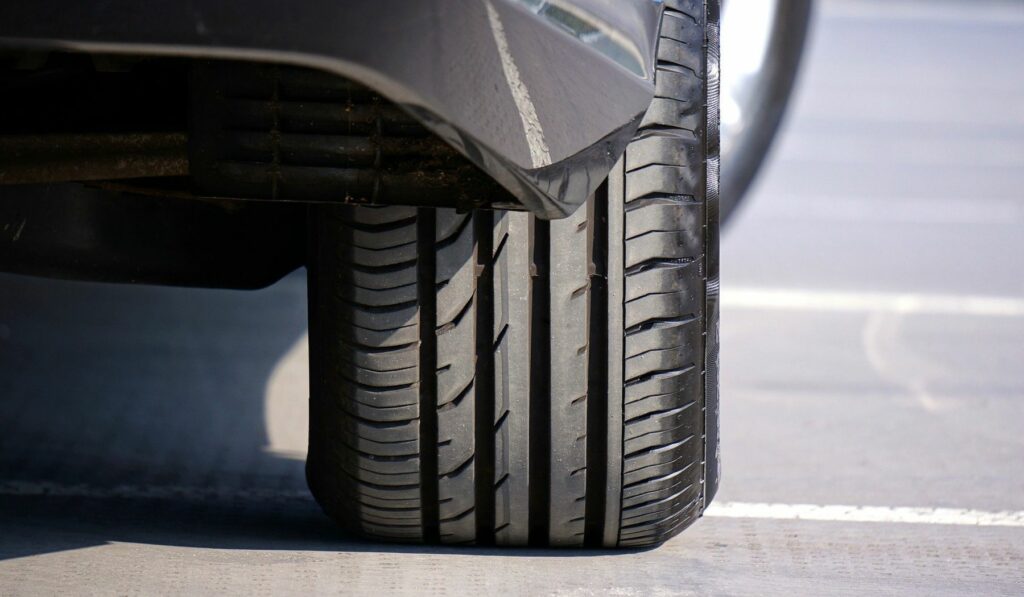
Keeping your tires in good shape is key to staying safe on the road. Caring for your car tires is easy with simple DIY steps. By following tire maintenance tips, you can make your car more fuel-efficient and save money. Regular checks can also stop you from needing to replace tires too soon, which can cost a lot.
It’s important to rotate your tires every 5,000 miles. This helps avoid bad fuel economy and tire wear. By following tire maintenance tips, like checking tire pressure and looking for damage, your tires will last longer. This makes driving safer and more efficient.
Why Caring for Your Car Tires Matters
Caring for your car tires is key to staying safe on the road. A good tire care routine can stop accidents and prevent tire failure. Checking your tire pressure regularly is vital. It boosts fuel efficiency and makes your tires last longer.

Proper tire care offers many benefits:
- Improved safety: Good tires give better grip and control, lowering accident risk.
- Cost savings: Caring for your tires can save you money by making them last longer and using less fuel.
- Environmental benefits: Taking care of your tires also helps the environment by reducing waste from old tires.
Safety Benefits of Well-Maintained Tires
Studies show that tires with enough tread can stop faster than worn-out ones. For instance, tires with 4/32” tread can stop a pickup at 70 mph in 377.5 feet on wet roads. But tires with 2/32” tread need 499.5 feet to stop.
Cost Savings Through Proper Tire Care
Proper tire care can also save you money. It makes your tires last longer and improves fuel use. This means you spend less on fuel and new tires. Plus, regular care avoids expensive repairs and replacements.
Environmental Impact of Tire Maintenance
Maintaining your tires is also good for the planet. It reduces the need for new tires and cuts down on waste. This helps lessen the environmental harm caused by making tires.
Essential Tools for DIY Tire Maintenance
For DIY tire maintenance, having the right tools is key. Tire maintenance tips stress the need for a tire pressure gauge. Use it to check tire pressure at least once a month. Also, keep a tire rotation schedule to know when to rotate your tires, usually every 5,000 to 7,000 miles.
To do DIY tire maintenance, you’ll need some basic tools. These include:
- A tire pressure gauge
- A lug wrench
- A spare tire
- A tire repair kit
- A reflective triangle
Checking tire pressure regularly can improve gas mileage. Proper inflation can also extend tire life by up to 10,000 miles. By following tire maintenance tips and using a tire rotation schedule, you can keep your tires in good shape. This reduces the chance of getting a flat tire.
| Tool | Importance |
|---|---|
| Tire pressure gauge | Crucial for checking tire pressure |
| Lug wrench | Necessary for changing tires |
| Spare tire | Essential for temporary use in case of a flat tire |
The Basics of Tire Pressure Monitoring
Keeping your tires at the right pressure is key for safety, efficiency, and tire life. A tire pressure check is a basic but important part of tire care. It’s best to check tire pressure monthly and before long drives.
Regular tire pressure checks can stop accidents from underinflated tires. They also save fuel and make tires last longer. Plus, the right pressure can boost fuel efficiency by 3%.
How to Check Tire Pressure
To check tire pressure, first find the recommended pressure for your vehicle. It’s in your owner’s manual or on a sticker inside the driver’s side door. You’ll also need a tire pressure gauge, available at auto parts stores or gas stations.
Understanding PSI Readings
Tire pressure is measured in pounds per square inch (PSI). Remember, pressure changes with temperature. For every 10 degrees, it can go up or down by 1 to 2 PSI. So, check tire pressure often, even more during big temperature swings.
When to Check Your Tires
Check tire pressure at least once a month and before long trips. This keeps your tires running well, safe, and long-lasting. Regular checks also spot issues like uneven tire tread depth. This can cause less grip and raise accident risks.
Mastering the Art of Tire Rotation
To keep your car’s tires in top shape, following a tire rotation schedule is key. Regular rotation spreads wear evenly, boosting your car’s performance and safety. Aim to rotate tires every 5,000 to 7,000 miles, or as your car’s manual suggests.
Don’t forget a tire inspection checklist to check your tires’ health. Look at the tread depth, spot uneven wear, and make sure they’re at the right pressure. By sticking to a rotation schedule and checklist, you’ll make your tires last longer and your car run better.
| Tire Rotation Pattern | Benefits |
|---|---|
| Rearward Cross Pattern | Even wear distribution, improved traction |
| Forward Cross Pattern | Reduced wear on front tires, improved handling |
Mastering tire rotation and sticking to a tire rotation schedule can greatly benefit your tires. It improves your car’s performance and keeps you safe on the road. Always check your car’s manual for the best tire rotation and care tips.
Measuring and Monitoring Tire Tread Depth
Checking your tire tread depth regularly is key to staying safe on the road. A good tire inspection checklist should include measuring tread depth. This is because tread depth affects traction and accident prevention. New tires usually have a tread depth of 8 to 12 millimeters, depending on the type and use.
To check tread depth, you can use the penny test. Insert a penny into the grooves with Lincoln’s head down. If you see the top of his head, it’s time for new tires. You can also use tread wear indicators or a digital gauge for a precise reading. Remember, tires with less than 1.6 millimeters tread are unsafe and need to be replaced.
Methods for Measuring Tire Tread Depth
- The penny test method: a simple and cost-effective way to check tire tread depth
- Tread wear indicators: built-in indicators that show when the tire tread is worn down to a certain level
- Digital gauge measurements: a precise way to measure tire tread depth using a digital gauge
By using these methods in your tire inspection checklist, you can keep your tread depth safe. This reduces the risk of accidents. Remember, keeping your tires in good shape is vital for your safety. Regular checks can spot issues early, preventing bigger problems later.
Spotting Signs of Tire Wear and Damage
Checking your tires regularly is key for your safety on the road. A tire inspection checklist should look for uneven wear, cracks, and bulges. Uneven wear can come from bad tire inflation, misaligned wheels, or old suspension parts.
Cracks and bulges might be from hitting potholes or curbs. They could mean tire sidewall damage.
To check your tires, start with the tread depth. Most cars need a tread depth of about 4/32 inches for safety. You can use the penny test to check this: if you see all of Lincoln’s head, the tread is too thin and needs to be replaced.
Also, watch for uneven wear signs like feathering or cupping. These can mean your tires are not aligned right.
Some important things to look for during a tire check include: * Uneven wear patterns * Cracks and bulges in the tread and sidewall * Proper tire inflation * Signs of tire sidewall damage, like deep cuts or bubbles By using a tire inspection checklist and checking your tires often, you can stay safe on the road and make your tires last longer.
Seasonal Tire Care Guidelines
As the seasons change, it’s key to adjust your tire care routine. This ensures your safety on the road. A good tire maintenance tips schedule is vital for seasonal care. In summer, high temperatures can make your tires overinflate, dropping pressure with each temperature drop.
In winter, using winter tires or snow chains helps on snowy and icy roads. Yet, about 70% of winter tire installations are done wrong due to lack of professional help. Spring and fall are times to check your tires for wear and damage. Also, do routine maintenance like rotating your tires and checking pressure.
Summer Maintenance Tips
- Check your tire pressure regularly to avoid underinflation issues
- Inspect your tires for signs of wear and damage
- Rotate your tires every 5,000 to 7,000 miles to promote even wear
Winter Tire Care Essentials
- Use winter tires or snow chains to improve traction on snowy and icy roads
- Check your tire pressure regularly to avoid underinflation issues
- Avoid overconfidence when driving in winter conditions, even with a four-wheel drive vehicle
Spring and Fall Checkup Routines
- Check your tires for wear and damage
- Rotate your tires to promote even wear
- Check your tire pressure to ensure it’s at the recommended level
By following these seasonal tire care guidelines, you can stay safe on the road and extend your tires’ life. Always check your tire pressure monthly and rotate your tires regularly. Proper tire maintenance can extend tire life by up to 25% and improve fuel efficiency. So, make sure to prioritize it in your tire maintenance tips schedule.
| Season | Tire Care Tips |
|---|---|
| Summer | Check tire pressure, inspect for wear and damage, rotate tires |
| Winter | Use winter tires or snow chains, check tire pressure, avoid overconfidence |
| Spring and Fall | Check for wear and damage, rotate tires, check tire pressure |
Proper Tire Storage Techniques
Proper storage is key to extending your tires’ life. It’s not just about tossing them in a garage corner. You need to think about the environment, how you position them, and how you stack them. By following these tips, you can prevent damage and keep your tires in top shape.
Keeping your tires in a cool, dry spot is important. Aim for a temperature below 60ºF (+15 ºC) and humidity under 60%. High temperatures, humidity, and ozone can harm your tires, making them wear out faster.
Temperature and Environment Control
To store your tires right, keep them below 60ºF (+15 ºC) and humidity under 60%. This stops the rubber from changing and reduces moisture buildup. Stay away from ozone-producing items like motors and heaters to avoid ozone damage.
Position and Stacking Methods
Store your tires upright with the valve stem up. If stacking, keep the height under 5 ft (~1.5 m) to avoid drops. Don’t stack more than four tires horizontally to avoid too much weight on the bottom ones. These simple steps can help your tires last longer and stay in good condition.
Advanced DIY Tire Maintenance Skills
Improving your tire care routine means learning advanced DIY skills. You can balance your tires and do a tire rotation to boost your vehicle’s performance and safety. It’s key to follow tire maintenance tips like checking tire pressure monthly. You should also check it more often in cold months and before long drives.
To keep your tires in top shape, remember these tips:
- Regularly check tire pressure with a gauge to keep it between 28 and 36 PSI.
- Rotate your tires every 3,000 to 5,000 miles, or as your vehicle’s maker suggests.
- Make sure the tread depth is at least 2/32 inch to avoid longer stopping times and hydroplaning risks.
By sticking to these tire maintenance tips and adding them to your tire care routine, you can make your tires last longer. This will also enhance your vehicle’s performance. Always check your vehicle’s manual for specific tire care and maintenance advice.
Common Tire Maintenance Mistakes to Avoid
Many car owners make mistakes that harm their tires and car performance. A good tire care plan can prevent these errors.
Over-inflation problems can make tires wear out unevenly. This reduces traction and increases the chance of blowouts. Rotation timing errors also cause uneven wear, shortening tire life and hurting car performance. Not fixing alignment issues can also lead to uneven wear, shortening tire life and affecting car performance.
To avoid these mistakes, a regular tire care routine is key. This includes checking tire pressure often, rotating tires every 5,000 to 8,000 miles, and keeping wheels aligned. By doing these things, car owners can make their tires last longer, improve car performance, and lower accident risks.
| Mistake | Consequence | Prevention |
|---|---|---|
| Over-inflation | Uneven tire wear, reduced traction | Check tire pressure regularly |
| Rotation timing errors | Uneven tire wear, reduced tire life | Rotate tires every 5,000 to 8,000 miles |
| Neglecting alignment issues | Uneven tire wear, reduced tire life | Ensure proper wheel alignment |
Building a Lifetime of Tire Care Success
Keeping your vehicle’s tires in good shape is key to a car care routine. By sticking to a tire maintenance tips and tire care routine, you can make your tires last longer. This also boosts your car’s performance and safety.
Experts say to check your tire pressure monthly and rotate your tires every 5,000 miles. This helps them wear evenly. Also, look for any damage or worn-out tread on your tires often.
Good tire care habits can save you money over time. An oil change costs between $32 and $75. Getting brakes checked every six months or during tire rotations is also smart. This way, you avoid expensive repairs later on.
Remember, taking care of your tires is an investment in your vehicle’s long life and reliability.