


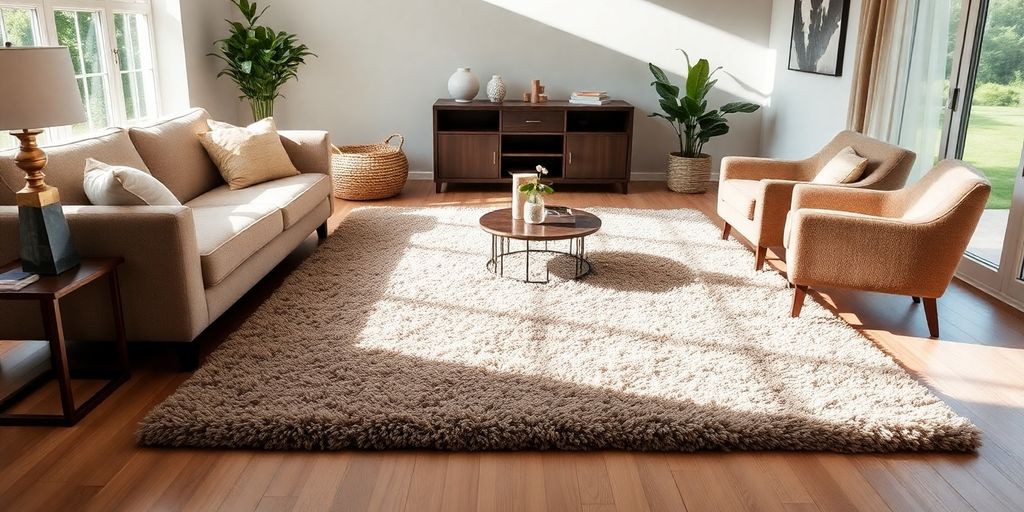
Choosing the right size for your area rug is a big deal. It’s not just about filling a space; it’s about how the rug enhances the entire room’s ambience. A rug that’s too small can make your furniture look like it’s just floating around, disconnected. It can make the room feel a bit unfinished, you know? On the flip side, a rug that’s way too big can actually make a room feel smaller than it is, which is kind of counterintuitive but totally happens.
You want a rug that anchors everything, brings a sense of coziness, and just makes the whole space feel balanced. It’s like the final piece of a puzzle that pulls all the design elements together. Getting the size wrong can throw off the whole vibe, but getting it right? That’s when the magic happens.
The Role of Rugs in Room Design
Rugs are more than just floor coverings; they’re design tools. They can define different areas within a larger room, like separating a seating area from a dining space. A rug adds texture, colour, and pattern, which can really liven up a room. Think of it as a visual anchor that draws your eye and helps organize the furniture.
Without the right rug, a room can feel a bit bare or impersonal. But with the correct size and placement, a rug can make a space feel more inviting, warm, and complete.
Avoiding Common Rug Sizing Mistakes
People often make the mistake of picking a rug that’s too small for their space. This is probably the most common error. Another mistake is not considering the furniture. You can’t just pick a rug based on the room’s dimensions alone; you also need to consider where your furniture will be placed. For example, in a living room, you don’t want a rug that’s so small that only the coffee table sits on it, with all the sofa and chair legs floating off. Also, people sometimes forget to measure properly or visualize the rug’s actual size in the room before buying. This can lead to disappointment when it arrives and doesn’t quite fit the way you imagined.
Achieving Balance and Warmth with Rugs
To achieve the perfect balance and warmth, consider how the rug complements your furniture. A good rule of thumb is to have at least the front legs of your main furniture pieces (like sofas and chairs) resting on the rug. This creates a sense of unity and makes the furniture grouping feel grounded. If you have a larger room, you might even want all the furniture legs to be on the rug. This creates a more cohesive and luxurious feel. Even in smaller spaces, a rug that’s appropriately sized can make the room feel more spacious and inviting, adding that cozy layer that makes a house feel like a home.
Measuring for Your Perfect Rug
Before you even start looking at pretty patterns or soft textures, you really need to get a handle on the measurements. Picking the right size rug can make or break the feel of a room, and honestly, it’s not as complicated as it sounds. It’s all about ensuring the rug complements your furniture and the space you have.
Essential Pre-Shopping Measurements
First things first, grab a tape measure. You need to know the dimensions of the room you’re working with. Measure from wall to wall. This gives you the overall canvas you’re dealing with. Also, consider where your main furniture pieces will be placed. You don’t want to buy a rug that’s too big and crowds everything, or too small and looks lost. Knowing your room’s basic size is the starting point for everything else.
Considering Furniture Placement
This is a big one. How will your furniture sit on the rug? In a living room, for example, you usually want the front legs of your sofa and chairs to be on the rug. This anchors the seating area and makes it feel cohesive. If you simply place a small rug under the coffee table, it can make the entire space look smaller and disconnected. So, measure out where your furniture will be and how much of it you want to cover with the rug. It’s like planning a layout before you start building.
Visualizing Rug Dimensions with Tape
This is a neat trick that really helps. Once you have an idea of the size you think you need, grab some painter’s tape. Use it to mark out the rug’s dimensions on your floor. Walk around it, place your furniture (or imagine it there), and see how it feels. Does it look balanced? Is there enough space to walk around? This visual test is super helpful for avoiding the dreaded ‘rug island’ or a rug that’s just too overwhelming. It allows you to experiment without actually making a purchase.
Living Room Rug Sizing Strategies
Choosing the right rug size for your living room can significantly impact the overall look. It’s not just about selecting something that fits the room; it’s about how it complements your furniture. A rug that’s too small can make your entire seating area feel a bit lost, as if it’s just floating there. On the other hand, a rug that’s just right can tie everything together, making the space feel cozy and complete.
Anchoring Furniture with the Right Rug
Think of your rug as the foundation for your furniture arrangement. The goal is to have your main seating pieces, like the sofa and chairs, either fully on the rug or at least have their front legs resting on it. This creates a sense of unity and defines the conversation area. If you have a larger living room, you might even be able to fit all the legs of your furniture onto the rug. This really anchors the space and makes it feel more grounded and intentional. For most standard living rooms, an 8×10 or 9×12 foot rug is a good starting point, but always measure your specific furniture layout first.
Ensuring Furniture Legs Grace the Rug
This is a fairly common guideline: ensure that at least the front legs of your sofa and chairs are on the rug. If you have a coffee table, ideally, all four of its legs should sit on the rug. This creates a cohesive look where all the main pieces of your seating area are connected by the rug. It prevents that awkward situation where the rug is only under the coffee table, making everything else look out of place. If your furniture is pushed against the walls, this rule still applies – just make sure the front legs are on the rug. It’s a simple trick that makes a big difference in how the room feels.
Ideal Rug Dimensions for Living Spaces
So, what are some good sizes to aim for? Well, it really depends on your room and furniture, but here are some general ideas:
- For smaller living rooms or apartments: A 5×8 foot rug might work if it’s primarily under a coffee table with chairs placed around it, but be careful it doesn’t look too small. A 6×9 foot rug is often a better bet, allowing at least the front legs of your sofa and chairs to sit on it.
- For average-sized living rooms: An 8×10 foot rug is a popular choice and usually works well for anchoring a sofa and two chairs. It allows for the front legs of all pieces to be on the rug.
- For larger living rooms: A 9×12 foot or even a 10×14 foot rug might be necessary to accommodate larger furniture groupings or to have all furniture legs resting comfortably on the rug. This creates a truly luxurious and grounded feel.
Remember, it’s always better to go a little larger than too small. You can always use the tape trick to visualize the space before you buy!
Dining Room Rug Placement
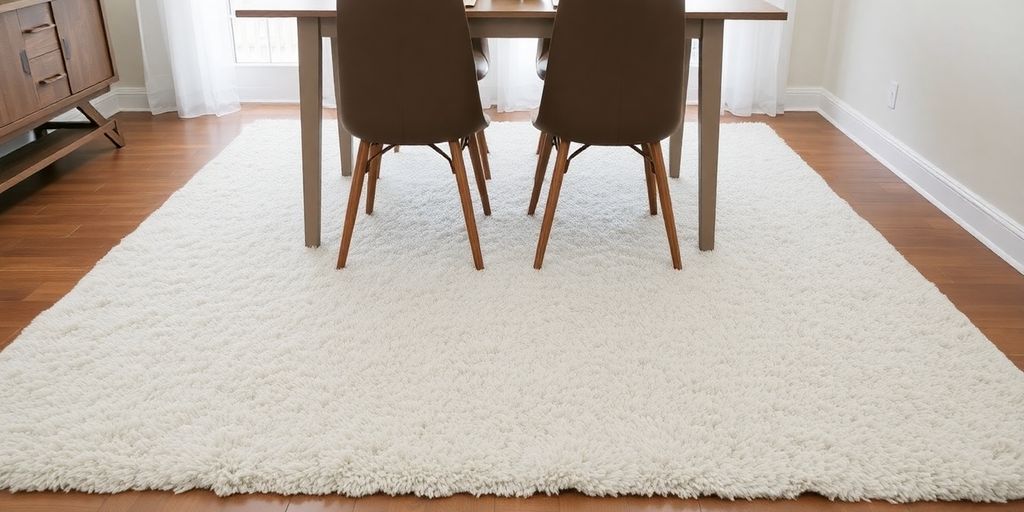
When you’re picking out a rug for your dining room, the main thing to think about is making sure everyone can pull their chairs out without snagging the rug’s edge. You don’t want anyone tripping, right? So, the rug needs to be big enough to cover the area under your table and then extend a good bit beyond that. A common rule of thumb is to have the rug extend at least 2 to 3 feet past the table on all sides. This way, even when chairs are pulled out all the way, they’ll still be on the rug. It really makes the whole space feel more put together and cozy.
Accommodating Chairs When Pulled Out
To get this right, try this little trick: pull your dining chairs out from the table as if you were going to sit down. Then, measure the distance from the edge of the table to the furthest point the chair goes. Add that measurement to each side of your table dimensions. This will give you the minimum size your rug needs to be. For example, if your table is 6 feet long and you need 3 feet of clearance on each side for chairs, your rug should be at least 12 feet long. It sounds like a lot, but trust me, it makes a huge difference in how functional the space is.
Preventing Tripping Hazards
Beyond just chair clearance, you also want to avoid having the rug edge too close to walkways or doorways. If the rug butts right up against a wall or a high-traffic path, it’s a recipe for stubbed toes and potential falls. Aim to leave a small amount of bare floor showing around the edges of the rug, perhaps a few inches, especially if it’s in a high-traffic area. This creates a visual buffer and makes the rug feel like a deliberate part of the room, not just something dropped in the middle.
Extending Rugs Past Table Edges
So, how much past the table edge should it go? As mentioned, 2 to 3 feet is a good starting point. For a standard rectangular or oval dining table, this means the rug should be about 4 to 6 feet wider and longer than the table itself. If you have a round table, think about a round rug that’s also a few feet wider than the table’s diameter. It might feel like a big rug, but it’s usually the right move for a dining area. If you’re unsure, using painter’s tape to mark out the rug’s dimensions on your floor can be super helpful before you buy. It lets you visualize the space and make sure it feels right.
Bedroom Rug Considerations
When you’re picking out a rug for your bedroom, think about where you’ll be walking barefoot the most. Usually, that’s right when you get out of bed and around the sides of the bed. You want your rug to feel good under your feet in those spots. A common mistake people make is getting a rug that’s too small, leaving the floor bare next to the bed. That’s no fun when you first wake up!
Framing the Bed Appropriately
For a really put-together look, your rug should extend past the sides of your bed. Aim for at least 24 inches on each side, if possible. This makes the bed look like it’s properly placed and gives you a nice soft spot to step onto. For the foot of the bed, you want the rug to extend a good distance too, perhaps 2 to 3 feet. This really anchors the bed and makes the whole room feel more complete. It’s like giving your bed a nice, cozy frame.
Allowing for Foot Traffic Around the Bed
Think about how you move around your room. You don’t want to be constantly stepping off the rug when you’re getting dressed or just walking around. So, make sure there’s enough rug extending from the sides and foot of the bed to cover those main pathways. If your nightstands are on the rug, that’s great, but if they’re just off the edge, that’s okay too. The main thing is that you have a soft landing when you get out of bed.
Creating a Cozy Foundation
Your bedroom is your sanctuary, right? A rug really helps with that cozy feeling. It adds warmth and texture, making the room feel more inviting. When you choose the right size, it can make the whole space feel more balanced and intentional. It’s not just about looks; it’s about how the room feels when you’re in it. A well-sized rug can transform your bedroom from just a place to sleep into a truly comfortable retreat.
Navigating Standard and Custom Rug Sizes
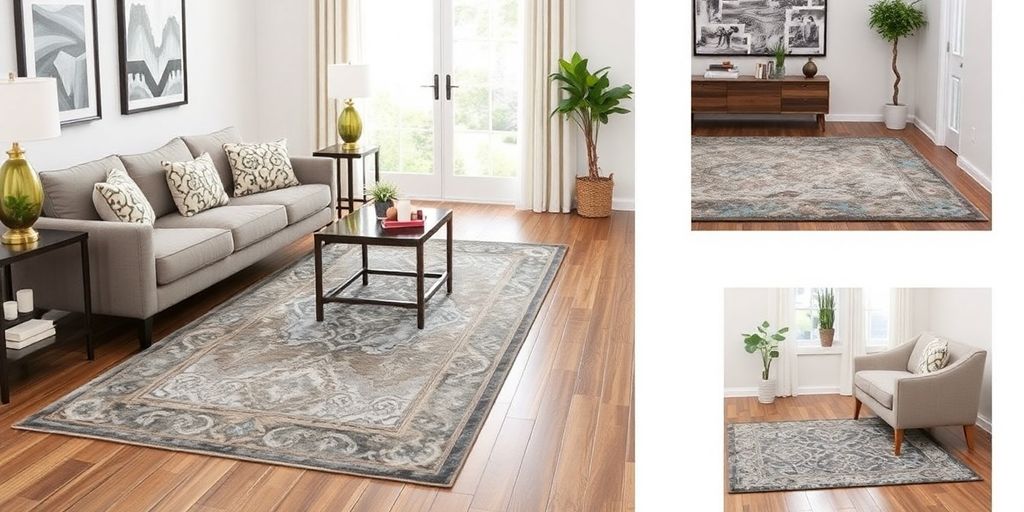
So, you’ve got your eye on a rug, but now you’re staring at a bunch of numbers and wondering what’s what. Most of the time, you’ll be looking at standard rug sizes. These are the ones you see everywhere, and they’re usually pretty straightforward. Think of them as the go-to options that fit most rooms without a fuss.
Commonly Available Rug Dimensions
Most stores will carry rugs in a few common sizes. Rectangles are the most popular, which makes sense since most rooms are rectangular too. However, you can also find squares, ovals, and circles if that better suits your space. Here are some of the sizes you’ll see most often:
- 3′ x 5′
- 4′ x 6′
- 5′ x 8′
- 8′ x 10′
- 9′ x 12′
Keep in mind that these sizes can sometimes vary by a few inches, so it’s always good to double-check the exact measurements before you buy.
When Custom Sizing is Beneficial
Sometimes, a standard size just won’t cut it. Maybe you have a really big room that needs a rug to match, or perhaps you have an oddly shaped space, like an L-shaped living area or a room with a built-in feature. That’s where custom sizing comes in handy. You can get a rug made to fit your space exactly, down to the inch. This is great for making sure everything looks perfectly proportioned and intentional.
Flexibility with Non-Standard Sizes
Don’t feel like you’re stuck if a standard size isn’t quite right. There are other ways to cover your floor nicely. You could try layering rugs – maybe a larger, plain rug as a base with a smaller, more decorative one on top. Or, if you have a large room with distinct zones, you could use two separate rugs that complement each other. Rug tiles are another option; you can arrange them in all sorts of patterns to fit any space, no matter how unusual the shape.
Additional Factors for Rug Selection
Beyond just the size and placement, you’ll want to think about a few other things when you’re picking out that perfect rug.
Choosing Materials for Durability
Not all rug materials are created equal, and what works in one room might not be the best fit for another. For high-traffic areas like your entryway or a busy living room, you’ll want something that can withstand a lot of wear and tear. Natural fibres like wool are tough and can handle a lot of foot traffic, plus they’re pretty easy to clean. Jute and sisal are also good options for durability, though they can be a bit trickier to clean if you spill something. Synthetic materials, like those made from recycled plastic bottles, are often a great choice for durability and are usually super easy to wipe down or even throw in the wash. Consider where the rug is going and what kind of action it will see before you commit.
Considering Room Traffic and Use
This ties right into the material choice, but it’s worth thinking about separately. If you have kids or pets, or if the room is a main thoroughfare in your house, you’ll want a rug that’s forgiving. This means looking at colors and patterns that can hide dirt and stains a bit better. A light, solid-colored rug might look amazing in a formal sitting room, but it’s probably not the best choice for a playroom. For areas where spills are common, like kitchens or play areas, machine-washable rugs are a lifesaver. You might even consider a less expensive rug for a home office if you use a rolling chair, as those can wear down the rug fibres over time.
Entryway Rug Specifics
Entryways can be a bit of a puzzle because they come in a wide range of shapes and sizes. For narrow hallways, a runner rug is often the best bet to cover the length. If you have a small entryway, a 3-by-5-foot rug may be the perfect solution. For larger entry areas, you’ll just need a bigger rug. One really important thing to remember for entryways: make sure your rug isn’t so thick that it stops your front door from opening and closing smoothly. You don’t want to be wrestling with the door every time you come or go!
Frequently Asked Questions
What’s the most common mistake people make when buying rugs?
Think of your rug like a foundation for your furniture. You want it to be big enough so that at least the front legs of your main seating pieces, like the sofa and chairs, are resting on it. If a rug is too small, it can make the whole room feel somewhat disconnected, as if it’s just floating there. Aim for a size that connects your furniture group.
How can I visualize rug dimensions before buying?
It’s super helpful to grab some painter’s tape and mark out the size of the rug you’re thinking about right on your floor. This way, you can really see how it will look and if it fits well with your furniture and the room’s layout before you actually buy it. It’s like a test drive for your rug!
How big should a dining room rug be?
For dining rooms, the key is to make sure the rug is large enough to keep your chairs on it, even when they’re pulled out from the table. A good rule of thumb is to have the rug extend at least two feet beyond the edges of your table in all directions. This prevents chairs from catching on the rug’s edge and causing trips.
What’s the best way to size a rug for my living room?
In a living room, you generally want your rug to be large enough to anchor the main seating area. Ideally, all furniture legs should rest on the floor, not on the rug. If that’s not possible, at least ensure the front legs of your sofa and chairs are on the rug. Standard sizes like 8’x10′ or 9’x12′ often work well, but it depends on your room and furniture.
How should I place a rug in my bedroom?
For bedrooms, you have a few options. You can get a rug that’s large enough for all the bed legs to sit on it. Another popular choice is to have a rug that extends out from the sides and foot of the bed, leaving the top of the bed bare. This creates a cozy landing spot for your feet when you get out of bed.
What if standard rug sizes don’t fit my room?
Yes, you can! If standard sizes don’t quite fit your space perfectly, don’t worry. You can often find rugs in close sizes, or you might consider getting a custom-sized rug. This is especially helpful for unusually shaped rooms or if you have a very specific furniture arrangement.