


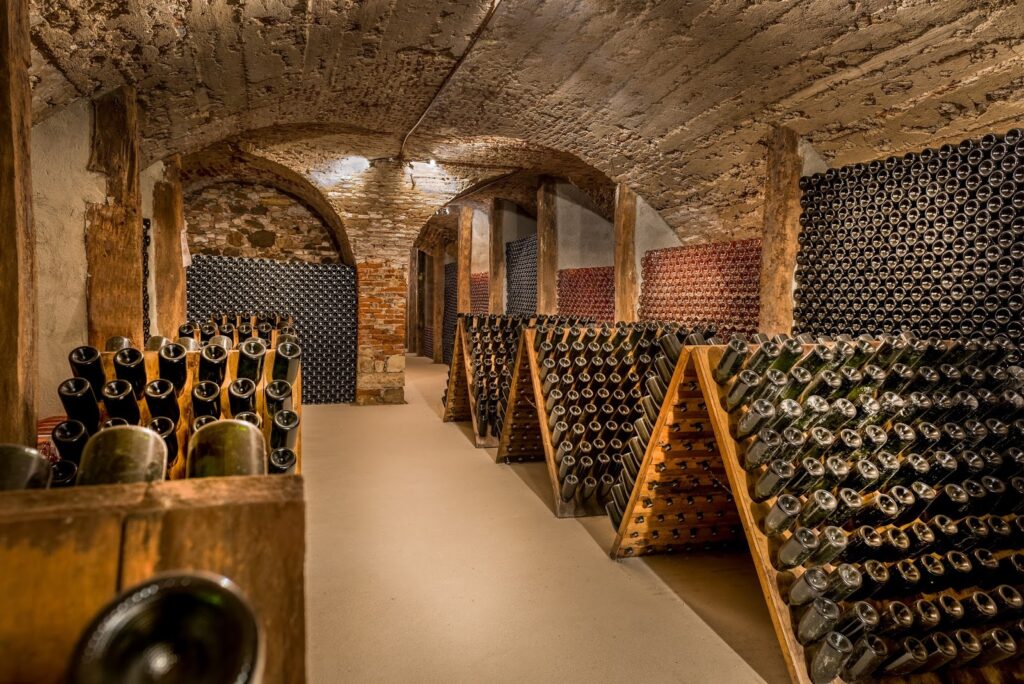
Learn how to store and serve champagne to elevate your celebrations. Proper handling keeps every bottle perfect. It ensures they are served at their best.
Serving champagne like a pro can make a big impression on your guests. The right storage and serving techniques let you enjoy your favorite champagne fully.
Our expert tips will show you the best ways to store and serve champagne. They will help you feel confident in the world of champagne.
Champagne: Why Proper Storage Matters
Storing champagne is more than just keeping bottles safe. It’s about keeping the flavors and bubbles just right. When you store it well, every glass is as good as the first. The right storage conditions can greatly improve the taste and quality of champagne.
The Science Behind Champagne Preservation
Keeping champagne fresh involves controlling a few key things: temperature, humidity, and light. Each one is important for keeping the champagne at its best.
- Temperature: Cool temperatures slow down aging.
- Humidity: Right humidity keeps the cork tight.
- Light: Darkness stops UV light from harming it.
How Storage Affects Taste and Quality
How you store champagne affects its taste and quality. Bad storage can cause oxidation, which changes the flavor and smell. Here are some important tips:
- Store champagne in a cool, dark spot to avoid spoilage.
- Keep the temperature steady to slow aging.
- Avoid vibrations to keep the sediment settled.
How to Store Champagne: The Essential Guidelines
Storing champagne right is key to keeping its quality and taste. You need to think about a few important things. These factors affect how long the champagne stays good and how it tastes.
Ideal Temperature Conditions
The best temperature for storing champagne is between 45°F and 55°F (7°C and 13°C). This keeps the champagne’s flavor and aroma fresh. It slows down aging.
It’s also important to keep the temperature steady. Avoid big changes in temperature. A stable temperature helps the champagne age well. It keeps its bubbles and flavor.
| Storage Temperature | Effect on Champagne |
|---|---|
| 45°F – 55°F (7°C – 13°C) | Ideal for long-term storage, preserving flavor and aroma |
| Above 55°F (13°C) | May cause champagne to age too quickly, losing flavor |
| Below 45°F (7°C) | Can slow down aging, but may affect flavor development |
Humidity and Light Considerations
Humidity is also very important. A humid place, between 50% to 70% relative humidity, keeps the cork moist. This stops it from drying out and lets air in.
Light can also hurt the champagne. Direct sunlight or bright artificial light can make it degrade. This leads to bad flavors and a loss of its smell. Keep it in a dark or dim place to keep it good.
- Maintain a humid environment (50-70% relative humidity) to keep corks moist.
- Store champagne in a dark or dimly lit area to prevent light damage.
Horizontal vs. Vertical Storage Debate
There’s a debate on whether to store champagne horizontally or vertically. Storing it horizontally is usually best. It keeps the cork in touch with the wine, stopping it from drying out.
But, if you live in a very humid place, vertical storage might work. It’s important to think about what’s best for your situation.
| Storage Orientation | Advantages | Disadvantages |
|---|---|---|
| Horizontal | Keeps cork moist, prevents drying out | May require more space |
| Vertical | Saves space, easier to store in small areas | Risk of cork drying out if not humid enough |
By following these guidelines, you can make a great place for your champagne. This way, it stays fresh and tasty for a long time.
Creating the Perfect Champagne Storage Space
To keep your champagne in top shape, you need a space that controls temperature, humidity, and light. You don’t need a huge cellar to do this. There are many ways to create the perfect spot, even in tiny areas.
Wine Refrigerators and Coolers
Wine refrigerators and coolers are great for storing champagne. They keep the temperature just right, which is key for quality. When picking one, think about size, temperature range, and extra features like humidity control and UV protection.
- Choose units with adjustable temperature settings for different champagnes.
- Think about how many bottles you’ll store to pick the right size.
- Look for coolers with dual temperature zones for storing various wines and champagnes.
Cellar and Basement Options
If you have a cellar or basement, they can be perfect for storing champagne. Just make sure it’s cool, humid, and dark. Here’s how to make the most of these spaces:
- Check the temperature and humidity to see if they’re right for champagne.
- Use a thermometer and hygrometer to keep an eye on the conditions.
- Think about using a wine storage rack or shelf to organize your bottles.
Affordable Storage Solutions for Small Spaces
Even without a cellar or big space, you can find affordable ways to store champagne. Here are some ideas:
- Compact wine coolers that fit under counters or in small spots.
- Insulated wine storage bags or boxes that keep the temperature steady.
- DIY solutions like a temperature-controlled cabinet or a thermally insulated box.
By picking the right storage, your champagne will stay in top condition. This way, it’ll be ready for any special occasion.
Long-Term vs. Short-Term Champagne Storage
To enjoy your champagne at its best, knowing the difference between long-term and short-term storage is key. The choice depends on the champagne type and your taste.
Aging Potentials of Different Champagne Types
Champagnes age differently. Non-vintage champagnes are best within a few years. Vintage champagnes can last longer. Prestige cuvées, made from top grapes, can age for decades.
- Non-vintage champagnes: Best consumed within 2-3 years.
- Vintage champagnes: Can age for 5-10 years or more.
- Prestige cuvées: Can age for 10-20 years or more.
When to Drink vs. When to Store
Knowing when to drink and when to store your champagne is important. For quick consumption, short-term storage is enough. But for aging, ensure optimal storage conditions.
Consider these factors when deciding:
- The type of champagne.
- Your personal taste preferences.
- The occasion for which you’re storing the champagne.
Handling Opened Bottles of Champagne
If you’ve opened a bottle and didn’t finish it, proper handling is key. Use a champagne stopper to keep bubbles in. Store the bottle in the fridge.
It’s best to drink the rest within:
- 1-3 days for optimal freshness.
Understanding the differences in storage helps you enjoy your champagne at its best quality.
Serving Champagne at the Ideal Temperature
To enjoy champagne fully, it must be served at the perfect temperature. The right temperature can greatly enhance your drinking experience.
Optimal Chilling Methods
There are a few ways to chill champagne quickly. One method is to put the bottle in an ice bucket with ice and water. This can cool it down in 20-30 minutes.
If you have more time, you can chill it in the fridge. Keep it at 45°F to 50°F (7°C to 10°C) for a few hours.
| Chilling Method | Time Required | Ideal For |
|---|---|---|
| Ice Bucket | 20-30 minutes | Last-minute chilling |
| Refrigerator | A few hours | Advance planning |
Using Ice Buckets Effectively
An ice bucket is a great way to chill champagne stylishly. Fill it with ice and water, making sure the bottle is surrounded. This method cools the bottle evenly.
Common Temperature Mistakes
One common mistake is over- or under-chilling champagne. Over-chilling can dull the flavors, while under-chilling makes it taste flat.
To avoid these errors, keep a close eye on the temperature. The best serving temperature for most champagnes is between 45°F and 50°F (7°C and 10°C).
| Type of Champagne | Ideal Serving Temperature |
|---|---|
| Non-vintage | 45°F – 48°F (7°C – 9°C) |
| Vintage | 48°F – 50°F (9°C – 10°C) |
Champagne Serving Techniques and Etiquette
To make your champagne experience better, learn how to serve it right. Serving champagne is more than just pouring a drink. It’s about making a special and fun moment for everyone.
Selecting the Right Glassware
The glass you use can change how you enjoy champagne. Flutes are the classic choice because they keep the bubbles and let you smell the aromas. But, some people like tulip-shaped glasses because they let the champagne breathe and show off its flavors.
- Choose glassware made just for champagne.
- Stay away from wide or shallow glasses that let the bubbles go fast.
- Make sure the glasses are clean and don’t have anything on them that could change the taste.
Opening the Bottle Safely and Elegantly
Opening a champagne bottle is a big moment, perfect for special times. To do it right and with style, follow these steps:
- Hold the bottle tight and take off the foil and wire cage.
- Put your thumb on the cork to control it as you twist the bottle slowly.
- When the cork comes out, let it pop softly. A loud pop can be too much and might spill the champagne.
Pouring Techniques to Preserve Bubbles
How you pour champagne can keep its bubbles longer. Pour it slowly and gently into the glass, holding the bottle at an angle. This way, you don’t stir up the champagne too much, keeping it bubbly for longer.
By learning these serving techniques and etiquette, you can make your champagne experience even better. Enjoy every sip to the fullest.