


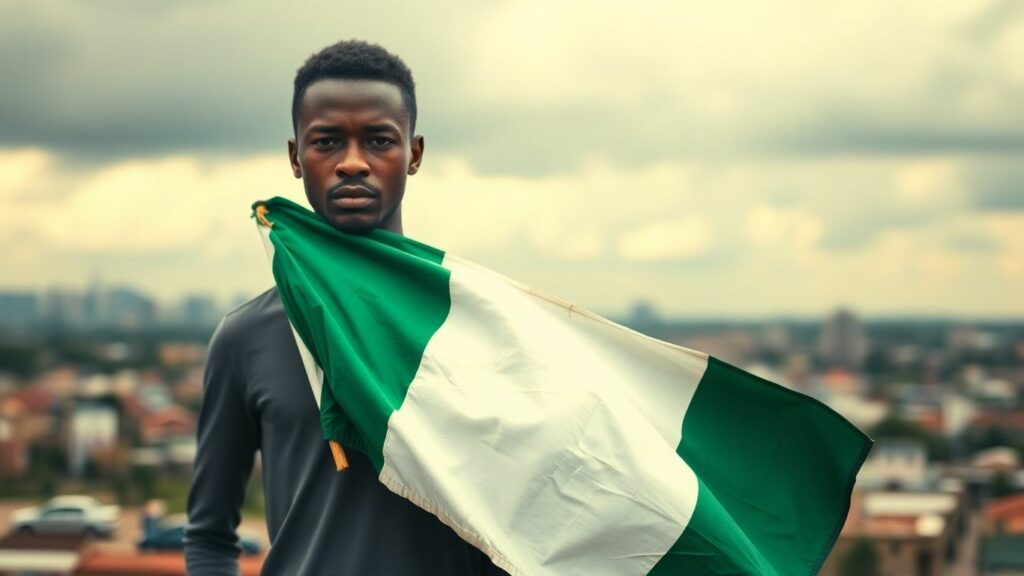
It’s hard to shake the feeling that the independence we celebrate each year is more of a historical marker than a lived reality for us, the youth. When we hear stories from our elders about what Nigeria was like right after independence, a time of palpable hope, economic stability, and a sense of national pride, it feels like a different country altogether. The meaning of independence for Nigeria was, to them, about genuine freedom and opportunity. For us, it often feels like a promise that never fully arrived.
We look around and see many things that don’t quite add up to freedom. Our aspirations as Nigerian youth often seem to hit a wall. We’re told to be hopeful, to believe in the future of Nigeria’s youth, but the daily grind makes it tough.
Economic hardship is real, and it impacts our ability to plan, dream, and build a stable life. It’s like we’re running on a treadmill, putting in a lot of effort but not really moving forward.
The disconnect between the ideals of independence and our current experiences is stark. We see resources that could be used for our development being diverted, and opportunities that should be available to us are often out of reach. This breeds a sense of disillusionment that’s hard to ignore.
When we talk about the youth voice in Nigeria and independence, we’re not just complaining. We’re trying to understand why things are the way they are and what needs to change. We want to see:
- Real economic opportunities: Not just promises, but actual jobs, support for small businesses, and a stable economy that allows us to thrive.
- Improved infrastructure and services: Necessities like reliable power, good roads, and accessible education are not luxuries, but essential expectations.
- A government that listens: We want to feel like our concerns are heard and that policies are made with our future in mind, not just for the benefit of a few.
It’s a complex situation, and we know there are no easy answers. However, ignoring the feelings of a generation that will shape Nigeria’s future is a mistake. We want to believe in the meaning of independence in Nigeria, but we need to see tangible proof that it applies to us too. The future of Nigeria’s youth depends on it.
A Nation Divided
It’s hard to ignore the cracks that run through our country, especially around Nigeria’s Independence Day. Instead of a united front, we often see ourselves pulled apart by different groups. It feels like we’re constantly dealing with challenges stemming from these divisions that arise from Nigeria’s Independence Day. We hear a lot about how different ethnic groups feel left out or treated unfairly. This isn’t just talk; it leads to real problems, like people wanting to break away from the country.
We are seeing calls for separate nations emerging more frequently. Groups in the southeast and southwest, for example, have been vocal about wanting their own countries. They’ve even asked people to skip official Independence Day events. It’s like they’re saying, ‘What is there to celebrate when we feel like we’re not truly part of this nation?’
This feeling of not belonging, of being overlooked because of one’s origins or the language spoken, is a significant contributor to why these agitations persist. It makes you wonder if we’re really one country or just a collection of groups forced together.
Erosion Of Trust In Governance
When you look at the government, it’s tough to feel confident. There’s a widespread feeling that leaders aren’t looking out for everyone. We hear about corruption, and it seems like public money disappears. Additionally, when elections occur, it often seems that people vote based on who is from their own group, rather than selecting the best person for the job.
This lack of faith in our leaders and the systems they oversee makes it difficult to believe in the concept of Nigeria as a whole. It’s as if we’re stuck in a cycle where promises are made, but nothing truly changes for the average person.
The feeling that our leaders don’t represent us, coupled with the constant friction between different communities, makes it hard to feel truly independent. It’s like we’re celebrating a day that doesn’t quite reflect our reality.
We’ve got a lot of issues that keep coming up, year after year:
- Different ethnic groups feel marginalised or ignored.
- A sense that certain groups unfairly dominate leadership positions.
- The rise of movements pushing for regions to separate from Nigeria.
- A general distrust in the people running the country and how they manage our resources.
It’s a tough situation, and it makes celebrating Nigeria Independence Day feel complicated for many of us.