


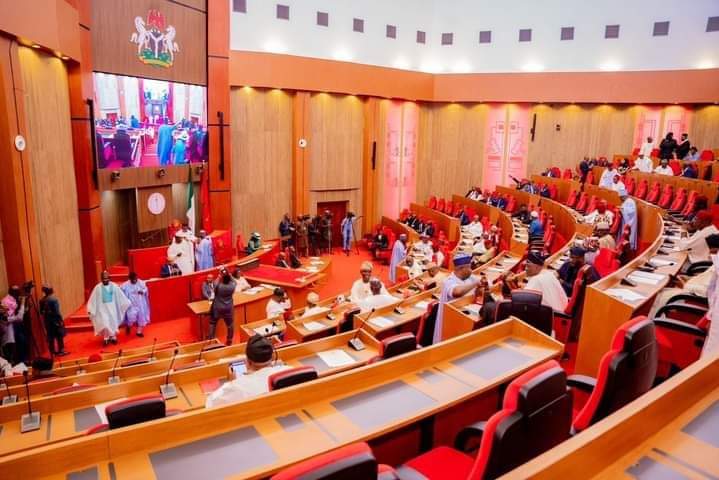
As a citizen of Nigeria, you may wonder about the inner workings of the government. At the heart of Nigeria’s legislative branch lies the Senate, a crucial institution in shaping the nation’s laws and policies.
This upper chamber of the National Assembly plays a vital role in representing the interests of Nigeria’s diverse states and regions. Understanding the Senate’s structure, functions, and impact is essential for any engaged Nigerian. In this article, we will explore the Senate’s composition, responsibilities, and significance in Nigeria’s democratic process.
Information About the Senate of Nigeria
The Senate is a crucial component of the country’s legislative branch, serving as the upper house of the National Assembly. The National Assembly (popularly referred to as NASS) is the nation’s legislature and has the power to make laws, as summarized in chapter one, section four of the 1999 Constitution of Nigeria. The lower chamber is the House of Representatives. As one of the two chambers that make up Nigeria’s bicameral legislature, the Senate plays a vital role in shaping the nation’s laws and policies.


The Senate of Nigeria consists of 109 senators, with three representatives from each of the country’s 36 states and one from the Federal Capital Territory, Abuja. This structure ensures that all regions of Nigeria have equal representation in the upper chamber, regardless of population size or economic influence.
The Senate works in tandem with the House of Representatives to create and modify laws that govern the nation. When both chambers pass a bill, it’s sent to the President for approval or veto.
The Senate is led by the President of the Senate, who’s elected by fellow senators. Various committees focus on specific areas like finance, education, and national security, allowing for in-depth analysis of proposed legislation.
In essence, the Senate of Nigeria serves as a crucial check and balance within the country’s democratic system, ensuring that diverse voices are heard and represented in the nation’s governance. Its role in lawmaking and oversight makes it an indispensable part of Nigeria’s political landscape.
The Role and Powers of the Nigerian Senate
The Senate of Nigeria plays a crucial role in the country’s legislative process. As the upper chamber of the National Assembly, it wields significant influence over lawmaking and governance. Let’s dive into the key responsibilities and powers that make the Nigerian Senate a cornerstone of democracy.
Legislative Authority
The Nigerian Senate, along with the House of Representatives, forms the backbone of the nation’s lawmaking body. You might be surprised to learn that senators have the power to propose, debate, and pass bills that can shape the country’s future. These bills cover a wide range of issues, from economic policies to social reforms.
One of the Senate’s most important functions is to review and approve the national budget. This means that your senators have a say in how the country’s resources are allocated, affecting everything from infrastructure development to education funding.
Oversight and Accountability
But the Senate of Nigeria isn’t just about making laws. It also serves as a watchdog over the executive branch. Senators have the authority to summon government officials, conduct investigations, and hold public hearings. This oversight function helps keep the government in check and ensures transparency.
Confirmation of Appointments
Ever wondered who approves key government appointments? That’s right, the Senate. From ministers to ambassadors, many high-ranking officials need the Senate’s stamp of approval before taking office. This power allows the Senate to influence the composition of the government and ensure that qualified individuals are placed in important positions.
By understanding these roles, you can see why the Senate of Nigeria is such a vital institution in the country’s democratic system. Its powers extend far beyond simple lawmaking, making it a key player in shaping Nigeria’s present and future.
The Structure and Composition of the Senate
The Senate of Nigeria forms an integral part of the country’s legislative branch, playing a crucial role in shaping national policies and laws. As you delve into the inner workings of this institution, you’ll discover a fascinating structure designed to represent Nigeria’s diverse population.
Senatorial Districts and Representation
The Senate of Nigeria consists of 109 senators, each representing one of the country’s senatorial districts. You might be surprised to learn that these districts are divided equally among the 36 states, with three senators per state. The Federal Capital Territory, Abuja, also gets its own senator, bringing the total to that magic number of 109.
Leadership Roles
At the helm of the Senate, you’ll find the Senate President, who acts as the chamber’s presiding officer. Working alongside the President is the Deputy Senate President. These leadership positions are crucial in guiding the Senate’s activities and maintaining order during debates and voting sessions.
Committee System
To efficiently handle the wide range of issues that come before it, the Senate of Nigeria operates through a committee system. These committees focus on specific areas like finance, education, and foreign affairs. As a citizen, you might be interested to know that these committees often hold public hearings, giving you a chance to have your voice heard on important matters.
Term Limits and Elections
Senators serve four-year terms, coinciding with the presidential election cycle. This means that every four years, you have the opportunity to elect new representatives or re-elect incumbents to the Senate. It’s a fundamental aspect of Nigeria’s democratic process, ensuring that the Senate remains responsive to the will of the people.
The Senate Leadership and Key Committees
The Senate of Nigeria boasts a robust leadership structure and several key committees that play crucial roles in the nation’s legislative process. Let’s dive into the details of how this important branch of government operates.
Senate Leadership
At the helm of the Senate of Nigeria is the Senate President, who serves as the presiding officer and administrative head. This powerful position is elected by fellow senators and holds significant sway over the legislative agenda. Working closely with the Senate President is the Deputy Senate President, who steps in when needed and assists in managing Senate affairs.
Other key leadership roles include:
- Senate Majority Leader
- Senate Minority Leader
- Chief Whip
- Deputy Chief Whip
These positions ensure party discipline and help coordinate legislative activities across party lines.
Key Committees
The Senate of Nigeria operates through a system of committees, each focusing on specific areas of governance. Some of the most influential committees include:
- Appropriations Committee: Oversees the federal budget and allocation of funds.
- Ethics and Privileges Committee: Maintains standards of conduct for senators.
- Rules and Business Committee: Manages the Senate’s daily legislative schedule.
- Public Accounts Committee: Examines government spending and financial accountability.
These committees, along with many others, form the backbone of the Senate’s legislative work. They hold hearings, conduct investigations, and draft bills that shape Nigeria’s laws and policies.
By understanding the structure and functions of the Senate leadership and key committees, you gain insight into how the Senate of Nigeria operates as a crucial pillar of the country’s democratic system.
How Senators are Elected in Nigeria
Have you ever wondered how the Nigerian Senate selects its members? Let’s dive into the fascinating process of electing senators in Africa’s most populous nation.
The Basics of Senatorial Elections
In Nigeria, senators are chosen through a democratic process that occurs every four years. Each of the country’s 36 states is divided into three senatorial districts, with one senator representing each district. This means a total of 109 senators make up the Senate of Nigeria.
The Election Process
When it’s time to vote, you’ll find that senatorial elections in Nigeria are quite competitive. Here’s a quick rundown of how it works:
- Political parties nominate their candidates
- Voters in each senatorial district cast their ballots
- The candidate with the highest number of votes wins the seat
It’s worth noting that Nigeria uses a first-past-the-post system, meaning the winner doesn’t need an absolute majority, just more votes than any other candidate.
Eligibility and Requirements
Not just anyone can run for a seat in the Senate of Nigeria. Candidates must meet certain criteria:
- Age Requirement: You must be at least 35 years old.
- Citizenship: You must be a Nigerian citizen by birth.
- Education: You must have been educated up to at least School Certificate level or its equivalent.
- Party Membership: You must be a member of a registered political party and be sponsored by that party.
- Mental Health: You must be mentally sound.
- Physical Health: You must be physically fit.
- Bankruptcy: You must not have been declared bankrupt.
- Criminal Record: You must not have been convicted of a crime involving dishonesty or fraud within the last 10 years.
- Public Service: You must resign from any public service position at least 30 days before the election date.
- Indigeneship: You must be an indigene of the senatorial district you wish to represent.
- Voters’ Registration: You must be registered to vote in the senatorial district you wish to represent.
The Role of INEC
The Independent National Electoral Commission (INEC) plays a crucial role in senatorial elections. They’re responsible for organizing, overseeing, and declaring the results of these important contests.
By understanding how senators are elected, you gain insight into the democratic processes that shape Nigeria’s legislative landscape. It’s a system designed to ensure fair representation for all regions in this diverse and dynamic nation.
The Legislative Process in the Nigerian Senate
Ever wondered how laws are made in Nigeria? Let’s dive into the fascinating world of the Senate of Nigeria and its legislative process. As one of the two chambers of the National Assembly, the Senate plays a crucial role in shaping the country’s laws.
Introducing Bills
The journey of a bill begins when a Senator introduces it on the Senate floor. These bills can address various issues, from economic reforms to social policies. You might be surprised to learn that both Senators and members of the public can propose ideas for new laws!
Committee Review
Once introduced, bills don’t just sail through. They’re sent to specialized committees for a thorough examination. These committees, made up of Senators with expertise in specific areas, scrutinize every detail. They might even hold public hearings to gather input from citizens and experts.
Debate and Voting
After the committee review, the bill returns to the Senate floor for debate. This is where you’d see Senators passionately arguing for or against the proposed law. It’s democracy in action, folks! Once the debate wraps up, Senators cast their votes. A simple majority is usually needed for a bill to pass.
Collaboration with the House of Representatives
The Senate doesn’t work in isolation. For a bill to become law, it needs to pass through both the Senate and the House of Representatives. If there are differences between the versions passed by each chamber, a joint committee works to reconcile them.
Presidential Assent
Once both chambers agree on a bill, it’s sent to the President for assent. If the President signs it, you’ve got a new law. But if the President vetoes it, the Senate can still override the veto with a two-thirds majority vote.
This process ensures that laws passed by the Senate of Nigeria are thoroughly vetted and represent the interests of the Nigerian people.
Landmark Bills and Legislation Passed by the Senate
The Senate of Nigeria has been instrumental in shaping the country’s legal landscape through its legislative powers. Over the years, this upper chamber of the National Assembly has passed numerous bills that have had far-reaching impacts on Nigerian society. Let’s take a look at some of the most significant pieces of legislation that have emerged from the Senate’s chambers.
Economic Reforms
One area where the Senate of Nigeria has made substantial contributions is in economic policy. You’ve probably felt the effects of bills aimed at diversifying the economy and boosting local production. For instance, the Nigerian Oil and Gas Industry Content Development Act of 2010 has been crucial in promoting indigenous participation in the oil sector.
Social Welfare and Rights
The Senate hasn’t just focused on the economy, they’ve also tackled important social issues. Remember the Child Rights Act of 2003? This landmark legislation, championed by the Senate, has been pivotal in protecting children’s rights across the country. It’s a prime example of how the Senate’s work touches the lives of everyday Nigerians.
Electoral Reforms
You might have noticed changes in how elections are conducted over the years. That’s largely thanks to the Senate’s efforts in electoral reform. The Electoral Act of 2022, passed after much deliberation in the Senate, introduced significant changes to improve the transparency and credibility of Nigeria’s electoral process.
These are just a few examples of how the Nigerian Senate has used its legislative powers to shape the nation’s trajectory. From economic policies to social welfare and democratic processes, the Senate’s influence reaches into nearly every aspect of Nigerian life.
Controversies and Challenges Facing the Nigerian Senate
The Nigerian Senate faces numerous challenges that impact its effectiveness and public perception. Here are some key issues:
Corruption Allegations
You’ve likely heard about corruption scandals involving senators. The Nigerian Senate has been plagued by accusations of bribery, embezzlement, and misuse of public funds. These allegations undermine public trust and hinder the Senate’s ability to serve as a credible legislative body.
Budget Padding
Budget padding, where senators allegedly inflate budget allocations for personal gain, has been a recurring controversy. This practice diverts resources from critical sectors and contributes to economic instability.
Excessive Remuneration
Senators’ salaries and allowances are often criticized as exorbitant, especially given Nigeria’s economic challenges. You might be surprised to learn that Nigerian senators are among the highest-paid lawmakers globally, despite the country’s high poverty rates.
Absenteeism and Poor Performance
The Senate of Nigeria has faced criticism for low attendance rates and lackluster performance. Some senators rarely participate in debates or committee work, raising questions about their commitment to their constituents.
Constitutional Amendments
Attempts to amend the constitution have been contentious, with disagreements over issues like restructuring and devolution of powers. These debates often reflect deeper regional and ethnic divisions within the country.
Executive-Legislative Friction
Tensions between the Senate and the executive branch have sometimes led to gridlock. You’ve probably noticed how this affects the timely passage of bills and budgets, impacting governance and development.
Representation Issues
Critics argue that the Senate doesn’t adequately represent Nigeria’s diverse population. Concerns about gender imbalance and the dominance of certain ethnic or regional groups persist.
Transparency and Accountability
The Senate’s operations often lack transparency, making it difficult for you and other citizens to hold senators accountable. This opacity extends to voting records, committee proceedings, and financial disclosures.
Frequently Asked Questions
Here are the frequently asked questions and answers about the Senate of Nigeria.
What are the main functions of the Nigerian Senate?
The Nigerian Senate has several key responsibilities, including the following:
- Lawmaking: Proposing, debating, and passing bills that can become federal laws
- Oversight: Monitoring the activities of the executive branch and government agencies
- Confirmation: Approving certain presidential appointments, such as ministers and ambassadors
- Budget approval: Reviewing and approving the national budget
- Constitutional amendments: Participating in the process of amending the Nigerian Constitution
The Senate works in conjunction with the House of Representatives to fulfill these duties, ensuring a system of checks and balances within the Nigerian government.
What is the composition of the Senate?
The Senate is composed of 109 senators, with each of the 36 states in Nigeria divided into three senatorial districts, and each district electing one senator.
What are the eligibility requirements to become a senator?
To become a senator, one must be at least 35 years old, a Nigerian citizen by birth, educated up to at least School Certificate level or its equivalent, and a member of a registered political party.
Who is the current Senate President?
The current Senate President is Godswill Akpabio, while the current Deputy President is Sen. Barau Jibrin, both members of the APC.
How long do senators serve?
Senators in Nigeria serve a term of four years, and there are no term limits, which means they can remain in the chamber for as long as they are re-elected in general elections.
Conclusion
As you’ve learned, the Senate of Nigeria plays a crucial role in the country’s legislative process and governance. Its responsibilities in lawmaking, oversight, and representation make it an essential pillar of Nigeria’s democracy.
By understanding the Senate’s structure, functions, and historical significance, you gain valuable insight into the nation’s political landscape. Moving forward, staying informed about the Senate’s activities and decisions will help you better comprehend Nigeria’s policy directions and legislative developments. As an engaged citizen, your awareness of this important institution contributes to a more informed and participatory democracy, ultimately shaping the future of Nigeria.