


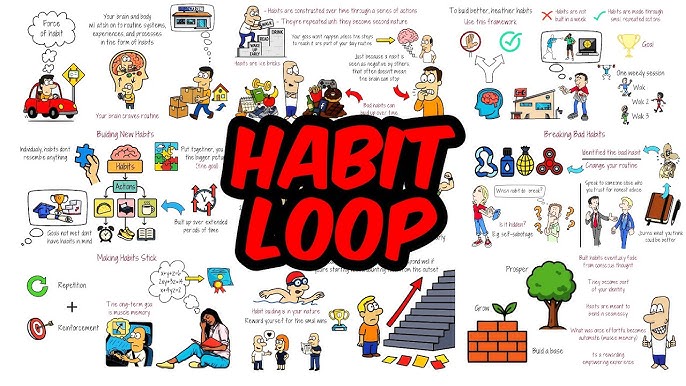
Habits are like the autopilot mode for your brain. They form through a loop of cue, routine, and reward, a concept popularized by Charles Duhigg in “The Power of Habit.” This loop starts with a cue, a trigger that tells your brain to go into automatic mode.
Then comes the routine, which is the behaviour itself. Finally, there’s the reward, which helps your brain decide if this loop is worth remembering for the future.
Understanding this loop is key to changing your habits. You can start interrupting the cycle when you know what triggers your bad habits and what rewards you receive from them.
How Habits Influence Daily Life

Have you ever noticed how much of your day comprises routines? Studies suggest that nearly 40% of our daily actions are driven by habits rather than conscious decisions. If you’re trying to change your life, you should start by changing your habits. Good habits can lead to a healthier, more productive life, while bad habits can hold you back. Recognizing how deeply habits are embedded in your daily routine can be eye-opening.
The Role of Environment in Habit Development
Your environment plays a huge role in shaping your habits. It’s not just about willpower; the spaces you inhabit can support or sabotage your efforts to change. For example, if you’re trying to eat healthier, keeping junk food out of your house can make it easier to stick to your goals. Similarly, if you want to read more, placing books in visible, accessible places can encourage you to pick them up more often. By modifying your environment, you can create cues that trigger positive habits and minimize those that lead to negative ones.
Identifying and Analyzing Your Bad Habits
Recognizing Triggers and Patterns
Understanding why you fall into certain habits is key to changing them. Begin by identifying the triggers that lead to your bad habits. These triggers can be emotional, such as stress or boredom, or situational, like specific times of day or social settings. Keep a journal for a week and note when and why you engage in the habit. Look for patterns that emerge. This awareness is the first step toward making a change.
Assessing the Impact of Bad Habits
Once you’ve identified your bad habits, evaluating their impact on your life is important. Ask yourself: How does this habit affect my physical health, mental well-being, relationships, and productivity? Create a simple table listing each habit and its consequences. This visual can help you see which habits are most harmful and prioritize which ones to tackle first.
| Bad Habit | Physical Health Impact | Mental Well-being Impact | Relationship Impact | Productivity Impact |
|---|---|---|---|---|
| Smoking | High | Moderate | High | Moderate |
| Procrastination | Low | High | Moderate | High |
| Overeating | High | Moderate | Low | High |
Tools for Self-Reflection and Awareness
Breaking bad habits requires self-reflection and a willingness to change. Tools such as mindfulness, meditation, and journaling can enhance your awareness of your habits. Meditation helps you become more mindful of your actions and thoughts, while journaling provides a space to explore your feelings and motivations. Consider using habit-tracking apps to monitor your progress and stay accountable. These tools can offer valuable insights and support as you transform your habits.
Strategies to Break Bad Habits Effectively
Replacing Bad Habits with Positive Ones
Swapping out bad habits for good ones is like trading in an old clunker for a shiny new car. It’s not just about stopping something; it’s about starting something better. Start by identifying a positive habit that can fill the void left by the bad one. For example, if you’re trying to quit smoking, you might run or exercise. The key is to find something that gives you the same satisfaction or reward.
Utilizing the Power of Habit Stacking
Habit stacking is a neat little trick where you piggyback a new habit onto an existing one. It’s like adding a new flavour to your morning coffee. You already have a routine, so why not build on it? Let’s say you want to start meditating daily. If you already brush your teeth every morning, try meditating right after. This way, the established habit acts as a trigger for the new one.
Implementing Bright-Line Rules for Clarity
Bright-line rules are clear, unambiguous guidelines that help you stick to your goals. Think of them as the guardrails on a winding road. They make it easy to know when you’re off track. For instance, if you’re trying to reduce screen time, a bright-line rule might be “no screens after 8 PM.” These rules remove the guesswork and help you stay committed to your new habits.
Building a Supportive Environment for Change
Creating an environment that helps you change your habits is like setting the stage for success. It’s not just about willpower; it’s about making it easier for you to stick to your goals. Let’s dig into how you can set up your surroundings to support your journey.
Optimizing Your Physical Space
Your physical surroundings can either help or hinder your progress. Think about arranging your space to make your new habits easier to follow. Here are a few tips:
- Declutter: A tidy space can clear your mind and reduce stress. Remove items that distract or tempt you away from your goals.
- Accessibility: Place items you need for your new habits in easy-to-reach places. For instance, keep your workout gear visible and ready if you’re trying to exercise more.
- Visual Cues: Use reminders like sticky notes or vision boards to keep your goals at the top of your mind.
Leveraging Social Dynamics
The people around you can have a big impact on your success. Surround yourself with those who support your goals and can hold you accountable.
- Find a Buddy: Partner with someone who shares your goals. You can motivate each other and share progress.
- Join a Group: Being part of a community with similar objectives can provide encouragement and inspiration.
- Communicate Your Goals: Let friends and family know what you’re trying to achieve. They can offer support and understanding.
Creating Accountability Systems
Accountability is key to sticking with your new habits. Here are some ways to build it into your routine:
- Track Your Progress: Use a journal or app to log your efforts and see how far you’ve come.
- Set Checkpoints: Establish regular times to review your progress and make adjustments.
- Reward Yourself: Celebrate small victories to keep your motivation high. This can be as simple as treating yourself to a favourite activity or snack.
By optimizing your environment, leveraging social support, and creating accountability systems, you can make the path to change a little smoother. Remember, it’s about making small adjustments that add up over time.
Maintaining Motivation and Overcoming Setbacks
Building Resilience Through Challenges
Staying motivated isn’t always easy, especially when trying to break a bad habit. But resilience is key. Think of it like building a muscle. The more you work at it, the stronger you get. When you face a setback, please don’t see it as a failure. Instead, view it as an opportunity to learn. Here are a few tips to help you build resilience:
- Accept Imperfection: Nobody’s perfect. Allow yourself to make mistakes and learn from them.
- Stay Flexible: Be open to adjusting your plans when things don’t go as expected.
- Celebrate Small Wins: Every step forward, no matter how small, is progress.
Using Failure as a Growth Opportunity
Failure is not the end of the road. It’s just a detour. When you slip up, take a moment to reflect. What went wrong? What can you do differently next time? By analyzing your failures, you can turn them into valuable lessons. Consider these steps:
- Reflect on the Experience: Spend time thinking about what happened and why.
- Identify the Lesson: Find the takeaway from the experience.
- Apply the Lesson: Use what you’ve learned to improve your approach.
Sustaining Long-Term Motivation
Keeping your motivation alive over the long haul can be challenging. It’s easy to start strong and then fizzle out. To keep your motivation burning bright, try these strategies:
- Set Clear Goals: Know what you want to achieve and why.
- Track Your Progress: Keep a journal or use an app to see how far you’ve come.
- Reward Yourself: Give yourself a treat when you hit a milestone.
- Stay Inspired: Surround yourself with positive influences and reminders of your goals.
By focusing on resilience, learning from failure, and maintaining motivation, you’ll be better equipped to overcome the setbacks that come your way. Remember, breaking a bad habit is a journey; every step, even the backward ones, is part of the process.
The Role of Mindfulness and Self-Compassion
Practicing Mindfulness in Daily Life
Mindfulness is like hitting the pause button on the chaos of life. Imagine sitting quietly, focusing on your breath, and letting thoughts drift by without grabbing onto them. This practice helps you become more aware of your habits and reactions. It’s not about emptying your mind but noticing what’s happening without judgment. Try setting aside just five minutes a day to sit quietly and breathe. You’ll start to see how often your mind wanders and how that affects your actions. Over time, this awareness can help you catch yourself before slipping back into bad habits.
Cultivating Self-Compassion
Self-compassion is about treating yourself with the kindness you’d offer a friend. When you mess up, acknowledge that everyone makes mistakes instead of beating yourself up. This doesn’t mean you let yourself off the hook, but you understand that failing is part of being human. Start by noticing your self-talk. Is it harsh or forgiving? Swap out the negative comments for kinder ones. For instance, instead of saying, “I’m so stupid for doing that,” try, “I made a mistake, and that’s okay. I can learn from this.” This shift in perspective can make it easier to move past slip-ups and stay committed to change.
Balancing Ambition with Self-Care
Ambition is great, but without self-care, it can lead to burnout. Balancing the two means setting realistic goals and taking time to recharge. Think of it like running a marathon: if you sprint the whole way, you’ll burn out before the finish line. Set small, achievable goals and celebrate when you reach them. Make sure to schedule downtime, whether it’s reading a book, going for a walk, or just relaxing. Remember, taking care of yourself isn’t a luxury—it’s a necessity for long-term success.
Tracking Progress and Celebrating Success
Effective Habit Tracking Techniques
Keeping track of your habits is like having a map for your journey. It shows you where you’ve been and where you’re headed. To start, consider using a simple habit tracker. This could be a journal, an app, or a calendar where you mark off each day you stick to your new habit. The goal is to visualize your progress. Seeing those checkmarks add up can be a huge motivator.
Also, try using a table to evaluate your habits. Here’s a simple format:
| Date | Habit | Completed? |
|---|---|---|
| 02/10/2025 | Morning walk | Yes |
| 02/11/2025 | Read 10 pages | No |
| 02/12/2025 | Meditate | Yes |
This kind of tracking helps you identify patterns. Maybe you notice that you’re more likely to skip a habit on weekends. Knowing this can help you plan better.
Recognizing and Rewarding Milestones
Celebrating small wins is important. It keeps you motivated and reminds you of how far you’ve come. Set milestones for yourself. These could be weekly, monthly, or whatever timeframe works for you. When you hit a milestone, reward yourself. It doesn’t have to be big—maybe a favorite treat or a night out with friends.
Here’s a simple way to structure your rewards:
- Weekly Goal Achieved: Treat yourself to a movie night.
- Monthly Goal Achieved: Buy yourself a book you’ve been wanting.
- Quarterly Goal Achieved: Plan a weekend getaway.
These rewards don’t just feel good—they reinforce your positive behaviour, making you more likely to stick with your new habits.
Adjusting Strategies for Continuous Improvement
Sometimes, things don’t go as planned. Maybe a habit isn’t sticking, or you’re not seeing the progress you hoped for. That’s okay. It’s all part of the process. Take a step back and analyze what’s not working. Is the habit too ambitious? Do you need to adjust your approach?
Consider these steps for tweaking your strategies:
- Evaluate: Look at your habit tracker. Are there patterns in your successes and failures?
- Reflect: Think about why a habit might not be working. Are there specific triggers or obstacles?
- Adapt: Make necessary changes. This could mean scaling back the habit or trying a new method altogether.
Remember, the goal is progress, not perfection. Adjusting your strategies ensures that you’re always moving forward, even if it’s just a bit at a time.
Frequently Asked Questions
What is a habit?
A habit is something you do regularly without thinking much about it. It’s like brushing your teeth every morning.
How long does it take to break a bad habit?
Breaking a bad habit can take anywhere from a few weeks to a few months. It depends on the person and the habit.
Why is it hard to change habits?
Habits are hard to change because they’re ingrained in our brains. We do them automatically, so changing them takes effort.
What are some tips for breaking bad habits?
Some tips include identifying triggers, replacing the bad habit with a good one, and staying consistent.
Can the environment affect my habits?
Yes, your environment can influence your habits. Changing your surroundings can help you break bad habits.
How can I stay motivated to change a habit?
Setting small goals, rewarding yourself for progress, and having a support system can keep you motivated.