


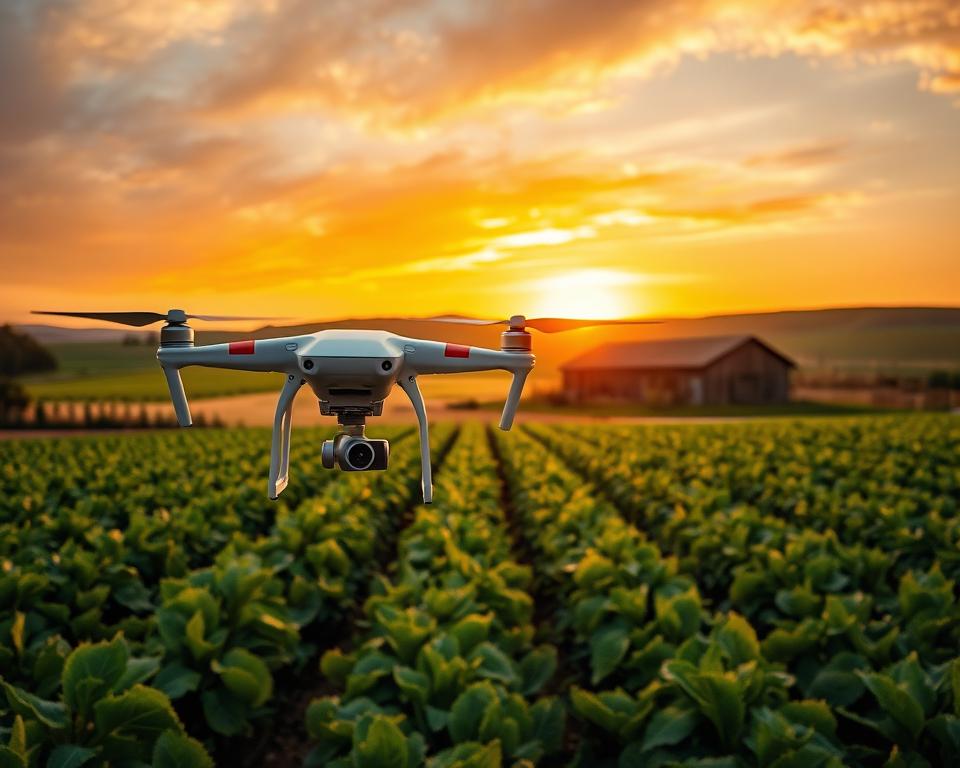
Farming has undergone significant changes over the years. It transitioned from traditional methods like ploughs and oxen to new technology that helps farmers. Tractors and irrigation systems have made farming easier.
The farming world is preparing for a significant shift. Precision agriculture drones are at the forefront of innovation. These drones have high-tech cameras and sensors. They provide farmers with detailed information on crops, soil, and weather.
This new tech is changing farming for the better. It helps farmers grow more crops and waste less. As more farmers use agricultural drones, it’s clear these tools are changing farming forever.
The Agricultural Revolution Taking Flight
Drones are changing farming forever. They introduce smart farming technology, making farms more productive and enabling farmers to make informed choices. Drones and AI are key in this change, solving problems like labor shortages and climate change.
With drones, farmers get detailed info on their crops. This enables them to utilise resources more effectively, identify problems early, and produce more food. UAVs equipped with cameras and sensors monitor crop health and growth.
Drones help in many ways, like watching over crops, managing water better, and analyzing soil. This leads to farmers making more informed choices, thereby improving their farms.
Drones for Agriculture: Game-Changing Technology
Drones are revolutionising farming, making it more efficient and productive. They are used for tasks such as aerial mapping, crop monitoring, precision spraying, and livestock monitoring.
Aerial Mapping and Surveying
Drones help farmers map their land and check on crop health. They take high-resolution images that show where crops need extra care.
These images enable farmers to make more informed decisions. They can monitor soil moisture and track the growth of crops. This info is key for improving farming methods.

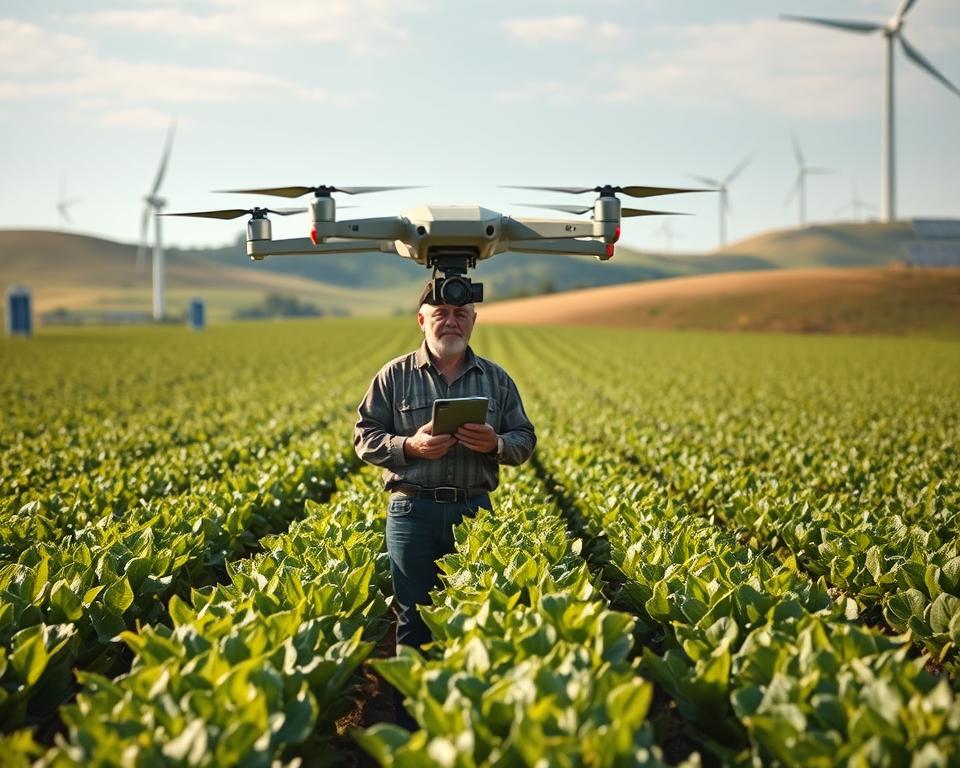
| Application | Benefits |
|---|---|
| Aerial Mapping and Surveying | Detailed land maps, crop health monitoring |
| Crop Monitoring | Early issue detection, yield improvement |
| Precision Spraying | Reduced chemical usage, cost savings |
Farming drones for crop monitoring spot problems early. This means farmers can act fast, saving crops and boosting yields.
As agricultural drone applications continue to grow, we’ll see drones used in new and innovative ways. This will make farming even more efficient and productive.
Why AI Integration Is the True Breakthrough
Drones are great for collecting data, but it is AI that makes them truly powerful. AI turns this data into useful insights. It helps farmers make informed choices, reducing the risk of crop failure and increasing yields.
AI is the mind behind smart farming. It analyses data from drones, sensors, and other sources. Predictive analytics and automated decision-making are key ways in which AI is transforming farming. For example, AI can identify stressed crops using drone data, enabling farmers to act quickly.
- Higher crop yields thanks to smart decisions
- Less waste and better use of resources
- Better predictions for managing risks
By combining AI with drones, farmers can achieve more efficiency and productivity. As AI tech grows, we’ll see even more cool uses in farming.
Real-World Success Stories from American Fields
American farmers are utilising drones, also known as UAVs, to enhance crop yields and reduce costs. Drones and AI in farming are changing the game. They help farmers manage large areas better.
In the United States, farmers are flying agricultural drones with advanced sensors and AI. They check crop health, spot problems early, and fine-tune irrigation and fertilizers. This technology has made farming more productive and environmentally friendly.
Drones are making a big difference in corn farming. Farmers use drone data to identify stressed crops and take prompt action. This leads to more crops and less waste.
The benefits of drones in agriculture extend beyond improved crop yields. Drones also help farmers use less water, fertilizers, and pesticides. This makes farming more eco-friendly.
- Enhanced crop monitoring and management
- Improved resource allocation and reduced waste
- Increased sustainability through precision agriculture
As drone technology improves, more farmers will adopt them. This will lead to more new ideas and ways to work smarter in American farming.
The Economic Equation: When Drones Actually Pay Off
Drone technology is transforming agriculture, bringing many economic benefits. Drones and AI in farming are changing the game. They help farmers grow more, waste less, and use resources better.
One significant benefit of drone technology in farming is the potential to save money. By using farming drones for crop monitoring, farmers spot problems early. This means they can use less fertilizer and pesticides.
Utilising agricultural drone applications can significantly benefit farmers. Studies show drones can increase crop yields and cut costs. For example, drones equipped with AI can determine the optimal time to water, thereby saving water and energy.
Drone data also helps farmers make better choices about planting and harvesting. This leads to better crops and higher prices, boosting the economic gains of drone use in farming.
As drone technology improves, its economic benefits will increase. This makes drones a great choice for farmers wanting to stay ahead in a tough market.
The Environmental Case for Aerial Technology
Drones and AI are changing farming by making it more precise and green. They help farmers use water, fertilizers, and pesticides just where they’re needed. This reduces waste and improves farming for the planet.
The benefits of precision agriculture drones are many. They let farmers focus on specific parts of their fields. This means fewer chemicals and water are used, helping protect nature and making farming more eco-friendly.
Drones provide farmers with a close-up view of how their crops are performing and the condition of their fields. This info helps farmers make smarter choices. It’s all about using resources wisely.
| Environmental Benefit | Description | Impact |
|---|---|---|
| Reduced Chemical Use | Precision application of fertilizers and pesticides | Less environmental pollution |
| Water Conservation | Targeted irrigation based on crop needs | Conservation of water resources |
| Increased Crop Yield | Data-driven farming decisions | Improved productivity |
Using drones for agriculture helps farmers produce more food while being more environmentally friendly. The use of aerial tech in farming is a big step towards greener farming practices.
Overcoming the Hurdles: Challenges Worth Addressing
Many obstacles hinder the use of drones in farming. Despite the benefits of agricultural drones and AI, farmers face big hurdles. These make it hard for them to adopt these technologies.
The cost of buying and keeping UAVs for farming is very high. Additionally, farmers require specialised skills to utilise and interpret drone data. This can be a big challenge for many.
Other issues include worries about data privacy and complex rules. Farmers are scared about keeping their data safe. And figuring out the rules can be very confusing.
To solve these problems, we can try a few things:
- Government help and incentives to make drones more affordable for farmers.
- Training programs to help farmers learn how to use drones.
- Clearer rules and guidelines to protect data and make things easier for farmers.
By tackling these challenges in adoption, farming can become more efficient and productive. Drones and AI can greatly assist farmers.

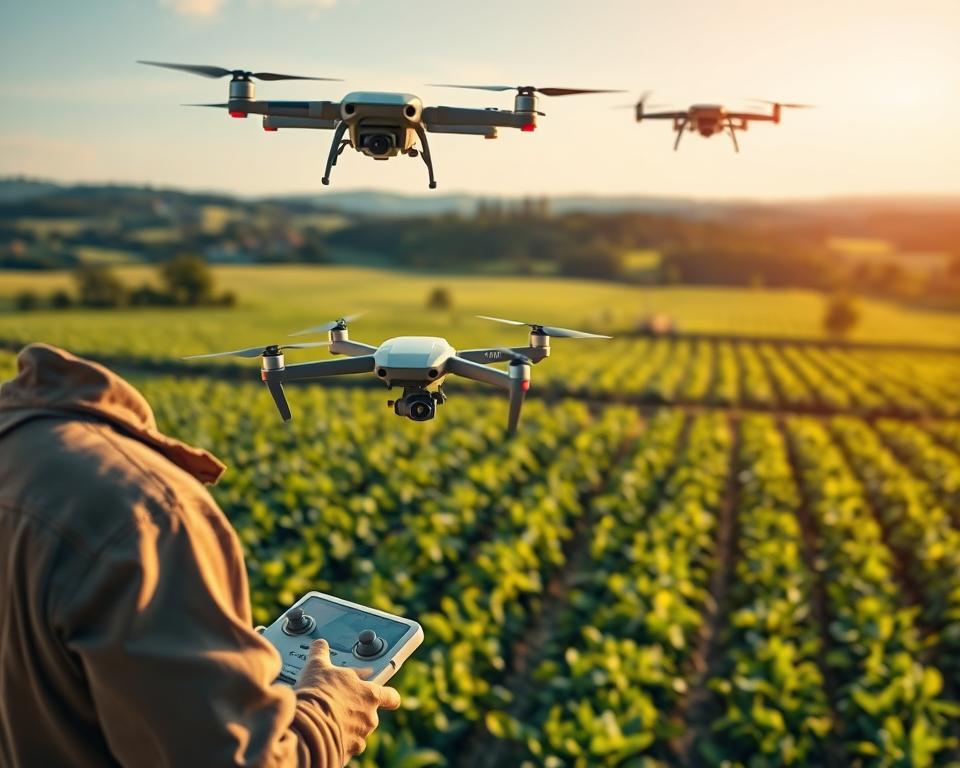
Why Aerial AI Farming Is Just the Beginning
Technology continues to improve, opening up endless possibilities for smart farming. New ideas, such as blockchain for tracking supplies, robots for crop picking, and gene editing, will improve farming. Drones and AI are already transforming the way we farm, and this is just the beginning.
AI in farming has already yielded significant benefits, including increased crop yields and improved resource utilisation. As these technologies become even smarter, we’ll see even more innovative uses in farming. This will shape the future of precision agriculture.
Drones, AI, and other new technologies are poised to transform farming for the better. Farmers and companies are starting to use these tools. This means farming will become more efficient, productive, and environmentally friendly.
FAQ
What are the primary benefits of using drones in agriculture?
Drones help farmers grow more crops and waste less. They utilise high-resolution cameras and sensors to monitor crops and soil. This helps farmers make better decisions.
How does AI integration enhance the use of drones in agriculture?
AI makes drones more useful by analyzing data. It helps farmers predict and prevent problems. This leads to better crop yields and less risk.
What are some of the applications of drones in agriculture?
Drones are used for many things in farming. They monitor crops, apply precise sprays, and manage livestock. This reduces waste and boosts productivity.
Are drones and AI in agriculture cost-effective?
Initially, drones and AI were expensive. But they save money in the long run. They help farmers grow more with less waste, saving on resources.
What are some of the environmental benefits of using drones and AI in agriculture?
Drones and AI help the environment by reducing waste. They make farming more precise, using less water and chemicals. This lowers the environmental impact of farming.
What are some of the challenges associated with adopting drones and AI in agriculture?
Starting with drones and AI can be tough. It costs a lot, requires technical skills, and adheres to rules. But education and the right policies can help overcome these hurdles.
How are precision agriculture drones being used in farming practices?
Drone data enables farmers to make informed choices. They use drones for spraying, monitoring, and managing livestock. This boosts productivity and cuts waste.
What is the future of aerial AI farming?
The future of farming, with drones and AI, looks promising. As these technologies improve, farming will become more efficient. Farmers will grow more, spend less, and be more sustainable.