


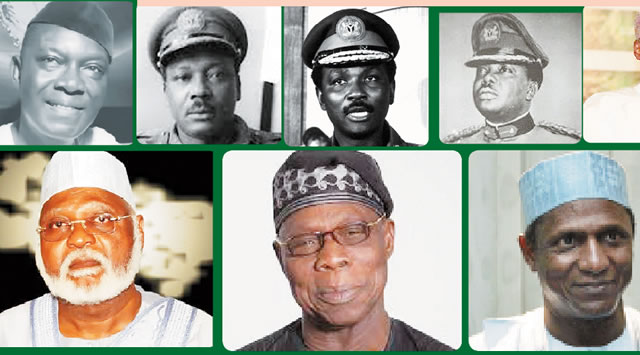
As you delve into the rich history of Nigerian politics, you may wonder about the nation’s first democratically elected leader. The story of Nigeria’s transition to self-governance is a compelling tale of determination and national pride. Understanding who held the esteemed position of first elected president provides crucial insight into the country’s early days of independence.
This exploration will take you back to a pivotal moment in Nigerian history, shedding light on the individual who played a significant role in shaping the nation’s future. Meet Nnamdi Azikiwe, the visionary leader who made history as the First President of Nigeria. From his instrumental role in the country’s fight for independence to his pioneering legacy, discover the fascinating story of the man who shaped Nigeria’s future.
The Road to Nigerian Independence
Nigeria’s journey to independence was a long and complex process, paving the way for the election of the first President of Nigeria. This path was marked by significant milestones and challenges that shaped the nation’s political landscape.
Under British colonial rule, Nigeria was administered as separate regions. However, the early 20th century saw the rise of nationalist movements seeking self-governance. These groups, led by educated elites, began to demand greater Nigerian participation in the colonial administration.
The road to independence was punctuated by a series of constitutional reforms. The Richards Constitution of 1946 and the Macpherson Constitution of 1951 gradually increased Nigerian representation in government. These steps were crucial in laying the groundwork for eventual self-rule.
The Push for Self-Government
As nationalist sentiments grew stronger, political parties emerged to champion the cause of independence. The National Council of Nigeria and the Cameroons (NCNC), the Action Group (AG), and the Northern People’s Congress (NPC) were at the forefront of this struggle.
The London Conferences of 1957 and 1958 set the stage for Nigeria’s independence. These talks between Nigerian leaders and British officials resulted in agreements on the structure of the soon-to-be independent nation. On October 1, 1960, Nigeria finally achieved independence, setting the stage for the election of its first President.
The First President of Nigeria: Nnamdi Azikiwe
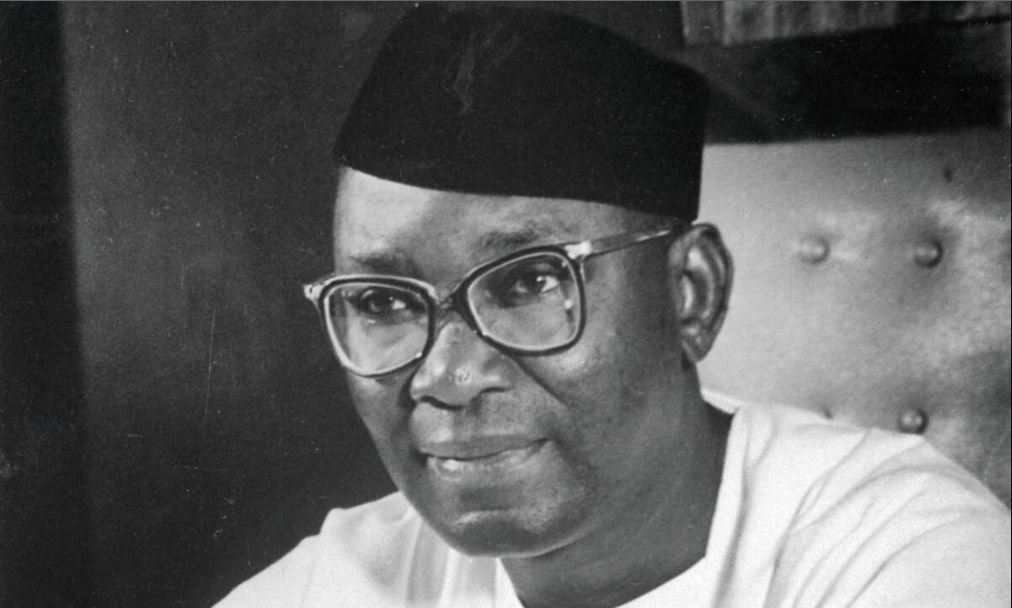

The first President of Nigeria, Dr. Nnamdi Azikiwe, played a pivotal role in shaping the nation’s early years of independence. He assumed office on October 1, 1963, marking a significant milestone in Nigeria’s political history.
Nnamdi Benjamin Azikiwe was a trailblazing Nigerian politician, statesman, and revolutionary leader. Born on November 16, 1904, he played a pivotal role in shaping Nigeria’s history. Azikiwe served as the country’s first black governor-general from 1960 to 1963 and later became the first president of Nigeria during the First Nigerian Republic, from 1963 to 1966.
Widely regarded as the father of Nigerian nationalism, Azikiwe was a driving force behind the country’s independence in 1960. His remarkable life and legacy have left an indelible mark on Nigerian history. Azikiwe passed away on May 11, 1996, but his impact continues to inspire generations of Nigerians.
Azikiwe’s journey to the presidency was marked by his unwavering commitment to Nigerian nationalism. As a prominent journalist and political activist, he tirelessly advocated for Nigeria’s independence from British colonial rule. His eloquence and charisma earned him the nickname “Zik of Africa,” reflecting his pan-African vision.
During his tenure as the first President of Nigeria, Azikiwe faced the challenging task of unifying a diverse nation. He worked to bridge ethnic and regional divides, promoting a sense of national identity. His presidency, though largely ceremonial, symbolized Nigeria’s emergence as a sovereign state on the global stage.
Azikiwe’s legacy extends far beyond his role as the first President of Nigeria. He was instrumental in establishing educational institutions and fostering intellectual growth in the country. His emphasis on national unity and pan-Africanism continues to influence Nigerian politics and diplomacy to this day.
Through his leadership and vision, Nnamdi Azikiwe laid the foundation for Nigeria’s democratic journey, earning his place as a revered figure in the nation’s history.
Early Life and Education
The first President of Nigeria, Nnamdi Azikiwe, was born on November 16, 1904, in Zungeru, Northern Nigeria. His early life was marked by a thirst for knowledge and a passion for his country’s independence.
Azikiwe, affectionately known as “Zik,” grew up in a multicultural environment. His father, Obed-Edom Chukwuemeka Azikiwe, worked as a clerk in the Nigeria Regiment. This exposure to diverse cultures and the colonial administration would later influence Zik’s political ideology.
Nnamdi Azikiwe’s educational journey was quite extensive. Azikiwe began his education at a young age, learning Hausa as his first language. However, his father, concerned about his son’s fluency in Igbo, sent him to Onitsha in 1912 to live with his paternal grandmother and aunt.
Azikiwe attended several schools, including:
- Holy Trinity School and Christ Church School in Onitsha
- Wesleyan Boys’ High School (now Methodist Boys’ High School) in Lagos
- CMS Central School in Onitsha, where he finished his secondary education
- Hope Waddell Training College in Calabar, where he began his tertiary education
In 1925, Azikiwe traveled to the United States, where he attended:
- Storer College in Harpers Ferry, West Virginia
- Howard University in Washington, D.C., where he studied political science
- Lincoln University in Pennsylvania, where he graduated with a BA in political science in 1930
- University of Pennsylvania, where he earned a master’s degree in anthropology in 1933
During his time in the United States, Azikiwe was exposed to various influences, including the teachings of Marcus Garvey and the ideals of the African-American press. He also became a member of Phi Beta Sigma and worked as a columnist for several newspapers.
This extensive education in both Nigeria and abroad equipped the future first President of Nigeria with a unique perspective on governance and nation-building.
Associations & Societies
- Young Men’s Christian Association, Storer College (1925–27)
- International Cub of Howard University (1928)
- Stylus Literary Society of Howard University (1923)
- International Club of Columbia University (1930–32)
- Life Fellow, Royal Anthropological Institute (1933)
- Life Fellow, Royal Economic Society (1934)
- Life Member, British Association for the Advancement of Science (1947)
- American Society of International Law (1933–34)
- American Anthropological Association (1932–1934)
- American Political Science Society (1933–34)
- American Ethnological Society (1933–34)
- Sodalitae Scientiae Civilis of Lincoln University (1934)
Azikiwe’s Role in the Nigerian Independence Movement
Nnamdi Azikiwe played a pivotal role in Nigeria’s journey to independence, earning him the title of the First President of Nigeria. His contributions to the nation’s freedom struggle were multifaceted and far-reaching.
Political Activism and Journalism
Azikiwe’s fight for Nigerian independence began in the realm of journalism. He founded and edited several influential newspapers, including the West African Pilot, which became a powerful tool for advocating nationalist ideals. Through his writings, Azikiwe galvanized public opinion against colonial rule and promoted the vision of a free, united Nigeria.
Formation of Political Parties
Recognizing the need for organized political action, Azikiwe co-founded the National Council of Nigeria and the Cameroons (NCNC) in 1944. This party became a significant force in the independence movement, with Azikiwe at its helm. His leadership in the NCNC helped to unite various ethnic groups under the banner of Nigerian nationalism.
Diplomatic Efforts
Azikiwe’s contributions extended beyond Nigeria’s borders. He represented the country in numerous international forums, articulating the case for independence to a global audience. His eloquence and charisma on the world stage helped to garner international support for Nigeria’s cause.
Negotiating Independence
As the First President of Nigeria, Azikiwe played a crucial role in the final negotiations for independence. He worked tirelessly with other Nigerian leaders and British officials to chart a peaceful transition to self-rule, culminating in Nigeria’s independence on October 1, 1960.
Political Career
The political journey of Nigeria’s first elected president was marked by significant milestones and challenges. As a prominent figure in the country’s struggle for independence, he played a crucial role in shaping Nigeria’s early years as a sovereign nation.
Azikiwe was a key figure in Nigeria’s nationalist movement. He joined the Nigerian Youth Movement (NYM), the country’s first nationalist organization, but resigned in 1941 due to disagreements with the leadership. Azikiwe then co-founded the National Council of Nigeria and the Cameroons (NCNC) with Herbert Macaulay in 1944.
In 1946, a group of young people formed the Zikist Movement to defend Azikiwe’s life and ideals of self-government. The movement was led by Kolawole Balogun, Raji Abdallah, and Osita Agwuna. However, the Colonial Government deemed the Zikist movement an unlawful society and banned it in 1950.
Azikiwe opposed the Richards Constitution, which was proposed by British Governor Arthur Richards in 1945. The constitution allowed for only four elected African members, with the rest being nominated candidates loyal to the colonial government. Azikiwe led a delegation to London to protest the constitution and propose amendments.
In 1951, Azikiwe was elected to the Legislative Council in a Lagos municipal election. However, he did not attend the first session of the council. In 1952, he moved to the Eastern Region and became the leader of the Opposition in the regional House of Assembly. Azikiwe eventually became the premier of Nigeria’s Eastern Region in 1954.
Azikiwe played a crucial role in Nigeria’s struggle for independence and self-government. He was a key figure in the nationalist movement and a strong advocate for African rights and interests.
Governor General of Nigeria
Before Nigeria gained independence and elected its first president, the country was under British colonial rule. During this period, the highest-ranking official in Nigeria was the Governor General, who served as the representative of the British monarch.
The Governor General of Nigeria held significant power and influence over the country’s affairs. This position was crucial in the transition period leading up to Nigeria’s independence.
Nnamdi Azikiwe’s remarkable journey took a significant turn in 1960 when British Prime Minister Harold Macmillan recommended him as the successor to Sir James Robertson during his visit to Lagos. This appointment made Azikiwe the representative of the British Queen in Nigeria as the Governor-General of the federation.
Azikiwe’s inauguration in November 1960 was a historic moment, attended by prominent figures from the Black Atlantic, including Martin Luther King Jr, Langston Hughes, Nina Simone, and W.E.B. Du Bois. Martin Luther King Jr acknowledged the profound impact of African liberation struggles on the American civil rights movement, hailing Azikiwe and other African leaders as “popular heroes on most Negro college campuses.”
In his inaugural speech, Azikiwe emphasized the need to “revive the stature of man in Africa and restore the dignity of man in the world.” He also underscored the importance of preserving Nigeria’s unity, stating that he would prioritize the country’s freedom and unity over personal comforts, safety, and even life itself.
Azikiwe’s tenure was marked by significant events, including his attendance at the First International Labour Organization (ILO) African Regional Conference in Lagos in December 1960. He also welcomed American celebrities such as Nina Simone and Langston Hughes to Lagos in December 1961 for a music festival organized by the American Society of African Culture (AMSAC).
In a speech at the University of Nigeria in Nsukka on November 17, 1961, Azikiwe proposed that Nigeria adopt a republican constitution while remaining a member of the Commonwealth. The following year, he chaired a Lagos conference where African leaders drafted a proposed charter for an “Inter-African and Malagasy Organization,” which was later adopted by the Organisation of African Unity in May 1963.
One of Azikiwe’s notable achievements was commissioning the first Guinness brewery plant outside of Ireland and Great Britain in Lagos in 1963. This marked a significant milestone in Nigeria’s economic development.
Several individuals served as Governor General of Nigeria, each playing a part in shaping the country’s future. Sir James Robertson was particularly significant, as he was the last Governor General before Nigeria’s independence. He played a pivotal role in the negotiations and preparations for Nigeria’s transition to self-governance.
The 1959 Nigerian General Election and Azikiwe’s Victory
Nigeria held a general election on December 12, 1959. This parliamentary election was a significant event in the country’s history, as it paved the way for Nigeria’s independence from British colonial rule in 1960.
The 1959 Nigerian General Election marked a pivotal moment in the country’s history, paving the way for Nigeria’s independence and the election of its first President. This election set the stage for Nnamdi Azikiwe to become the First President of Nigeria, a title that would cement his place in the nation’s history.
A Landmark Election
The 1959 election was a complex affair, reflecting Nigeria’s diverse ethnic and regional landscape. Three major parties dominated the political scene:
- The Northern People’s Congress (NPC)
- The National Council of Nigeria and the Cameroons (NCNC)
- The Action Group (AG)
Azikiwe, leading the NCNC, campaigned on a platform of national unity and progressive policies. His charismatic personality and vision for an independent Nigeria resonated with many voters across the country.
Azikiwe’s Path to Presidency
While the NPC won the most seats in the federal parliament, no party secured an outright majority. This led to a coalition government between the NPC and NCNC. As part of this agreement, Azikiwe was initially appointed Governor-General and later became the First President of Nigeria when the country became a republic in 1963.
Azikiwe’s ascension to the presidency was a testament to his political acumen and the complex negotiations that characterized Nigeria’s early years of independence. His election marked a significant milestone in Nigeria’s journey towards self-governance and set the stage for the nation’s future political landscape.
Azikiwe as Nigeria’s First President (1963-1966)
The Federal Republic of Nigeria was established on October 1, 1963. Abubakar Tafawa Balewa became the prime minister, while Benjamin Nnamdi Azikiwe took on the roles of president, head of state, and commander-in-chief of the armed forces.
Prime Minister Balewa proposed an amendment to the 1960 independence constitution. This amendment would transform Azikiwe’s role from Governor-General to a ceremonial president. Balewa believed this change was necessary to honor Azikiwe’s contributions to Nigeria’s nationalist movement and his service to the nation.
As a result, Section 157 of the 1963 constitution was enacted. This section declared Azikiwe the president of the republic, stating that he “shall be deemed to be elected President of the Republic on the date of the commencement of this Constitution.”
Nigeria’s first federal election after independence took place on December 30, 1964. However, the election was marred by controversy, including widespread boycotts, rigging, intimidation, arson, and violence. The crisis was so severe that it ruptured the coalition government of the NPC and the NCNC.
The election’s aftermath was marked by tension. Azikiwe initially refused to invite Prime Minister Balewa to form a new government. Eventually, Azikiwe’s commitment to constitutional propriety prevailed.
Prior to the election, a contentious census exercise had taken place in 1964. The initial results showed Northern Nigeria had a significantly lower population than the South. Prime Minister Balewa rejected these results, leading to a recount that produced dramatically different numbers. This controversy contributed to the tensions surrounding the 1964 election.
Azikiwe’s presidency faced numerous challenges, including regional tensions and economic difficulties. Despite these obstacles, he made significant strides in areas such as education and infrastructure development. His administration focused on expanding access to education and improving Nigeria’s transportation network, recognizing these as key factors for national progress.
Azikiwe’s tenure as the first President of Nigeria left an indelible mark on the country’s political landscape. His commitment to democracy and national unity set a precedent for future leaders. Even after his presidency, Azikiwe remained an influential figure in Nigerian politics, continuing to advocate for a strong, united Nigeria until his passing in 1996.
Final Years
Nnamdi Azikiwe’s final years were marked by significant events. In 1989, news outlets falsely reported his death, prompting him to respond humorously, “I am not in a hurry to leave this world, because it is the only planet I know.” Two years later, he attended the launch of the Nnamdi Azikiwe Centre in Zungeru, his birthplace, which was inaugurated by President Ibrahim Babangida. In 1995, Azikiwe granted an interview at Lincoln University in Pennsylvania. Unfortunately, his health began to decline, and he passed away on May 11, 1996, at the University of Nigeria Teaching Hospital in Enugu. He was 91 years old.
Azikiwe’s death was met with widespread mourning, and the government of Sani Abacha organized a state funeral. His body was taken to various cities across the country for tributes and mourning. He was finally laid to rest in his native Onitsha on November 16, 1996, which would have been his 92nd birthday.
The New York Times paid tribute to Azikiwe, describing him as a “truly national hero” who transcended regional and ethnic lines. In 2019, President Muhammadu Buhari’s administration completed the Dr. Nnamdi Azikiwe Mausoleum, which was declared a National Monument.
Azikiwe’s Legacy and Impact on Nigeria
Nnamdi Azikiwe, the first President of Nigeria, left an indelible mark on the nation’s history and continues to influence its political landscape today. His legacy extends far beyond his tenure as president, shaping Nigeria’s path to independence and its early years as a sovereign state.
Architect of Nigerian Nationalism
Azikiwe’s role in fostering Nigerian nationalism cannot be overstated. As a prominent journalist and political leader, he used his platform to advocate for independence and unity among Nigeria’s diverse ethnic groups. His efforts helped lay the foundation for a cohesive national identity, crucial for the young nation’s stability.
Educational Contributions
One of Azikiwe’s most enduring legacies is his commitment to education. He founded numerous institutions, including the University of Nigeria, Nsukka, which became a beacon of higher learning in West Africa. This emphasis on education helped cultivate a generation of Nigerian leaders and intellectuals who would go on to shape the country’s future.
Political Influence and Mentorship
As the first President of Nigeria, Azikiwe set precedents for democratic governance and peaceful transitions of power. His leadership style and political acumen inspired many subsequent Nigerian politicians. Even after leaving office, he remained an influential figure, offering guidance and mentorship to emerging leaders.
Azikiwe’s impact on Nigeria’s development as a nation-state continues to resonate, cementing his place as a pivotal figure in the country’s history.
Conclusion
As you’ve learned, Nnamdi Azikiwe holds the distinction of being Nigeria’s first elected president. His ascension to this role in 1963 marked a pivotal moment in the nation’s history, symbolizing Nigeria’s full independence and self-governance. Azikiwe’s presidency, though brief, laid the groundwork for Nigeria’s political future.
Understanding this historical milestone provides valuable context for Nigeria’s ongoing development as a democracy. As you reflect on Azikiwe’s legacy, consider how his leadership shaped the nation and continues to influence Nigerian politics today. The story of Nigeria’s first elected president serves as a reminder of the country’s journey towards self-determination and the ongoing importance of democratic principles in African governance.