


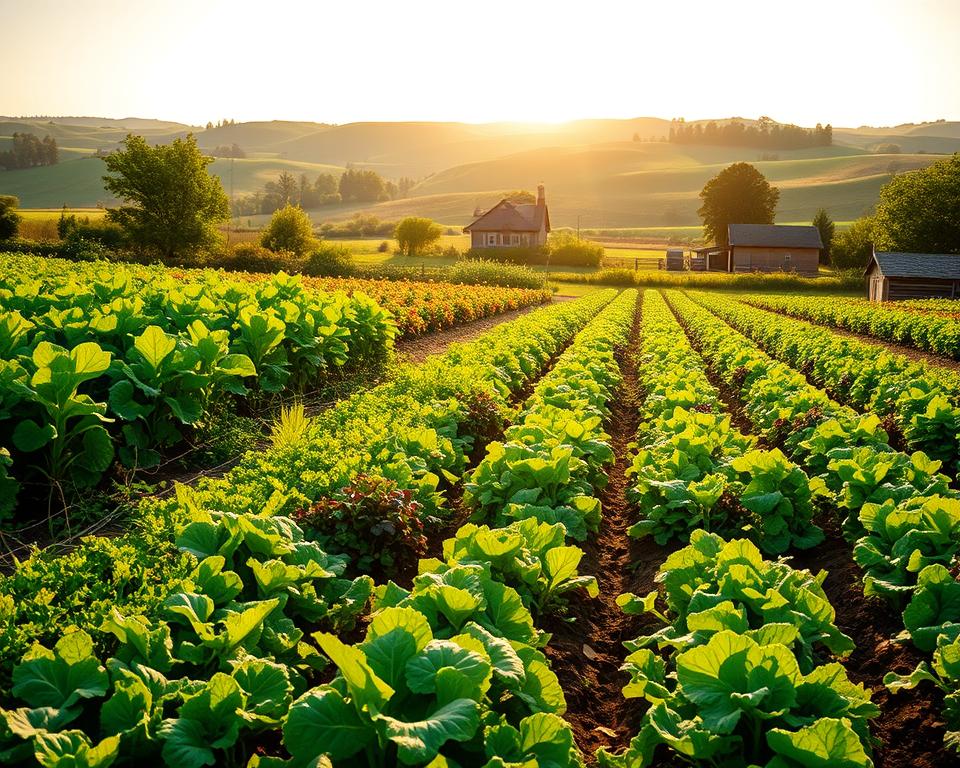
Improving your garden’s foundation is key to healthy plants and sustainable farming. Natural methods can boost your garden’s quality, reducing synthetic fertilizer use. This creates a balanced ecosystem.
This method is good for the environment and makes your food more nutritious. Organic matter is essential for sustainable farming. It makes the soil rich and keeps your garden healthy.
Using natural ways to make your garden fertile makes it stronger and more productive. Your garden will thank you.
Soil Fertility and Its Importance
Soil fertility is key to a successful garden or farm. It affects plant health and growth. It’s about the soil’s ability to provide plants with what they need, support life, and maintain its shape.
Nutrients such as nitrogen, phosphorus, and potassium are vital to plants. A soil rich in organic matter and minerals can grow high-quality veggies.
Soil fertility does more than help plants grow. It also keeps the soil healthy, including how it holds water and air. This is important for gardening that lasts.
| Nutrient | Role in Plant Growth | Impact on Soil Health |
|---|---|---|
| Nitrogen | Promotes leaf growth and development | Enhances the soil’s ability to support microbial life |
| Phosphorus | Essential for root development and flowering | Contributes to the soil’s nutrient cycling |
| Potassium | Helps with overall plant health and resistance to disease | Improves the soil’s water-holding capacity |
For gardeners, understanding soil fertility is vital. By keeping an eye on nutrients and soil health, gardeners can grow better crops. This also helps make gardening more sustainable.

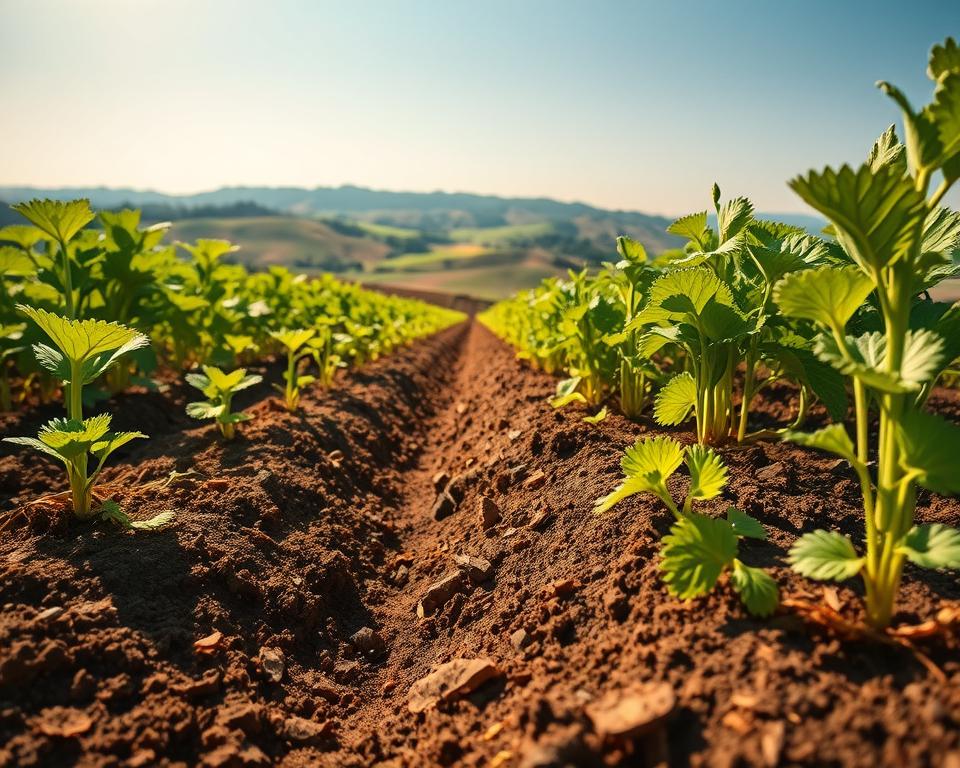
How to Test Your Soil Fertility
Knowing your soil’s fertility is key to a healthy garden. It starts with testing. This test provides insights into your soil’s composition and nutrient levels. It helps you choose the right fertilisers and amendments.
The Jar Test for Soil Composition
The jar test is a simple DIY way to check your soil’s makeup. Fill a jar with soil and water, then shake it well. Let it settle for a few days.
The layers that form will show you the sand, silt, and clay in your soil.
pH testing is also important for soil fertility. You can buy pH test kits or use pH paper. This tells you if your soil is too acidic or too alkaline.
This info is key because it affects how nutrients are available and how microbes work.
By doing these simple tests, you learn more about your soil’s fertility. This is the first step to making your garden better for your plants.
Natural Methods to Enhance Soil Fertility
To grow a thriving garden, it’s key to focus on soil fertility. Composting is a top method. It improves soil structure and boosts microbial activity, making it more conducive to plant growth.
There are many composting approaches, each with its own benefits. Hot composting and cold composting are two popular ones.
Hot Composting Techniques
Hot composting speeds up the composting process by keeping the pile hot. It needs regular turning and moisture checks.
- Start with a mix of ‘green’ materials (like kitchen scraps and grass clippings) and ‘brown’ materials (such as dried leaves and straw).
- Ensure the compost pile is adequately moist, like a damp sponge.
- Turn the compost pile regularly to maintain oxygen flow and speed up decomposition.
Cold Composting for Beginners
Cold composting is slower and easier. It doesn’t need regular turning. It’s great for beginners or those short on time.
- Add materials to the compost pile as you collect them, without worrying about the mix of green and brown materials.
- Locate the compost pile in a shaded area to reduce moisture loss.
- Be patient, as cold composting can take several months to a year to produce usable compost.
Composting isn’t the only way to improve soil. Manure and green sand are also good. Using these natural methods can make your garden fertile and sustainable.
Organic Amendments to Boost Soil Fertility
Gardeners can use organic amendments to keep soil healthy and fertile. These natural materials add nutrients to the soil. They improve soil structure, increase nutrient availability, and support beneficial microbes.
Rock phosphate and greensand are two great organic amendments. They are rich in nutrients essential for plant growth.
Rock Phosphate for Phosphorus
Rock phosphate is a natural source of phosphorus, vital for plant growth. Phosphorus helps with root development, flower and fruit production, and overall health. It’s great for soils low in phosphorus, providing a slow-release source of this nutrient for sustained growth.
Greensand for Potassium
Greensand is another valuable amendment for soil fertility, as it provides potassium. Potassium is key to plant health, supporting disease resistance and water balance. It slowly releases potassium, making it available to plants over time.
Using organic amendments like rock phosphate and greensand can greatly improve soil fertility. This supports crop production and creates a sustainable soil ecosystem. Gardeners can make their soil more balanced and healthy.
Understanding organic amendments helps gardeners better manage their soil. This leads to healthier plants and more productive gardens.
Biological Approaches to Soil Fertility Management
Biological methods are a holistic way to manage soil fertility. They focus on the complex relationships in the soil ecosystem. This approach helps gardeners create a more resilient and diverse ecosystem.
Using cover crops is an effective biological method. Cover crops improve soil health by adding organic matter and reducing erosion. They also provide a home for beneficial organisms. For instance, legume cover crops can fix nitrogen, cutting down on the need for synthetic fertilizers.
Crop rotation is key to keeping soil fertile. It breaks disease and pest cycles, improves soil structure, and boosts nutrient availability. This method also supports biodiversity, which is vital for sustainable agriculture and crop production.
Diversity in the garden makes it more resilient. With a variety of crops and cover crops, gardeners can improve soil health. This contributes to sustainable agriculture practices.
Effective soil management through biological approaches needs a deep understanding of the soil ecosystem. By using these methods, gardeners can boost soil fertility, increase crop production, and help create a more sustainable food system.
FAQ
Q: What is soil fertility, and why is it important for gardening?
A: Soil fertility means how well soil helps plants grow and get the nutrients they need. It’s key for gardening because it affects plant health and growth. This, in turn, impacts the quality of what we harvest.
Q: How can I test my soil fertility at home?
A: Testing your soil at home is easy. You can use the jar test to see what’s in your soil. Or you can test its pH to see if it’s too acidic or too alkaline.
Q: What are some natural methods to enhance soil fertility?
A: To make your soil better, try composting. You can also use organic stuff like manure and green sand. Cover cropping and crop rotation are other good ways to improve soil health.
Q: What is composting, and how can it improve soil fertility?
A: Composting turns organic stuff into a nutrient-rich soil amendment. It improves soil by adding nutrients, improving its structure, and helping beneficial microbes grow.
Q: What are some organic amendments that can be used to boost soil fertility?
A: To make your soil better, use organic stuff like rock phosphate, greensand, and manure. These add important nutrients and help your soil stay healthy.
Q: How can cover cropping and crop rotation improve soil fertility?
A: Cover cropping and crop rotation help soil by keeping it healthy, stopping erosion, and adding variety. They also keep nutrients in the soil and help good microbes thrive.
Q: What is a sustainable soil fertility plan, and how can I create one?
A: A sustainable soil plan is about keeping soil healthy for a long time. To make one, mix composting, cover cropping, and crop rotation with organic amendments. This keeps your soil in top shape.
Q: How can I maintain soil health and promote sustainable agriculture?
A: Keep your soil healthy by testing it, composting, and using cover crops and crop rotation. Also, use organic stuff wisely to keep your soil fertile and support sustainable farming.