


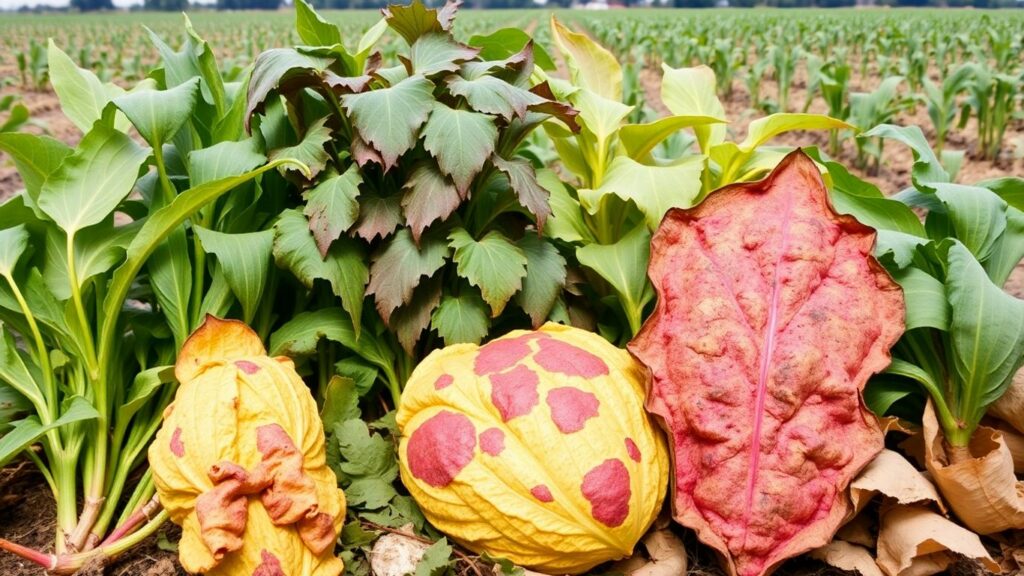
Dealing with crop diseases can be a real headache for farmers. You put in all this work, and then suddenly, a fungus or a virus appears and starts affecting your plants. It’s not just about losing some crops; it can really impact your income and the food supply.
Fortunately, there are ways to counteract these issues and maintain your plants’ health. Understanding what to look for and taking some simple steps can make a big difference in crop disease prevention.
Key Takeaways
- Regularly inspect your crops for any unusual spots, wilting, or discoloration that could signal a disease.
- Practice crop rotation to disrupt the life cycles of soil-borne pathogens and reduce disease buildup.
- Maintain good field sanitation by promptly removing and destroying infected plant debris.
- Use disease-free seeds and healthy plant varieties whenever possible to start with a clean slate.
- Consider integrated pest management, which combines various methods like biological controls and targeted chemical use for effective crop diseases prevention.
Anthracnose
Man, this anthracnose stuff can really mess with your crops. It’s essentially a fungal disease, and it appears as dark, sunken spots. You’ll see them on leaves, flowers, fruits, even stems. It’s a fast spreader, too, and can really hit developing shoots and leaves hard. If you have warm, humid weather, that’s like a party for this fungus, especially if you’re watering frequently. It can wipe out entire vegetable crops or kill off branches on trees.
So, how do you spot it?
- Look for little yellow or brown dots on your leaves.
- On fruits, you might see dark spots with pinkish spore masses.
- Stems can get these sunken, dark lesions.
If you think you’ve got anthracnose, here’s what you can do:
- Remove any plants that are severely damaged. Don’t just leave them lying around.
- If it’s on trees, prune off any dead wood and infected leaves. Again, dispose of them properly.
- You can try spraying your plants with a fungicide. Copper-based ones often work.
It’s a real pain, but catching it early and taking action can make a big difference.
Rust Plant Disease
Rust is a common fungal disease that affects a wide range of plants, including roses and tomatoes. You’ll usually spot it as little powdery spots, often orange, yellow, or reddish-brown, on the leaves, stems, or even fruit. These spots are actually spores, and they can spread easily with wind and water, infecting nearby plants.
When a plant gets rust, it can really weaken it. You might notice stunted growth, leaves turning yellow and dropping off prematurely, and a generally sad-looking plant. It thrives in warm, humid weather, so keeping good air circulation around your plants is a big help.
Here are some ways to deal with it:
- Clean Up: As soon as you notice rust spots, remove any affected leaves or stems. Remove them right away – don’t just leave them lying around the garden.
- Water Wisely: Avoid watering the leaves directly from above. Splashing water can help spread those rust spores. Watering the soil at the base of the plant is a better bet.
- Fungicides: For more serious cases, there are fungicides specifically labeled for rust control. Always follow the product instructions carefully.
Dealing with rust is part of managing plant health issues. By being observant and taking action early, you can help prevent these disease control strategies in agriculture from taking over your garden. It’s all about understanding crop ailments and remedies to keep your plants healthy.
Early Blight
Ugh, early blight. It’s one of those fungal diseases that loves to show up when you least expect it, especially on tomatoes, potatoes, eggplants, and peppers. You know, the good stuff. It really gets going when things are wet and humid, such as after a morning dew or during a rainy spell.
Spotting it can be a little tricky because other issues, such as septoria leaf spot or bacterial leaf spot, can appear similar. But here’s what to keep an eye out for:
- Dark brown spots, often with those weird concentric rings that look like a bullseye, usually showing up on the older, lower leaves first.
- These spots might have a yellow ring around them.
- Sometimes, you’ll see leathery, sunken spots on the fruit or stems too.
- Eventually, those lower leaves will turn yellow, become sad, and fall off.
So, how do you keep your plants from getting this blight? It’s all about protecting crops from illness before it takes hold. A few things can help:
- Crop Rotation: Don’t plant the same susceptible crops in the same spot year after year. Give the soil a break.
- Good Air Circulation: Space your plants out properly when you plant them, and prune lower leaves if they’re getting too crowded. This helps keep things dry.
- Water Wisely: Try watering at the base of the plants, preferably with a drip system, and avoid wetting the leaves, especially in the evening.
- Clean Up: Remove any plant debris at the end of the season. Don’t let those fungal spores hang around.
- Fungicides: If you’ve had problems in the past, using a fungicide can be a good preventive measure. Just be sure to follow the label instructions carefully.
Downy Mildew
Ugh, downy mildew. It’s one of those annoyances that can really sneak up on you, especially when the weather gets warm and humid. You know, those days where everything feels a bit sticky? That’s prime time for this fungal issue to show up. It tends to target plants such as basil, cucumbers, sunflowers, and grapes, among others.
So, what does it look like? Usually, you’ll start seeing yellow or pale green spots on the top side of the leaves. Then, if you flip those leaves over, you might spot a fuzzy gray or purplish mold. Sometimes, the infected leaves develop a mosaic pattern, or they turn brown, wilt, and fall off. It’s not pretty, and it can significantly reduce your harvest.
Dealing with it means being proactive. If you see it, you must remove the infected plants or parts immediately. Don’t just toss them in your compost bin; that’s a recipe for spreading it further.
Here are a few things that help:
- Improve Airflow: Pruning lower leaves can help, and simply ensuring your plants aren’t too crowded makes a significant difference. Good air circulation is key.
- Water Wisely: Try to keep the leaves dry. Watering at the base of the plant, maybe with a drip system, is way better than spraying water all over the foliage. Additionally, keeping leaves off the ground is also helpful.
- Keep it Clean: When pruning, ensure that you clean your shears with alcohol or bleach between cuts. You don’t want to spread the spores from one plant to another.
- Mulch: Adding mulch can help keep the soil moist, which is good, but it also helps prevent soil splash that can spread fungal spores.
Honestly, sometimes it feels like a constant battle, but catching it early and taking these steps can really help save your plants.
White Mold
White mold, caused by the fungus Sclerotinia sclerotiorum, can be a real headache for gardeners. It doesn’t just stick to one type of plant; it’s known to show up on a wide range of common vegetables, including lettuce, beans, and peas. This fungus is fond of growing and can really thrive when the weather is warm and humid, especially in the spring and summer. If you’ve got plants packed in too tightly, that’s like an open invitation for white mold to spread.
So, how do you know if your plants are getting hit with white mold? Keep an eye out for stems that look water-soaked and white. You might also notice stems starting to wilt, and you could see tan or even dark-colored lesions on them. It’s not a pretty sight, and it can weaken your plants pretty fast.
Dealing with white mold means you’ve got to be proactive. Here are a few things you can do:
- Remove infected plants: As soon as you spot white mold, pull out the affected plants. Please don’t mess around with them; remove them from your garden to prevent the spread.
- Cover up: If you’ve had white mold, it’s a good idea to cover the soil where the infected plants were. Using mulch or even plastic sheeting can help keep any lingering fungus from spreading further, especially if you plan to replant in that area later.
- Start fresh: In severe cases, you may need to consider replacing the soil in the infected area with clean, new soil. This helps eliminate any fungal spores that may be present.
- Give plants space: Ensure that you’re not planting your crops too closely together. Good air circulation is key to preventing a lot of fungal diseases, and white mold is no exception.
Fusarium Wilt
Fusarium wilt is a significant issue, caused by a fungus that inhabits the soil. This nasty substance enters the plant’s plumbing – its vascular system – and essentially clogs it up. You’ll usually see plants start to wilt, even when the soil is moist, and their leaves might turn yellow. Sometimes, you can even see dark streaks inside the stem if you cut it open. It’s a tough one because once that fungus is in your soil, it can persist for a long time, making it difficult to grow susceptible crops in the same spot year after year.
Unfortunately, there’s no magic cure once a plant gets Fusarium wilt. The best defense is a good offense, meaning you need to focus on prevention. Here are a few things you can do:
- Choose resistant varieties: When selecting seeds or seedlings, look for types known to be resistant to Fusarium wilt. This is probably the most effective step you can take.
- Rotate your crops: Don’t plant the same thing in the same spot every single year. Mix it up with crops that aren’t affected by Fusarium wilt. This helps break the fungus’s life cycle.
- Keep things clean: Make sure your tools and any containers you use are clean. Also, remove any plant debris from last season, as the fungus can overwinter in that material.
- Improve drainage: This fungus thrives in areas with poor drainage. Making sure your soil drains well can help reduce its ability to thrive.
Some plants that are particularly prone to this disease include tomatoes, peppers, melons, and strawberries. It’s a sneaky disease that can significantly hinder your gardening efforts if you’re not careful.
Blossom-End Rot
Blossom-end rot is a real bummer. You’re watching your tomatoes, peppers, or squash grow, and then BAM! You see these dark, sunken spots on the bottom of the fruit. It looks pretty nasty, and it’s actually a sign that the plant isn’t getting enough calcium.
Now, it’s not always just a matter of a lack of calcium in the soil, although that can be part of it. Often, the plant has the calcium, but it can’t get it where it needs to go. This usually occurs due to inconsistent watering. If the soil dries out too much and then you flood it, the plant gets stressed and can’t transport that calcium effectively. Soil pH that’s too high or too low can also mess with calcium uptake. And sometimes, too much nitrogen fertilizer can throw things off balance too.
Here are some things you can do to help prevent this problem:
- Water consistently: Try to keep the soil evenly moist. Mulching can really help with this, especially during dry spells, by retaining moisture.
- Check your soil: Get a soil test to determine your pH level and the presence of sufficient calcium. Adjust the pH if needed, and consider adding a calcium-rich fertilizer if your soil test shows a deficiency.
- Don’t overdo the nitrogen: While nitrogen is important for leafy growth, too much can cause problems for fruiting plants. Balance your fertilizers.
- Protect those roots: Be careful when cultivating around plants, as damaged roots can also affect nutrient uptake.
Paying attention to these details can make a big difference in achieving best practices for healthy harvests and avoiding blossom-end rot.
Cassava Mosaic Virus
Cassava mosaic virus (CMV) is a real headache for farmers, especially in Africa and Asia where cassava is a major food source. It’s caused by a type of virus called a gemini virus, and it really messes with the plant. You’ll usually see it as yellow patterns, similar to a mosaic, appearing on the leaves. The plants also tend to grow much shorter than they should, and you won’t get many, if any, good roots. This disease can be devastating because it reduces both the quantity and quality of cassava that can be harvested. For small farmers, losing a cassava crop to this virus can be a total disaster.
So, how do you fight it? The best defense is a good offense, really. Ensure you’re planting with disease-free material from the outset. If you see a plant that appears to be infected, remove it promptly to prevent the virus from spreading. Keeping a close eye on your fields regularly is also super important. Sometimes, using digital tools that provide early warnings about the virus spreading can make a significant difference in how quickly you can react.
Root-Knot Nematodes
These little guys, root-knot nematodes, are a real pain in the neck, or rather, the roots. They’re tiny roundworms, so small you usually can’t see them without a microscope. They hang out in the soil and basically feed on plant roots, sucking out all the good stuff. When plants become infested, they often appear to be lacking water, even if you’re watering them regularly. You might see yellowing leaves, stunted growth, and a general decline. Fertilizers and water don’t seem to help much.
The most obvious sign, if you were to dig up a plant, is the lumpy, swollen, or knotted appearance of the roots. These aren’t normal root structures; they’re the nematode’s handiwork. Over 2,000 different plant species can be affected, including common garden veggies like tomatoes, beans, and carrots, as well as fruit trees and strawberries.
Here’s the kicker: while they might take a while to cause major damage, they spread surprisingly fast through the soil. Once they’re in, they can remain for years, making the soil a challenging environment for susceptible crops.
So, how do you fight something you can’t even see?
- Crop Rotation: This is a big one. Planting a different, non-susceptible crop in the affected area for a few years can starve out the nematodes. Think of it as giving the soil a break from its favorite meal.
- Resistant Varieties: Luckily, plant breeders have developed some varieties of common crops that are naturally resistant to root-knot nematodes. Choosing these can make a huge difference.
- Soil Health: Maintaining healthy soil with an abundance of organic matter can help plants better resist nematode attacks. Healthy soil supports a healthier root system.
- Biological Controls: Certain beneficial fungi and bacteria can prey on nematodes. Introducing these can help keep populations in check.
- Sanitation: If you know you have an infestation, be careful not to spread infested soil to new areas on your tools or shoes.
Bacterial Blight
Bacterial blight is a real pain for gardeners and farmers alike. It’s caused by several different types of bacteria, which can significantly impact your plants. You’ll often see it on things like beans, tomatoes, and even some fruit trees. The bacteria usually enter the plant through small cuts or openings, such as those made by insects or even just from wind and rain beating on the leaves. Once they’re in, they can hang out for a while, just waiting for the right conditions to start causing trouble.
What does it look like? Well, symptoms can vary slightly depending on the plant and the specific bacteria, but you may notice things like wilting, especially in the upper parts of the plant. Sometimes, you may notice dark spots or lesions that appear watery or as if they’re weeping. On some plants, such as beans, you may notice yellow-green spots on the leaves that can eventually turn brown and die. It’s not always easy to tell exactly which bacteria is causing the problem without sending a sample to a lab, but the general signs are pretty clear.
Preventing bacterial blight is all about making your plants less welcoming to these tiny invaders. Here are a few things you can do:
- Start with good seeds: Look for seeds that are certified disease-free. Sometimes, treating seeds with hot water before planting can also be beneficial.
- Keep things clean: This is a big one. Ensure your tools are clean, especially when transitioning from one plant to another. Please get rid of weeds because they can harbor the bacteria. Also, dispose of any diseased plant material properly – don’t just leave it lying around.
- Manage your watering: Try to water your plants in a way that keeps the leaves dry, especially overnight. Overhead watering can splash soil onto the leaves, carrying bacteria with it. Drip irrigation is often a better choice.
- Give plants space: Good air circulation is key. Don’t plant your crops too close together. Pruning lower leaves can also help with airflow.
- Rotate your crops: Don’t plant the same thing in the same spot year after year. This helps break the cycle of diseases that can build up in the soil.
- Choose resistant varieties: If you know bacterial blight is a common problem in your area, look for plant varieties that are known to be more resistant to it.