


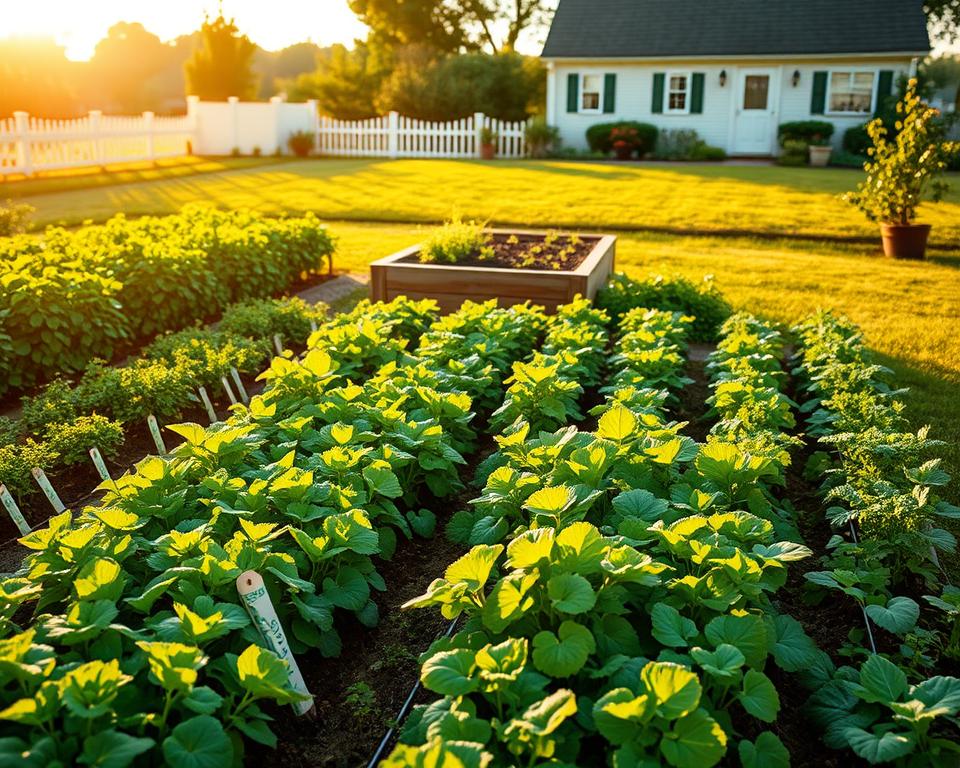
Are you looking to get more out of your small garden? You’re not alone. Many gardeners struggle to grow enough food in tight spaces. That’s where intensive gardening comes in.
Square foot gardening is a top choice for growing more in less space. It lets you pack a lot of produce into a small area. You can see a 100% increase in yield while using 80% less space.
This method is great for those with small gardens or little space. It helps you make the most of what you have. You can enjoy a big harvest without needing a huge garden.
What Is Square Foot Gardening?
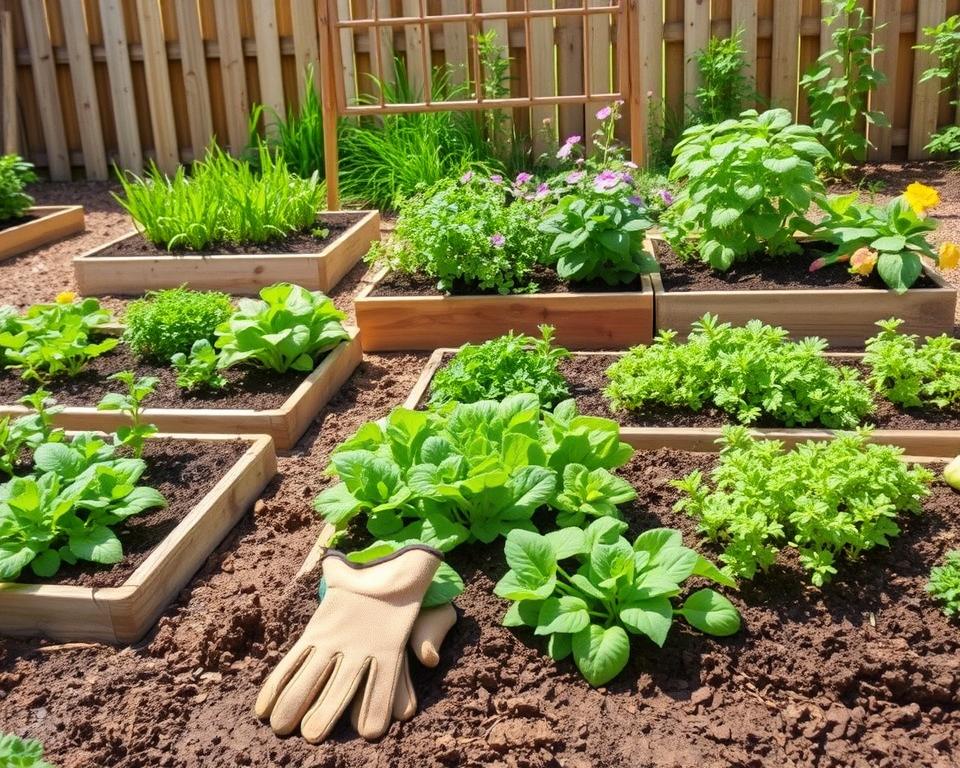
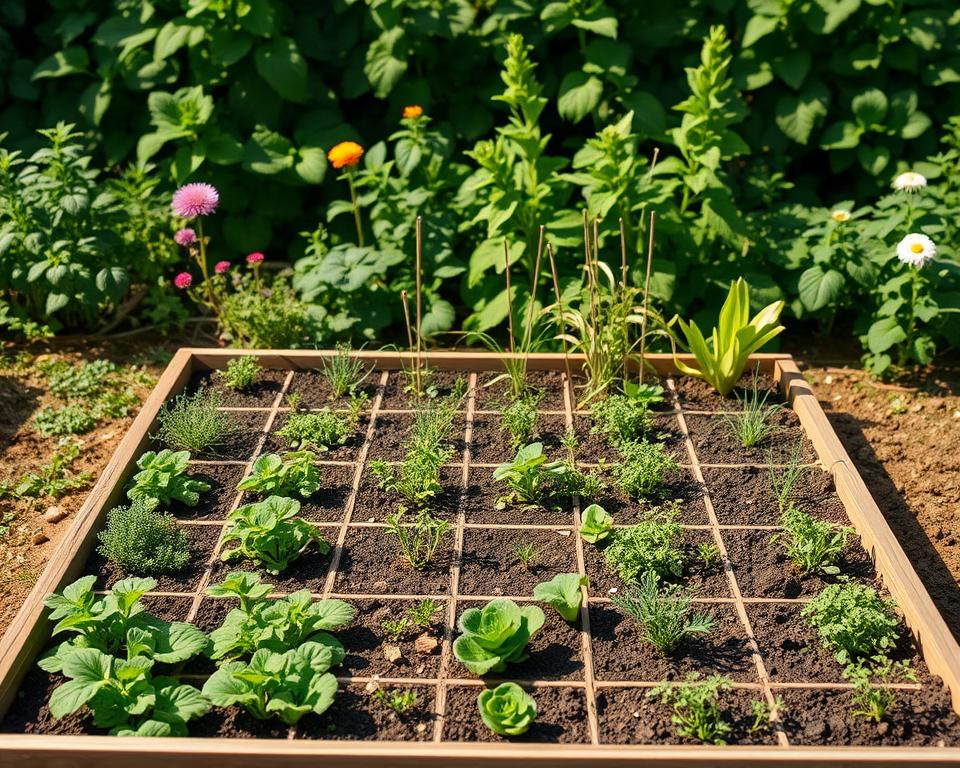
Square foot gardening is a way to use your garden space wisely. It involves dividing your garden into smaller sections. These sections are usually 1-foot by 1-foot squares within a 4×4 raised bed.
Each square is for a different plant, letting you grow many plants in a small area. First, you build a raised bed. Then, you divide it into a grid of squares.
This grid helps organize your plants and uses space well. You can grow vegetables, herbs, and flowers in these squares, based on what you like.
The grid makes crop rotation and reducing waste easier. With smaller sections, you can take care of each area well. This ensures your plants get enough water and nutrients.
Square foot gardening is a smart way to garden in a small space. It’s perfect for those with little room, as it produces a lot in a small area. By using square foot gardening, you can have a big harvest with less work.
Benefits of Square Foot Gardening
Square foot gardening is great for those who want to make the most of their space. It makes gardening more efficient and fun. You’ll spend less time on upkeep and more time enjoying your garden.
Less Weeding, No Tilling, and Less Watering
Square foot gardening means less weeding. The plants grow close together, shading out weeds. You won’t need to till the soil because of the paths. It also saves water by reducing evaporation and runoff.
| Feature | Traditional Gardening | Square Foot Gardening |
|---|---|---|
| Weeding Frequency | High | Low |
| Tilling Requirement | Yes | No |
| Water Usage | High | Low |
Choosing square foot gardening means a greener, more efficient garden. It’s perfect for small spaces, letting you grow many plants in a little area. Follow these tips to grow more with less effort and less harm to the environment.
Planning Your Square Foot Garden
Starting a square foot garden needs careful planning. First, pick a spot that gets enough sunlight and drains well. Make sure your garden gets at least 6 hours of direct sunlight daily.
After finding the right spot, design your garden layout. A square foot garden is divided into a grid. Each square foot grows a different crop. This way, you use space wisely and avoid waste.
Gardening in raised beds has many benefits. It improves soil drainage and keeps the soil warmer. When planning, think about how big your plants will get. Leave enough room for easy access.
A good square foot garden plan lets you grow many vegetables. Try companion planting to help your plants grow better and fight pests. For example, marigolds can keep nematodes away from tomatoes.
With careful planning, your square foot garden can be very productive. Even in small spaces, you can create a lush garden oasis. Just be creative and plan well.
Building Your Square Foot Garden Beds
Building your square foot garden beds is easy with a few simple materials. Start by picking the right materials for your raised beds. You can choose wood, composite materials, or recycled plastic lumber. Each option has its own advantages and disadvantages, so pick what works best for you.
Think about the size of your beds. A common size is 4 feet by 4 feet, making it easy to reach the center. But, you can adjust the size to fit your space and needs.
To build the beds, you’ll need:
- 2″ x 6″ or 2″ x 8″ lumber for the frame
- Wood screws or nails
- Weather-resistant wood glue (optional)
Assemble the frame by screwing or nailing the lumber together. Make sure the corners are secure and the frame is level. If using wood, add a bottom layer to keep weeds out.
Place your beds in a spot that gets at least 6 hours of direct sunlight a day. The right spot is key for your square foot garden’s success.
By following these steps, you’ll have a solid base for your square foot gardening. Raised bed gardening improves drainage and soil structure, making your garden easier to care for.
With your beds ready, you’re set to prepare the perfect soil mix for your square foot garden.
The Perfect Soil Mix for Square Foot Gardening
A good soil mix is key to a successful square foot garden. It needs to be rich in nutrients and drain well. This is important for the intensive gardening method.
The best mix includes compost, peat moss, and vermiculite. Compost adds nutrients and improves soil structure. Peat moss keeps moisture in, and vermiculite helps with drainage and air.
To make your own mix, use 1/3 compost, 1/3 peat moss, and 1/3 vermiculite. This mix creates a great environment for your plants in a square foot garden.
Choosing the right soil mix greatly affects your garden’s success. Nutrient-rich and well-draining soil helps your plants grow well in small spaces.
Square Foot Gardening Layout and Spacing
To get the most out of your square foot garden, mastering plant spacing and layout is key. Different plants need different spaces. This careful planning ensures each plant has room to grow.
When planning your garden, think about how big each plant will get. Lettuce and spinach can grow close together. But tomatoes and peppers need more room. Here are some tips for spacing:
- Leafy greens like lettuce and kale can be planted 4-6 per square foot.
- Herbs like basil and cilantro can be planted 4-6 per square foot.
- Tomatoes and peppers need 1-2 plants per square foot, depending on the variety.
- Carrots and radishes can be planted 12-16 per square foot.
Good layout also means thinking about how plants grow. Climbing plants like peas and beans can grow up trellises. Plants like marigolds and nasturtiums can act as a living mulch, keeping moisture in and weeds out.
By planning well, you can get a lot from a small space. Remember, the secret to success is in the planning and details.
Best Vegetables for Square Foot Gardening
Choosing the right vegetables is key to a successful square foot garden. Look for plants that grow well in tight spaces. Also, pick those that can grow up a trellis or other support.
Leafy greens are perfect for square foot gardens. They grow fast, taste great, and can be picked over and over. Some top picks include:
- Lettuce
- Kale
- Spinach
- Arugula
Herbs are another smart choice. They need little care, taste wonderful, and can be picked often. Some favorites are:
- Basil
- Cilantro
- Parsley
- Dill
There are also compact versions of common veggies that work well. These include:
- Cherry Tomatoes
- Radishes
- Carrots
- Compact Peppers
When picking veggies, think about how big they’ll get and what they need to grow. Most veggies need lots of sunlight and soil that drains well.
By picking the right veggies, you can have a big harvest from a small garden. With some planning and care, you can grow lots of tasty veggies in a tiny space.
Planting and Maintaining Your Square Foot Garden
Getting your square foot garden to thrive starts with good planting and care. First, prepare your soil mix as suggested earlier.
When planting, remember to space each crop correctly to prevent overcrowding. Use a grid to plant seeds or seedlings. This ensures each plant has room to grow.
Watering is key to keeping your garden healthy. Water when the top inch of soil feels dry. Don’t overwater, as it can cause root rot and other issues.
To keep your garden in top shape, fertilize regularly. Choose a balanced fertilizer rich in nutrients. Follow the package instructions for how much to use.
Remember these important maintenance tasks:
- Watch for pests and diseases
- Keep the garden bed weed-free
- Prune or train plants as needed
By following these tips and keeping up with maintenance, you’ll enjoy a productive and thriving square foot garden.
Troubleshooting Common Square Foot Gardening Problems
Understanding how to fix common problems is key to a successful square foot garden. You might face pests, diseases, and nutrient deficiencies. These can happen even in small, intensive gardens.
Pests like aphids, slugs, and caterpillars can be a big problem. Use organic pest control, like neem oil. Or, introduce beneficial insects, like ladybugs, to your garden.
Diseases, like fungal infections or bacterial spots, can also occur. Good air circulation and removing sick plants help. Also, choose disease-resistant plants and rotate crops to lower disease risk.
Nutrient deficiencies can harm your plants. Check your soil mix often and adjust it if needed. Use a balanced fertilizer and compost to keep your soil rich.
| Common Issue | Symptoms | Solution |
|---|---|---|
| Pests | Visible insects, damaged leaves | Organic pest control, beneficial insects |
| Diseases | Fungal infections, bacterial spots | Good air circulation, disease-resistant varieties |
| Nutrient Deficiencies | Yellowing leaves, stunted growth | Balanced fertilizer, compost |
Knowing how to tackle these common problems helps keep your garden healthy and productive. Regular checks and quick action are essential for a thriving garden in small spaces.