


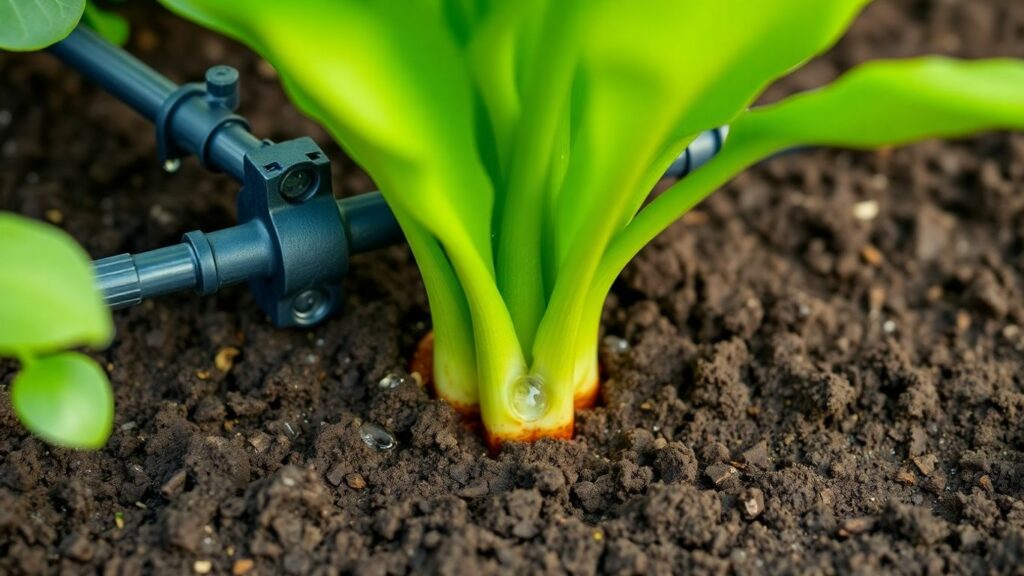
Water use in food production is under growing pressure from climate change and a rising global population. With agriculture consuming about 70% of the world’s freshwater – and up to 95% in some developing countries – more efficient irrigation is essential as water scarcity worsens.
This article explores the most water-efficient irrigation system and why it’s critical for tackling this challenge.
Drip Irrigation For Water Conservation
What Is Drip Irrigation?
Drip irrigation, sometimes called trickle irrigation, is a method for watering plants that delivers water slowly and directly to the root zone. Instead of spraying water over a wide area like traditional sprinklers, drip systems use a network of pipes, tubes, and small devices called emitters to put water right where the plants need it most. This approach is a big deal for sustainable agriculture water practices because it cuts down on a lot of the water that usually gets wasted.
The Core Principle Of Drip Irrigation
The main idea behind drip irrigation is simple: get water to the plant’s roots efficiently. It’s all about wetting about half of the root zone and then letting it dry out a bit before watering again. This cycle helps plants use water better and prevents issues like overwatering.
This method is key for reducing water usage farming because it minimizes losses from evaporation, runoff, and deep percolation. When set up right, drip irrigation systems can be incredibly efficient, sometimes saving up to 80% of the water compared to other methods. This makes it a smart choice for anyone looking to improve their irrigation system water saving capabilities.
Key Advantages Of Drip Irrigation Systems
So, why bother with drip irrigation? Well, there are some pretty good reasons. It’s not just about saving water, though that’s a big one. This system really changes how you manage your crops.
Maximizing Water Conservation
This is probably the main draw for most people. Drip irrigation delivers water right where the plants need it – at the roots. Unlike sprinklers that spray water everywhere, losing a lot to evaporation or wind, drip systems are super targeted.
Think about it: water isn’t just sitting on the surface getting baked by the sun or blown away. This means you can use significantly less water. Some studies suggest savings of up to 80% compared to older methods. That’s a huge difference, especially when water is scarce or expensive.
Enhancing Crop Health And Yield
Because the water goes straight to the roots, plants get a consistent, steady supply. This avoids the stress that comes from plants drying out and then getting flooded. Healthier plants tend to produce more and better quality crops. Plus, by keeping the leaves dry, you cut down on fungal diseases that love damp foliage. It’s a win-win for the plants.
Efficient Nutrient Application
This is a neat trick. You can actually mix fertilizers and nutrients right into the water that flows through the drip system. This process, called fertigation, means nutrients are delivered directly to the root zone, just like the water.
Plants can absorb them more easily, and you use less fertilizer overall because you’re not losing it to runoff or evaporation. It’s a more precise and cost-effective way to feed your crops.
Reducing Weed Growth And Disease
Remember how drip irrigation only waters the plants? That means the areas between your plants stay much drier. This makes it harder for weeds to sprout and grow. Less weeding means less work for you and less competition for water and nutrients for your crops.
Also, as mentioned before, keeping foliage dry helps prevent many common plant diseases that spread in wet conditions. It’s a simpler way to keep your fields cleaner and your plants healthier.
Essential Components Of A Drip Irrigation Setup
So, you’re thinking about setting up a drip irrigation system? That’s a smart move for saving water and keeping your plants happy. But before you start digging trenches or buying tubes, let’s talk about what actually makes these systems tick. It’s not just a bunch of pipes; there are a few key players that need to work together.
Water Source Considerations
First things first, where’s the water coming from? This sounds obvious, but it matters. You could be pulling from a well, your regular city water supply, or even a rainwater harvesting tank. Each source has its own quirks. City water is usually pretty clean, but it might have fluctuating pressure.
Well water can sometimes have sediment or minerals that you’ll need to deal with later. Rainwater is great, but you’ll definitely need to filter it well. The main thing is to know your source and what might be in the water before it even gets to your system.
Filtration For Clog Prevention
This is a big one, folks. If you don’t filter your water, you’re asking for trouble. Tiny bits of dirt, sand, or even algae can sneak into your system and clog up those little emitters that are supposed to be delivering water right to the plant roots.
A good filter acts like a sieve, catching all that gunk. Most folks recommend a filter with at least a 120-mesh screen. It’s a small investment that can save you a ton of headaches down the road. Think of it as the bouncer at the club, keeping the riff-raff out of the main event.
Pressure Regulators For Optimal Flow
Water pressure is a tricky thing. Too much, and you risk blowing out your tubing or emitters. Too little, and your plants won’t get enough water. That’s where a pressure regulator comes in. It’s like a traffic cop for your water, making sure it flows at a steady, consistent rate that your system can handle. This is super important for making sure every plant gets the right amount of water, not just the ones closest to the source. You want that uniform delivery.
Tubing And Emitters Explained
These are the workhorses of your system. The tubing is basically the network of “veins” that carries water from your source, through the filter and regulator, out to your plants. You’ll find different sizes, and sometimes it’s worth getting UV-resistant tubing if it’s going to be sitting out in the sun a lot, otherwise, it can get brittle. Then you have the emitters.
These are the little gadgets at the end of the line that actually drip the water out. They come in all sorts of designs – some are built right into the tubing, others are separate little pieces you stick into the ground. Their job is to release water slowly and precisely, right where the plant needs it most: the roots.
Designing Your Drip Irrigation System
Alright, so you’ve decided drip irrigation is the way to go. That’s awesome! But before you start buying parts, you gotta do a little planning. It’s not just about sticking tubes in the ground; you need to think about what works best for your specific patch of dirt and the plants you’re trying to grow.
Assessing Site-Specific Needs
First off, what kind of soil do you have? Sandy soil drains fast, so you might need more frequent, shorter watering cycles. Clay soil holds water longer, meaning you can water less often but for longer periods. You also need to consider the lay of the land. Is it flat, or are there slopes?
Slopes can affect water pressure and how evenly water spreads out. And, of course, what are you actually growing? Different plants have different thirst levels and root depths. A veggie garden will have different needs than a row of shrubs.
Determining Available Water Flow Rate
This is a big one. You need to know how much water you can actually get to your system. Hook up a bucket and a stopwatch to your water source – whether it’s a spigot, a well pump, or a tank. Time how long it takes to fill a known volume, like a 5-gallon bucket.
This gives you your flow rate in gallons per minute (GPM) or gallons per hour (GPH). You can’t design a system that needs more water than your source can provide. It’s like trying to fill a swimming pool with a leaky faucet – it’s just not going to happen.
Here’s a quick way to figure it out:
| Container Size | Time to Fill (seconds) | Flow Rate (GPM) |
|---|---|---|
| 5 Gallons | 30 | 10.0 |
| 5 Gallons | 60 | 5.0 |
| 5 Gallons | 120 | 2.5 |
Note: Flow rate in GPM = (Container Volume in Gallons / Time to Fill in Seconds) * 60
Layout Options For Efficient Coverage
How you lay out your tubing makes a difference. For individual plants or widely spaced rows, you might run a main “header” tube and then branch off with smaller “spaghetti” tubing to each plant, putting a drip emitter right at the base. This is super precise.
For densely planted areas, like flower beds or vegetable patches, you might use a grid pattern of tubing with emitters built right in, or spaced closely together. This ensures a more uniform wetting pattern across the whole area. You can also run tubing on the surface, which is easy to check and adjust, or bury it slightly (subsurface) to keep it out of sight and reduce evaporation, though this makes maintenance a bit trickier. The goal is to get water where the roots are, without watering the pathways or empty spots.
Best Practices For Drip Irrigation Success
So, you’ve got your drip irrigation system all set up. That’s great! But just having the equipment isn’t the whole story. To really get the most out of it, and to make sure it keeps working well for years, there are a few things you should be doing. Think of it like owning a car – you can’t just drive it forever without changing the oil or checking the tires, right? Your drip system needs a little attention too.
Proper Scheduling And Monitoring
This is probably the most important part. You can’t just turn it on and forget about it. The goal is to give your plants just enough water, right where they need it, without overdoing it. Overwatering can be just as bad as underwatering, leading to root rot or other problems. So, how do you get the schedule right?
- Watch the weather: If it rains, you’ll probably want to skip a watering cycle. Simple enough.
- Check the soil: Stick your finger a few inches into the soil near your plants. If it feels damp, you likely don’t need to water yet. If it’s dry, it’s probably time.
- Observe your plants: Wilting leaves can be a sign of thirst, but they can also mean too much water. Look for other clues like yellowing leaves or stunted growth.
- Consider the season and crop: Plants need more water when they’re actively growing and during hot, dry spells. Different crops also have different thirst levels.
Regular System Checks And Maintenance
Your system is made of a bunch of parts, and sometimes things can go wrong. A little bit of regular checking can save you a lot of headaches later.
- Look for leaks: Walk through your system while it’s running. Are there any drips where there shouldn’t be? A small leak can waste a surprising amount of water over time.
- Check the filters: These are super important for stopping gunk from clogging up your emitters. Depending on your water quality, you might need to clean them out pretty often. A clogged filter means less water gets to your plants.
- Inspect emitters: Make sure they aren’t blocked. Sometimes dirt or mineral buildup can stop them from dripping properly. You can usually clear them with a small wire or by soaking them.
- Test pressure: Ensure your pressure regulator is working. If the pressure is too high, you risk blowing out fittings or damaging the tubing. Too low, and water won’t reach all your plants.
Adapting To Plant Needs
Plants aren’t static. They grow, they change, and their water needs change with them. What worked when you first planted might not be ideal a month later.
- Root zone development: As plants grow, their root systems expand. You might need to adjust emitter placement or watering duration to cover the new, larger root zone.
- Growth stages: Seedlings need less water than mature plants. Fruiting or flowering stages often require more consistent moisture. Pay attention to what your plants are doing.
- Crop rotation: If you change what you’re planting in a certain area, you’ll need to re-evaluate the irrigation needs for the new crop. Some plants are thirstier than others.
Basically, think of your drip system as a tool that needs to be managed. By paying attention to your plants and your system, you’ll keep things running smoothly and efficiently.
Advanced Drip Irrigation Techniques
Integrating Fertigation for Precision
Fertigation is basically combining fertilization with irrigation. With drip systems, this is super easy to do. Instead of applying fertilizer separately, you can mix it right into the water that’s flowing through your drip lines. This means the nutrients go straight to the plant’s roots, exactly where they’re needed. It’s way more efficient than broadcasting fertilizer over the whole field, which often leads to waste.
You can control the amount of fertilizer precisely, making sure your plants get just what they need, when they need it. This not only saves money on fertilizer but also helps prevent nutrient runoff into waterways, which is a big environmental plus.
Automation and Smart Farming Integration
Taking drip irrigation to the next level involves automation. Think about systems that can adjust watering schedules based on real-time weather data or soil moisture sensors. These smart systems can automatically turn on or off, delivering the exact amount of water required.
This takes a lot of the guesswork out of irrigation. You can monitor everything from your phone or computer, getting alerts if something isn’t right. This kind of integration is part of what they call smart farming, where technology helps make farming more precise and less labor-intensive. It’s all about using efficient irrigation techniques to get the best results with the least amount of resources.