


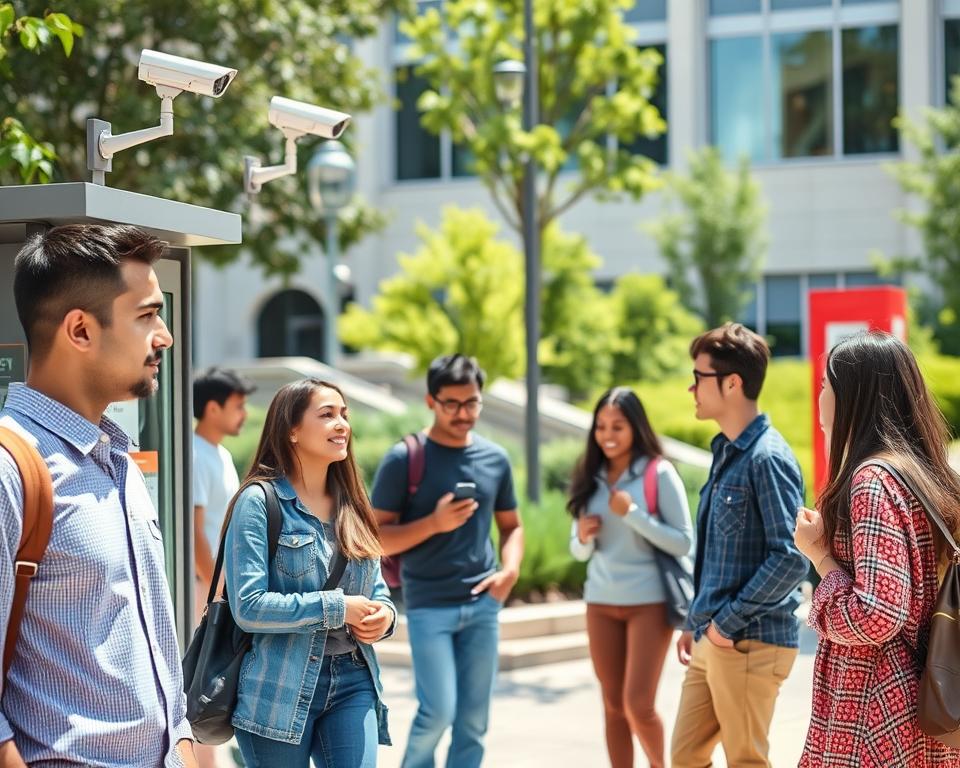
Keeping yourself safe is a big deal for college students. With a lot of crimes happening on campus, it’s key to stay alert and protect yourself.
Numbers show a scary truth: most campus crimes are burglaries. Also, 13% of students face rape or sexual assault. These stats highlight the importance of being careful and ready.
Learning about college security measures and how to defend yourself can help. This way, students can lower their chances of being a crime victim.
The College Security Landscape
When students arrive on campus, knowing about campus safety is key. It’s a team effort between students, teachers, and security. Everyone plays a role in keeping the campus safe.
Crime on campus can include theft, vandalism, and assault. Students should keep an eye out and report anything odd to security. Staying informed helps prevent crimes.
There are ways to stay safe. Learn about your school’s safety rules and emergency plans. Many schools give tips, like walking in groups at night and using safe paths.
Keeping up with local crime news can also help you stay safe. By being alert and informed, students can lower their chances of facing safety problems on campus. Schools offer services like escort programs and emergency call boxes to help keep students safe.
Assessing Your University’s Security Environment
To stay safe on campus, it’s key to check the security measures at your university. Many colleges have local police to protect students and keep campuses safe. These services are very important for a secure environment.
Universities offer many safety resources for students. This includes emergency call boxes, security patrols, and safety programs. It’s important for students to know about these resources and how to use them.
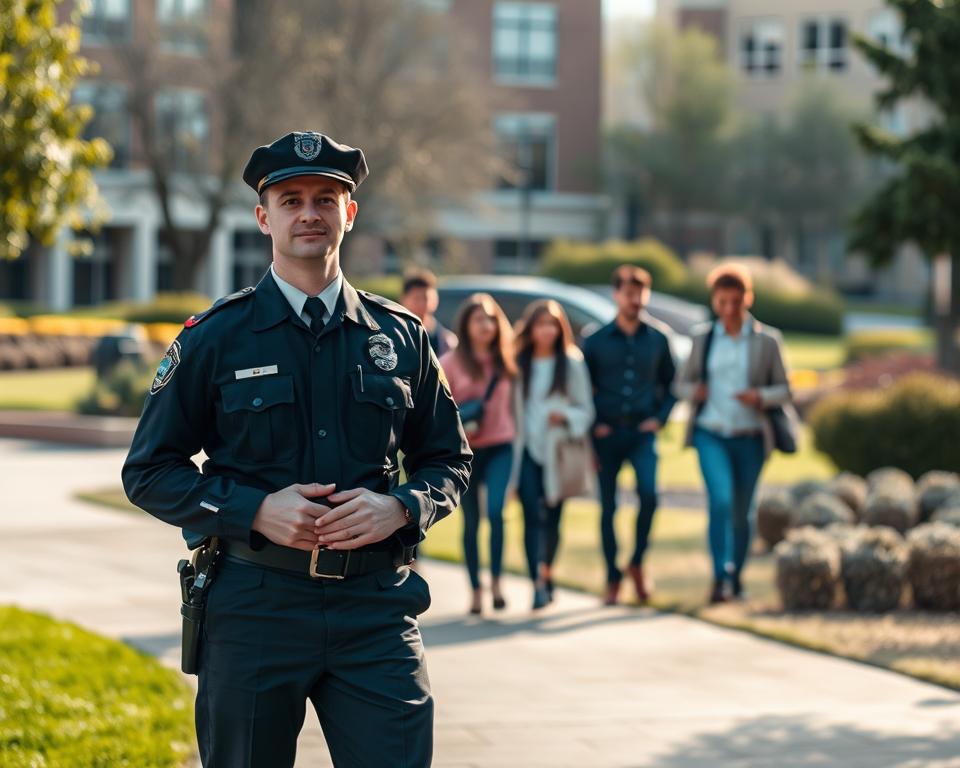
When looking at your university’s security, think about a few things. Look for campus police, emergency call boxes, and how well security patrols work. Knowing these details helps you use safety resources better and makes the campus safer for everyone.
Campus Safety Fundamentals for Students
As a college student, knowing about campus safety is key for a safe learning experience. Campus safety includes many practices and awareness that help prevent incidents.
Being aware of your surroundings is a big part of campus safety. This means knowing where emergency services are, understanding campus layouts, and watching out for risks like isolated spots or strange activities.
In today’s world, keeping safe on social media is also very important. Students should think carefully about what they post online. This is because it can reveal personal habits, locations, or other sensitive info.
- Set social media profiles to private to control who can see your information.
- Be mindful of check-ins and location sharing, as they can reveal your whereabouts.
- Avoid sharing personal details or schedules that could be used to predict your movements.
By following these student safety tips and being smart about your online presence, you can improve your campus safety. It’s also good to stay up-to-date on campus security policies. Use safety apps or emergency contact systems when you can.
Using these strategies can make college safer and more secure. By focusing on campus safety and being proactive, students can reduce risks. This way, they can concentrate on their studies and personal growth.
Utilizing Campus Security Services and Resources
To keep campus life safe, it’s important to know about security services and resources. Colleges often have emergency call boxes and campus police for 24/7 patrols. This makes campus safer.
Emergency notification systems are a key resource on campus. It’s vital to stay updated on threats or emergencies for your safety.
How to Register for Campus Emergency Notifications
Signing up for emergency alerts is easy. Colleges use a special platform for alerts, and you can register online. Just visit the college’s website or student portal.
To sign up, follow these steps:
- Visit your college’s website or student portal.
- Find the link to register for emergency alerts.
- Enter your contact details, like phone number and email.
- Confirm your registration.
Campus security also offers escort services. Security can walk you to your destination on campus, mainly at night. Knowing what’s available can boost your safety.
| Service | Description | Availability |
|---|---|---|
| Emergency Call Boxes | Direct connection to campus security | 24/7 |
| Campus Police Patrols | Regular patrols across campus | 24/7 |
| Escort Services | Security personnel accompany students | Evening/Night |
By using these services and staying informed, you can greatly improve your safety. This helps make campus a safer place for everyone.
Basic Self-Defense Principles for College Students
Learning basic self-defense can change the game for college students. It helps you stay safe on campus. Knowing self-defense techniques boosts your safety and confidence.
SABRE’s College Safety Program stresses the importance of personal safety. It’s about being aware of your surroundings and knowing how to react in danger.
Recognizing Potentia Threats Early
Spotting threats early is a big part of self-defense. Stay alert and know your surroundings, day or night, whether walking or studying.
Trust your instincts – if something feels off, it’s safer to leave the area.
Basic self-defense includes keeping distance from strangers, knowing escape routes, and using your voice to scare off attackers. Using these tips daily can lower your risk of campus crime.
Stay informed and proactive to improve your safety. This helps make your campus a safer place for everyone.
Physical Self-Defense Techniques for Beginners
In today’s world, knowing self-defense is a must for college students. It boosts personal safety and confidence. Starting with simple yet effective techniques is key for beginners.
Understanding how to use your body’s natural weapons is vital. This knowledge is essential for emergency situations.
Striking Techniques for Emergency Situations
Striking techniques are important in self-defense. They can help stop an attacker. Here are some basic ones:
- Palm Strike: Using the base of your palm to strike an attacker can be very effective, targeting the nose or chin.
- Elbow Strike: Elbow strikes are powerful. They can be used when close to the attacker, targeting the face or body.
- Knee Strike: Knee strikes are useful in close combat situations. They target the stomach or groin area.
Practicing these techniques is important. It helps build muscle memory. This ensures you can react instinctively in a threatening situation.
Having the right safety resources is also key. Products like pepper sprays and personal alarms, as offered by SABRE, add security. These tools are easy to use in emergencies, making them perfect for college students.
Some important safety resources for students include:
- Personal alarms that emit a loud noise to deter attackers
- Pepper sprays that can incapacitate an attacker temporarily
- Smartphone apps that allow for quick emergency calls or alerts
By learning self-defense techniques and using the right safety resources, college students can improve their safety and security on campus.
Self-Defense Tools and Personal Safety Devices
College students can boost their safety with self-defense tools and personal safety devices. These items add a layer of protection. They help students feel safer on campus.
Pepper sprays and gels are top choices for self-defense. Brands like SABRE offer compact, easy-to-use products. Pepper spray is favored for its ability to stop an attacker, giving the victim time to get away.
Proper Use and Carrying of Pepper Spray
To use pepper spray right, knowing how to handle and carry it is key. Here are some important tips:
- Always check local laws about using and carrying pepper spray.
- Practice using the spray to know its range and how well it works.
- Keep it in a spot you can easily reach, like on a keychain or in a pocket.
Other safety devices include personal alarms. They make a loud noise to scare off attackers. These devices are small and easy to carry around campus.
When picking self-defense tools or personal safety devices, think about their effectiveness, how easy they are to use, and local laws. Being informed and ready can greatly improve personal safety on campus.
Campus Emergency Procedures and Response
Knowing campus emergency procedures is key to keeping students safe in urgent situations. Colleges have set rules for emergencies. It’s vital for students to know these to act quickly and correctly.
These procedures usually cover evacuation paths, emergency phone numbers, and how to stay safe inside. Students should learn these to protect themselves and others.
If there’s a lockdown or shelter-in-place, students must listen to campus security or local police. Lockdowns mean staying in a safe spot, like a classroom or dorm, until it’s safe to leave.
- Stay away from windows and doors.
- Lock or barricade doors if possible.
- Turn off lights and remain silent.
- Follow instructions from authorities.
Shelter-in-place is similar but might include sealing doors and windows to keep out harmful substances. It’s important to know the difference to act right.
By knowing and following emergency plans, students can greatly improve their safety in emergencies. It’s also key to stay informed about dangers and be ready for unexpected events.
Psychological Aspects of Campus Safety
Campus safety is more than just physical security. It also includes the mental health of students. Studies show that keeping mental health in check is key to feeling safe and well. Students deal with a lot, from school stress to personal issues, which can affect their mind.
Many schools now understand the importance of mental health. They offer help and support to students. This includes counseling, stress management workshops, and efforts to reduce mental health stigma.
Campus Mental Health Resources
Students have many resources on campus to help with their mental health. These include:
- Counseling centers for one-on-one and group therapy
- Mental health awareness programs and workshops
- Support groups for specific issues like anxiety or depression
- Online resources and hotlines for quick help
Using these resources can help students manage their mental health. It’s a big step in making campus safer.
Some important student safety tips are being mindful of your surroundings and staying in touch with loved ones. Also, don’t hesitate to ask for help when you need it. By using campus resources and these tips, students can feel safer and more supported.