


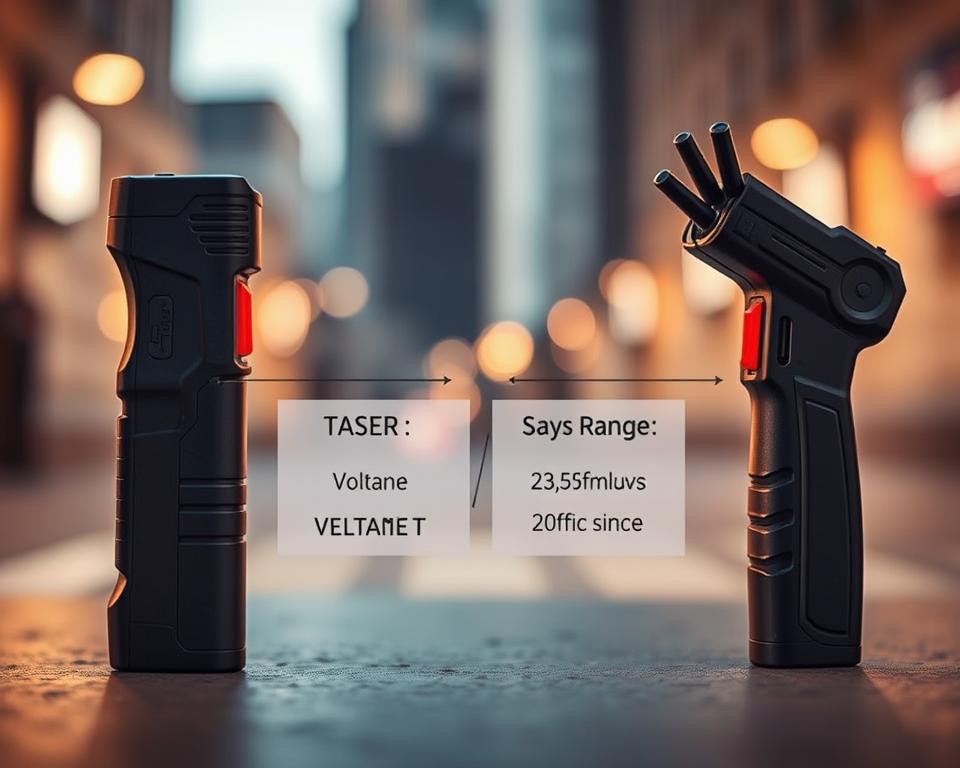
Choosing the right self-defense tool can be tough. Two popular choices are stun guns and tasers. But what makes them different?
Stun guns need direct contact with the attacker. On the other hand, tasers are projectile devices. They can stop an attacker from a distance. Knowing these differences is key to picking the right tool for you.
By comparing stun guns and tasers, you can make a smart choice for your safety. In this article, we’ll explore both options. This will help you pick the best tool for protecting yourself.
Self-Defense Electrical Devices
Stun guns and tasers are used for self-defense. They send an electrical current to stop the attacker’s muscles. This lets the victim get away. Even though they serve the same goal, they work differently.
These devices aim to stop an attacker for a short time. They do this with a high-voltage shock. The main things they have in common are:
- They are for self-defense.
- They use an electrical shock.
- People can buy them in many places.
It’s important to know how these devices work. This helps when choosing a self-defense tool. While they are similar, there are big differences. Knowing these can help pick the best tool for safety.
In short, stun guns and tasers are good for self-defense. They use electrical shock to work. Their similarities make them popular for keeping safe.
What Is a Stun Gun?
Stun guns are handheld devices used for self-defense. They are easy to use and work well. They deliver an electrical shock to stop an attacker.
To work, a stun gun needs to touch the attacker. It sends out a strong electrical current. This current hurts and makes the attacker unable to move for a while.
Stun guns are small and simple to use. They are also safe to use again and again. This makes them a good choice for protecting oneself without causing lasting harm.
But, stun guns have some downsides. They only work if they touch the attacker. Also, some places have rules about using and owning stun guns.
| Feature | Stun Gun | Taser | Pepper Spray |
|---|---|---|---|
| Effective Range | Direct Contact | Up to 15 feet | Up to 10 feet |
| Reusable | Yes | Yes | No |
| Legal Restrictions | Varies by State | Varies by State | Varies by State |
In summary, stun guns are a good self-defense choice. They are effective and easy to use. Knowing how they work and their pros and cons helps in deciding if they are right for you.
What Is a Taser?
Tasers are special devices used for self-defense. They fire projectiles to stop an attacker. They are known for their ability to temporarily disable someone from a distance.
Tasers shoot two small darts that connect to the device by wires. When they hit the target, they send an electric current. This current stops the target’s muscles from working, making them unable to move.
Tasers have a big advantage over stun guns because they can be used from far away. While stun guns need to touch the attacker, Tasers can work from up to 15 feet. But, it’s important to aim well because the darts might miss or not stick properly.
| Feature | Taser | Stun Gun |
|---|---|---|
| Range | Up to 15 feet | Direct contact |
| Method of Use | Fires projectiles | Direct electrical contact |
Choosing between a Taser and a stun gun depends on your needs and what you feel comfortable with. Think about how often you might need to use it, your comfort with the device, and the laws in your area.
In summary, Tasers are great for self-defense because they can stop an attacker from a distance. Knowing how they work and their benefits over stun guns helps people make better choices for their safety.
Stun Gun vs Taser: Key Differences
Stun guns and tasers are both used for self-defense, but they differ in many ways. Knowing these differences is key for those looking to protect themselves.
Stun guns need you to be close to the attacker to work. You must touch them to send an electric shock. Tasers, though, can be used from a distance. They fire probes that can stop an attacker from several feet away.
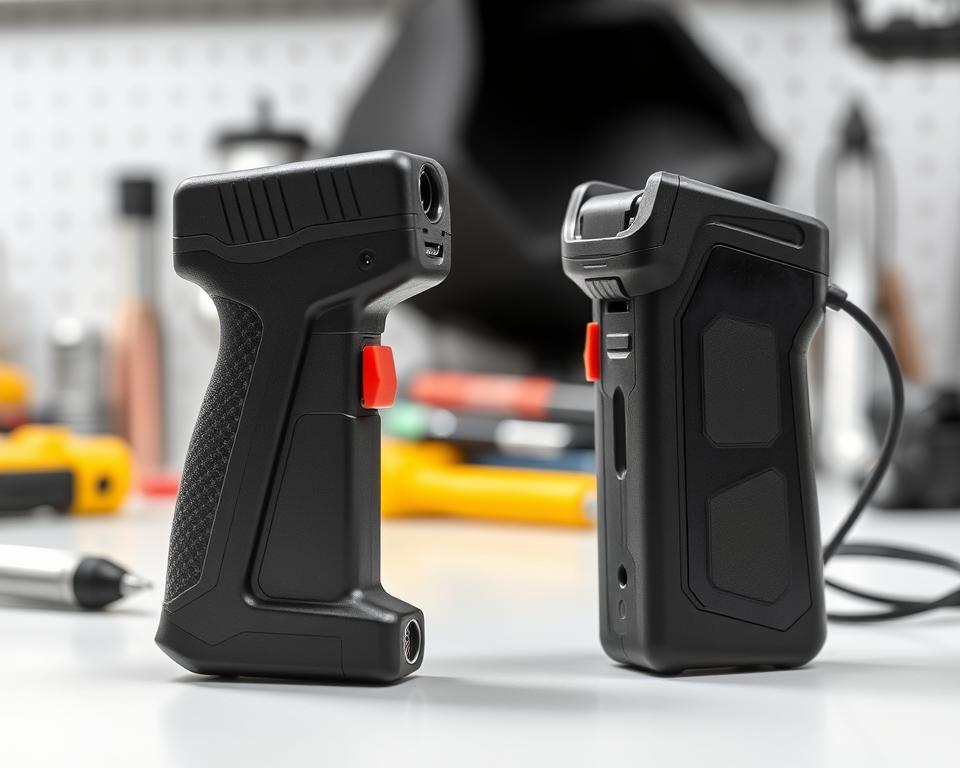
How well these devices work also varies. Stun guns use pain to stop an attacker, but you must be close. Tasers, which can stop attackers from a distance, might be safer for you.
Comparative Analysis
| Feature | Stun Gun | Taser |
|---|---|---|
| Range | Close contact required | Distance up to several feet |
| Method of Delivery | Direct contact | Projectile probes |
| Effectiveness | Pain compliance | Incapacitation |
Even though they differ, stun guns and tasers have some things in common. They’re both for self-defense, are usually not deadly, and can stop or scare off attackers. Knowing both their similarities and differences helps you choose the right one for you.
In conclusion, picking between a stun gun and a taser depends on several things. Consider how you plan to use it, how comfortable you are with it, and the laws in your area. By looking at their differences and similarities, you can pick the best option for your safety.
Effectiveness Comparison
Stun guns and tasers are both for self-defense. But, their effectiveness can be influenced by several factors. The outcome depends on the device’s power, the attacker’s health, and the setting.
Stun guns work well at close range. They can stop an attacker for a while. But, their power can be less if the attacker is wearing thick clothes or has a high pain threshold.
Tasers have a longer range and can be more effective in some cases. But, they need proper training and can have issues with cartridge deployment.
Factors Affecting Effectiveness
The success of stun guns and tasers depends on their voltage, amperage, and discharge time. It also depends on the attacker’s physical and mental state.
Weather and the presence of others can also change how well these devices work.
Success Rates and Limitations
Tasers are often seen as more effective because they can stop attackers from a distance. But, stun guns can be very effective in close situations.
Knowing the limits of each device is key to making a good choice.
Factors Affecting Effectiveness
Legal and training aspects also play a big role in how well stun guns and tasers work.
Understanding local laws and getting proper training can greatly improve their effectiveness in self-defense.
Safety Considerations
It’s key to know how to use stun guns and tasers safely. They are made for self-defense but have their own safety rules. Users need to understand these rules.
When you use a stun gun or taser for self defense, always follow the maker’s instructions. Know how far the device can reach, make sure it’s charged, and know any possible dangers.
- Proper storage to prevent accidental discharge
- Awareness of local laws and regulations regarding the use of such devices
- Understanding the stun gun vs taser misuse or unintended consequences
When comparing stun gun vs taser, remember the risk of injury to you or others. Tasers can cause falls or other injuries because they can stop an attacker.
To use them safely, get proper training and know the legal side of things. Being informed and careful helps you use stun guns or tasers for self-defense without risks.
Safe use of stun guns and tasers means knowing how they work, their risks, and the law. Knowing these helps you make smart choices for your safety.
Legal Considerations in the United States
The laws on stun guns and tasers differ from state to state in the U.S. It’s key to know these laws if you’re thinking about using one for self-defense.
Some states have strict rules about who can use, carry, and sell these devices. For example, some states need a permit to carry them, while others ban them altogether.
It’s vital to learn about the laws in your state. Here’s a quick look at where stun guns and tasers stand in different states:
| State | Stun Gun Legality | Taser Legality |
|---|---|---|
| California | Legal with restrictions | Legal for law enforcement |
| New York | Illegal for civilian use | Legal for law enforcement |
| Texas | Legal | Legal |
Before choosing a stun gun or taser for self-defense, think about the legal side. Using them wrongly can get you in trouble, including criminal charges.
To follow the law, you should:
- Look up state and local laws on stun guns and tasers.
- Know the rules for carrying and using them.
- Be aware of any laws about buying and owning stun guns and tasers.
In summary, the laws on stun guns and tasers in the U.S. are complex and change by state. By knowing and following local laws, you can make smart choices about self-defense.
Price Comparison and Value
When looking at self-defense tools, the cost of stun guns and tasers matters a lot. Their prices vary a lot, showing their different features, how well they work, and the brand’s reputation.
Stun guns are usually cheaper, starting at $20-$50 for basic ones. More advanced stun guns with extra features like higher voltage or rechargeable batteries can cost $50-$100. Tasers, on the other hand, cost more, from $200 to over $1,000 for top models with features like wireless connectivity or bigger batteries.
The value of these tools isn’t just their price. It’s also about how well they work, how long they last, and any extra features. Tasers have a longer range and are more reliable, which makes them worth the extra cost for some. Stun guns, though, are a more affordable choice with good deterrent power.
In the end, choosing between a stun gun and a taser depends on what you need, how much you can spend, and what you prefer. It’s key to think about the cost against the device’s effectiveness and features to make a smart choice.
Proper Usage and Training
Learning how to use stun guns and tasers is key for self-defense. Knowing how to use them right is important. It helps them work best and keeps you safe.
Deployment Techniques
Stun guns and tasers work differently. Stun guns need direct contact with the attacker. Tasers can be fired from a distance, aiming for the attacker’s body.
Learning the right distance and aiming for the probes is part of the training.
Maintenance and Battery Life
Keeping your stun gun or taser in good shape is important. Check the battery and make sure it’s clean and free of dirt.
| Device | Maintenance Requirement | Battery Life |
|---|---|---|
| Stun Gun | Regularly check for damage, clean contacts | Several thousand activations |
| Taser | Check cartridge expiration, battery status | Varies by model, typically long-lasting |
Aiming and Firing Techniques
Learning to aim and fire a taser is critical. Practice makes perfect. For stun guns, knowing how to make good contact is essential.
Cartridge Replacement and Maintenance
Replacing taser cartridges is important. Knowing when and how to do it keeps your taser working.
Choosing between a stun gun and a taser for self-defense is a big decision. Knowing how to use them right makes a big difference. Whether you choose a taser versus stun gun, getting proper training is a must.
Alternative Self-Defense Options
Self-defense isn’t just about stun guns and tasers. Other tools can be just as good. It’s key to look at different options to find what’s best for you.
Pepper Spray and Chemical Deterrents
Pepper spray is a common self-defense tool. It can stop an attacker without lasting harm. It’s simple to use and works well with other safety steps.
Pepper spray irritates the eyes, skin, and lungs. This gives you time to get away from danger.
Physical Barriers and Alarms
Physical barriers, like personal alarms, can also be effective. These devices make a loud noise when turned on. This noise can scare off an attacker and draw attention to your situation.
| Self-Defense Tool | Effectiveness | Ease of Use |
|---|---|---|
| Pepper Spray | High | Easy |
| Personal Alarms | Medium | Very Easy |
| Stun Guns/Tasers | High | Moderate |
When picking a self-defense tool, think about what feels right for you. Look at the laws in your area and what each tool offers. Knowing your options helps you choose the best for your safety.