



Getting stuck with a flat tire is really frustrating. But, you can change it fast and get moving again.
You don’t need to be a pro to change a tire quickly. With the right tools and some basic knowledge, you can do it in 10 minutes. Having roadside tire help is key for drivers who don’t want to be stuck for hours.
Having a good tire change service ready can be a lifesaver. It’s all about being ready and knowing what to do when your tire goes flat.
The Essential Flat Tire Fix Toolkit
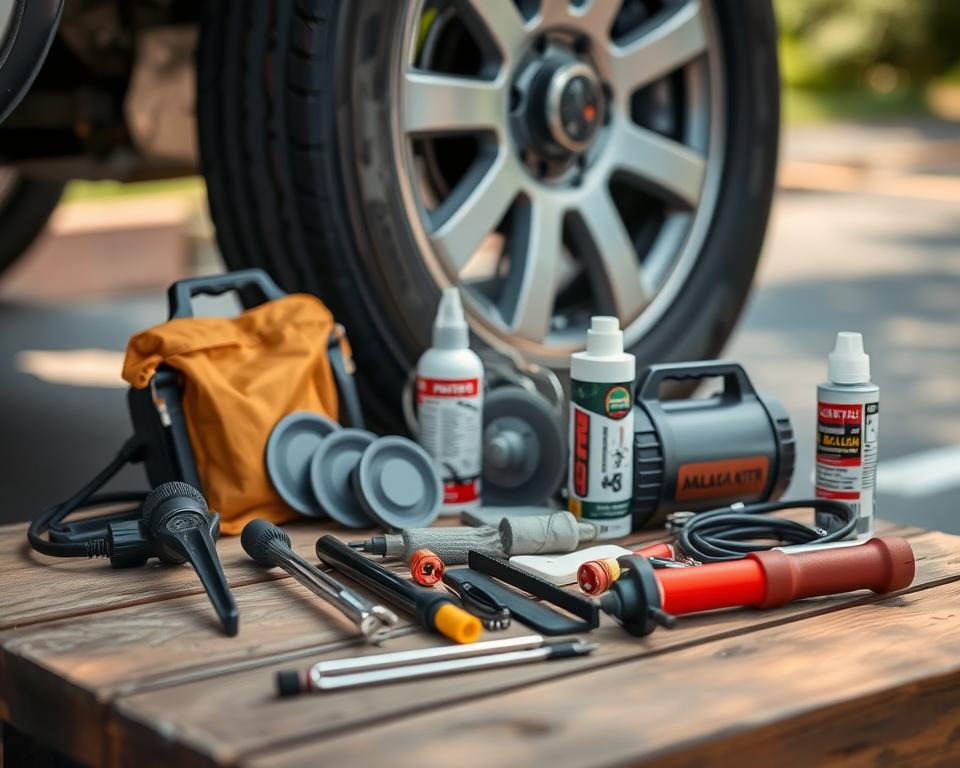
A well-stocked toolkit is key when facing a flat tire. Let’s look at the must-have tools for a successful fix.
Jack and Lug Wrench Basics
The jack and lug wrench are essential for tire repair. The jack lifts the vehicle, and the lug wrench loosens lug nuts. Choose a sturdy jack that can handle your vehicle’s weight.
Spare Tire Maintenance
Your spare tire is vital. Always check its air pressure and condition. A neglected spare is as useless as no spare at all.
Tire Pressure Gauge and Portable Compressor
A tire pressure gauge checks your tire air, including the spare. A portable compressor can reinflate your tire or spare to the right pressure.
Gloves, Flashlight, and Wheel Wedges
Don’t forget gloves for protection, a flashlight for light, and wheel wedges for safety. These tools are key for safe tire changing.
| Tool | Purpose | Tips |
|---|---|---|
| Jack | Lift the vehicle | Ensure it’s sturdy and suitable for your vehicle’s weight |
| Lug Wrench | Loosen lug nuts | Use it correctly to avoid stripping the nuts |
| Spare Tire | Replace the flat tire | Regularly check its air pressure and condition |
With these essential tools and knowledge, you’re ready for a flat tire. Regularly check your tools to keep them ready for use.
Safety First: Preparing for Roadside Tire Repair
Getting ready for a roadside tire repair is more than just fixing the tire. It’s about keeping yourself and others safe. When you need to change a tire on the side of the road, being visible and aware is key.
Visibility to Other Drivers
To make yourself more visible, turn on your hazard lights. This warns other drivers you’re stranded and helps prevent accidents. Use warning triangles or flares around your car to boost visibility, even at night. It’s vital to be seen to avoid being hit by another vehicle.
Knowing what’s happening around you is important. If you’re on a busy road, try to move to a safer spot before changing the tire. If you can’t move, be very careful of passing cars. The emergency tire service rules say to stay alert and watch the traffic while changing your tire.
Also, think about where you are. If the ground is sloping or uneven, take extra steps to keep your car stable. And remember, if you’re not sure about changing the tire yourself, it’s okay to call for roadside tire assistance.
Quick Assessment: Determining If You Can Fix the Tire Yourself
When you get a flat tire, it’s important to check how bad the damage is. This will help you know if you can fix it yourself. The success of a flat tire fix depends on how well you understand the tire’s condition.
Punctures and Minor Damage
For punctures, look at where and how big the hole is. If it’s in the tread and small, you might be able to fix it with a plug or patch. But, if it’s on the sidewall or big, you should get a new tire.
Sidewall Damage and Blowouts
Damage to the sidewall or a blowout is serious and needs a pro. If you see bulges, cracks, or tears, get help from a tire repair expert. A blowout means the tire is badly damaged, and fixing it yourself is not safe.
| Type of Damage | DIY Repairable | Recommended Action |
|---|---|---|
| Puncture in tread area ( | Yes | Use tire plug or patch |
| Puncture on sidewall or large puncture | No | Replace tire |
| Sidewall damage (bulges, cracks, tears) | No | Seek professional tire repair |
By quickly checking your tire, you can choose to fix it yourself or get help. This ensures you stay safe while driving.
Step-by-Step Flat Tire Fix Procedure
Don’t let a flat tire ruin your day. Follow our simple steps to fix it quickly. With practice, you’ll handle a flat tire like a pro, getting you back on the road fast.
The first step is to loosen the lug nuts on the wheel with a lug wrench. Turn them counterclockwise until they’re loose, but don’t remove them yet. This is key in the tire change service process.
Next, raise the vehicle with a car jack until the flat tire is off the ground. Make sure the jack is securely in place and the vehicle is stable. Now, you can remove the lug nuts completely and take off the flat tire.
Before putting the spare tire on, check the wheel hub and spare tire for debris or damage. Then, place the spare tire onto the wheel hub and hand tighten the lug nuts. Make sure the tire is properly seated and centered.
Tightening the lug nuts in a star pattern is important. This pattern helps to evenly distribute the force across the wheel. It prevents damage to the brake rotor or wheel bearings. If you’re not familiar with this, refer to your vehicle’s manual or seek flat tire assistance from a professional.
| Step | Description | Notes |
|---|---|---|
| 1 | Loosen Lug Nuts | Use a lug wrench to loosen lug nuts counterclockwise. |
| 2 | Raise the Vehicle | Use a car jack to raise the vehicle until the flat tire is off the ground. |
| 3 | Remove Lug Nuts and Flat Tire | Completely remove lug nuts and take off the flat tire. |
| 4 | Install Spare Tire | Place the spare tire onto the wheel hub and hand tighten the lug nuts. |
| 5 | Tighten Lug Nuts | Tighten the lug nuts in a star pattern until they’re snug. |
After tightening the lug nuts, lower the vehicle to the ground. Then, tighten the lug nuts as much as possible in a star pattern. Check your vehicle’s manual for the recommended torque specification.
Fixing a flat tire is a skill that can save you time and money. By following these steps and practicing, you’ll become more confident and proficient in handling a flat tire situation. This makes you a more self-sufficient driver.
Time-Saving Techniques for Faster Tire Changes
Changing a tire quickly and safely is more than just using the right tools. It’s about using the right techniques. When you’re stuck on the side of the road with a flat tire, every minute is precious. Learning a few key strategies can make changing a tire much faster, getting you back on the road sooner.
Proper Lug Wrench Technique
Using a lug wrench correctly is key to loosening lug nuts without damaging the threads. To do this, position the lug wrench correctly on the nut and use your body weight to loosen it. This method helps avoid wheel damage and makes the tire-changing process smoother.
Optimal Jack Placement
The jack’s placement is vital for safety and efficiency. Identify the jacking points on your vehicle, as shown in your owner’s manual, for correct placement. Proper jack placement prevents damage to your vehicle’s frame and keeps you safe while changing the tire.
Here’s a quick comparison of common mistakes and best practices for jack placement:
| Aspect | Common Mistake | Best Practice |
|---|---|---|
| Jack Position | Placing the jack on a weak point | Using the manufacturer’s designated jacking points |
| Jack Stability | Not ensuring the jack is stable | Placing the jack on a firm, level surface |
By using these techniques, you’ll save time and stay safer on the road. For more flat tire help or roadside tire assistance, look into professional resources or roadside assistance services.

Vehicle-Specific Considerations for Tire Changes
Knowing your vehicle’s design is key for fixing tires, even when you’re driving. Each car has its own needs for tire changes. This depends on the spare tire’s location, the lug nuts, and the car maker’s instructions.
Some cars have a full-size spare, while others have a temporary or “doughnut” spare. It’s vital to know your car’s spare type for a successful tire repair. The spare’s location also varies, often in the trunk, under the floor, or on the rear door.
The type of lug nuts is another important detail. Some cars use standard lug nuts, while others need special ones or have anti-theft systems. Knowing this can save you time during a mobile tire repair.
Key Considerations for Various Vehicle Types
| Vehicle Type | Spare Tire Location | Lug Nut Type |
|---|---|---|
| Sedans | Trunk | Standard |
| SUVs/Trucks | Underfloor or Rear Mounted | Specialized or Anti-theft |
| Electric/Hybrid Vehicles | Varies by Model | Standard or Specialized |
Always check your car’s owner’s manual for tire change instructions. Many makers provide detailed guides and safety tips for changing tires.
Understanding these specific needs can help you prepare for a tire repair or mobile tire repair. This ensures your safety while driving.
Dealing with Stubborn Lug Nuts and Other Challenges
Many drivers face the problem of stubborn lug nuts when fixing a flat tire. These nuts can be hard to remove, often due to being over-torqued or stuck from rust or corrosion.
To tackle stubborn lug nuts, start by using the right lug wrench size. A good fit is key to avoid damaging the nuts. If they’re hard to remove, try using penetrating oil. Let it sit for a few minutes to work its way into the threads.
Another approach is to use a breaker bar for extra leverage. This can help loosen the nuts without causing harm. If you’re finding it tough, an impact wrench might be helpful. But be careful not to damage the nuts or the wheel bearings.
Other problems you might encounter include a flat tire stuck to the wheel hub or a spare tire that won’t fit right. To solve these, clean the wheel hub before putting on the spare. Also, make sure the spare is securely in place.
When facing these challenges, staying calm and patient is vital. Taking your time to figure out the problem ensures a safe fix. If you’re unsure about handling stubborn lug nuts or other issues, getting help from a tire service professional is a good idea.
Weather Considerations: Changing Tires in Rain, Snow, or Extreme Heat
Changing a tire in bad weather like rain, snow, or extreme heat is tricky. You must be ready for the challenges each weather brings. This ensures your safety on the road.
Changing a tire in the rain is slippery. Wear gloves that grip well. Try to dry the area around the tire with a towel or cloth if you can. In snow or ice, watch your step and clear the area of ice to avoid slipping.
In extreme heat, tools and tires can get very hot. Handle metal tools carefully. Also, hot tires might be more likely to get damaged when you change them.
| Weather Condition | Precautions | Tips |
|---|---|---|
| Rain | Slippery surfaces, reduced visibility | Use gloves with a good grip, dry the area around the tire |
| Snow/Ice | Slippery footing, cold tools | Clear ice from around you, use warm gloves |
| Extreme Heat | Hot tools, tire damage | Handle tools with care, check tire condition |
No matter the weather, staying calm and following the right steps for changing a tire is key. If you’re unsure, get roadside tire assistance or flat tire assistance from experts.
Preventative Maintenance to Avoid Future Flat Tires
Preventative maintenance is key to avoiding flat tires. Regular checks and upkeep of your vehicle’s tires can prevent the trouble and risk of a flat tire.
Checking tire pressure is a must. The right pressure boosts fuel efficiency, handling, and safety. Make sure to check your tire pressure monthly and before long drives. Use a tire pressure gauge to match the recommended level found in your vehicle’s manual.
Inspecting tread depth is also vital. To check, insert a penny into the tire groove with Lincoln’s head down. If you see the top of his head, the tread is too thin and needs to be replaced.
Watch for signs of wear or damage, such as:
- Cracks in the sidewall or tread
- Uneven wear patterns
- Bulges or blisters
- Excessive wear on the center or edges of the tire
Regularly checking your tires and fixing any problems quickly can stop flat tires. This simple routine can make your drives smoother and safer.
Beyond the Roadside Fix: Next Steps After Your Emergency Repair
After changing your tire, it’s important to stay safe on the road. First, get your flat tire fixed or replaced quickly. If you can’t drive to a shop, use a tire change service or mobile repair to fix it where you are.
Then, check your spare tire’s condition. Look at its tread depth and for any wear signs. Make sure it’s inflated right for your vehicle. This prepares you for future tire emergencies.
Reflect on the tire-changing process you just went through. Think about how you can improve next time. If unsure, practice with a mechanic. Being proactive and prepared means you’ll quickly get back on the road, ready for any tire issues.