


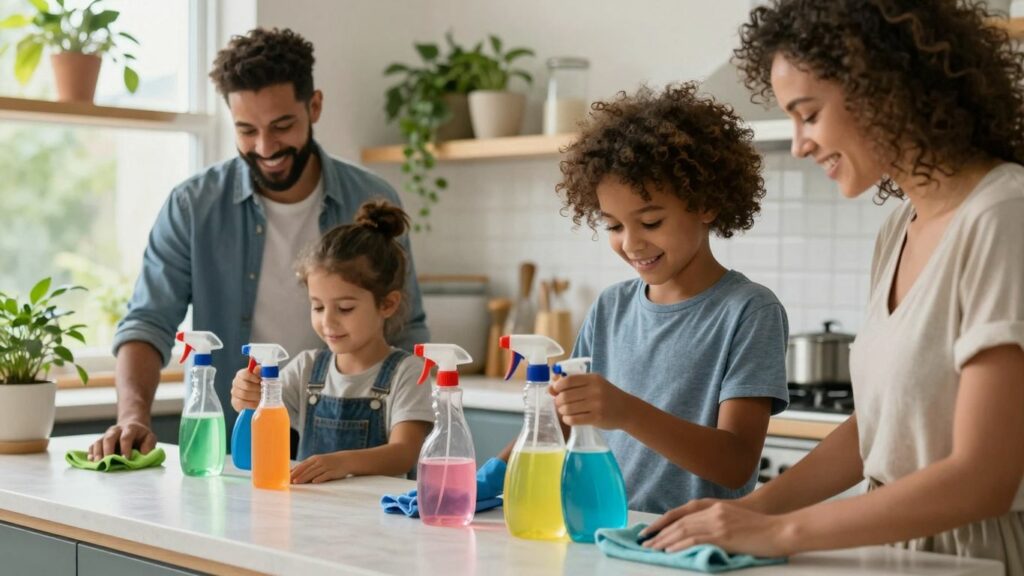
Thinking about making your home a little healthier and a lot more eco-friendly? You’ve come to the right place. Creating a green cleaning routine might sound like a big undertaking, especially with a busy family, but it’s totally doable.
We’re talking about swapping out those harsh chemicals for natural alternatives that are safer for everyone and kinder to the planet. Let’s figure out how to create a green cleaning routine that actually works for your household.
Key Takeaways
- Embracing green cleaning means a healthier home environment, fewer environmental impacts, and often, cost savings.
- Simplify your cleaning supplies by focusing on natural ingredients like vinegar and baking soda, and choosing eco-friendly products.
- Involve the whole family in chores, making it a game and establishing a consistent schedule to build a lasting habit.
- Utilize effective green cleaning strategies like tackling high-touch surfaces with natural solutions and using natural air freshening techniques.
- Adopt sustainable cleaning tools like reusable cloths and brushes, and focus on reducing waste through recycling and reusing.
Why Embrace Green Cleaning
You might be wondering why you should bother switching to green cleaning. It’s more than just a trend; it’s a way to make your home a healthier place for everyone and be a bit kinder to the planet. Think about it: those strong chemical cleaners you might be using? They often release stuff into the air that you breathe, which isn’t great for your lungs or anyone else in the house, especially kids or pets. Plus, when that stuff goes down the drain, it can end up in our water. It’s a cycle that’s not doing our environment any favors.
Healthier Home Environment
Switching to green cleaning means you’re cutting down on exposure to potentially harsh chemicals. Many traditional cleaners contain ingredients that can irritate skin, trigger allergies, or cause breathing problems. By choosing natural alternatives, you’re creating a safer space. You won’t have that strong, artificial smell lingering after you clean, and you can feel more confident that the surfaces your family touches are free from concerning residues. It’s about making your home a sanctuary, not a place where you worry about what you’re breathing in.
Environmental Benefits
When you opt for green cleaning, you’re making a choice that helps the Earth. These products are typically made with ingredients that break down more easily and don’t harm ecosystems when they eventually get washed away. This means less pollution in our waterways and a smaller overall impact on the environment. It’s a simple way to contribute to a healthier planet, one cleaning session at a time. You’re reducing your household’s footprint without a lot of extra effort.
Cost-Effective Solutions
Going green doesn’t have to mean spending more money. In fact, many green cleaning solutions can actually save you cash. Think about DIY cleaners made from common household items like vinegar, baking soda, and lemon juice. These ingredients are super cheap and incredibly effective for a wide range of cleaning tasks. Even when buying commercial green products, many are concentrated, meaning a little goes a long way, so you end up using less and buying less often. It’s a smart way to keep your home clean and your budget happy.
Simplifying Your Cleaning Arsenal
You don’t need a cabinet overflowing with different bottles to keep your home sparkling. When you’re aiming for a greener clean, the trick is to simplify. Think fewer products, more natural ingredients, and smart choices. This approach not only makes cleaning easier on your wallet and the planet but also cuts down on decision fatigue when it’s time to tackle chores.
Essential Natural Ingredients
Forget those harsh chemical cleaners. You can handle most household messes with just a few basic, natural items. These are safe, versatile, and surprisingly effective.
- White Vinegar: A powerhouse for cutting grease, removing soap scum, and deodorizing. Its acidity makes it great for tackling mineral deposits too.
- Baking Soda: This gentle abrasive is perfect for scrubbing without scratching. It also absorbs odors like a champ.
- Lemon Juice: Natural bleach and degreaser, plus it leaves a fresh, clean scent.
- Castile Soap: A plant-based soap that’s biodegradable and can be used for everything from dishes to floors.
DIY Cleaner Recipes
Making your own cleaners is simple and cost-effective. Here are a few go-to recipes:
- All-Purpose Spray: Mix equal parts white vinegar and water in a spray bottle. Add a few drops of lemon essential oil for scent if you like. Great for counters, sinks, and most surfaces.
- Scrubbing Paste: Combine baking soda with just enough water to form a paste. Use it to scrub sinks, tubs, and tile grout. For tougher jobs, add a little castile soap.
- Glass Cleaner: Mix 1/4 cup white vinegar with 1 cup water in a spray bottle. Wipe with a microfiber cloth for a streak-free shine.
Choosing Eco-Friendly Products
Sometimes, you might need to buy cleaning products. When you do, look for these signs:
- Biodegradable Formulas: Products that break down naturally without harming the environment.
- Plant-Derived Ingredients: Cleaners made from renewable resources.
- Minimal Packaging: Opt for concentrated formulas or products in recyclable or refillable containers.
- Third-Party Certifications: Look for labels like EPA Safer Choice or Green Seal, which indicate that a product meets certain environmental and health standards.
Making Green Cleaning a Family Habit
Getting everyone on board with cleaning can feel like a challenge, but when you shift to green cleaning, it actually becomes easier to involve the whole family. It’s a fantastic way to build healthy home cleaning habits together. Think of it as a team effort where everyone contributes to a cleaner, safer space.
Involve Children in Chores
Kids can be surprisingly enthusiastic helpers, especially when they understand why you’re using gentler products. Assigning age-appropriate tasks makes them feel important and teaches responsibility. Little ones can help wipe down baseboards with a damp cloth or sort laundry. Older kids might be ready to tackle vacuuming or help mix up simple DIY cleaners (with supervision, of course!). It’s about making them feel like active participants in maintaining your home.
Turn Cleaning into a Game
Who says cleaning has to be a chore? You can make it fun! Try putting on some upbeat music and seeing who can clean their designated area the fastest. Or, create a “cleaning scavenger hunt” where kids have to find and clean specific spots. For younger children, you can even use sticker charts to reward completed tasks. Making it a game can transform a dreaded activity into something your family looks forward to.
Establish a Consistent Schedule
Consistency is key to making any habit stick, and green cleaning is no different. Set aside specific times for cleaning tasks. This could be a quick 15-minute tidy-up every evening, or a more thorough cleaning session every Saturday morning. You can even create a simple chart that outlines daily, weekly, and monthly tasks. When cleaning becomes a predictable part of your routine, it’s much less likely to be put off. This structured approach helps ensure your home stays clean without feeling overwhelming.
Effective Green Cleaning Strategies
Now that you’re ready to embrace a greener clean, let’s talk about how to actually do it effectively. It’s not just about swapping out products; it’s about smart strategies that make your home sparkle without the harsh chemicals. You’ll find that many eco friendly household cleaning tips focus on using what you already have or can easily get.
Tackling High-Touch Surfaces
These are the spots that get touched the most – doorknobs, light switches, remote controls, countertops, and faucet handles. Regular cleaning here is key to keeping germs at bay. Instead of reaching for a disinfectant spray loaded with questionable ingredients, try a simple solution. A 50/50 mix of white vinegar and water in a spray bottle works wonders. For tougher grime, a paste made from baking soda and a little water can be surprisingly effective. Just remember to wipe down with a damp cloth afterward to remove any residue. For electronics, always spray the cloth, not the device itself, and use a microfiber cloth to avoid scratches.
Green Floor Cleaning Methods
Your floors see a lot of action, and keeping them clean without leaving behind sticky residues or toxic fumes is important. For most hard floors like tile, linoleum, or sealed wood, a mop dipped in warm water with a splash of white vinegar is a fantastic option. It cuts through grease and grime and dries without streaks.
If you have unsealed wood or delicate surfaces, a damp mop with just water might be best, or you can look for specific natural cleaning solutions for home designed for those materials. For carpets, baking soda is your friend. Sprinkle it liberally over the carpet, let it sit for at least 15 minutes (or longer for tougher odors), then vacuum it up. It helps neutralize odors and lift dirt.
Natural Air Freshening Techniques
Forget those aerosol air fresheners that just mask odors with synthetic fragrances. You can make your home smell amazing naturally. One of the easiest ways is to simply open your windows for a bit each day to let in fresh air. Simmering water on the stove with citrus peels (like lemon or orange), cinnamon sticks, or a few drops of essential oils like lavender or peppermint can create a lovely, natural scent.
You can also create your own room spray using distilled water, a splash of witch hazel or vodka (to help emulsify), and a few drops of your favorite essential oils. Keep it in a small spray bottle and give it a spritz when needed. These DIY non toxic cleaning recipes are simple, effective, and much better for your respiratory system.
Sustainable Cleaning Tools and Practices
Making the switch to sustainable cleaning tools is a big part of creating a truly green cleaning routine for your family. It’s not just about the cleaners you use, but also about the things you use to apply them and how you manage waste.
Reusable Cleaning Cloths
Think about all the paper towels you go through in a week. They get used once and then tossed. That’s a lot of waste! Instead, you can switch to reusable cleaning cloths. Microfiber cloths are fantastic for picking up dust and grime, and they can be washed and used over and over. Old cotton t-shirts or towels that you’re ready to get rid of can also be cut up and used as cleaning rags. It saves money and keeps stuff out of the landfill.
Biodegradable Scrub Brushes
When you need something a bit tougher than a cloth, like for scrubbing pots or tiles, reach for a natural scrub brush. Look for ones made from bamboo or other plant-based materials. These are much better for the environment than plastic brushes that will just sit in a landfill for ages. They work just as well, if not better, at tackling tough spots.
Reducing Waste Through Recycling
Beyond just using reusable tools, think about how you handle waste from your cleaning. When you buy cleaning products, choose ones with minimal packaging or packaging made from recycled materials. If you’re making your own cleaners, reuse old spray bottles. And of course, make sure you’re recycling any eligible packaging. It’s all about being mindful of the entire lifecycle of the products you use.
Maintaining Your Green Cleaning Routine
So, you’ve gotten into the swing of green cleaning, which is awesome! But how do you keep it going without it feeling like a chore that just piles up? It’s all about making it stick, right? Think of it like building any good habit – a little structure and some positive reinforcement go a long way.
Setting Timers for Daily Tasks
Honestly, sometimes the biggest hurdle is just getting started. A simple trick that really helps is using timers. You don’t need to block out huge chunks of your day. Try setting a timer for just 15 or 20 minutes each day for a specific task. Maybe it’s “kitchen counter wipe-down” or “quick bathroom sink scrub.” You’d be surprised how much you can get done when you know you’ve only got a short window.
It makes the task feel less daunting and more manageable. Plus, when that timer goes off, you’re done for the day with that specific chore, which feels pretty good.
Rewarding Your Cleaning Efforts
Let’s be real, cleaning isn’t always the most exciting part of life. So, why not give yourself a little pat on the back when you stick to your green cleaning goals? It doesn’t have to be anything big.
Maybe after you’ve tackled your weekly green clean, you allow yourself an extra episode of that show you’re watching, or you brew a fancy cup of coffee. Small rewards can make a big difference in keeping you motivated. It’s like a little thank you to yourself for doing a good job taking care of your home and the planet.
Staying Informed on Green Trends
The world of eco-friendly living is always changing, and that includes green cleaning. New products pop up, and people discover even better ways to do things. It’s a good idea to keep an eye on what’s new. You don’t need to become an expert overnight, but maybe follow a couple of blogs that talk about sustainable living or check out what’s trending on social media.
Sometimes you’ll find a new DIY recipe that works even better, or a product that makes a specific task easier. Staying curious helps keep your routine fresh and effective, and you might even discover some cool new tips to share with others.