


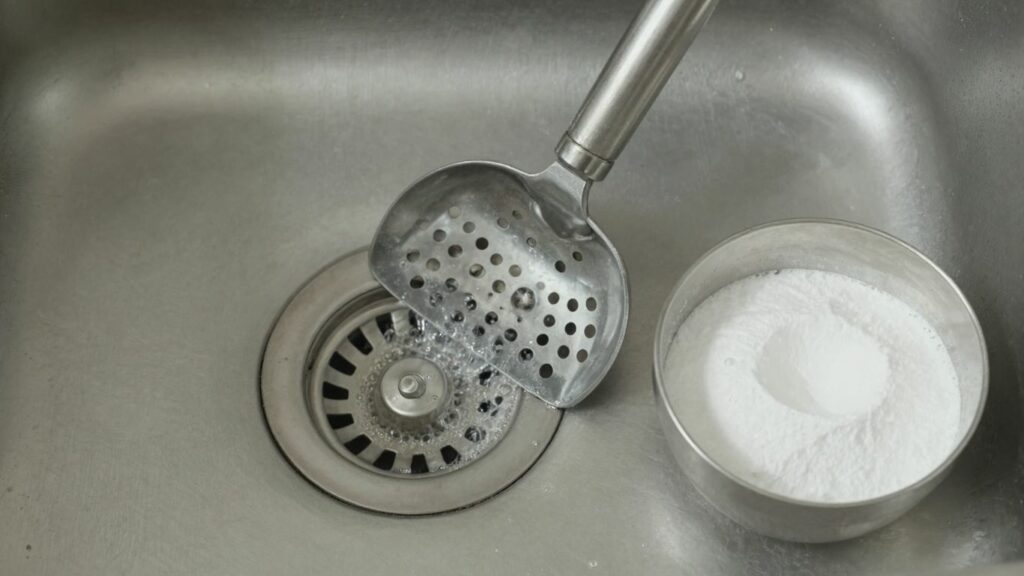
Dealing with a clogged drain is a real pain, isn’t it? You want it fixed fast, but the thought of using those harsh chemical cleaners just doesn’t sit right. They smell awful, can damage your pipes, and let’s be honest, they’re pretty scary to have around.
The good news is, you don’t need them! You can actually unclog a drain without chemicals using simple things you probably already have in your kitchen. We’re going to walk through some easy, natural methods to get your drains flowing freely again.
Key Takeaways
- You can effectively unclog a drain without resorting to harsh chemicals by using common household items.
- Natural methods often involve creating a fizzing reaction with baking soda and vinegar or lemon juice to break down clogs.
- Boiling or hot water can help dissolve grease and soap scum, but be cautious with PVC pipes.
- For physical blockages like hair, tools like tweezers or a straightened coat hanger can be useful.
- Regularly using natural methods can help prevent future clogs and keep your drains clear.
1. Baking Soda and Vinegar
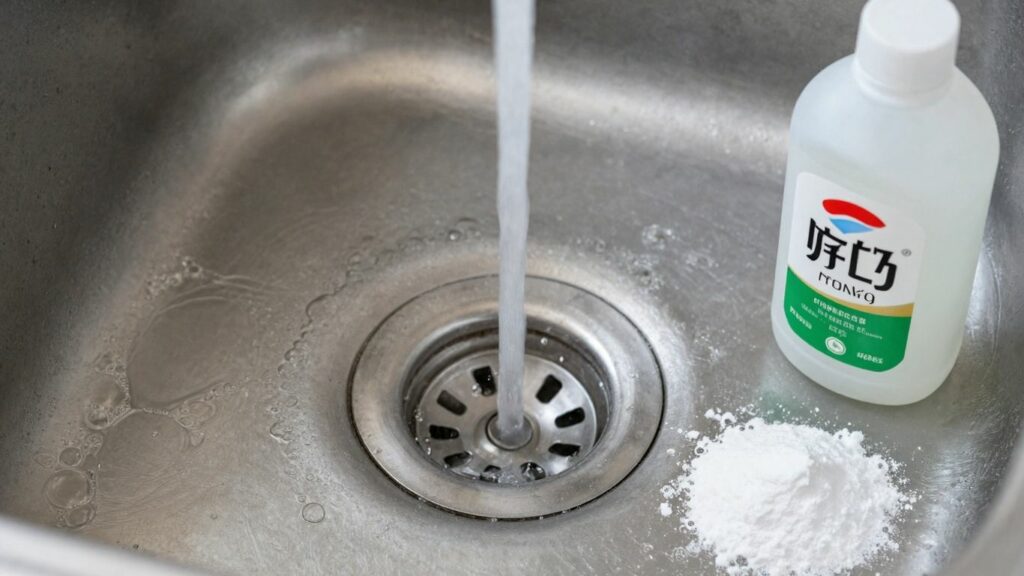
When you’ve got a slow-moving drain, reaching for harsh chemicals might be your first thought, but there are some pretty effective natural drain cleaning methods you can try right at home. One of the most popular and easiest DIY drain unblocker options involves just two common kitchen staples: baking soda and vinegar. This combination creates a fizzy reaction that can help break down gunk and clear out clogs.
Here’s a simple homemade drain cleaner recipe to get you started:
- Gather your ingredients: You’ll need about half a cup of baking soda and a cup of white vinegar. You’ll also need some boiling water – just be careful when handling it.
- Apply the baking soda: Sprinkle the baking soda directly down the drain opening. Try to get as much of it into the pipe as possible.
- Add the vinegar: Slowly pour the white vinegar over the baking soda. You’ll notice it start to bubble and fizz right away. This is the chemical reaction doing its work!
- Let it sit: Put a drain stopper or cover the opening and let the mixture work its magic for about 10 to 15 minutes. This gives the fizzing action time to loosen up whatever is causing the blockage.
- Flush with hot water: After the waiting period, carefully pour a kettle full of boiling water down the drain. This hot water helps to wash away the loosened debris. If you have PVC pipes, use very hot tap water instead of boiling water to avoid any potential damage.
For tougher clogs, you might need to repeat this process a couple of times. It’s a great way to tackle minor blockages and keep your drains running smoothly without resorting to strong chemicals.
2. Boiling Water
Sometimes, the simplest solutions are the best. For clogs caused by grease or soap scum, a kettle full of boiling water can work wonders. It’s especially effective when there’s not much standing water in the sink or tub already.
Here’s how to do it:
- Boil your water: Fill a kettle or a large pot with water and bring it to a rolling boil.
- Pour carefully: Slowly and cautiously pour the boiling water directly down the drain. Do this in three or four stages, giving the hot water time to work on the clog.
- Wait and see: If this method is going to work, you should see results fairly quickly. The heat helps to melt away grease and loosen up soap buildup.
Important Note: If you have PVC pipes, it’s best to skip the boiling water. Stick with very hot tap water instead, as boiling water can potentially damage PVC piping. If you’re unsure about your pipe material, always err on the side of caution and use hot water.
3. Dish Soap and Hot Water
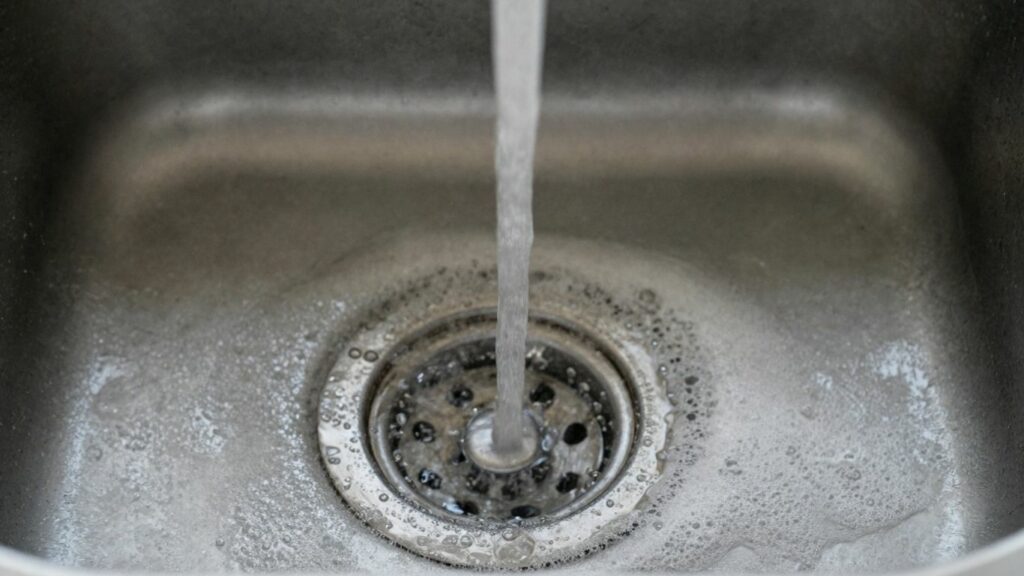
Sometimes, the simplest solutions are the most effective, especially when dealing with clogs caused by grease. If your kitchen sink is backing up, chances are it’s a greasy mess. This method is one of those straightforward, eco-friendly ways to clear pipes without resorting to harsh chemicals.
Here’s how you can tackle a greasy clog:
- Gather your supplies: You’ll need a bottle of liquid dish soap (the kind you use for hand-washing dishes) and some hot water. You can use water from your tap if it gets hot enough, or you can boil some water on the stove.
- Apply the dish soap: Squirt a generous amount of dish soap directly down the drain. Think about a quarter cup or so. The soap is designed to break down grease, so it’s your primary weapon here.
- Follow with hot water: Slowly pour about two liters of hot water down the drain. If you boiled the water, let it cool for a minute or two so it’s not scalding, especially if you have PVC pipes, as extreme heat can damage them. Very hot tap water usually does the trick.
- Wait and repeat: Let the soap and hot water work their magic for about 15-20 minutes. You might see some of the gunk start to loosen up. If the drain is still slow or clogged, repeat the process. It might take a couple of tries, especially for stubborn grease buildup, but it’s a gentle way to clear your pipes.
4. Baking Soda and Salt
This is another simple, yet effective, method that uses common kitchen staples. If you’ve got a clog that’s a bit stubborn, this combo might be just what you need. It works by creating a bit of a gritty, abrasive mixture that helps break down gunk, and then the hot water flushes it all away.
Here’s how you do it:
- Gather your ingredients: You’ll need about half a cup of baking soda and half a cup of salt. That’s it!
- Mix them up: Combine the baking soda and salt in a bowl. You want a nice, even mix.
- Pour it down the drain: Carefully pour the mixture directly into the clogged drain. Try to get as much of it in there as possible.
- Let it sit: Give the mixture some time to work its magic. Letting it sit for at least 15 to 30 minutes is a good start, but if the clog is really bad, you can even leave it overnight.
- Flush with hot water: After the waiting period, pour a kettle full of boiling water down the drain. Be careful when handling boiling water! The hot water will help dissolve any remaining gunk and wash away the baking soda and salt.
This method is great because it’s non-toxic and uses things you probably already have in your pantry. It’s particularly good for tackling soap scum and general grime buildup.
5. Salt, Borax, and Vinegar
This method uses a combination of common household items to tackle stubborn clogs. You’ll need about a quarter cup each of salt and Borax, plus half a cup of vinegar.
Here’s how you do it:
- Combine the salt and Borax in a bowl.
- Slowly add the vinegar. You’ll notice it start to fizz – that’s the chemical reaction working its magic. Try not to inhale the fumes directly, as they can be a bit irritating for some people.
- Once the fizzing calms down, carefully pour the mixture down your clogged drain.
- Let it sit for at least 20 to 30 minutes. For tougher clogs, you might want to let it sit for an hour.
- After it’s had time to work, flush the drain with a pot of boiling water.
- If the clog is still there, you can repeat the process. Sometimes it just takes a couple of tries to get things flowing again.
6. Baking Soda and Lemon Juice
If you’ve run out of vinegar or just want your drain to smell a little fresher, lemon juice can be a good substitute. It’s an acid, just like vinegar, so it can help break down gunk in your pipes. Plus, who doesn’t love a citrus scent?
Here’s how you can use baking soda and lemon juice to tackle a minor clog:
- First, pour about a quarter cup of baking soda directly down the drain. Try to get as much of it into the pipe opening as possible.
- Next, pour about a cup of lemon juice after the baking soda. You should hear and see a fizzing reaction. That’s the baking soda and lemon juice working together.
- Let this mixture sit and do its thing for about 10 to 15 minutes. You might want to cover the drain opening with a stopper or a damp cloth to keep the fizzing action concentrated in the pipe.
- After the waiting period, flush the drain with plenty of hot water. If you have PVC pipes, stick to very hot tap water. If your pipes are metal and you’re not worried about damage, boiling water can be more effective, but be careful when handling it.
This method is best for smaller clogs, like those caused by soap scum or minor food bits. For tougher blockages, you might need to repeat this process a couple of times or try one of the other methods.
7. Wire Coat Hanger
Okay, so you’ve tried the baking soda and vinegar, maybe even the boiling water, and your drain is still being stubborn. It’s time to get a little more hands-on. This next method involves a simple tool you probably have lying around: a wire coat hanger. It’s not the prettiest job, but it can be surprisingly effective for pulling out gunk, especially hair.
First things first, grab an old wire coat hanger. You’ll want to straighten it out as much as you can. Then, use a pair of pliers to bend a small hook at one end. Think of it like a makeshift fishing hook for your drain. You might also want to put on some rubber gloves because, let’s be honest, this can get a little gross. Keep a bucket or some old towels handy too, just in case some water decides to escape when you start poking around.
Here’s how to use it:
- Carefully insert the hooked end of the hanger down into the drain opening.
- Gently push and twist the hanger, trying to snag whatever is causing the blockage. Hair is usually the main culprit here.
- Once you feel like you’ve hooked something, slowly pull the hanger back out. Hopefully, you’ll bring some of that gunk with it.
- Repeat this process a few times. You might be surprised at how much stuff you can pull out.
Sometimes, you might need to remove the drain stopper first to get better access. This can be a bit tricky depending on your sink, but usually, there’s a mechanism underneath that you can disconnect. Once the stopper is out, you can often reach even further down the pipe with your hanger. Just remember to put everything back correctly when you’re done!
8. Plunger
Sometimes, the simplest tools are the most effective. A good old-fashioned plunger is one of the most common and safe drain opening techniques you can try. It works by creating a seal around the drain and using pressure to dislodge whatever is causing the blockage. This is especially good for sinks and tubs where you can get a good seal.
Here’s how to use it:
- Prepare the Area: First, remove any standing water from the sink or tub. If it’s a double sink, make sure to block off the other drain with a wet cloth or stopper. This helps create better suction.
- Create a Seal: Place the plunger cup directly over the drain opening. Make sure it covers the drain completely. For sinks, a flange plunger works best, while a cup plunger is good for tubs.
- Plunge Away: Give the plunger a few firm up-and-down thrusts. You’re trying to create pressure and suction to break up the clog. You might need to do this several times.
- Check the Flow: After plunging, remove the plunger and see if the water drains. If it’s still slow, repeat the process. If it works, run hot water down the drain for a few minutes to flush out any remaining debris.
9. Tweezers
Okay, so sometimes the clog is right there, staring you in the face. You peek down the drain, and yep, there’s a clump of hair or some other gunk that you can actually see. This is where your trusty tweezers come in handy. It’s not the most glamorous job, but hey, it beats chemicals, right?
First things first, you might need to remove the drain cover. This can be a bit of a pain depending on your drain type. Some covers just lift off, while others are screwed in. If yours is screwed in, be prepared for a little extra work. Sometimes, removing the cover can make the pipe underneath a bit wobbly, so just be gentle.
Once the cover is off, or if you can reach without removing it, carefully use your tweezers to grab onto the visible clog. Try to get a good grip and pull it straight out. You might have to do this a few times, pulling out small bits at a time. It’s a bit like playing Operation, but with more potential for grossness. If you can’t quite reach, you might need to try a different method, but for those surface-level clogs, tweezers can be surprisingly effective. Just remember to wash your hands thoroughly afterward!
10. Biological Enzyme Cleaners
If you’re looking for a ready-made, natural solution for your clogged drains, biological enzyme cleaners are a solid choice. These aren’t your typical harsh chemical concoctions. Instead, they use natural enzymes and bacteria to break down organic gunk like hair, grease, and food bits that cause blockages. Think of them as tiny Pac-Men munching away at the clog.
When you’re shopping for one, keep an eye out for products that are:
- Human-safe: Look for ratings that indicate safety for people, not just the environment. Some resources rate these products, so a good score is a plus.
- Fragrance-free: You don’t want to mask a drain smell with another artificial scent.
- Biodegradable: This means they break down naturally without harming the planet.
- Free of harsh chemicals: This is the main point, right?
- Safe for all pipes and septic systems: This is important so you don’t cause more problems.
These cleaners are generally safe for all types of pipes, including PVC, and they can even be beneficial for septic systems by helping to replenish the good bacteria.
They work more slowly than chemical cleaners, so you might need to let them sit overnight for tougher clogs. It’s a gentler approach that’s better for your home and the environment.