


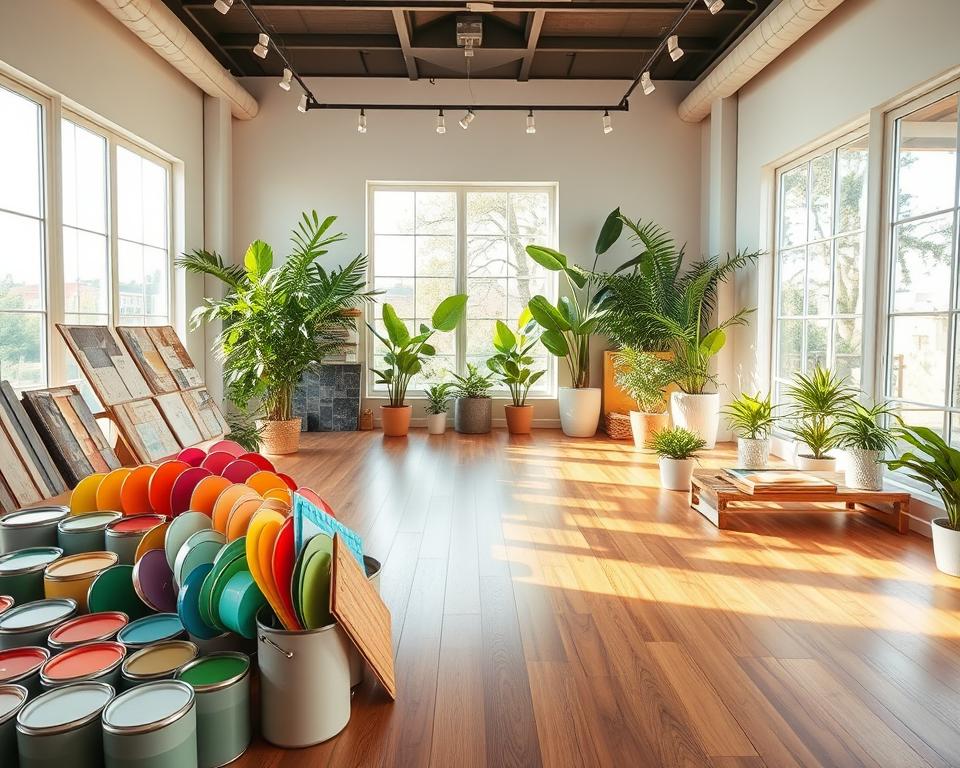
When aiming for a healthier home, the paint and flooring you choose matter a lot. Regular materials often have toxins that harm indoor air quality. This can be risky for people living there.
Going for eco-friendly painting options and flooring is key to a safer home. By choosing materials without harmful chemicals, you can significantly improve indoor air quality. This guide will show the good of non-toxic choices and help you make smart picks for a better home.
The Hidden Dangers in Conventional Paint and Flooring
Many paints and flooring materials can release harmful chemicals. These chemicals can harm the air inside our homes. They include volatile organic compounds (VOCs), heavy metals, formaldehyde, and phthalates.
VOCs and Their Sources
VOCs are released when paint dries. They can irritate your eyes, nose, and throat. They can also cause headaches and other health problems.
- Paints and coatings
- Adhesives and sealants
- Flooring materials
Heavy Metals in Paint Pigments
Some paints have heavy metals like lead. Lead is very dangerous, mainly for kids.
Formaldehyde is found in laminate and engineered wood flooring. It can release harmful gases over time. This adds to indoor air pollution.
Phthalates and PVC in Vinyl Flooring
Vinyl flooring often has phthalates and PVC. These can release harmful chemicals into the air.
Health Impacts of VOCs and Other Toxins
VOCs and other toxins in paint and flooring can harm your health. They can cause mild irritation or serious chronic conditions.
Respiratory Irritation and Headaches
Being around VOCs can irritate your lungs. You might cough, wheeze, or have trouble breathing. They can also make you feel dizzy, nauseous, or have headaches.
Eye and Skin Reactions
VOCs can irritate your eyes and skin. You might see redness, itching, or burning. Long-term exposure can lead to worse skin problems.
Chronic Respiratory Conditions
Long-term VOC exposure can cause chronic respiratory issues like asthma. People with breathing problems are at higher risk.
Potential Links to Serious Illnesses
Some VOCs might be linked to serious health problems, like cancer or neurological damage. While research is ongoing, it’s important to limit exposure.
| Health Impact | Symptoms | Long-term Risks |
|---|---|---|
| Respiratory Irritation | Coughing, Wheezing, Shortness of Breath | Chronic Respiratory Conditions |
| Eye and Skin Reactions | Redness, Itching, Burning Sensations | Skin Conditions, Allergic Reactions |
Choosing sustainable renovation materials can greatly reduce the risks of VOCs and toxins. Using non-toxic paint and flooring makes your home healthier.
Understanding Indoor Air Quality Standards
Knowing the standards for indoor air quality is key to our health. It helps us avoid toxins. Keeping our homes and offices clean is essential.
GreenGuard and GreenGuard Gold
GreenGuard and GreenGuard Gold are top certifications for air quality. GreenGuard Gold is extra strict. It focuses on keeping children and others safe by limiting harmful chemicals.
Green Seal and Other Eco-Labels
Green Seal is another big eco-label. It checks if products are good for the environment and our health. Other labels might have different rules, but they all push for better choices.
- Look for products with GreenGuard or Green Seal certifications.
- Be aware of the ingredients and chemicals used in products.
- Consider the product’s overall environmental impact.
DIY Testing Kits
DIY testing kits are great for checking your air quality. They show you the levels of pollutants in your home.
Professional Assessment Options
For a deeper look, get a professional to check your air. They use special tools to test many things. They provide detailed reports and tips to improve your air quality.
By learning about these standards and using them, we can make our air healthier. This makes our living spaces better for everyone.
Non-Toxic Paint & Flooring Options for Healthier Homes
Choosing paint and flooring without harmful chemicals is key to healthier homes. As people learn more about indoor air quality, they look for safer choices for their homes.
Paint is a big area of focus. Traditional paints can release harmful chemicals into the air. Luckily, there are now many eco-friendly painting options.
Benjamin Moore Natura and Eco Spec
Benjamin Moore has Natura, a line of paints with low VOCs. They also offer Eco Spec for commercial and residential projects that need top-notch, low-emission coatings.
Sherwin-Williams Harmony and ProMar 200 Zero VOC
Sherwin-Williams offers Harmony, a low-VOC paint line. They also have ProMar 200, a zero-VOC paint for projects focusing on air quality.
Lime and Silicate Paints are known for their natural ingredients and durability. Clay-Based Paints are a chemical-free option.
Real Milk Paint and BioShield
Real Milk Paint and BioShield provide natural, non-toxic paint options. Real Milk Paint uses natural ingredients. BioShield offers eco-friendly paints and coatings.
ECOS and AFM Safecoat
ECOS Paint and AFM Safecoat are known for their low-VOC and zero-VOC paints. They aim to improve indoor air quality.
When picking non-toxic paint, it’s important to compare options. Here’s a table showing some key features of the mentioned brands:
| Brand | VOC Level | Key Features |
|---|---|---|
| Benjamin Moore Natura | Low VOC | High-performance, low-odor paint |
| Sherwin-Williams Harmony | Low VOC | Microban technology for mold and mildew resistance |
| ECOS Paint | Zero VOC | Water-based, non-toxic, and eco-friendly |
Choosing non-toxic paint and flooring can greatly improve your home’s air quality. This makes your home a healthier place for your family.
Eco-Friendly Flooring Materials That Promote Clean Air
Sustainable flooring materials are great for the planet and our air. Sustainably harvested hardwoods are a top choice.
Sustainably Harvested Hardwoods
Sustainably harvested hardwoods are a favorite for eco-friendly floors. They come from forests that are cared for. Oak, maple, and walnut are common flooring materials.
Reclaimed Wood Alternatives
Reclaimed wood is another green option. It saves trees and keeps old buildings standing. It also brings a special look to any room.
Materials like sustainably harvested hardwoods and reclaimed wood are durable and look great. But, they cost more and need special care.
| Material | Durability | Maintenance | Cost |
|---|---|---|---|
| Sustainably Harvested Hardwoods | High | Moderate | High |
| Reclaimed Wood | High | High | Very High |
| Forbo Marmoleum | High | Low | Moderate |
Top Brands and Products
Top brands for eco-friendly floors include those with sustainably harvested hardwoods and reclaimed wood. Forbo Marmoleum is a leading brand of natural flooring.
Forbo Marmoleum and Other Brands
Forbo Marmoleum is famous for its linoleum floors. Made from natural materials, it’s durable, easy to care for, and biodegradable.
How to Identify Truly Non-Toxic Products
Finding non-toxic products for a healthier home is key. More people now care about indoor air quality. But, not all products live up to their claims.
Decoding Marketing Claims
Don’t just trust what’s on the label. Terms like “eco-friendly” or “non-toxic” aren’t always checked. Always check for third-party certifications to confirm these claims.
Red Flag Ingredients to Avoid
- Volatile Organic Compounds (VOCs)
- Formaldehyde
- Phthalates
These ingredients harm indoor air and health. Always check the labels or the manufacturer’s website to see what’s inside.
FloorScore shows a product meets high indoor air quality standards for flooring. It’s a sign of safety.
Indoor Advantage Gold and CDPH Standard
Indoor Advantage Gold and the California Department of Public Health (CDPH) Standard are also important. They mean products meet strict emissions rules, making homes healthier.
Knowing about these certifications and avoiding bad ingredients helps you choose better for your home.
Preparing Your Space for Non-Toxic Renovations
Getting ready for non-toxic renovations is key to keeping you safe. Before you start, it’s important to take steps to avoid harmful substances.
Safety Precautions for Old Paint Removal
When you remove old paint, wear gloves and a mask. This helps prevent skin contact and breathing in harmful particles. Make sure the area is well-ventilated by opening windows and using fans.
Flooring Demolition Best Practices
When tearing up flooring, use tools that catch dust. Cover the area with plastic sheets to keep dust and debris inside.
Wear a respirator to protect against dust and chemicals. Change the filters as the maker says.
Skin and Eye Protection
Wear long sleeves, pants, and eye protection to avoid irritation. Apply barrier cream on your skin for extra safety.
| Safety Measure | Purpose | Best Practice |
|---|---|---|
| Protective Gear | Prevent skin contact and inhalation | Wear gloves, masks, and eyewear |
| Ventilation | Reduce airborne toxins | Open windows, use fans |
| Dust Containment | Minimize dust spread | Seal work area, use dust collection tools |
By following these steps, you can greatly lower the risks of non-toxic renovations. This way, you can make your home a healthier place.
Installation Techniques for Healthier Indoor Environments
The right installation techniques can make a big difference in indoor air quality. When done right, non-toxic materials work as they should. This keeps the air inside healthier.
Surface Preparation Methods
Cleaning and preparing the surface is key. It involves ensuring the area is clean, dry, and, if needed, primed. This step is vital for a strong bond with the new material. For non-toxic materials, it’s important to avoid harmful chemicals during this process.
Application Tools and Techniques
The tools and methods used can also affect air quality. It’s important to choose tools that don’t release dust or harmful fumes. For example, using a notched trowel for applying adhesive can help you use less of it. This reduces harmful emissions.
Choosing non-toxic adhesives and fasteners is essential. Traditional ones can release harmful chemicals. Always look for products that are labelled as non-toxic and free from VOCs.
Floating Floor Installation
Floating floor installation is a great way to put in non-toxic flooring. It doesn’t require adhesives, which means a lower risk of harmful emissions. But make sure the underlayment is also non-toxic and safe for indoor use.
| Installation Method | Non-Toxic Considerations | Benefits |
|---|---|---|
| Surface Preparation | Use non-toxic cleaning agents | Ensures strong bond, reduces VOCs |
| Adhesive Application | Choose non-toxic adhesives | Minimizes harmful emissions |
| Floating Floor | Select non-toxic underlayment | Reduces VOC emissions, easy installation |
Maintaining Your Non-Toxic Surfaces
Non-toxic surfaces need special care to stay healthy and last long. Keeping them clean not only makes them last longer. It also helps keep your home air clean and healthy.
Homemade Cleaning Formulas
Homemade cleaners are good for the planet and your surfaces. You can mix baking soda, vinegar, and lemon juice for cleaning. For example, baking soda and water clean grout well. A mix of water and white vinegar generally cleans surfaces.
Commercial Green Cleaning Products
Choose eco-friendly cleaning products whenever possible. These products use natural ingredients and don’t harm the air. Always check the labels to make sure they meet your non-toxic standards.
Each material needs its own cleaning method. Hardwood floors need a pH-neutral cleaner to avoid damage. Natural stone needs a special cleaner for its unique needs.
| Surface Material | Recommended Cleaning Method |
|---|---|
| Hardwood | pH-neutral cleaner |
| Natural Stone | Stone-specific cleaner |
| Tile | Mild detergent and water |
Extending the Life of Your Healthy Surfaces
Regular care is essential for your non-toxic surfaces. Clean them regularly, avoid harsh chemicals, and clean up spills quickly. By doing this, your surfaces will stay in great shape and keep your home healthy.
Cost Comparison: Conventional vs. Non-Toxic Materials
Choosing non-toxic materials for renovations is key for homeowners. The upfront cost might be higher, but think about the long-term gains. These benefits can lead to savings over time.
Paint Price Comparisons
Non-toxic paints are sometimes pricier but are healthier. They have lower VOC emissions. Even though regular paints might cost less at first, non-toxic paints offer better health benefits in the long run.
Flooring Material Cost Analysis
Non-toxic flooring, such as solid hardwood or bamboo, costs more than traditional options. Yet their durability and health benefits can save you money in the long run.
Using non-toxic materials can reduce medical bills. This is vital for homes with kids, the elderly, or people with breathing problems.
Productivity Benefits
A healthier home, thanks to non-toxic materials, can also make you more productive. It reduces headaches, allergies, and breathing issues. This makes your living space more comfortable and efficient.
Where to Purchase Quality Non-Toxic Materials
Finding eco-friendly and non-toxic building materials is easier now. Homeowners have many places to look for healthier options for their homes.
Regional Green Building Centers
Regional Green Building Centers are great for finding non-toxic materials. They offer many eco-friendly products and experts to help with sustainable building.
Eco-Friendly Paint Retailers
Eco-friendly paint retailers offer non-toxic paint choices. Brands like Benjamin Moore’s Natura and Sherwin-Williams’ Harmony are favorites among homeowners.
Big stores like Home Depot and Lowe’s now carry non-toxic and eco-friendly materials. They have special sections for green products, making it easy to find what you need.
Direct-from-Manufacturer Options
Some makers sell directly to people, with a variety of non-toxic materials. This is good for those who want specific products or brands.
Specialty Online Retailers
Online stores like BuildDirect and The Home Depot’s website let you shop for non-toxic materials from home. It’s a convenient way to find what you need.
| Retailer Type | Examples | Notable Products |
|---|---|---|
| Regional Green Building Centers | Local Green Building Centers | Sustainable lumber, non-toxic paints |
| Eco-Friendly Paint Retailers | Benjamin Moore, Sherwin-Williams | Natura, Harmony paint lines |
| Major Retailers | Home Depot, Lowe’s | Variety of eco-friendly products |
| Specialty Online Retailers | BuildDirect | Wide selection of non-toxic flooring |
Homeowners can find non-toxic materials to make their homes healthier. Whether through local centers or online, there are more chemical-free flooring solutions and eco-friendly products available.
FAQ
What are VOCs, and how do they affect indoor air quality?
VOCs, or Volatile Organic Compounds, are chemicals found in many paints and flooring. They can easily evaporate and pollute indoor air. This can lead to health problems. Choosing eco-friendly paints and flooring can help reduce these risks.
Are there any certifications I should look for when selecting non-toxic paint and flooring?
Yes, look for certifications like GreenGuard and Green Seal. These ensure products meet high standards for air quality and sustainability. They help you pick safe paint and flooring.
How can I test the indoor air quality in my home?
You can use DIY kits or hire experts to test your home’s air. These tests find pollutants like VOCs. They help you make your home’s air cleaner.
What are some eco-friendly flooring alternatives to conventional materials?
Consider sustainably harvested hardwoods, reclaimed wood, and bamboo. These options are good for the air and look great. They’re also durable.
How do I maintain my non-toxic surfaces to ensure they remain healthy and clean?
Clean with homemade or green products. Use methods that fit your materials. This keeps your surfaces healthy and looking good.
Are non-toxic materials more expensive than conventional ones?
Non-toxic materials might cost more upfront. But, they save money in the long run by reducing health costs. They also make your home more valuable and durable.
Where can I find quality non-toxic paint and flooring materials?
Look at local green building centers, eco-friendly paint stores, and online. Online retailers offer a wide range of options. You can also buy directly from manufacturers.
What safety precautions should I take when removing old paint and flooring?
Wear masks, gloves, and goggles when removing old materials. This protects you from toxins. Follow safe removal practices for a healthy renovation.