


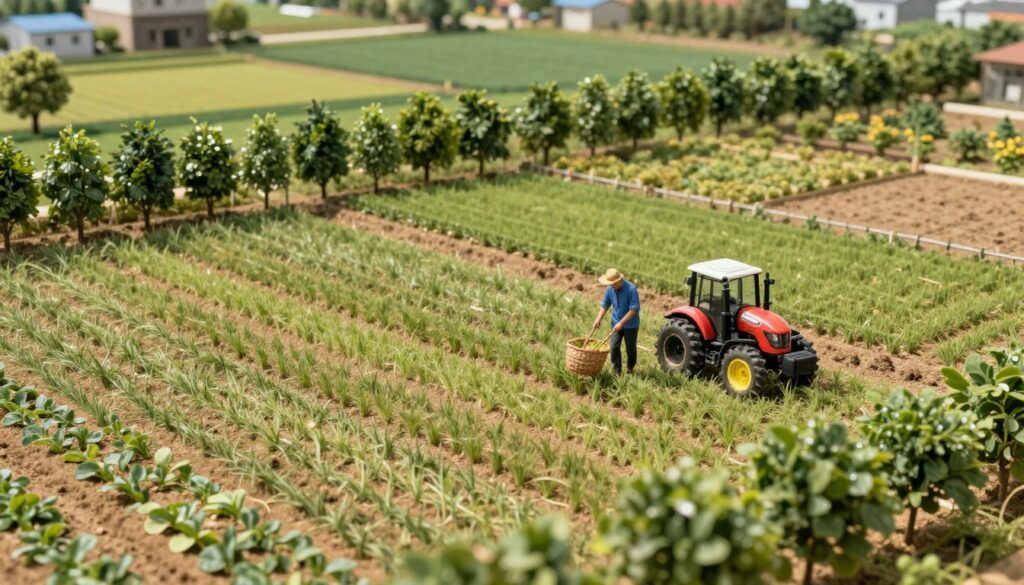
Starting a micro-farm is a smart move for those into sustainable agriculture. It’s about growing food on a small piece of land, usually 1-5 acres. This approach has become popular because it can be very profitable.
With the right methods and tools, small scale farming can be both rewarding and profitable. By picking high-value crops and using efficient farming methods, you can make a lot of money from a tiny plot of land.
This article will give you a detailed guide on starting a micro-farm. We’ll cover planning, choosing the right crops, and marketing. It’s all to help you start your micro-farming journey.
What Is a Micro-Farm and Why Start One?
Micro-farms are changing how we see farming, making the most of small spaces. They are small farms, often run by families or individuals. These farms grow a variety of crops and sometimes animals on just one to five acres.
Starting a micro-farm has many benefits. It helps support the local food movement by providing fresh, healthy food. Plus, it can be a good way to make money, thanks to the high value of the crops grown.
Micro-farms are also great for the environment. They use methods like crop rotation and organic farming. This keeps the soil healthy and reduces harm to the environment.
| Benefits of Micro-Farms | Description |
|---|---|
| High Yields | Micro-farms can produce a significant amount of crops on small plots of land. |
| Local Food Movement | Micro-farms contribute to the local food movement by providing fresh produce. |
| Sustainable Practices | Micro-farms often employ environmentally friendly practices. |
As more people want locally grown food, micro-farms are becoming a popular choice. They offer a chance for small farmers to thrive. By understanding what micro-farms are and their benefits, people can decide if starting one is right for them.
Assessing Your Land’s Potential
Understanding your land’s ability to grow is key to a successful organic farm. You need to check your soil’s health and how well it can support different crops.
Testing Methods and Interpretation
Soil testing is essential to know what your land can do. You can use DIY kits or send samples to labs for detailed analysis. These tests show your soil’s pH, nutrient levels, and structure.
Understanding soil test results is important. For example, if your soil is too acidic, adding lime might be needed.
Soil Amendment Strategies
After getting your soil test results, you might need to add things to make your soil better. This could be organic matter like compost or manure.
| Soil Amendment | Purpose | Application Rate |
|---|---|---|
| Compost | Improves soil structure and fertility | 2-4 inches |
| Lime | Adjusts soil pH | 1-2 tons per acre |
| Manure | Adds nutrients and improves soil health | 1-2 tons per acre |
By checking your land’s ability and using the right soil amendments, you can make a productive and sustainable micro-farm.
Planning Your Micro-Farm Layout
A well-designed micro-farm layout is key to success. It ensures efficient operations, boosts productivity, and cuts down on waste. When planning your micro-farm, think about storage and processing areas, paths, and workspaces.
Storage and Processing Areas
Storage areas are vital for keeping your produce fresh and tidy. Efficient storage solutions help reduce handling time and crop damage. Processing areas should make cleaning and preparing produce easy.
| Area | Purpose | Considerations |
|---|---|---|
| Storage | Keep produce fresh and organized | Cool, dry, and well-ventilated |
| Processing | Prepare produce for market | Easy to clean, adequate space for equipment |
Access Paths and Work Areas
Access paths should make moving around the farm easy. This reduces congestion and boosts efficiency. Work areas should be close to each other to streamline your workflow.
By planning your micro-farm layout carefully, you can make your farming more efficient and productive. This improves your self-sufficient farming and backyard gardening experience.
Selecting Profitable Crops for Small Acreage
Finding the right crops is key to a successful micro-farm. By choosing wisely, farmers can meet the growing need for fresh, local food.
When picking crops, think about market demand, growth needs, and how much money they can make. Some crops are better for small farms because they grow well and are valuable.
Microgreens and Baby Vegetables
Microgreens and baby veggies are great choices. They grow fast and are in high demand. They’re perfect for fancy restaurants and health food fans.
- Microgreens like pea shoots and radish greens can be harvested in as little as 7-10 days.
- Baby vegetables such as lettuce and spinach are ready in about 20-30 days.
Culinary Herbs and Edible Flowers
Culinary herbs and edible flowers are also good choices. They grow easily, need little space, and sell well.
Popular choices include basil, mint, and violas.
Berry Bushes and Fruit Trees
Berry bushes and fruit trees are great for micro-farms. They grow back every year and make a lot of money. They also need less care as time goes on.
| Crop | Growth Cycle | Potential Revenue |
|---|---|---|
| Berry Bushes | 1-2 years to mature | $5,000 – $10,000 per acre |
| Fruit Trees | 2-5 years to mature | $10,000 – $20,000 per acre |
Asparagus and Other Perennial Vegetables
Asparagus and other perennial veggies are perfect for micro-farms. They’re easy to care for, come back every year, and can be picked early.
By focusing on these crops, micro-farmers can build a strong and varied farm. This meets local market needs and boosts profits from small areas.
Essential Tools and Equipment for Starting a Micro-Farm
Choosing the right tools and equipment is key for a micro-farm’s success. It’s important to invest in the right machinery and infrastructure for a good start.
Micro-farmers can greatly benefit from specialized farm equipment made for small farms. This includes tractors, cultivators, and irrigation systems that fit the needs of small areas.
Greenhouses and High Tunnels, Row Covers and Cold Frames
Greenhouses and high tunnels are essential for growing crops longer and protecting them from bad weather. Row covers and cold frames also help keep plants safe and maintain a steady temperature.
| Equipment | Purpose | Benefits |
|---|---|---|
| Greenhouses | Extends growing season | Protects crops, improves yield |
| High Tunnels | Protects crops from weather | Enhances growth, reduces damage |
| Row Covers | Shields plants from frost | Maintains soil temperature, promotes growth |
By choosing the right equipment and infrastructure, micro-farmers can boost their chances of success. They can create a thriving small-scale farming operation.
Sustainable Growing Techniques for Maximum Yield
To get the most out of a micro-farm, using sustainable growing methods is key. These approaches boost productivity and help protect the environment.
Techniques like succession planting and vertical farming greatly improve output while being kind to the planet. Succession planting means planting small seed batches every few weeks. This keeps the harvest going all season long.
Succession Planting
- Allows for a continuous harvest
- Reduces waste by avoiding over-production
- Maximizes the use of space
Vertical Growing Systems
Vertical farming is also a smart way to use space. It grows crops in layers, letting micro-farms produce more without needing more land.
Using these sustainable methods needs good planning and management. But, they offer big benefits like more production and less harm to the environment. This makes them very important for micro-farmers.
By using succession planting and vertical farming, micro-farmers can make their farms more efficient and green.
Livestock Options for Small-Scale Farms
Adding livestock to your small-scale farm can make it healthier. Livestock can bring in extra money by selling meat, eggs, and dairy. They also help the soil by adding manure, which is great for fertilizing.
Poultry is a top choice for small farms. You can raise chickens, ducks, and turkeys for eggs and meat. They need little space and fit well with other farm activities.
Poultry for Eggs and Meat, Rabbits and Other Micro-Livestock
Rabbits are great for small farms too. They grow fast, need little room, and are good for meat. Other small animals like guinea pigs and quails can also offer meat and income.
Choosing the right livestock is key. Think about the cost to start, the ongoing expenses, and what people want to buy. Adding livestock can make your farm more sustainable and profitable.
Creating a Micro-Farm Business Plan
To keep a micro-farm financially stable, a detailed business plan is key. This plan acts as a guide, helping the farm run smoothly and attract funding or investment.
A good business plan for a micro-farm should cover a few important points. It should explain the farm’s mission, goals, and how it will produce food. This part helps figure out the farm’s unique spot in the market.
Initial Investment Requirements
The cost to start a micro-farm can change a lot. It depends on things like getting the land ready, buying equipment, and setting up the farm’s structure. It’s important to get these costs right to not run out of money.
Some big costs at the start include getting the land ready, setting up irrigation, buying seeds and fertilizers, and getting the right tools like tractors or greenhouses. Careful budgeting is key to handling these costs well.
Ongoing Expenses and Cash Flow
After starting, a micro-farm has ongoing costs like seeds, fertilizers, pest control, labor, and marketing. Keeping track of these costs is important to stay financially healthy.
Good cash flow management means watching income and expenses closely. It also means adjusting how much you produce and price things, and keeping some money aside for surprises.
By making a detailed business plan that covers start-up costs, ongoing expenses, and cash flow, micro-farmers can face challenges head-on. This increases their chances of success over the long term.
Marketing and Selling Your Farm Products
Marketing is key to a micro-farm’s success. It helps farmers reach buyers. Good marketing is essential for selling farm products and keeping the business alive.
Micro-farmers have many ways to sell their products. They can use farmers markets, CSA programs, farm stands, and online sales. Each method has its own benefits and can help increase sales.
Farmers Markets and CSA Programs
Farmers markets let micro-farmers sell directly to people. This builds a loyal customer base. CSA (Community-Supported Agriculture) programs let customers buy a share of the farm’s produce regularly. This gives the farmer a steady income.
| Marketing Channel | Advantages |
|---|---|
| Farmers Markets | Direct customer interaction, high margins |
| CSA Programs | Predictable income, loyal customers |
| Farm Stands | Easy for customers, chance for impulse buys |
| Online Sales | Wide reach, flexible sales |
Farm Stands and Online Sales
Farm stands make it easy for customers to buy fresh produce. Online sales let micro-farmers sell to more people, even those far away.
By using different marketing channels, micro-farmers can sell more. It’s important to try out different ways to see what works best for your products and customers.
Legal Requirements and Certifications
To run a successful micro-farm, knowing the legal rules and certifications is key. Following the law is not just to avoid fines. It’s also about getting into markets and building a good name.
Organic certification is a big deal for many micro-farmers. It means your farm meets USDA’s organic standards. Getting certified opens up high-end markets and lets you charge more for your products.
Other laws you might need to follow include registering your business and getting the right licenses. You also have to follow rules about the environment and how you treat your workers. The exact rules depend on where you are, how big your farm is, and what you grow.
| Legal Requirement | Description | Importance |
|---|---|---|
| Business Registration | Registering your micro-farm as a legal business entity. | High |
| Organic Certification | Certifying your products as organic according to USDA NOP standards. | High for organic markets |
| Environmental Compliance | Complying with regulations related to water usage, waste management, and conservation. | High |
It might seem hard to understand and follow all these rules and certifications. But it’s a must for a successful and green micro-farm. By doing your homework and following these laws, you set your farm up for success.
Overcoming Common Micro-Farm Challenges
Micro-farms face many challenges that can stop them from succeeding. These include pests, diseases, and market ups and downs. It’s key for micro-farmers to use sustainable methods and be resilient.
Managing pests and diseases without chemicals is a big challenge. Sustainable agriculture practices like crop rotation and companion planting help. They also use integrated pest management (IPM) to control pests.
- Crop rotation to break disease cycles
- Companion planting to deter pests
- IPM strategies to monitor and control pest populations
Market ups and downs are another big challenge. Micro-farmers can solve this by growing different products and selling directly to consumers. This way, they can make a steady income and gain loyal customers.
By using self-sufficient farming methods and being ready for challenges, micro-farmers can keep their farms going strong. It’s about making a balanced ecosystem that can handle any problem.
FAQ
What is a micro-farm?
A micro-farm is a small farm that covers one to five acres. It focuses on growing crops and sometimes raising animals in a sustainable way. This approach helps produce a wide variety of food.
How do I assess my land’s micro-farming suitability?
To check if your land is good for micro-farming, start by testing the soil. Look at how much sunlight it gets and how well it drains. Also, think about the local weather to pick the best crops.
What are the most profitable crops for small acreage?
For small farms, growing microgreens, herbs, berries, and perennial veggies is profitable. These crops are in high demand. They can be grown using methods like succession planting and vertical systems.
What tools and equipment are essential for starting a micro-farm?
Key tools for starting a micro-farm include greenhouses and high tunnels. Also, row covers and cold frames are important. They help grow more food, even in tough weather.
How can I market and sell my micro-farm products?
You can sell your farm products at farmers markets, through CSA programs, and at farm stands. Online sales are also an option. Use social media and local networks to find customers.
What are the legal requirements for micro-farming?
For micro-farming, you need to get the right permits and follow zoning rules. Getting organic certification can also help sell your products better.
How do I create a business plan for my micro-farm?
Creating a business plan starts with figuring out how much money you need at first and what expenses you’ll have. Then, estimate how much money you’ll make. Outline your marketing and production plans, and have a backup plan for tough times.
What are some common challenges faced by micro-farms?
Micro-farms face challenges like soil problems, pests, changing weather, and ups and downs in the market. You can overcome these by using sustainable farming, growing different things, and being ready for surprises.
Can I integrate livestock into my micro-farm?
Yes, you can add animals like chickens, rabbits, and other small livestock to your farm. They can make more money for you and help keep the soil healthy with their manure.
How can I ensure the long-term sustainability of my micro-farm?
To keep your farm going strong, use sustainable farming methods. Keep the soil healthy, save resources, and watch for changes in the market and weather. Always be ready to make changes as needed.