


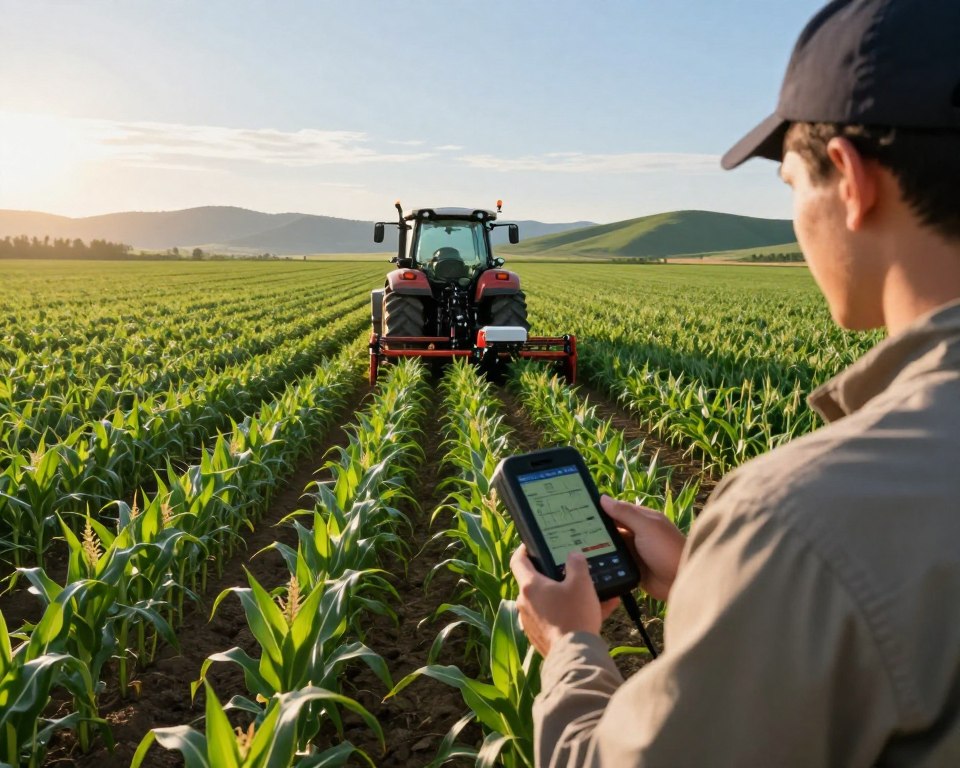
The use of GPS farming and data analytics is changing farming. Farmers can now use technology to make better decisions. This helps increase crop yields and reduce waste.
Studies show that GPS can boost crop yields by up to 20%. This is because farmers can plan better and use resources more efficiently. They can track soil conditions, weather, and crop health.
By using data-driven farming, farmers are becoming more efficient and sustainable. This marks a big change towards new farming methods.
The Transformation of Modern Farming
The farming world is changing fast thanks to new tech. Tools such as remote sensing, artificial intelligence, and imagery help farmers map their land more effectively. This lets them make data-driven choices.
Key Technological Milestones
Several important tech steps have helped precision farming grow. GPS technology makes it easy to map out farms. Data analytics helps farmers understand the data they collect. This way, they can grow more crops and waste less.
Some big changes include:
- Improved crop monitoring through satellite imagery
- Precision irrigation systems controlled by data analytics
- Automated farming equipment guided by GPS
Experts say, “The future of farming is in using tech for sustainable ways.” They want farming to be more productive but also kinder to the planet.
Modern farming isn’t just about new tech. It’s also about using methods that are good for the long run.
What Is Precision Agriculture?
Precision agriculture is a new way of farming that uses modern tech to boost productivity and cut down on environmental harm. It combines advanced tools such as the Global Positioning System (GPS), remote sensing, and variable-rate technology (VRT) to maximise crop yields and make farming more profitable.
This method makes farming more efficient and sustainable. Farmers use data and GPS to decide when and how to plant, water, and harvest. This way, they grow more crops, waste less, and harm the environment less.
From Intuition to Information
Switching to precision agriculture means moving from old-school farming to data-driven decision-making. The main tools behind this change are:
- GPS and Geographic Information Systems (GIS) for exact field mapping and navigation
- Remote sensing technologies for checking on crop health and growth
- Variable Rate Technology (VRT) for better use of seeds, fertilizers, and pesticides
By using these technologies, farmers can work smarter, spend less, and help the planet. As the world’s population continues to grow, precision agriculture is key to feeding everyone without harming the environment.
GPS Technology: Navigating the Future of Farming
GPS technology lets farmers navigate their fields with great accuracy. This boosts farming efficiency. It’s a key part of precision agriculture, helping farmers make better decisions. These decisions lead to higher crop yields and less waste.
GPS starts with mapping fields and testing soil. High-resolution GPS gives farmers detailed digital maps of their farms. This is vital for planning and managing farming tasks, from planting to harvesting.
Studies show GPS technology’s impact on farming. For example, GPS-guided tractors cut fertilizer waste by 10-15%. This saves money and protects the environment. A farmer said, “GPS has changed our farm, helping us use resources better and grow more.”
GPS technology offers many benefits. It makes farming more precise, reducing waste and environmental harm. It also helps farmers collect and use data on soil, crops, and weather. This data guides their decisions.
- Improved yield mapping through precise data collection
- Enhanced efficiency in farming operations
- Reduced environmental impact through targeted application of inputs
As farming evolves, GPS technology will play an even bigger role. By using GPS and other precision tools, farmers can stay competitive. They can also work towards more sustainable and productive farming.
Data Analytics: The New Decision-Making Tool for Farmers
Data analytics is changing farming. It’s leading to data-driven farming. Farmers now use precision agriculture to boost productivity and sustainability.
Data analytics helps farmers make smart choices. It gives insights into soil, weather, and crops. This info helps farmers use resources more effectively, reduce waste, and grow more crops.
The perks of precision agriculture are clear. Farmers see better yields, use resources wisely, save money, and care for the environment.
Overcoming Data Analysis Challenges
Farmers face big hurdles in handling all the data. But they can use top-notch data analytics tools. These tools give farmers the insights they need.
| Challenge | Solution |
|---|---|
| Data Overload | Advanced Data Analytics Tools |
| Lack of Technical Expertise | Training and Support |
| Data Integration | Standardized Data Formats |
The table shows common problems and how to solve them. With these solutions, farmers can use data analytics to improve their farming.
In summary, data analytics is changing farming. It lets farmers make data-driven choices. As farming evolves, data analytics will be key to sustainable agriculture and the benefits of precision agriculture.
Yield Mapping and Variable Rate Applications
Farmers are now using yield mapping and variable-rate applications to improve their farming practices. They track crop yields with GPS technology. This helps them create detailed maps showing where crops grow best.
These maps help farmers see where they need to change their farming practices. They can adjust how much fertilizer or water they use in different parts of the field. This way, they can give each area exactly what it needs.
Yield mapping and variable rate applications help farmers grow more food with less waste. They make farming more efficient and better for the environment. By using these methods, farmers can make smarter choices and grow more crops.
For example, areas that don’t grow as much might need more fertilizer or water. But areas that grow a lot might need less. This way, farmers can keep their crops healthy and grow more food.
As farming becomes more precise, yield mapping and variable-rate applications will be used more. This will help farmers grow more food without harming the environment. It’s a win-win for everyone.
Precision Agriculture Sensors and Monitoring Systems
Farmers can now monitor their fields better with precision agriculture sensors. These tools help make data-driven decisions to boost yields. They are changing farming by giving real-time info on crop health and the environment.
These systems use GPS to collect data on soil moisture, temperature, and crop health. This info is key for spotting pests and diseases early. It also helps in optimizing irrigation and cutting down on fertilizers and pesticides.
Integration of Sensor Networks
Adding sensor networks to precision agriculture provides a deeper view of the farm. Advanced satellite and drone images help these systems. They offer near real-time crop health checks when paired with GPS.
Sensor networks include devices like soil moisture sensors, temperature sensors, and crop health monitors. These tools together paint a detailed picture of the farm. This lets farmers make smart choices.
Using precision agriculture sensors and monitoring systems boosts crop yields and helps the environment. As tech in farming grows, these tools will play a bigger role in modern farming.
Remote Sensing: Eyes in the Sky for Smart Farming
Drones, satellites, and sensors are changing how farmers watch over their crops. This tech helps gather important info on crop health and soil moisture. It also shows how these factors affect crop yields.
There are many ways remote sensing helps in farming. It lets farmers keep an eye on how crops grow, spot pests and diseases early, and see how weather affects their land.
Interpreting Remote Sensing Data
Understanding remote sensing data requires advanced tools. These tools help farmers make smart choices. For example, they can spot stressed crops and take action.
- Identifying crop stress and disease
- Monitoring soil moisture levels
- Assessing crop growth and development
By using remote sensing and data analysis, farmers can do better. They can reduce waste and grow more food. This helps farmers make more money and also helps the planet.
The Economic Benefits of Precision Agriculture
Precision agriculture has transformed farming for the better, delivering significant economic gains. It uses cool tech like GPS and data to help farmers grow more, spend less, and work smarter.
Research shows that precision farming can boost yields by 10-20%. It can also reduce costs by up to 25%. Plus, it saves on labor and fuel. All these savings mean more money in farmers’ pockets.
Economic Case Studies from U.S. Farms
Many U.S. farms have jumped on the precision agriculture bandwagon. They’ve seen real economic gains. For example, a farm in Nebraska cut its fertilizer use by 15%. This saved them a lot of money.
| Farm Location | Precision Agriculture Technique | Economic Benefit |
|---|---|---|
| Nebraska | Variable Rate Fertilizer Application | 15% reduction in fertilizer costs |
| Iowa | GPS-Guided Planting | 10% increase in crop yields |
| Illinois | Precision Irrigation Management | 20% reduction in water usage |
These stories show how precision agriculture can make farming more profitable and green. As more farmers use these tools, the benefits will keep growing. This will help make farming more sustainable for everyone.
The future of farming is data-driven, and precision agriculture is at the forefront of this revolution.
Environmental Sustainability Through Precision Farming
Farmers can now help create a greener future with precision agriculture. This method uses advanced technology to boost crop yields and reduce waste. It supports sustainable agriculture.
One big plus of precision farming is its low environmental footprint. Farmers use GPS and data to apply fertilizers and pesticides more precisely. This reduces harmful chemicals in the air and water.
Measuring Environmental Impact
The green benefits of precision farming are clear. It helps save water, prevent soil erosion, and lower greenhouse gas emissions.
| Environmental Benefit | Description | Impact |
|---|---|---|
| Water Conservation | Precision irrigation systems | Reduced water waste |
| Soil Health | Targeted fertilizer application | Improved soil quality |
| Biodiversity | Precision farming techniques | Enhanced ecosystem services |
By tracking data, farmers can see how their actions affect the environment. This helps them make choices that protect our planet and promote environmental stewardship.
In summary, precision agriculture is key to sustainable farming. It reduces environmental harm and conserves natural resources. As the world’s population grows, using precision farming will be essential for a sustainable food future.
Wrap Up
Technology keeps improving, opening up huge opportunities for precision agriculture. This approach is changing farming, helping farmers grow more with less waste and harm to the environment.
GPS, data analysis, and remote sensing are key. They help farmers make smart choices, leading to better crops and a greener planet. As more farmers use these tools, we’ll meet our food needs without harming the earth.
The future looks bright for data-driven farming. New ideas in precision agriculture will continue to improve farming. With more people to feed, precision agriculture will play a bigger role in making farming sustainable and efficient.
FAQ
What is precision agriculture?
Precision agriculture uses technologies such as GPS and data analytics. It aims to improve crop yields, reduce waste, and be more sustainable.
How does GPS technology improve farming practices?
GPS helps farmers navigate fields better. It also helps them use less fertilizer, saving money and protecting the environment.
What is the role of data analytics in precision agriculture?
Data analytics helps farmers make better decisions. It optimizes resource use, reduces waste, and boosts crop yields.
What are the benefits of yield mapping and variable rate applications?
Yield mapping and variable rate applications help farmers tailor their approach. This leads to better yields and less waste.
How do precision agriculture sensors and monitoring systems work?
These systems monitor crop health and detect issues. They work with GPS to guide farming decisions.
What is remote sensing in precision agriculture?
Remote sensing uses drones and satellites. It gathers data on crop health and soil moisture, helping farmers make informed choices.
What are the economic benefits of precision agriculture?
Precision agriculture cuts costs and boosts efficiency. It makes farming more profitable for those who adopt it.
How does precision agriculture promote environmental sustainability?
It reduces farming’s environmental impact. It conserves resources and supports ecosystem services.
What is the future of data-driven agriculture?
The future looks bright for data-driven agriculture. It will continue to transform farming, meeting food demands sustainably.
How does precision agriculture contribute to sustainable land management practices?
Precision agriculture boosts productivity and reduces waste. It promotes farming that’s good for the environment.
What are the key technologies used in precision agriculture?
Key technologies include GPS, remote sensing, and variable rate technology. Precision agriculture sensors and monitoring systems are also important.