


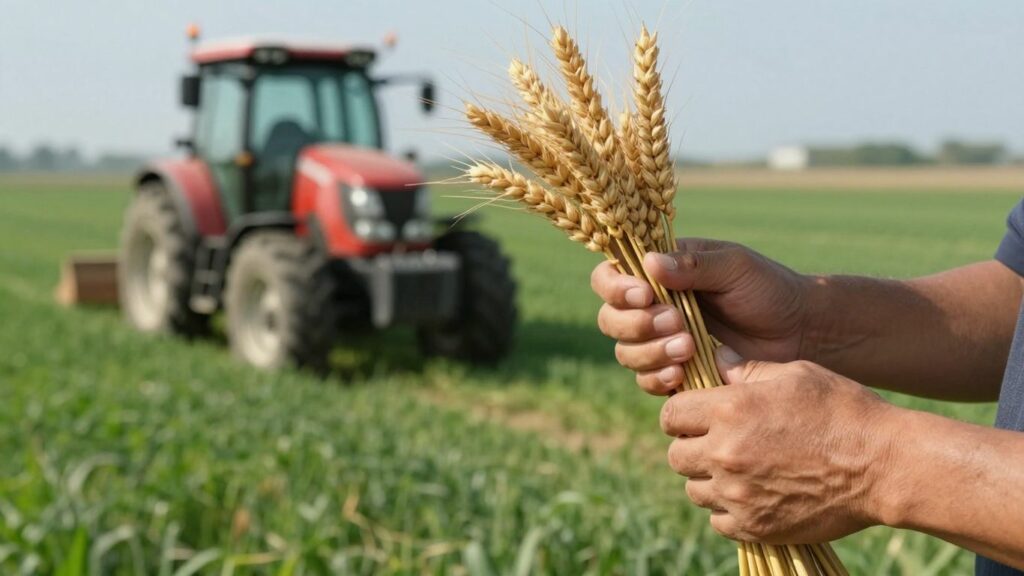
Getting support for your farm or agricultural co-op can feel tricky, but there are programs out there to help. The Canadian Agricultural Loans Act (CALA) Program, for example, is designed to make it easier for farmers and co-ops to get loans.
Whether you’re looking to buy land, upgrade equipment, or just need a bit of financial breathing room, understanding how agricultural loan subsidies work can make a big difference. In this article, I’ll walk you through the basics, who can apply, and what to expect during the process.
Key Takeaways
- The CALA Program helps farmers and co-ops obtain loans with a government guarantee, increasing lenders’ willingness to approve applications.
- Farmers and agricultural co-operatives can use these loans to buy land, make repairs, purchase equipment, or even refinance.
- You’ll need to meet certain eligibility rules, like being a farmer or part of a co-op, and there are limits on how much you can borrow.
- Applying means gathering the right documents, choosing a lender, and following their specific steps, either online or in person.
- Support is available if you have questions, and it’s smart to check for updates since program details can change over time.
Understanding Agriculture Loans and Subsidies
Stepping into farming or growing your operation can be expensive, but that’s where agriculture loans and subsidies come in. The government and some financial institutions work together to make credit more accessible for people working in this field. Here’s how it all fits together.
Overview of Available Options
Farm loans and subsidies aren’t one-size-fits-all. Here’s a quick look at the main types you might run into:
- Direct farm loans: Money you borrow straight from a bank or credit union, sometimes with special terms for farmers.
- Government-backed loans: The government steps in and guarantees a big chunk of the loan in case you miss payments, making it less risky for the lender, and maybe easier for you to get approved.
- Subsidies: Not really loans at all, these are financial boosts or fee reductions, designed to help lower your costs for certain things like equipment, seeds, or eco-friendly upgrades.
Agri-co-ops can use loans to build processing plants or buy trucks for distribution. Individual farmers often seek loans for land, tractors, or even just to smooth out the ups and downs between planting and harvest.
Key Program Objectives
Programs offering farm loans and subsidies have some main goals in mind:
- Increase the number of loans made available to both new and established farmers.
- Make sure co-ops and group efforts can access funding for larger-scale improvements or marketing projects.
- Back up lenders so they feel more comfortable offering better terms or loan sizes.
For many, the aim is simply to help keep farms running smoothly and help folks in agriculture manage costs, especially as land prices and equipment costs keep rising.
Government Guarantees Explained
The government doesn’t usually hand out the money itself, instead, it covers a major portion of a lender’s risk. Here’s what that means in practice:
| Loan Type | Maximum Limit | Government Guarantee |
|---|---|---|
| Farm Operation | $500,000 | Up to 95% of net losses |
| Ag Co-operative | $3 million* | Up to 95% of net losses |
*Requires approval from relevant authorities.
A typical example: Let’s say you take out a $300,000 loan to buy a new tractor. If something goes wrong and you can’t pay, the government will compensate your lender for up to 95% of their losses. This share makes it much less risky for a bank to loan you the money. It’s win-win, they’re more likely to say yes, and you can get the financing you need.
Still, these guarantees have their boundaries:
- Only certain uses qualify (like land, equipment, or buildings).
- There are caps on how much you can borrow for each purpose.
- You need to show lenders that you can make payments, even if the government is backing you.
So, if you’re planning to start or expand a farm, or join a co-op, it pays to know what help is out there and how these programs actually work. The next steps involve checking eligibility, determining what paperwork you’ll need, and then applying.
Eligibility Criteria for Agriculture Loans Subsidies
So, you’re looking into getting some help for your farm, huh? It’s not as complicated as it might seem, but there are definitely some boxes you need to tick. Let’s break down who can actually access these farm loan schemes and subsidies.
Who Can Apply
Generally, if you’re involved in farming or a related co-operative, you’re probably on the right track. The main idea behind these programs is to support folks who are actively working the land or involved in the agricultural business. This usually means:
- Individual Farmers: If you own and operate a farm, whether it’s big or small, you’re likely a candidate. This includes new farmers just starting out and those looking to expand.
- Farm Families: Sometimes, loans can be structured to help multiple family members involved in the operation.
- Agricultural Co-operatives: Groups of farmers who have joined forces to process, market, or distribute their products can also apply.
- New Entrants: Programs often have specific provisions to help people just getting into farming.
Qualifying Farm Operations and Co-operatives
It’s not just about who you are, but also what you’re doing. The government wants to see that the loan will actually help your agricultural business grow or improve. They’re looking for operations that are:
- Established or Developing: Whether you’re looking to buy more land, build new facilities, purchase equipment, or even just refinance existing debt to get better terms, your operation needs a clear purpose for the funds.
- Commercially Focused: The operation should be geared towards producing agricultural products for sale, not just for personal use.
- Legally Recognized: Your farm or co-operative needs to be properly registered and recognized.
Financial Requirements and Limitations
Now, let’s talk numbers. There are limits, and you’ll need to show you’re a good bet for the lender. While specific amounts can change, here’s the general idea:
- Loan Limits: For individual farmers, there’s often a maximum amount you can borrow. For example, a common limit might be around $500,000 for things like land or buildings, and a bit less for other purposes like equipment or debt consolidation. Co-operatives can usually borrow more, sometimes in the millions, but this often requires special approval.
- Financial Health: Lenders will look at your farm’s financial history. They want to see that you have a plan to repay the loan. This means providing financial statements, business plans, and projections.
- Purpose of Funds: Loans are usually tied to specific uses. You can’t just get a loan for anything; it has to be for eligible agricultural purposes, such as capital improvements, equipment purchases, or working capital.
It’s always best to check the specific details of the farm loan schemes you’re interested in, as requirements can vary between different programs and lenders.
Step-by-Step Guide to Applying for Farm Loans
Applying for a farm loan might sound intimidating, but once you break it down, it’s very doable. Here’s how to approach each part of the process so you won’t get overwhelmed. I remember when my neighbour, Jack, first tried for a loan; he forgot half his paperwork, and it cost him a few extra weeks. Save yourself that hassle!
Preparing Your Documents
Before you do anything else, pull together what you’ll need. It helps to keep your stuff in a folder you can reach anytime. Here’s a typical checklist:
- Proof of identity (like a driver’s license or passport)
- Recent financial statements for your farm or business
- A written business or crop plan (some lenders will want to see the details)
- Records of past loans, if you’ve had any
- Legal documents for your farm or cooperative (tax returns, registration)
Some lenders might ask for more, but these are the usual suspects. If you’re missing something, get on it early.
Online and In-Person Application Processes
When it comes to actually applying, you’ve got options. Most lenders let you fill out applications online, which can be faster, but some still prefer the old-fashioned, in-person approach. Here’s how it usually works:
Online:
- Head to the lender’s website and look for their agricultural loan section.
- Fill out the application, and make sure you double-check every field!
- Upload scanned copies of your documents.
- Submit and wait for a confirmation email.
In-Person:
- Call ahead to set up a meeting with a loan officer.
- Take all your documents (better safe than sorry—bring extras).
- Answer questions about your operation and future plans. Sometimes this feels a bit like a job interview.
- The officer might give you feedback on-the-spot, or you might be told to wait for a decision.
No matter the route, stay organized. If you don’t hear back in a week or two, it’s always worth checking in.
What to Expect After Submission
Here’s what comes after you hit “submit” or leave your meeting:
- The lender will review your application and paperwork. They might reach out with questions. Respond quickly so nothing stalls.
- If you’re approved, you’ll get a loan offer with the amount, interest rate, and repayment terms.
- You’ll need to sign some paperwork to accept the loan and agree to the terms.
- Funds are usually sent to your bank account (sometimes in a lump sum, sometimes in stages).
And here’s a quick breakdown of possible timelines:
| Step | Typical Timeframe |
|---|---|
| Application review | 1–3 weeks |
| Follow-up questions | 1 week (varies) |
| Approval & paperwork | 1–2 weeks |
| Funds disbursed | 1–2 weeks |
So, in total, expect about a month, give or take. It can move faster or slower, depending on the lender and your preparedness. Stay patient—it’s all part of the process.
Maximizing Loan Benefits Through Government Programs
Leveraging Loan Guarantees
Government loan guarantee programs are a big deal for farmers. Basically, they tell the bank, ‘Hey, if this farmer can’t pay back the loan, we’ll cover a good chunk of it.’ This makes lenders way more willing to approve loans, especially for new farmers or those looking to expand. It’s like a safety net that opens doors you might not have been able to open otherwise.
The Canadian Agricultural Loans Act (CALA) program, for instance, guarantees 95% of any loss a lender takes on an eligible loan. This means you can often get better terms or larger loan amounts than you would without the guarantee.
Utilizing Multiple Loan Purposes
Don’t think of these loans as being for just one thing. You can often use them for a variety of farm needs. For example, a loan might cover the cost of buying new equipment, fixing up buildings, or even purchasing more land. Some programs allow you to consolidate existing debts, too, which can simplify your finances.
It’s smart to plan out all your farm’s needs and see how a single loan, or perhaps a couple of strategically planned loans, can address them. Just be aware of the limits; for example, under CALA, there’s a $500,000 limit on land and buildings, but a lower limit on other items like equipment or refinancing.
Case Scenarios and Examples
Let’s say you need $300,000 for a new tractor and also want to buy an extra 50 acres of land, which costs $200,000. With a government-backed loan program, you might be able to get a single loan for the full $500,000.
This is because the loan covers both the equipment and the land purchase. Another farmer might need $350,000 for a barn renovation and $100,000 to refinance an old, high-interest loan. They could potentially get a $450,000 loan to cover both needs, as long as it fits within the program’s overall limits and guidelines. It really pays to talk to your lender about what combinations are possible.
The Lender’s Application Process
When you start the process of getting an agri loan, most of the hard work comes down to dealing with the lender. Knowing what they look for and how to keep things moving along matters a lot. Here’s how this stage typically plays out.
Understanding Lender Guidelines
Every lender, farm credit unions, banks, and other institutions has their own rules, even for the same government-backed farm loan. What one bank allows, another might not. Most will look at these areas:
- Credit history: They’ll want to know if you generally pay your bills on time.
- Business plan: Lenders want to see how you’ll use the funds.
- Loan purpose: Make sure your loan matches what’s allowed under the program—things like buying equipment, land, or updating barns.
Here’s a quick table showing how several lenders approach applications:
| Lender Type | Typical Credit Check | Business Plan Required? | Max Loan Processing Time |
|---|---|---|---|
| Major Bank | Yes | Yes | 2-4 weeks |
| Farm Credit Union | Yes | Sometimes | 1-3 weeks |
| Co-operative Lender | Yes | Yes | 2-5 weeks |
Interacting With Approved Financial Institutions
Don’t worry if you’re unsure where to go, approved institutions are pretty easy to find. Most major banks and farm lending specialists work with government loan programs. When reaching out, keep these things in mind:
- Bring all your info (financial statements, business plan, proof of farm status) to your first meeting.
- Be honest about your history, even if you’ve got a few rough patches.
- Ask about processing timelines and any fees up front.
Some banks even have a farm loan officer, so ask for one right away to save time.
Tips for a Successful Application
Getting a loan isn’t rocket science, but it does take a bit of effort. Here’s what farmers and co-op folks say works best for them:
- Start early, well before any big purchase or project; banks get busy, and deadlines sneak up on you.
- Double-check all your paperwork before you go. Missing bank statements and unsigned forms slow things to a crawl.
- If you’re declined, don’t sweat it. Ask for clear feedback and try another lender if possible.
The key is to keep your expectations realistic. Not every application moves quickly. Sometimes, a bank will ask for more details or clarification, and that’s pretty normal. Just keep communication open and don’t be afraid to ask questions every step of the way.
Support and Resources for Farmers and Co-operatives
Getting help during the agriculture loan process isn’t always straightforward. There are lots of government agri support options and resources out there, but sometimes finding the right contact or tool can be tricky. Here’s a breakdown to make things easier.
Contact Information for Assistance
When you’re stuck on paperwork or have questions about requirements, it’s smart to reach out for help before you waste time or miss deadlines. Here’s who you can talk to:
- Local Government Agriculture Offices: Usually found in your region, these folks can answer specific questions about programs for your area.
- Approved Lenders: Partner banks and credit unions understand the loan process inside out. Calling their agri-loan officer can speed things up.
- Program Helplines: National or provincial programs often have dedicated phone numbers or emails for applicants. They know the latest rules.
- Farmers’ Associations: Groups like local co-op organizations may give free guidance or connect you with someone who’s done it before.
Helpful Links and Tools
Not everything has to be a phone call. Plenty of online tools streamline both planning and applying:
- Eligibility Calculators: Quickly check whether your farm or co-op meets the criteria for a specific loan or subsidy.
- Document Checklists: Printable and digital lists to make sure you’re not missing anything important.
- Application Tracking Portals: Some programs let you log in and see where your paperwork stands.
Here’s a quick table of websites you might want to bookmark:
| Resource | Description | Web Address |
|---|---|---|
| Government Agri Support Portal | Program details & online forms | agri.gov.local/support |
| Farmer Helpline | General guidance & referrals | agloanshelp.ca |
| Approved Lender Directory | List of participating banks/credit unions | agfin.ca/lenders |
Staying Updated on Program Changes
Farm loan programs and subsidies change pretty regularly, and missing an update could mean missing out. To keep current:
- Sign up for Email Alerts: Most government agri support programs offer notifications for key changes.
- Subscribe to Industry Newsletters: National or province-level agri newsletters highlight funding updates and reminders.
- Join Online Forums: Other farmers often hear about changes fast and share tips from personal experience.
Relying on official sources will keep you from acting on rumors or missing important deadlines. Checking in every couple of weeks can save you a ton of hassle down the road.
If you’re new to this, don’t be afraid to keep asking questions. Each step gets easier once you tap into the right resources and people willing to help.
Frequently Asked Questions
What is the Canadian Agricultural Loans Act (CALA) Program?
The CALA Program is a government-backed loan program that helps farmers and farm co-ops get loans more easily. The government promises to pay back most of the loan if the borrower cannot, making it less risky for banks to lend money to farmers.
Who can apply for agriculture loans under this program?
Both individual farmers and agricultural co-operatives can apply. Farmers can use the loans to start, grow, or improve their farms. Co-ops can use the money for things like processing, selling, or distributing farm products.
How much can I borrow with a CALA loan?
A single farm can borrow up to $500,000 in total. Co-operatives can borrow up to $3 million, but they need special approval from the Minister of Agriculture and Agri-Food. There are also limits for certain uses, such as $500,000 for land or buildings and $350,000 for other needs.
What documents do I need to apply for a farm loan?
You will need papers that show who you are, details about your farm or co-op, a plan for how you’ll use the loan, and information about your finances. Getting these ready before you apply will speed up the process.
How do I apply for an agriculture loan?
You can apply either online or by visiting a bank or credit union that is part of the program. After you submit your application, the lender will review it and let you know whether you are approved or need more information.
Where can I get help or more information about farm loans and subsidies?
You can contact the program’s help center, visit their website for guides and tools, or talk to your local bank. Staying in touch with these resources can help you stay updated on any changes to the program.