


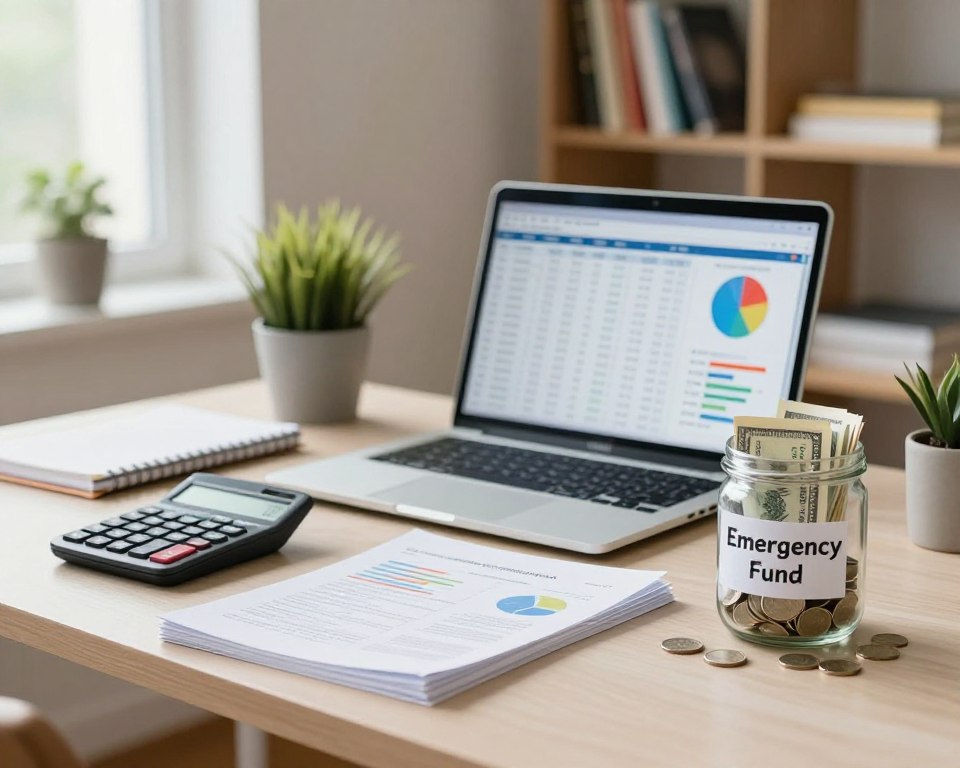
Having a cushion for unexpected expenses is key in personal finance. An emergency fund acts as a financial safety net. It helps people avoid debt when unexpected costs arise.
Experts often suggest saving three to six months’ worth of living expenses. This amount can change based on your job security and monthly costs. Building such a fund might seem hard, but it’s vital for financial stability.
Knowing why an emergency fund is important is the first step. In this article, we’ll look at how to figure out how much to save. We’ll also talk about where to keep your savings.
What Is an Emergency Fund and Why You Need One
Life is full of surprises, and an emergency fund can help. It’s a financial safety net for unexpected costs like medical bills, car repairs, or job loss.
Having cash set aside can ease your mind and stop you from getting into debt. Without an emergency fund, dealing with unexpected expenses can be tough.
An emergency fund keeps your finances stable when things get uncertain. It lets you handle unexpected costs without hurting your long-term plans or affecting your retirement savings.
Here are some key benefits of having an emergency fund:
- Reduces financial stress by providing a cushion against unexpected expenses
- Prevents the need for taking on high-interest debt
- Allows for continued investment in long-term financial goals
- Provides peace of mind and financial security
Let’s look at some scenarios where an emergency fund is really helpful:
| Scenario | Potential Cost | Benefit of Emergency Fund |
|---|---|---|
| Medical Emergency | $1,000 – $5,000 | Covers unexpected medical bills |
| Car Repair | $500 – $2,000 | Fixes car without disrupting budget |
| Job Loss | $1,000 – $5,000 per month | Supports living expenses during job search |
Understanding the role of an emergency fund helps you prepare for life’s surprises. It keeps your finances stable.
Emergency Fund Basics: Understanding the Foundation
Knowing how an emergency fund works is key to keeping your finances safe. It’s a stash of money for unexpected bills. This way, you won’t be caught off guard by sudden expenses.
To start building your fund, figure out your monthly living costs. Add up things like rent, utilities, food, and debt payments. Being precise with these numbers is important. They are the foundation of your emergency fund.
- Rent/Mortgage payments
- Utilities (electricity, water, gas, internet)
- Groceries and household supplies
- Minimum debt payments (credit cards, loans)
- Transportation costs (car payment, insurance, gas)
- Insurance (health, life, disability)
After knowing your monthly expenses, decide how much to save. Think about your job security and other personal factors. These can impact your financial health.
By grasping these basics, you can build a strong emergency fund. It acts as a safety net during tough times.
The Standard Rule: Three to Six Months of Expenses
Many experts say saving three to six months’ worth of expenses is a good start for an emergency fund. This advice is based on how long it usually takes to get back on your feet after losing a job or facing unexpected medical bills.
To start, figure out your monthly expenses. Look at your bank statements, credit card bills, and other financial records. These will show how much you spend on things like rent, utilities, groceries, and debt payments each month. Essential expenses are the must-haves for living.
Calculating Your Emergency Fund Target
To figure out how much you need for your emergency fund, follow these steps:
- List all your monthly essential expenses.
- Add up the total cost of these expenses.
- Multiply this total by the number of months you want to cover (usually three to six).
For example, if you spend $3,000 a month on essentials, saving for three months would mean aiming for $9,000. Saving for six months would be $18,000.
Remember, your personal situation also matters when deciding how much to save. Factors such as job stability, health, and family size can affect your needs. For example, if your income is unpredictable or you’re self-employed, you might want to save more.
Learning the basics of emergency funds and how much to save can really improve your financial health. By following the standard rule and tailoring it to your life, you can build a strong safety net against unexpected events.
Personal Factors That Determine Your Target Amount
Your emergency fund target is shaped by many factors in personal finance. Knowing these factors helps you figure out how much to save. This ensures you’re ready for unexpected costs or income drops.
Job security is a big factor. People with steady jobs might need less in their emergency fund. But, those who are self-employed or in jobs with high risk need to save more. Freelancers or gig workers, for example, face income uncertainty.
Income stability is also key. If your income is steady, you might save less. But, if it changes a lot, you should save more. This is true for salespeople or seasonal workers with variable incomes.
Expenses and debt also matter. Those with large monthly bills or significant debt need to save more. This includes people with mortgages, car loans, or credit card debt.
Health, dependents, and lifestyle also affect your emergency fund needs. For instance, someone with health issues or a big family might need to save more. This is for medical costs or supporting dependents.
Adding budgeting savings to your financial plan is vital. Knowing your income and expenses helps you find ways to save. Regularly check your budget to stay on track with your savings goals.
Figuring out your emergency fund amount requires looking at your financial situation. This includes your income, expenses, debt, and other financial duties. By considering these, you can set a realistic savings goal. This boosts your financial strength.
How Much Emergency Savings Different Lifestyles Require
Emergency savings needs vary based on your job and lifestyle. For example, those with unpredictable income or in risky jobs might need more savings. This is to stay financially stable in the face of unexpected events.
It’s important to know how different lifestyles and jobs affect your savings needs. Freelancers and business owners, for instance, face income that can fluctuate significantly. They often need a bigger emergency fund to get through tough times.
But, people with steady jobs and fewer financial worries might need less savings. Yet it’s key to consider your job security, health, and family when deciding how much to save.
Emergency Fund Considerations for Various Professions
Professions have their own financial challenges and risks. Here’s a look at what to consider for different jobs:
| Profession | Recommended Emergency Fund Size | Rationale |
|---|---|---|
| Freelancers/Entrepreneurs | 6-12 months | Variable income, project-based work |
| High-Risk Professions (e.g., Construction) | 6-9 months | Higher risk of injury or job loss |
| Stable Employment | 3-6 months | Regular income, lower risk |
It’s critical to review your financial situation and adjust your savings plan. These guidelines are just a starting point. Remember to consider your health, family, and other financial needs.
Figuring out the right amount for your emergency fund is about understanding your financial situation. Think about your job, lifestyle, and personal factors. This way, you can create a fund that gives you peace of mind and keeps you financially safe.
Where to Keep Your Emergency Fund for Safety and Access
For effective budgeting, picking a safe, easy-to-reach spot for your emergency fund is key. The right account balances safety with quick access, helping you in tough financial times.
A high-interest savings account is a top pick for emergency funds. It lets you get to your money easily while earning interest. This type of account is liquid, so you can withdraw your cash without incurring penalties.
When choosing a spot for your emergency fund, consider a few things. Look at the account’s interest rate and any fees. Also, make sure you can get to your money quickly and easily.
Other choices for your emergency fund include money market accounts and some CDs. But, CDs might have penalties if you withdraw early. The best spot for your emergency fund depends on your personal financial situation and goals.
Building Your Emergency Fund: A Step-by-Step Tutorial
Building an emergency fund is easier than you think. Start by understanding your finances and what you want to achieve.
To start your emergency fund, follow these steps:
- Find out how much you spend each month to know how much to save.
- Choose a savings goal that fits your income and expenses.
- Begin with small amounts, like a few dollars a week.
Automating your savings is a smart move. Use pre-authorized contributions (PACs) to save money automatically. This way, you don’t have to remember to save every time.
Also, use windfalls like tax refunds or bonuses to grow your fund. Put these extra funds towards your savings goal.
Here are some useful tips:
- Look at your budget to find ways to save more for your emergency fund.
- Keep your emergency fund in a separate, easy-to-reach savings account.
- Don’t use your emergency fund for things you don’t really need.
By following these steps and staying disciplined, you can grow your emergency fund. This will make you more financially secure.
Budgeting Savings: Creating Space for Emergency Contributions
Budgeting for savings is more than just cutting costs. It’s about making room for emergency funds. To build a strong emergency fund, you need to manage your spending well. Cut down on things you don’t need and save that money.
Good budgeting means tracking your income and spending. This helps you see where your money goes. You can then find ways to save more by cutting back on unnecessary spending.
- Track every expense to understand your spending habits.
- Cut back on non-essential spending, such as dining out or subscription services you don’t use.
- Use the 50/30/20 rule: allocate 50% of your income to necessities, 30% to discretionary spending, and 20% to saving and debt repayment.
- Automate your savings by setting up automatic transfers from your checking account to your savings or emergency fund.
By following these tips, you can save for emergencies. Remember, building an emergency fund takes time and discipline, but it’s a key step to securing your financial future.
Practical Steps to Reduce Unnecessary Expenses
Reducing unnecessary expenses is key to saving for emergencies. Here are some practical steps:
- Cancel subscription services you don’t use, such as streaming services or gym memberships.
- Negotiate bills with service providers, such as your cable or internet company, to get a better rate.
- Shop around for insurance quotes to ensure you’re getting the best rate.
- Avoid impulse buys and practice delayed gratification.
By taking these steps, you can reduce unnecessary spending. This means more money for your emergency savings. It helps you prepare better for personal finance emergencies.
Common Emergency Fund Mistakes and How to Avoid Them
Creating an emergency fund is key to securing your financial future. But, it’s also vital to steer clear of common pitfalls.
Many people face challenges when building and keeping their emergency funds. This can lead to financial stress when unexpected expenses pop up. One big mistake is not saving enough. Experts suggest saving 3 to 6 months’ worth of expenses, but your personal situation may determine how much you save.
Another error is mixing your emergency fund with other savings. Commingling funds can cause the emergency fund to be used for non-essential things. This can leave it empty when you really need it.
Using the emergency fund for non-essential items is a major mistake. It’s important to have clear rules about what counts as an emergency. This helps avoid using the fund for things it’s not meant for.
To sidestep these errors, try these strategies:
- Set a realistic savings goal based on your expenses and income.
- Keep your emergency fund in a separate, easily accessible savings account.
- Regularly review and adjust your emergency fund to ensure it remains adequate.
By understanding and avoiding these common mistakes, you can build a more effective emergency fund. This fund will provide financial security when you need it most.
Start Building Your Personal Finance Emergency Safety Net Today
Starting an emergency fund is a big step towards financial security. It helps you prepare for life’s surprises. Saving a part of your income can protect you from unexpected costs.
How much you need in your emergency fund depends on your lifestyle and income. By following the steps and saving regularly, you can reach financial stability.
Start today by checking your finances, setting a goal, and saving regularly. With dedication and the right plan, you can build a strong financial safety net. This will help you face financial challenges head-on.