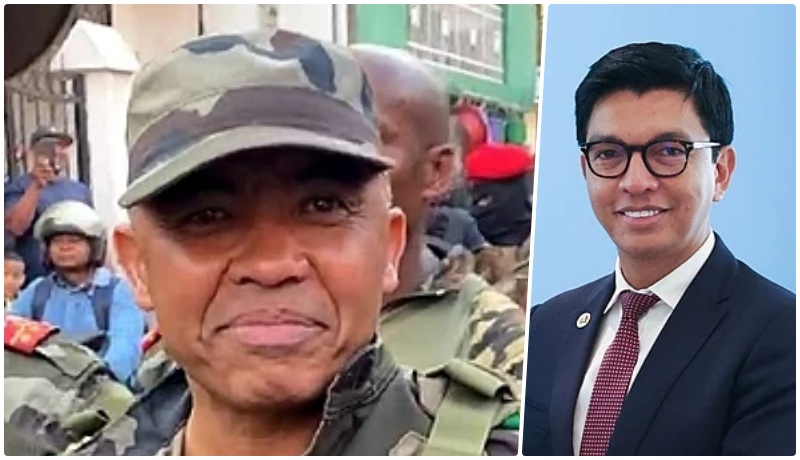
On October 15, 2025, the military in Madagascar announced coup d’etat, ending the regime of Andry Nirina Rajoelina.
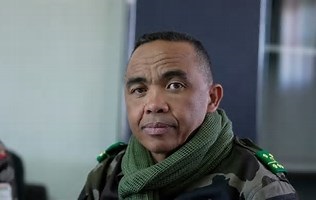
The announcement came after Colonel Michael Randrianirina , the head of The Army Corps of Personnel and Administrative and Technical Services ( Corps d’armée des personnels et des services administratifs et techniques) CAPSAT, said President Rajoelina is no longer in control of the country.
“We took responsibility yesterday,” Randrianirina told journalists. “We will be sworn in soon.”
Weeks of youth-led demonstrations, dubbed the “Gen Z protests,” had shaken the capital, Antananarivo, with thousands demanding Rajoelina’s resignation over corruption allegations and economic hardship.
Genesis of the crisis
The political turmoil in Madagascar could be traced to September 2025, following widespread protests which erupted against frequent water and power cuts. The protests degenerated, causing the deaths of over 20 people.
Similar to African politics, in response, Rajoelina sacked Prime Minister Christian Ntsay on 29 September 2025.
Rajoelina accused some politicians without providing evidence of plotting to take advantage of the protests and had considered staging a coup while he was addressing the United Nations.
On 12 October, Rajoelina’s office announced that an attempt to topple his government was underway; even as he said that the situation was under control.
In any case, on 13 October, an opposition lawmaker reported that Rajoelina had fled the country.
In confirmation to the statement, Rajoelina addressed the nation later that day, saying that he fled “in fear for his life” but remained defiant, saying that he “would not allow Madagascar to be destroyed” while refusing to step down. The speech was broadcast on the presidency’s official Facebook page but not on national television.
WITHIN NIGERIA gathered that in further confirming this, Rajoelina later said he had left the country sometime between 11 and 12 October after “explicit and extremely serious threats” were made to his life while he was due to travel abroad for a mission.

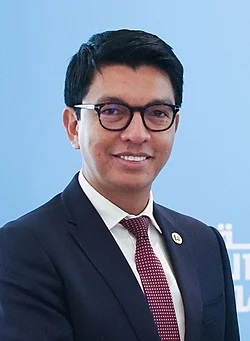
Not ready to relinquish power, on 14 October 2025, Rajoelina issued a decree dissolving the National Assembly, even as he refused to disclose his whereabouts while going further to state that he is still in charge of the government.
Later that day, the National Assembly defied the decree and voted to impeach Rajoelina by 130 votes to one blank, as the military said that they have seized power.
Rajoelina’s background
Andry Rajoelina was born on 30 May 1974 to a relatively wealthy family in Antsirabe. His father, now-retired Colonel Roger Yves Rajoelina, held dual Malagasy/French nationality and fought for the French army in the Algerian War.
Although his family could afford a college education for their son, Andry Rajoelina opted to discontinue his studies after completing his baccalauréat to launch a career as a DJ.
Purchase of radio and TV stations
In 1993, at the age of 19, Rajoelina established his first enterprise: a small event production company called Show Business. In the following year, he organized an annual concert called Live that brought together foreign and Malagasy musical artists. The event gathered 50,000 participants on its tenth anniversary.
In 1999, he launched Injet, the first digital printing technology company available on the island, which gained quick traction with its expansion of billboard advertising throughout the capital.
Following his marriage in 2000, Andry and Mialy Rajoelina acquired Domapub, a competing Antananarivo-based billboard advertising business owned by Andry’s in-laws.
The couple worked together to manage the family businesses, with Andry responsible for Injet and his wife handling the affairs of Domapub.
In May 2007, Andry Rajoelina purchased the Ravinala television and radio stations, and renamed them Viva TV and Viva FM.
Rajoelina’s political journey
In 2007, Rajoelina created and led the political association called Tanora malaGasy Vonona (TGV), meaning “determined Malagasy youth”.
However, shortly after that, he announced his candidacy to run for Mayor of Antananarivo. His very young age became a lever to gain a quick popularity throughout the nation reflecting a trend of “jeunification of politics” – the promotion of younger leaders as symbols of political renewal and change.
Rajoelina was elected on 12 December 2007 with 63.3% of the vote on a 55% voter turnout, beating his closest rival, TIM party incumbent Hery Rafalimanana.
Rajoelina’s opposition movement against Ravalomanana
The first conflicts between Andry Rajoelina and president Marc Ravalomanana could be traced back to 2003, when the national government ordered the removal of Antananarivo’s first Trivision advertising panels, which Rajoelina had installed at a major roundabout in the capital.
In November and December 2008, the government became embroiled in two scandals. A July 2008 deal with Daewoo Logistics to lease half the island’s arable land for South Korean cultivation of corn and palm oil, and the November 2008 purchase of a second presidential jet, a Boeing 737, at a cost of US$60 million, which led the World Bank and the IMF to suspend $35 million worth of financial support to the Island. Rajoelina used this to garner support against Ravalomanana’s government.
At the beginning of Rajoelina’s tenure as mayor, the Antananarivo’s treasury had a debt of 8.2 billion Malagasy Ariary (approximately US$4.6 million).
However, on 4 January 2008, due to unpaid debts to the Jirama, the city of Antananarivo was hit by a general water cutoff, and brownouts of the city’s street lights. After an audit, it was found that the Jirama owed about the same amount of money to the City Hall, and the sanction on the city’s population was retrieved.
On 13 December 2008, the national government closed Andry Rajoelina’s Viva TV, stating that a Viva interview with exiled former head of state Didier Ratsiraka was “likely to disturb peace and security”.
Within a week Rajoelina met with 20 of Madagascar’s most prominent opposition leaders, referred to in the press as the “Club of 20”, to develop a joint statement demanding that the Ravalomanana administration improve its adherence to democratic principles. Rajoelina also promised to dedicate a politically open public space in the capital which he would call Place de la Démocratie (“Democracy Plaza”).
Rajoelina’s rise to presidency
As Andry Rajoelina continued to push his political pedal, in early August 2018, he was the first to register his candidacy for the 2018 presidential elections.
He had previously introduced the Initiative for the Emergence of Madagascar (IEM) that define the lines of his campaign program. One campaign promise is to close the Senate to save money and build universities instead.
He also aims to increase access to electricity, to work towards agricultural self-sufficiency, and to increase security.

The campaign started in October 2018, with Andry Rajoelina facing as opponents the former presidents Ravalomanana and Rajaonarimampianina, the favorites in a campaign of 46 candidates.
In the first round of the elections on 7 November, he took the lead with 39.19% (1,949,851) of the votes (Ravalomana 35.29% or 1,755,855 votes). A televised debate between the two final candidates was aired live on 10 December.
Rajoelina won the election on 19 December 2018 with 55.66% of the votes and was inaugurated on 19 January 2019.
Second elected term (2023–2025)
Following his firm grip to power, Rajoelina took the oath of office on 16 December 2023 for his second term as president of Madagascar amid a boycott by opposition parties that challenged the 16 November election results.
In May 2025, Andry Rajoelina reaffirmed his intention to visit the Scattered Islands himself, French islands bordering Malagasy waters, while favoring the path of dialogue to resolve this dispute of several decades, after the European imperial era, in Africa.
African Union suspends Madagascar
Following this political development, the African Union’s Peace and Security Council has described the events in Madagascar as an “unconstitutional change of government,” which consequently and automatically triggers suspension under AU rules.
However, few hours later, Mahmoud Ali Youssouf, chairperson of the AU Commission, said the bloc maintained “an unwavering respect for constitutional order and peaceful resolution of disputes.”
“The rule of law must prevail over the rule of force,” Youssouf said during a council session in Addis Ababa. Our approach is grounded in law and dialogue.”
With this development, Madagascar has joined other African countries like Burkina Faso, Mali and Niger who are currently under military rule.
WITHIN NIGERIA gathered that the new military ruler was sworn in on Friday, October 17, 2025, promising to hand over to the democratically elected president after two years.