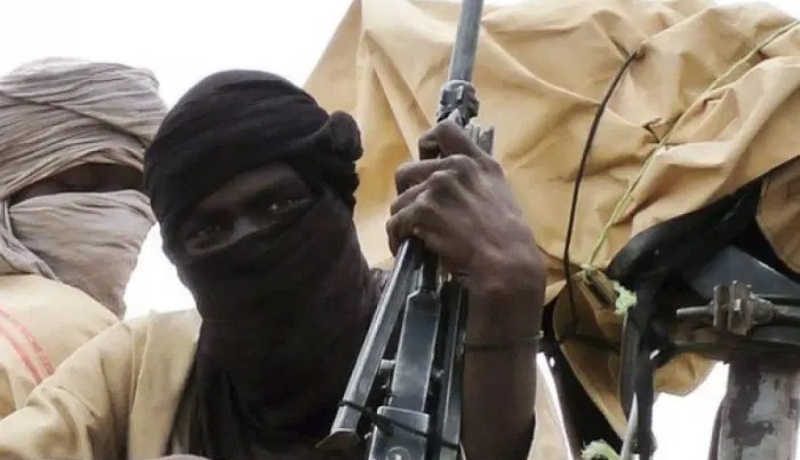
On Sunday, November 16, 2025, armed bandits in large numbers, wielding sophisticated weapons laid siege to Comprehensive Secondary School in Maga, Danko/Wasagu Local Government Area of Kebbi State.
According to reports, at the end of their deadly attacks, 25 schoolgirls were said to have been abducted by these men of underworld.
According to an eyewitness, Sulaiman Abdulllahi, he narrated that these bandits killed the school’s vice principal, even as other yet to be identified bodies were seen in the school premises.
In his words, “They came in mass numbers at night, began shooting sporadically before they got access to the school,” the source said.
Abdulllahi added that Air Force fighter jets were seen hovering over the sky on Monday by 8 a.m., after the attack.
He said the area was cordoned off by heavily armed security personnel.

However, confirming the incident, the Police Public Relations Officer, Kebbi state police command, CSP Nafiu Abubakar, Kebbi said that tactical team has been raised to begin rescue operations of the abducted students.
According to the police image maker, efforts were being intensified to see that these abductees get their freedom soon and unhurt while adding that the Commissioner of Police, Bello Sani, is poised to bring an end to the menace.
Litany of school children’s abductions in northern Nigeria
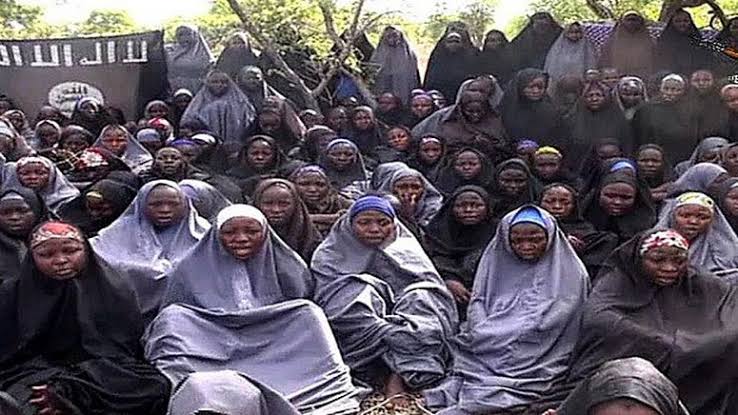
The abduction of these schoolgirls in Kebbi has brought back the memory of repeated kidnappings in schools some years ago.
Chibok schoolgirls’ abduction
In the midnight of 14–15 April 2014, 276 mostly Christian, with some Muslim, schoolgirls aged from 16 to 18 were abducted by the Nigerian militant group Boko Haram from the Government Girls Secondary School in the town of Chibok in Borno State.
According to the report, before the incident, the school had been closed for four weeks due to worsening security conditions, but the girls were in attendance to take final exams in physics.
After the ugly incident, 57 schoolgirls immediately escaped by jumping from the trucks on which they were being transported, and others have been rescued by the Nigerian Armed Forces on various occasions.
Before the Chibok girls’ incident, on 6 July 2013, armed men from Boko Haram attacked Government Secondary School in Mamudo, Yobe State, killing at least 42 people.
Reports had it that most of those killed were students, with some staff members among the dead.
Also on 29 September 2013, armed men from Boko Haram gained access to the male hostel in the College of Agriculture in Gujba, Yobe State, killing forty-four students and teachers.
Parents and others took to social media to complain about the government’s perceived slow and inadequate response. The news caused international outrage against Boko Haram and the Nigerian government. On 30 April and 1 May, protests demanding greater government action were held in several Nigerian cities.
However, most parents were afraid of speaking publicly for fear their daughters would be targeted for reprisal. On 3 and 4 May, protests were held in major Western cities including Los Angeles and London.
Sequel to this development and seeming government’ s slow action in rescuing these girls, Ibrahim M Abdullahi, a lawyer in Abuja, the capital of Nigeria, started the hashtag #BringBackOurGirls in a tweet posted in April 2014 after listening to the former Federal Minister of Education Oby Ezekwesili speak on the kidnappings at an event at Port Harcourt.
It was then used by a group of Nigerian activists protesting about the government’s slow response to the kidnapping to tag tweets as they marched down a highway in protest.
The hashtag began to trend globally on Twitter by May 2014 as a form of hashtag activism and the story spread rapidly internationally, becoming for a time Twitter’s most tweeted hashtag.
By 11 May it had attracted 2.3 million tweets and by 2016 it had been retweeted 6.1 million times.
However, at the ten years anniversary of this deadly incident, in April 2024, about 89 Chibok school girls were yet to be rescued.
2015
Malari kidnapping
Recall also that after the Chibok girls’ incident, in January 2015, less than a year after the 2014 Chibok abduction, in the village of Malari, Borno State about 40 boys and young men were abducted by Boko Haram.
2018
Dapchi schoolgirls kidnapping
As the nation continued to express worry over the Chibok girls’ incident, in February 2018, approximately four years after the 2014 Chibok abduction, in the nearby town of Dapchi again another 110 schoolgirls were abducted by Boko Haram, with no government intervention intercepting the abductors yet as of 4 March 2018.
Following the UNICEF report released in April 2018, it was claimed that more than 1,000 children have been kidnapped by Boko Haram since 2013.
2020
Kankara kidnapping
At the tail of 2020 precisely in December 2020, more than 500 boys were abducted by a group of masked gunmen from a secondary school in Kankara, a town in Nigeria’s northwestern state of Katsina.
WITHIN NIGERIA gather that at the heat of the incident, the dreaded Boko Haram claimed responsibility for abductions.
Seven days after the incident, 344 boys out of the group were released due to successful negotiations by the Nigerian government.
2021
Kagara kidnapping, Jangebe kidnapping, and Afaka kidnapping
2021 opened with a lot kidnapping incident in the country. In February 2021, three mass kidnappings occurred at schools in Nigeria, mostly in the northern part. In the first incident, gunmen kidnapped over 40 people, including at least 27 students, from a school in north-central Nigeria.
Secondly, on 25 February, gunmen abducted 317 girls from the Girls Science Secondary School in Jangebe, Zamfara State. In March 2021, another mass kidnapping in Afaka resulted in 39 students (made up of 23 females and 16 males) being kidnapped from Federal College of Forestry Mechanisation, Afaka, in the Igabi local government area of Kaduna State.
2024
Kuriga kidnapping
On March 7, one staff member and 287 students were kidnapped from a school in Kuriga in northwestern Kaduna; 137 children were released two weeks later, but the staff member had died during that time.