Concerts are designed to be spaces of release and places where thousands of voices melt into one. It’s where fans escape daily hardship through sound and movement. But for some fans, the journey toward joy never reaches the stage.
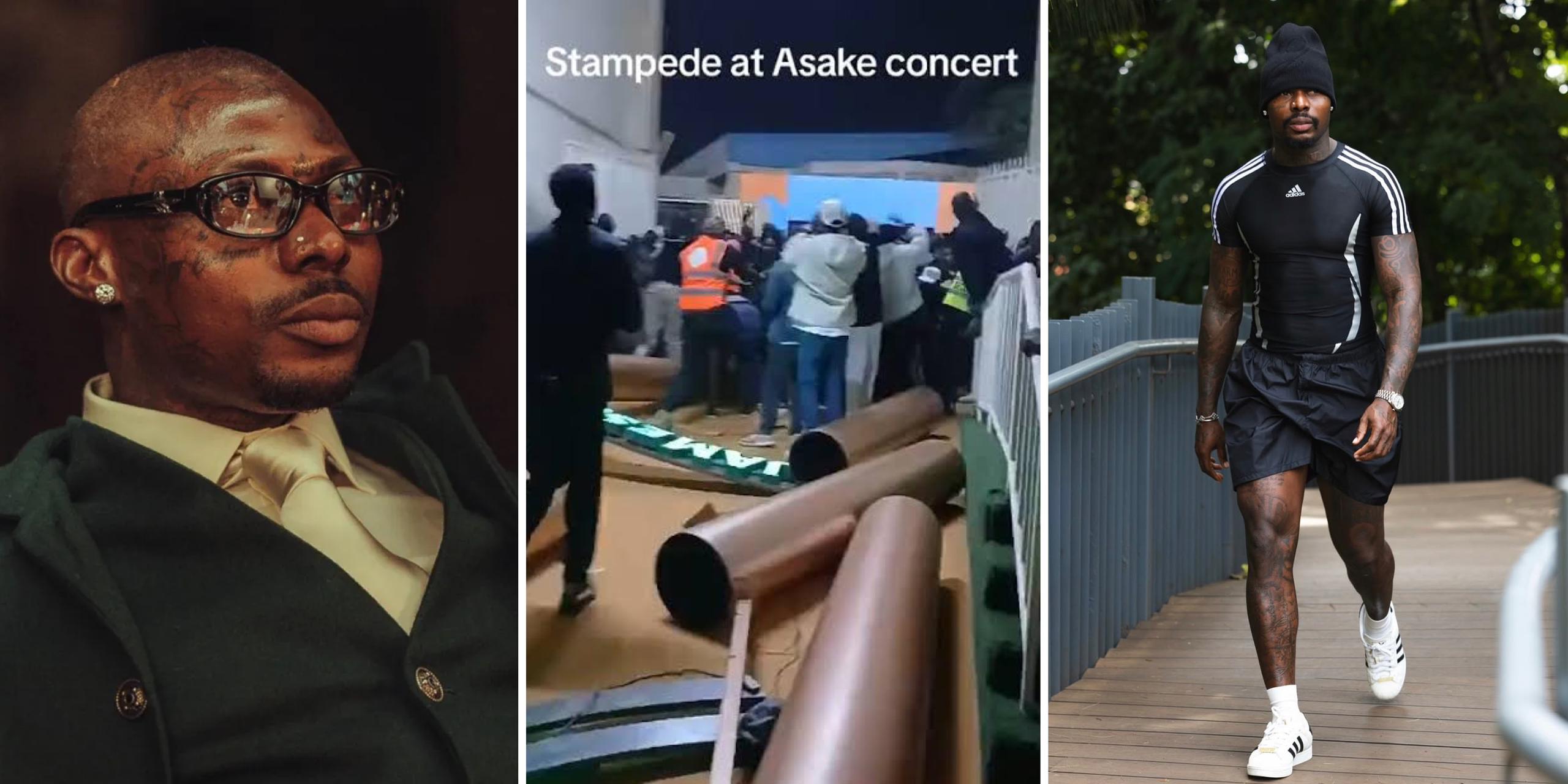
In December 2025, tragedy struck outside a packed stadium in Nairobi, Kenya, during a highly anticipated concert headlined by Nigerian Afrobeats star Asake. A stampede at the entrance gates led to the death of a young woman and injuries to several others, after crowds surged amid delays and congestion.
It was a grim reminder that in the age of sold-out shows and global Afrobeats dominance, crowd safety remains a deadly blind spot and it was not the first time Asake’s name had been linked to such a disaster.
Asake as a Case Study: Two Continents, the Same Risk


Asake, born Ahmed Ololade, is one of the most commercially successful Nigerian artists of the last decade. His rise has been meteoric with hit singles, international tours, and an intensely devoted fan base that often overwhelms venues.
That devotion, however, has twice collided with poor crowd control.
London, 2022
In December 2022, a crowd surge occurred outside O2 Brixton Academy during Asake’s sold-out show. Fans without tickets attempted to force entry, overwhelming security. The resulting crush led to multiple hospitalisations, and two women later died from injuries sustained during the incident.
UK authorities later described the event as one marked by “catastrophic crowd failure”, with investigations pointing to lapses in security planning and venue management.
Nairobi, 2025
On December 20, 2025, a fatal stampede occurred at Nyayo National Stadium, Nairobi, during a concert headlined by Asake, resulting in the death of a young woman and injuries to several others.
Kenyan authorities confirmed that the incident happened outside the stadium, near the entry points, as large numbers of concertgoers attempted to gain access to the venue. The deceased was later identified as 20-year-old Karen Lojore.
Event organisers acknowledged the incident in a public statement, confirming the death and stating that they were working with security agencies and emergency services to establish the circumstances surrounding the crowd surge. Kenyan police also confirmed that an investigation was underway.
Asake reacted publicly after the incident, describing the situation as “devastating” and extending condolences to the victim’s family. In his statement, the artist emphasised that the incident is painful and expressed concern for everyone affected. He wrote:
“I am devastated by the tragic incident that took place at the festival on Dec 20th in Nairobi.
My heart goes out to the family, friends, and loved ones of Karen Lojore, and I pledge to support and do my best to understand what happened.
Those responsible should be held accountable.
Music has always been my way of sharing love and joy, and it breaks my heart that anyone had to experience such loss. My thoughts are with everyone grieving, and I pray that Karen rests in peace.
God Bless Kenya.”
Local media reports confirmed that several other attendees sustained injuries during the stampede and received medical attention. No further fatalities were reported.
The Nairobi incident once again highlighted a recurring reality in concert safety globally: the most dangerous moments at major shows often occur before audiences ever reach their seats or the stage.
Is Asake Alone? The Wider Nigerian Music Context


Despite the scale of Nigerian music globally, fatal stampedes at concerts headlined by Nigerian artists are rare in documented public records.
Artists such as Wizkid, Burna Boy, Davido, Tiwa Savage, Olamide, and Tems have performed at massive venues across Africa, Europe, and North America without widely reported fatal crowd-crush incidents linked directly to their concerts.
This does not mean crowd risks are absent. The fact is near-misses, overcrowding, and security lapses are common but Asake’s situation stands out because two separate incidents, in two different countries, ended in loss of life.
That pattern is why safety analysts and event planners increasingly point to his concerts as a case study in what happens when popularity outpaces preparation.
Why Stampedes Happen: The Anatomy of a Crowd Crush


Contrary to popular belief, most stampedes are not caused by people “running wildly.” Experts explain that deaths often occur due to crowd density, where individuals are packed so tightly they cannot breathe or move.
Common triggers include:
• Delayed gate openings
• Too few entry points
• Poor communication with fans
• Inadequate security staffing
• Fans arriving hours early to secure proximity to the stage
Once pressure builds, the crowd moves as a single force. Individuals lose control and survival becomes impossible for the most vulnerable.
Lessons Nigeria and Africa Cannot Ignore


The tragedies linked to Asake’s concerts echo a broader problem across the continent: crowd management is often treated as an afterthought.
From religious gatherings to charity distributions and entertainment events, stampedes continue to claim lives — not because crowds are uncontrollable, but because planning is inadequate.
Safety advocates argue that change must include:
• Mandatory crowd-control audits for large concerts
• Strict enforcement of venue capacity limits
• Clear entry scheduling and fan communication
• Emergency response drills before events
Unfortunately, without these, the next tragedy is not a question of if, but when.
Conclusion


For fans, a concert ticket is a promise of music, connection and escape. When that promise ends in death, apologies are never enough.
Asake’s story is not about blame. It is about what unchecked situations can expose in fragile systems, and how preventable failures keep repeating themselves.
Music should unite, not bury its listeners. Safety should be as important as sound so that the cost of entertainment won’t continue to be paid in human lives.