The first dawn of 2026 spread quietly across Nigeria, touching palaces, towns, and villages with a sense of anticipation. Behind the gates of historic palaces, tradition met the realities of the present, as monarchs prepared to address the nation.
Their words were awaited not as mere ceremony, but as signals that could guide, reassure, or caution communities facing uncertainty. Across the country, from the Yoruba heartlands to the Niger Delta, citizens felt the weight of expectation, aware that these first messages would ripple far beyond palace walls.
Nigeria’s monarchs occupy a unique space between heritage and contemporary influence. Their role is symbolic yet consequential, steeped in centuries of culture while engaging with the modern challenges of security, cohesion, and development. As the nation entered a new year, every palace held the quiet tension of anticipation, and every citizen awaited guidance that could shape understanding, perception, and action.
Even in the stillness of early morning, the stage was set. Citizens, advisers, and observers alike sensed that the first words of 2026 would carry weight. They would be both blessing and counsel, tradition and foresight, leaving the nation with questions as much as answers.
What direction would these voices signal, and what challenges might lie ahead? The answers would unfold with the monarchs’ own words.
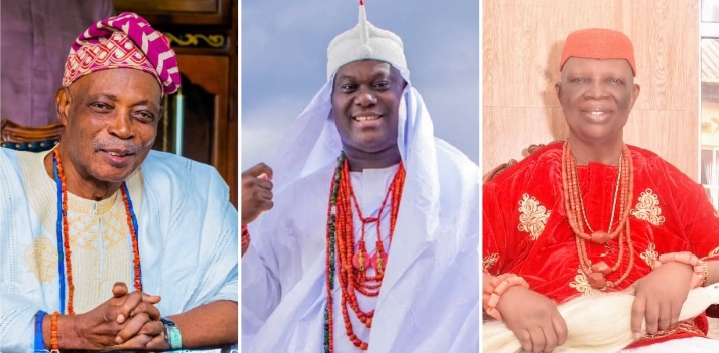
The Ooni of Ife: Unity, Dialogue, and the Call to the Diaspora
Oba Adeyeye Ogunwusi, Ooni Ojaja II, began the year by speaking to all Nigerians, extending not only blessings but a vision of national cohesion. He emphasized the themes of peace, dialogue, compassion, and collective progress as foundational pillars for 2026. His message was a deliberate bridge between tradition and contemporary responsibility, reminding citizens that unity is not abstract but a practice, cultivated daily through mutual respect and collaboration.
In addressing the diaspora, the Ooni urged Nigerians abroad to leverage their skills and investments for the country’s development. This appeal highlighted a broader understanding of influence, acknowledging that the nation’s prosperity is tied to global networks of talent, capital, and ideas. By engaging the diaspora, he reinforced the monarchy’s role not just as a custodian of culture but as a facilitator of progress, blending heritage with national ambition.
The Ooni also contextualized these themes within the pressures Nigeria faces today. Security concerns, ethnic tensions, and socio-economic disparities were implicit backdrops to his words. By invoking dialogue and compassion, he framed 2026 as a year where citizens and leaders alike must act responsibly, bridging divides and fostering cohesion across diverse communities. His message was both aspirational and cautionary, reminding all Nigerians that progress requires participation, awareness, and deliberate action.
Symbolically, the Ooni’s words reaffirmed the palace as a center of cultural authority and moral guidance. Ile Ife remains a touchstone of Yoruba heritage, and its monarch’s voice resonates far beyond ceremonial confines. By combining blessings with actionable guidance, Oba Ogunwusi demonstrated the continuing relevance of monarchy in a modern Nigeria, positioning tradition as both moral compass and agent of civic engagement.
The Olubadan of Ibadanland: Peace and Cohesion in Focus
Oba Rashidi Ladoja, ascending as the 44th Olubadan in September 2025, chose to anchor his first words of 2026 in the principles of peaceful coexistence and unity. Drawing on his experience as a former governor and senator, he framed his message for both local and national audiences, emphasizing that harmony is the foundation of social stability and progress. In Ibadan, where history and contemporary life converge, his words served as a reminder that the strength of a city lies in its ability to manage diversity and nurture cooperation.
Ladoja’s message was deliberate in linking community responsibility to broader societal cohesion. He highlighted that residents must actively cultivate understanding, civility, and mutual respect to sustain collective development. This emphasis reflects a deeper awareness that leadership alone cannot ensure societal peace; it must be paired with engaged citizenry willing to participate in dialogue and conflict resolution.
The Olubadan also acknowledged the importance of tradition in guiding behavior and sustaining cultural continuity. In a society navigating rapid modernization and shifting political landscapes, the monarchy acts as both moral anchor and stabilizing influence. His words reassured citizens that the palace is not a relic but a functioning institution capable of fostering cohesion, mediating disputes, and reinforcing social values that endure across generations.
By framing peace and unity as actionable priorities for the year, Oba Ladoja set the tone for civic responsibility and collaboration. His guidance was practical yet symbolic, reinforcing the role of traditional leadership in modern governance while simultaneously celebrating Ibadan’s heritage and cultural significance.
The Obi of Owa Kingdom: Security, Unity, and Inclusive Progress
His Majesty Obi Dr Emmanuel Efeizomor II extended his first words of 2026 with a focus on peace, unity, and improved security across ethnic and religious divides. His message reflected the delicate balance monarchs must maintain between ceremonial authority and tangible societal influence. In Delta State and surrounding areas, where communities face persistent socio-economic and security challenges, the Obi’s words were both timely and significant.
Efeizomor II’s emphasis on inclusivity highlighted the need for collaboration between communities, local authorities, and traditional institutions. By advocating for cooperation across ethnic and religious lines, he positioned the monarchy as a facilitator of dialogue and mediator of conflicts. His guidance implicitly acknowledged that Nigeria’s social fabric requires active attention, particularly in regions susceptible to tensions or misunderstandings.
The Obi also reinforced the principle that peace is not passive but cultivated. Security, social cohesion, and community engagement are interlinked, and traditional leadership plays a critical role in sustaining them. His words were a call to collective vigilance, a reminder that citizens, authorities, and cultural custodians must all participate to preserve stability and harmony.
By centering his first message on unity and security, Obi Efeizomor reaffirmed the monarchy’s role as a moral and civic anchor. He framed leadership as a shared responsibility, emphasizing that progress depends on engagement, understanding, and the deliberate cultivation of social bonds that extend beyond individual communities.
Security and Challenges Facing Monarchs: Fragile Thrones in a Turbulent Year
The new year’s first hours reminded Nigeria that even the most revered palaces are not immune to modern threats. On January 1, 2026, the Aniwo I palace in Aafin community, Kwara State, was breached by armed gunmen. Oba Simeon Olaonipekun and one of his sons were abducted in an audacious attack that sent ripples of alarm across local and national media. The incident underscored the vulnerability of monarchs, whose authority is steeped in centuries of tradition yet exposed to contemporary insecurity. The palace, a space of ceremony and guidance, became a stark symbol of fragility amid volatility.
Such incidents highlight the broader challenges that traditional rulers face in contemporary Nigeria. While monarchs wield symbolic and cultural influence, they often navigate regions marked by communal tensions, resource disputes, and sporadic violence. The kidnapping in Kwara exemplifies how authority does not guarantee safety, and it poses pressing questions about the protection mechanisms for leaders whose roles are crucial for mediation and stability. Each palace, though fortified by history, must contend with risks shaped by political, social, and economic realities.
Beyond physical security, monarchs confront subtler pressures. Public expectation weighs heavily on their decisions, and every word or ceremony is scrutinized for meaning and consequence. They balance loyalty to heritage with responsiveness to citizens, while operating in environments where local grievances can escalate rapidly. In regions where policing and governance are uneven, the responsibility of kings extends far beyond symbolism. Monarchs must mediate conflicts, maintain social cohesion, and navigate the fine line between moral authority and tangible influence, often under threat.
Despite these pressures, the persistence of monarchs in active leadership highlights resilience. Even as the Kwara incident drew national attention, communities turned to other rulers for guidance, demonstrating the enduring cultural and moral weight of these institutions. Security challenges are formidable, yet they also reaffirm the significance of monarchy in Nigeria: custodians of tradition who must confront the uncertainties of a modern nation while preserving continuity, stability, and trust.
Context and Broader Monarch Issues: Tradition, Law, and National Discourse
The role of monarchs in Nigeria remains a subject of national debate, balancing cultural respect with constitutional ambiguity. Recent discourse has focused on proposals to formalize the authority of key traditional rulers, such as the Sultan of Sokoto and the Ooni of Ife, granting them permanent status in national councils. Supporters argue that such recognition affirms cultural continuity and moral guidance, while critics caution against privileging certain ethnic or regional hierarchies in a federal system. The debate reflects a broader tension between heritage, modern governance, and equitable representation.
Legal considerations intersect with social expectations, as traditional rulers seek clarity on their official capacities. Monarchs operate within communities that look to them for leadership on security, conflict resolution, and development, yet their constitutional powers remain limited. This duality shapes public discourse, as citizens, scholars, and policymakers negotiate the boundaries between ceremonial significance and practical authority. Discussions about codifying influence inevitably provoke questions about the nature of governance in a country where history and modern law intertwine.
Cultural respect and societal perception remain central to the monarchy’s relevance. While many Nigerians continue to revere kings as custodians of heritage, others call for reforms that ensure accountability and alignment with contemporary social values. Monarchs must navigate these dynamics carefully, blending ceremony, diplomacy, and moral leadership to retain legitimacy. Their role is symbolic and functional, reflecting centuries of tradition while responding to evolving expectations of governance, security, and societal cohesion.
Monarchs also play a critical role in national dialogue, often bridging divides that political institutions struggle to address. Through cultural diplomacy, ceremonies, and public statements, they influence perception and encourage cooperation among communities. Even in contested or volatile regions, their voice retains persuasive power, demonstrating that traditional leadership, while historically grounded, continues to shape Nigeria’s social, political, and cultural landscape in meaningful ways.
Closing Reflections: A Call for Peace or a Warning of What’s to Come
As Nigeria moves into 2026, the first words of its monarchs linger in the public consciousness, leaving the nation to interpret their meaning. Were these messages an affirmation that peace, dialogue, and unity will guide communities through the year, or subtle signals of challenges and tensions that might emerge? From the Ooni of Ife to the Olubadan of Ibadanland and the Obi of Owa Kingdom, each carefully chosen word blends reassurance with expectation, inviting citizens to reflect on their role in shaping cohesion and responding to unfolding realities.
Security incidents, including the January 1 kidnapping in Kwara State, serve as stark reminders that authority alone cannot shield against uncertainty. At the same time, the monarchs’ voices stand as stabilizing instruments, a mixture of guidance, moral weight, and cultural influence. Their words offer both hope and caution, underscoring the fragile balance between aspiration and vulnerability that defines leadership in contemporary Nigeria.
The first messages of 2026 leave a lingering question over the nation: will they chart a course toward harmony, serve as early warnings of looming unrest, or both?.
Nigerian monarchs continue to act as anchors of tradition and conscience, their words shaping perception, inspiring reflection, and reminding all that the path ahead requires vigilance, dialogue, and collective responsibility.