The 9th All Africa Music Awards (AFRIMA) unfolded in Lagos, Nigeria, culminating in a live ceremony at the Eko Convention Centre on Sunday, January 11, 2026. AFRIMA, Africa’s premier celebration of music talent across the continent and the diaspora, featured a week of events from January 7–11, 2026, including welcome soirees, business summits, live concerts, and red‑carpet showcases before the final awards night. The ceremony brought together industry leaders, artists, and fans to celebrate excellence in African music, broadcast to audiences across more than 80 countries.
The evening balanced live performances and award presentations, with artists delivering dynamic sets that reflected the diversity of sounds shaping the African music landscape. Performers from various regions took the stage, blending contemporary Afrobeats, hip‑hop, R&B, and traditional sounds. The pacing of the event ensured that performances set the mood for each award presentation segment, keeping audience engagement high throughout the night.
By the time the major continental categories arrived, anticipation had peaked. Top stars from across Africa were nominated in key categories, and the live audience waited in focused silence as presenters stepped forward to announce winners. Nigerian artistes featured prominently both in nominations and wins, a testament to the country’s dominance in the modern African music scene.
The structure of the night ensured that each award moment unfolded in a clear sequence: presenter call, announcement of nominee and winner, and the award handover. This pattern set the stage for the climactic award of the night — Best Male Artiste in Western Africa, a category that featured some of the biggest names on the continent and would see Rema emerge as the winner.
AFRIMA 2026 Winners, Performances, and the Artiste of the Year Category
At the close of the ceremony, Rema emerged as the most decorated artist of the night, clinching three major awards: Artiste of the Year, Best Male Artiste in Western Africa, and Best African Artiste in R&B and Soul. This underscored his influence and commercial success over the past year on the African music scene.
Other major winners included Burna Boy, who won Album of the Year for No Sign of Weakness, and Shallipopi, whose hit Laho earned Song of the Year and Best African Collaboration alongside Burna Boy. Emerging artists also shone: Qing Madi was named Most Promising Artiste of the Year, and Chella took African Fans’ Favourite, showcasing the ceremony’s celebration of both established and rising talent.
In regional categories across the continent, artists from different African zones were recognised. Juma Jux of Tanzania was named Best Male Artiste in Eastern Africa, while Ghana’s Wendy Shay earned Best Female Artiste in Western Africa, and South Africa’s Nontokozo Mkhize won Best Female Artiste in Southern Africa. These results reflected AFRIMA’s commitment to representing the breadth of African music excellence.
For the Artiste of the Year category specifically, Rema’s win was particularly significant given the stature of the artists he bested. According to multiple reports, he edged out major names including Burna Boy, Davido, Wizkid, Amr Diab (Egypt), DJ Maphorisa (South Africa) and Tyla for the top prize in what was one of the most competitive lineups on the night.
The Build‑Up to the Best Male Artiste In West Africa Award
As the ceremony moved toward its final awards, the crowd’s anticipation grew palpable. The Best Male Artiste In West Africa category is traditionally the climax of AFRIMA, recognising not just artistic achievement but influence across the continent within the eligibility period. Cameras cut between focused faces in the audience and the stage, creating visual tension before the category was presented.
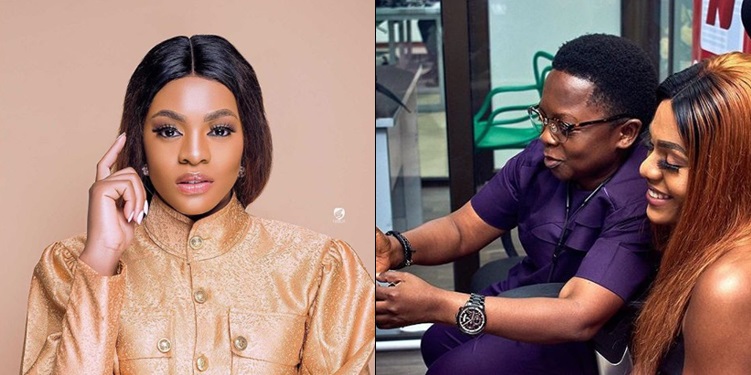
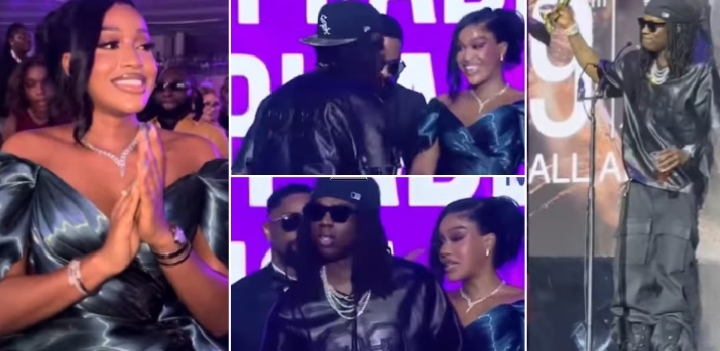
Before the winner was revealed, the next presenter was called to the stage. Uche Montana stepped forward to present the Year award, her role signalling the ceremony’s transition from announcement to recipient reveal. Her entrance was captured from multiple angles, with lighting and camera cues designed to centre attention on the forthcoming sequence.
Uche Montana approached the podium with professionalism, acknowledging the audience and preparing for the next procedural step. Her experience and stature in the industry were clear, and her presence on stage marked a deliberate lead‑in to one of the night’s most anticipated moments.
The audience’s focus shifted fully to the presentation sequence. Presenters in AFRIMA are chosen for their professional demeanor and ability to carry the moment with respect to both fans and nominees. Uche Montana’s role in this high‑stake moment set up the award announcement that would bring Rema back to the stage in front of thousands.
Rema Announced and Approaches the Stage
Once Uche Montana was in position, the announcer declared Rema as the winner of Best Male Artiste In West Africa. Applause surged from the crowd as cameras captured both the reaction in the hall and the immediate change in focus from presenter to recipient.
Rema rose from his seat and moved toward the stage. The crowd’s cheering grew in volume as he took measured steps, moving from his seat through the aisle and up onto the stage. His approach was deliberate, his posture controlled, signalling both respect for the moment and readiness to receive the top award of the night.
Cameras captured his trajectory from multiple angles, ensuring that both viewers present in the venue and those watching across broadcasts could see his movements clearly. This visual coverage set the stage for the next sequence — the interaction between presenter and recipient.
By the time Rema reached the podium, the energy in the room was focused and intense, framed by the ceremony’s pacing and lighting. At this point, the structured sequence of award handover was underway, moving toward what would soon draw substantial online attention.
The Onstage Interaction: Uche Montana and Rema
As Rema arrived at the podium, Uche Montana bent slightly to greet him — a gesture that immediately drew the attention of cameras and viewers alike. As an older artist and presenter, her motion was a sign of respect and acknowledgement toward the winner standing before her.
The gesture was brief yet visible. Uche Montana maintained professional demeanour while ensuring the handover of the award continued without interruption. Rema accepted the greeting and the award with composure, taking the trophy as expected within the ceremony’s structure.
This moment was procedural, following the expected sequence for award handovers at major ceremonies: presenter called, recipient announced, recipient approaches, award handed, acknowledgment exchanged. There was no deviation from the planned choreography of the event.
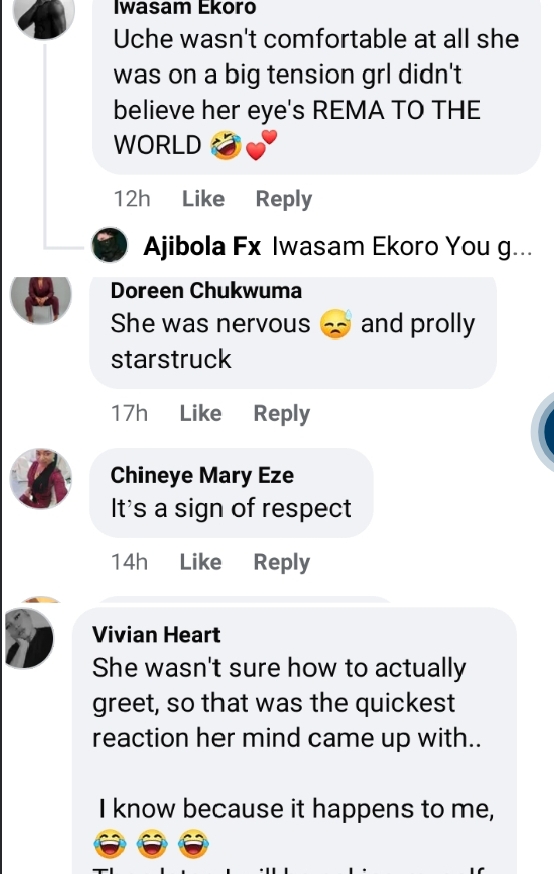
However, once the clip circulated online, reactions varied. Many fans praised Uche Montana’s humility and respect in the gesture, highlighting it as a professional example of decorum in live award presentations. Others kicked against it, questioning whether the bending gesture was necessary given her status and the setting. These interpretations did not stem from any quoted incident onstage but from audience perception of body language and industry norms.
Audience and Social Media Reaction
The immediate reaction in the venue was applause, with the crowd acknowledging both Rema’s award and the polished execution of the handover. Cameras captured the energy in the hall, blending cheers with focused attention as the moment concluded.
Once clips of the exchange circulated online, fans dissected every detail. Many celebrated Uche Montana’s composure and Rema’s respectful acknowledgment, interpreting the sequence as a positive highlight of the ceremony. The visual of her bend became a topic of discussion about professionalism and respect between artists of different generations.
On the other hand, some viewers disagreed with the gesture, arguing that it was unnecessary or overly deferential. These reactions were framed as commentary rather than reporting conflict or incident, reflecting varied fan perspectives rather than documented controversy.
Overall, the online conversation reinforced that the sequence — from presenter call to recipient acknowledgment — was executed smoothly and professionally, with the debate centering on interpretation of body language rather than any disruption or mishap during the ceremony.

Conclusion
AFRIMA 2026 was a celebration of African music excellence, blending live performances with award presentations in a structured, professional format. Nigerian artists dominated major categories, with Rema emerging as a standout winner in multiple fields.
In the Best Male Artiste In West Africa sequence, Rema’s win came after a lineup of heavyweight nominees including Burna Boy, Davido, Wizkid, Asake, Black Sheriff, others showcasing the depth of talent across the continent.
The onstage exchange between Uche Montana and Rema followed the planned award presentation flow: presenter called, winner announced, recipient approached, award handed, acknowledgment made. The moment was executed without incident and broadcast professionally.
Online reactions varied, with praise for professionalism and critique of gesture interpretation. Yet the core sequence remained clear: a structured, respectful exchange in a major live awards ceremony that crowned Rema as one of Africa’s defining artistes for 2025.