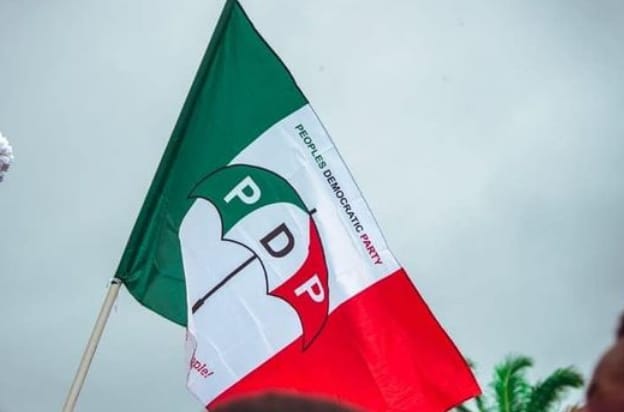
The Peoples Democratic Party (PDP) once stood at the centre of Nigeria’s political life, presenting itself as Africa’s largest party and projecting confidence that it would dominate governance in the country for decades.
By 2025, however, the party that ruled Nigeria for 16 uninterrupted years had entered a period widely seen as its most destabilising since losing power at the federal level in 2015.
Throughout the year, the PDP grappled with deep internal divisions, sustained legal battles, mass defections and a leadership struggle that collectively eroded its organisational strength and public standing.
Political observers noted that while the party had survived earlier crises, the scale and speed of events in 2025 placed it at what its national publicity secretary, Ini Ememobong, described as a “convulsion point.”
The turbulence did not emerge in isolation, as party insiders and analysts traced it to unresolved disputes dating back to contentious presidential primaries in 2015 and 2023.
One of the most visible indicators of the party’s decline in 2025 was the wave of defections that stripped it of several elected office holders across the country.
At the beginning of the year, the PDP controlled 11 governorship seats, but by December that number had fallen sharply following the exit of six governors.
The first major defection came from the governor of Delta State, Sheriff Oborevwori, who moved to the All Progressives Congress alongside the former governor of the state, Ifeanyi Okowa, the PDP’s vice-presidential candidate in the 2023 election.
Their departure was followed by the collapse of the party’s structure in Delta State, with leaders citing concerns over relevance and access to federal support.
In June, the governor of Akwa Ibom State, Umo Eno, also defected to the APC, explaining that his decision was informed by the need to align the state with the federal government.
October witnessed further losses when the governor of Enugu State, Peter Mbah, and the governor of Bayelsa State, Douye Diri, crossed over to the ruling party, each referencing internal instability within the PDP.
The year ended with the governor of Osun State, Ademola Adeleke, resigning from the PDP to join the Accord Party, while the governor of Rivers State, Siminalayi Fubara, defected to the APC.
Beyond the governors, the party recorded a steady reduction in its strength in the National Assembly, with its Senate seats declining from 36 at the inauguration of the 10th Assembly to 23 by the end of 2025.
Several members of the House of Representatives also left the PDP, many following the political direction taken by their governors.
Prominent party figures, including the former vice president, Atiku Abubakar, and the former senate president, David Mark, also exited the party during the year.
As defections mounted, attention shifted to the PDP national convention held in Ibadan, Oyo State, between 15 and 16 November 2025, which became a focal point of controversy.
The convention was convened amid conflicting court orders, with judges of the Federal High Court in Abuja issuing rulings that sought to halt the exercise or prevent its recognition by the Independent National Electoral Commission.
Despite these legal obstacles, the National Convention Organising Committee proceeded with the event, relying on a ruling by a judge of the Oyo State High Court that permitted it to go ahead.
The convention produced a new leadership led by a senior lawyer and former minister, Kabiru Turaki, as national chairman, alongside other members of the National Working Committee.
Rather than unify the party, the exercise deepened existing rifts, especially following the expulsion of several high-profile members over alleged anti-party activities.
Those expelled included the minister of the federal capital territory, Nyesom Wike, a former governor of Ekiti State, Ayo Fayose, and other national officers aligned with a rival faction.
The expulsions triggered further litigation and hardened factional lines, with opposing groups disputing the legitimacy of the convention and the authority of the emerging leadership.
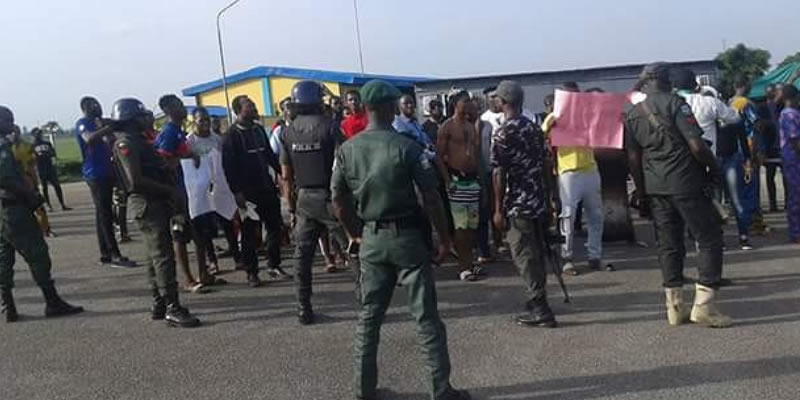
By November, tensions escalated into physical confrontations that led to the sealing of the PDP national secretariat in Abuja by the police.
Shortly before the end of the year, INEC announced that it would not recognise any faction of the party pending the resolution of court cases surrounding the leadership dispute.
The electoral body’s decision had immediate consequences, including the refusal to list the PDP’s candidate for a forthcoming governorship election in Ekiti State.
Reacting to the developments, the national publicity secretary, Ini Ememobong, said, “What actually happened in 2025 was an accumulation of the things that had happened from 2015 down, just that in 2025 it got to convulsion point.”
He added, “As much as there were judgements against convention, there were court orders directing that the convention should hold, but all of that are issues before the Court of Appeal.”
Civil society voices also weighed in, with the president of the Campaign for Democracy, Ifeanyi Odili, describing 2025 as one of the most difficult years in the party’s history.
“2025 was a brutal year for the PDP, marking a major low point in the party’s recent history,” Mr Odili said, while noting that internal conflicts and defections had reduced the party’s national footprint.
As the PDP entered 2026 still divided and awaiting judicial clarity, analysts observed that the events of 2025 had reshaped perceptions of a party that once dominated Nigeria’s political landscape.