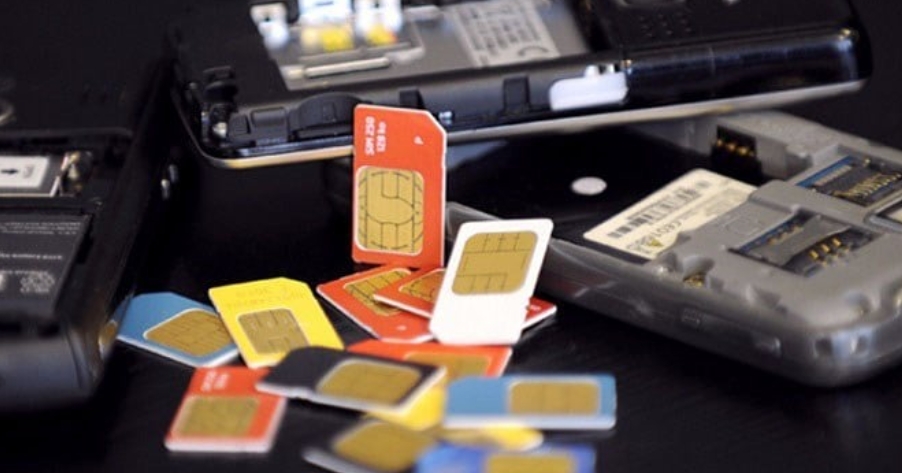
What linking a SIM card, opening a bank account and registering for examinations share in Nigeria is the growing requirement for digital proof of identity.
Over time, everyday activities have quietly shifted online, making access dependent on recognition by digital systems.
Bank transfers, document renewals, online registrations and payments now happen within seconds, often without physical visits to offices.
These activities are not isolated services but are powered by a shared foundation known as digital public infrastructure.
Digital public infrastructure refers to core digital systems that allow governments, citizens and businesses to interact efficiently.
The World Bank defines DPI as comprising digital identity systems, digital payment platforms and secure data exchange frameworks.
These systems function like public utilities, designed to be reliable, shared and capable of serving millions simultaneously.
Key principles guiding DPI include openness, inclusivity, interoperability, user-centric design, privacy by design and strong governance.
In Nigeria, DPI operates largely unnoticed despite being embedded in daily life.
The National Identification Number issued by the National Identity Management Commission serves as Nigeria’s primary digital identity system.
The Bank Verification Number underpins identity verification and security within the financial system.
Instant interbank transfers are enabled through payment infrastructure operated by the Nigeria Inter-Bank Settlement System.
Government payments are processed through platforms under the Treasury Management and Revenue Assurance Service using Payment Solution Service Providers such as Remita.
In healthcare, the Nigeria Digital Health Initiative aims to establish interoperable electronic medical records and secure data sharing.
These systems are designed to recognise verifications carried out by others, allowing secure information sharing across platforms.
This interoperability strengthens efficiency but also means failures in one system can disrupt many services.
“Interoperability sounds like a technical word, but in reality, it’s about time, trust, and dignity,” said a Nigerian-based digital rights activist, Muhammed Bello Buhari.
Nigeria’s emerging DPI framework and data exchange standards coordinated by the National Information Technology Development Agency focus on secure, seamless public service integration.
Speaking during the Digital Public Infrastructure Live Event in September 2025, the director of e-government and digital economy at NITDA, Salisu Kaka, said frameworks were being built responsibly.
“We are laying the foundation with the right regulation, framework, and guidelines. This process is co-created with stakeholders to ensure that what we roll out reflects the needs and expectations of Nigerians,” he said.
Kaka said data exchange remains central to building trust in digital governance.
“What is central is the data exchange — how to get the design right, how to guarantee privacy, how to ensure interoperability and security. These are the things that make citizens trust government digital services,” he added.
Nigeria’s digital identity system illustrates the central role of DPI.
As of October 2025, NIMC reported that over 123.9 million Nigerians and diaspora residents were enrolled in the national identity database.
The Federal Government has made the NIN mandatory for services such as SIM registration, banking, examinations, passports and social intervention programmes.
In July 2025, NIMC began migrating the identity system to the Modular Open Source Identity Platform under the World Bank-supported ID4D programme.
The programme allocates $430m to modernising Nigeria’s identity infrastructure and includes deployment of the NIMS 2.0 platform.
A data-rights advocate and head of insights and storytelling at SBM Intelligence, Victor Ejechi, said a unified identity system improves service delivery.
“By relying on a single, shared form of identification, governments and service providers can reduce duplication, lower costs, and streamline processes such as opening bank accounts, registering SIM cards, sitting for examinations, or accessing social programmes,” he said.
He warned that centralisation also concentrates risk.
“When one identity becomes the gateway to multiple services, technical failures, data breaches, or enrolment errors can quickly translate into exclusion from everyday economic and social life,” Ejechi said.
Digital payments form another critical layer of Nigeria’s DPI.
Most electronic transactions move through shared infrastructure managed by NIBSS.
NIBSS reported that electronic transaction values rose from N280tn in August 2024 to N384tn by July 2025.
In November 2025, the platform reached a mature inclusivity level on the AfricaNenda Inclusivity Spectrum.
Government-approved platforms such as Remita enable digital payments for taxes, levies and regulatory fees.
The launch of the e-Naira in October 2021 positioned Nigeria as Africa’s first country with a central bank digital currency.
The Central Bank of Nigeria describes the e-Naira as part of broader efforts to enhance inclusion and reduce transaction costs.
Mobile money services allow digital transactions through apps or USSD without internet access.
The CBN’s mobile money guidelines aim to promote inclusion, reduce cash reliance and regulate sector development.
Mobile money operators include fintechs, banks and telecom firms such as OPay, PalmPay, Kuda, Moniepoint, Paga, MTN and Airtel.
A fabric trader in Kwara State, Akinrinade Hauwa, said mobile money transformed her business.
“I used to travel by road to Kano six or seven years ago to buy fabrics in bulk, carrying cash with me,” she said.
“But with the insecurity on those routes, I had to adapt. Now I receive payments directly into my bank account, choose fabrics from suppliers over WhatsApp, pay through a mobile money app, and get the goods delivered days later. It is safer, more efficient, and less stressful.”
Speaking on Radio Nigeria Harmony FM, a professor of accounting at the University of Ilorin, Khadijat Yahaya, said fintech wallets ease transactions for traders.
“They eliminate the financial burden of transporting cash and queuing in banks just to carry out transactions,” she said.
She warned that poor digital literacy could limit inclusion.
“Some people cannot even recite their phone numbers, which often serve as their account numbers,” she said.
Data exchange remains the missing layer in Nigeria’s digital systems.
Nigeria is finalising its national data exchange platform with initial use cases expected in early 2026.
NITDA has developed draft standards for the Nigerian Data Exchange based on the X-Road model used in Europe.
The system will enable secure, consent-based data sharing without granting direct database access.
The Nigeria Data Protection Act 2023 and National Cloud Policy 2025 establish safeguards for personal data.
Understanding DPI matters because it shapes access, efficiency and exclusion in public services.
Poor governance of digital systems can deepen inequality and erode trust.
Nigeria’s digital public infrastructure is already shaping daily life, with higher stakes as new systems emerge.