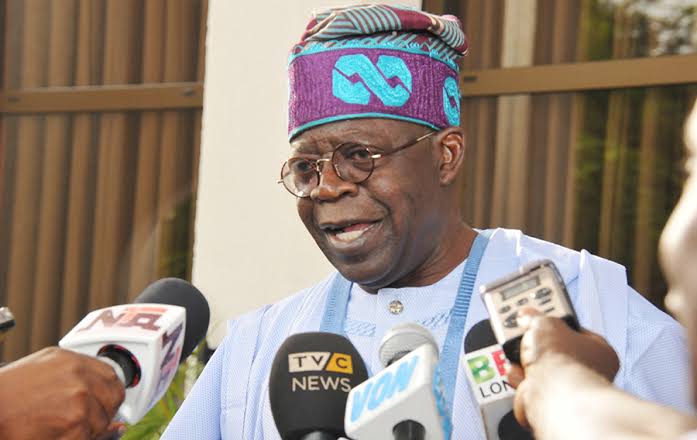
Leadership at the highest level is never just public speeches, official engagements, or ceremonial appearances. For President Bola Ahmed Tinubu, the corridors of power carry invisible currents, and the rhythm of governance is shaped as much by unseen vigilance as by policy decisions. Ordinary days can hold extraordinary risk, and those who operate in the shadows of authority often make choices that define the boundary between safety and catastrophe.
In these hidden spaces, the people closest to leadership — the Chief of Army Staff, military commanders, intelligence operatives, and security chiefs — navigate a world where timing, judgment, and loyalty are constantly tested. Among them, Director-General Adeola Ajayi of the Department of State Services coordinates intelligence that rarely reaches the public eye, while senior military leaders monitor movements and decisions that could impact the presidency at any given moment. These figures operate with precision, balancing discretion with decisive action, aware that a single misstep could escalate consequences beyond imagination.
The president himself moves through this environment, attending events, traveling between states, and fulfilling the duties of office. Each engagement, no matter how routine it appears, carries a hidden overlay of risk assessment. Every schedule is layered with protective measures invisible to the public, yet vital to preserving the continuity of governance. The proximity of danger is often measured not in public alarms but in subtle signals only detectable by those trained to read them.
This is a story not of spectacle or drama, but of invisible battles, calculated vigilance, and the people whose decisions preserve leadership without public acknowledgment. It is about how Tinubu navigates an environment where proximity to danger is real, though unseen, and where the choices of a few trusted individuals determine the difference between crisis and continuity.
The Network of Shadows
The officers involved in the plot were not random actors; they represented a network carefully embedded across different branches of the Nigerian Armed Forces. According to military confirmations, at least 16 serving personnel had coordinated plans that could have directly targeted the presidency. These individuals were entrusted with sensitive responsibilities, their positions granting them access to both strategy and execution channels within the military hierarchy. It was a network designed for stealth, operating under the assumption that loyalty would shield its movements from discovery.
The Department of State Services quickly mapped this network, tracing conversations, surveillance records, and patterns of communication that intersected with the alleged conspirators’ routines. Each thread revealed overlaps that suggested planning had extended beyond individual ambition; the scheme was collective, methodical, and potentially lethal. DSS operatives acted as silent custodians of information, intercepting signals and relaying intelligence in real time, ensuring that actions taken would protect the presidency without tipping off the conspirators.
Coordination between DSS and the Army allowed for a measured response. Arrests were not carried out as a public spectacle but as precise interventions executed simultaneously in multiple locations. By the end of September 2025, key suspects were in custody, their ability to act neutralized before any plan could manifest into violence. The operation itself exemplified how intelligence and decisiveness intersected to prevent disaster. It was a victory of strategy over audacity, of preparation over opportunism.
In the aftermath, questions remained about motives and potential collaborators. Military officials emphasized that the arrested officers represented a fragment of what could have been a larger scheme. Some reports hinted at involvement of retired officers and political financiers whose roles were under investigation. Yet even with these unknowns, the swift action and intelligence-driven arrests created a buffer between potential chaos and the calm corridors where President Tinubu continued to lead. The network of shadows had been illuminated just enough to prevent the unthinkable.
Timing and the Independence Day Decision
The chronology of events highlights how narrow the window of danger truly was. On the 30th of September 2025, as President Tinubu traveled to Imo State for scheduled engagements, authorities executed the coordinated arrests. The next day, the Independence Day parade was canceled — a decision rooted not in politics but in prudence. Officials explained that the disruption was necessary to safeguard the president, yet the public was left to speculate, unaware of the true stakes that had unfolded behind the scenes.
This cancellation was more than a procedural adjustment; it was a reflection of how close the presidency had come to potential disruption. Had the plan succeeded even partially, the symbolic independence parade could have become the stage for an orchestrated attack. By intervening in time, security agencies preserved both the life of the president and the perception of national stability. The act underscored a larger truth: in governance, timing is as crucial as intelligence.
Behind the closed doors of strategy rooms, military leaders assessed risk continuously. The balance between public calm and operational secrecy was delicate, requiring discretion, precision, and absolute trust in the information provided by intelligence officers. Each decision, from arrest timing to parade cancellation, demonstrated a sophisticated understanding of risk management, illustrating how administrative prudence and operational execution intersect to avert national crises.
The Independence Day decision, seemingly simple on the surface, became a metaphor for the unseen battles that secure power in modern Nigeria. It was a reminder that the preservation of leadership often hinges not on visible authority but on silent acts of courage, vigilance, and disciplined coordination among those entrusted with security.
Legal Implications and the Court-Martial Process
The formal acknowledgment by the Defence Headquarters in late January 2026 marked a turning point in transparency. Military authorities confirmed that at least sixteen officers would face judicial proceedings for their involvement in the foiled plot. This public disclosure signaled a departure from earlier denials and clarified that the matter would move through established military legal channels, emphasizing accountability and adherence to procedural justice.
Under Nigerian military law, convictions for attempting to overthrow a constitutional government carry severe consequences. Legal experts have noted that outcomes could range from long-term imprisonment to the death penalty depending on the charges substantiated during court proceedings. The implications for the officers involved extend beyond personal accountability; the trials serve as a precedent for institutional discipline and the reaffirmation of loyalty to civilian leadership.
The proceedings are expected to be conducted by military judicial panels, which operate under a framework designed to assess evidence, testimony, and corroborating intelligence comprehensively. At present, official trial dates remain undisclosed, but the pathway toward adjudication underscores the seriousness with which the Nigerian military and government approach threats to constitutional order.
Public awareness of these judicial steps may influence perceptions of military governance, loyalty, and political stability. By initiating court-martial processes, authorities aim to balance secrecy necessary for national security with transparency essential for trust, reinforcing the principle that even within disciplined ranks, accountability remains paramount.
How Tinubu Really Came Close to Danger
The danger was not theoretical. It crept quietly, almost invisibly, through corridors of the military, whispered in encrypted conversations and subtle movements that, if unnoticed, could have led to catastrophe. President Bola Ahmed Tinubu, engaged in his official duties and public appearances, was unaware of how deeply the plot had infiltrated the system. He traveled to Imo State, attended meetings, and prepared for the Independence Day parade while plans to remove him from power were already in motion.
The officers involved had positioned themselves with careful calculation. Access to communication channels, knowledge of presidential itineraries, and the ability to coordinate movements gave them the tools to act with lethal precision. Had the tip-off from the serving officer not reached the Chief of Army Staff, these carefully orchestrated actions could have unfolded into violent disruption, endangering not only the presidency but the perception of national stability. Each day that passed before discovery increased the stakes, transforming ordinary governance into a high-wire act over hidden threats.
The plotters’ confidence was rooted in secrecy. Meetings occurred in discreet locations, messages were coded, and loyalist assumptions shielded their movements from immediate scrutiny. The fact that President Tinubu remained unaware of their intentions illustrates how thin the line was between normalcy and chaos. Only the intervention of intelligence services and decisive military action prevented what might have been an unprecedented breach of security at the highest level of Nigerian leadership.
When authorities moved, they did so with surgical precision. Arrests were coordinated across locations, communications were monitored in real time, and contingencies were neutralized before any opportunity for execution arose. Tinubu’s schedule, which might have been his vulnerability, became a controlled variable; the very events of his public life were leveraged to ensure his safety. The president never saw the threat looming, but without the careful orchestration behind the scenes, the trajectory of those days could have changed Nigeria’s political landscape dramatically.
The Moment the Plot Could Have Succeeded
In late September 2025, the plan was perilously close to moving from discussion to action. Intelligence suggests that the conspirators had rehearsed scenarios for capturing or incapacitating the president during a public event. The Independence Day parade, a symbol of national unity, was identified as an opportunity where chaos could be imposed publicly, creating both immediate danger to Tinubu and a broader crisis of confidence.
Had a single operational failure not been exploited by the tip-off, the plot might have intersected with the president’s itinerary. Security gaps existed not from negligence but from the nature of trust within military ranks. The conspirators relied on assumptions about loyalty and discretion, a confidence that could have placed the president directly in harm’s way during a moment meant for celebration. The window for disaster was narrow, measured in hours, and the margin for error was almost nonexistent.
Counter-intelligence operations unfolded just in time. Arrests, surveillance interventions, and immediate operational decisions removed critical actors before they could align their movements with the president’s presence. The parallel coordination between the Army and DSS ensured that even the smallest action could be intercepted. The foiled plan was more than a prevention; it was a razor-thin escape from potential catastrophe, a scenario that might have rewritten the nation’s recent history.
The president himself never learned the full scale of what was averted. From his perspective, official schedules proceeded with minor adjustments, but behind the scenes, the orchestrated effort to protect him involved months of observation, discreet communication, and high-stakes decisions by those who understood the lethal potential of the conspiracy. The episode underscores how leadership at the highest level can be shielded not by visibility but by the unseen courage and diligence of those sworn to protect it.
How Close Calls Were Thwarted
There were multiple junctures where the plan could have succeeded. Each time a misstep was avoided, it owed to the vigilance of officers who prioritized constitutional loyalty over personal ambition. Every intercepted communication, every observation of unusual patterns, every coordinated arrest was a barrier that prevented chaos from materializing:
- Coordination across multiple cities neutralized simultaneous threats
- Key suspects were isolated before they could mobilize personnel or resources
- Surveillance confirmed the absence of secondary operatives ready to act
- Contingency plans by DSS and Army prevented operational improvisation by the plotters
The conspirators had underestimated the speed at which intelligence could converge. By the time actions were ready to unfold, the officers who had been tipped off ensured the net closed around critical points of execution. What could have been a violent disruption became a sequence of preemptive detentions and protective maneuvers, a testament to the precision of disciplined counter-intelligence.
The closeness of the danger illustrates how fragile security can be when threats come from within. Had a single warning gone unheeded or a single arrest delayed, the consequences might have been immediate and irreversible. The president’s continued public engagements and apparent safety were the result of calculated interventions invisible to the broader public eye.
The Calculated Risk and the Hidden Courage
The plot against Tinubu was a high-stakes gamble by a few military actors who misjudged loyalty, timing, and vigilance. Their assumptions failed not because they lacked preparation but because they underestimated the reach of human conscience and institutional collaboration. The officer who first disclosed the plan acted knowing the risk of retribution or suspicion, yet his decision prevented an unparalleled breach of security.
The courage extended beyond a single individual. DSS operatives worked silently, military leadership acted decisively, and coordination ensured that the plot was contained before execution. Every layer of action represented an invisible shield that absorbed threats before they reached the president. The danger was real, imminent, and meticulously orchestrated, yet it was also met with calculated and courageous interventions that turned potential disaster into averted crisis.
The public sees Tinubu presiding over governance, attending events, and navigating political waters, unaware of how perilously close he came to direct harm. Yet the sequence of intelligence, observation, and preemptive action illustrates a hidden narrative where timing, vigilance, and loyalty intersected to preserve both life and democratic continuity.
In essence, Tinubu’s near-danger was not a single event but a chain of narrowly avoided disasters, each a lesson in the fragility of power and the necessity of disciplined protection. It was a stark reminder that leadership is often safeguarded not by strength alone but by the unseen vigilance of those entrusted with security.