In early February 2026, the Nigerian political landscape witnessed a surge in celebrity involvement that was both unprecedented and highly visible. The announcement on 3 February 2026 of Obi Cubana, also known as Obinna Iyiegbu, being appointed the South-East Zonal Coordinator of the City Boy Movement represented more than a mere addition to a political support group. It signaled the growing influence of public figures in shaping political narratives and mobilizing youth support for President Bola Tinubu’s administration in the lead-up to the 2027 elections. Celebrity appointments like Cubana’s blur the lines between entertainment, business, and politics, creating an environment where social media reactions can influence political discourse as much as formal policy debates.
In this context, the role of the City Boy Movement was not just grassroots organization but also the creation of visible, celebrity-led ambassadors who could attract attention, spark debate, and mobilize networks in the South-East region, a strategically important zone for political calculations.
The decision to involve someone of Cubana’s profile reflected a calculated strategy. He was widely recognized not just for his entertainment industry connections and luxurious lifestyle but for his ability to command influence among young voters and aspirants. The movement’s decision to expand its reach through such appointments also demonstrated an acknowledgment of the role of perception in contemporary politics.
This was an era where online narratives, social media virality, and personal branding could rival traditional campaign strategies in shaping public opinion. As a result, the appointment of Cubana on 3 February 2026, while initially framed as a routine political announcement, became the first domino in a sequence that would later ignite one of the most publicized celebrity-political controversies in recent Nigerian history.
Cubana Chief Priest Enters the Political Arena
Only four days after Cubana’s appointment, on 7 February 2026, Pascal Okechukwu, popularly known as Cubana Chief Priest, was officially named the Imo State Director of the City Boy Movement. This move formally tied him to the political structure that was rapidly expanding under the Tinubu administration’s youth outreach and celebrity engagement strategies. While Cubana Chief Priest’s appointment might have appeared ceremonial to some observers, it carried significant symbolic weight. As a high-profile figure with strong local influence in Imo State, his alignment with the movement provided instant visibility and added a layer of credibility to the campaign’s engagement with young voters and social media communities.
The choice of Imo State as his operational zone was also strategically meaningful. Imo State, being a key South-East state, holds political significance in both local and national calculations. By appointing a popular personality to a formal political role, the City Boy Movement sought to combine entertainment influence with organized political advocacy. Cubana Chief Priest had previously built a following not just in hospitality and entertainment but also among aspirants and emerging leaders, giving him an edge in mobilizing support quickly.
His public alignment with President Tinubu’s network created both opportunities and risks, as any celebrity entering politics often invites scrutiny, commentary, and sometimes controversy from those outside the immediate support circle.
Isaac Fayose Raises Questions
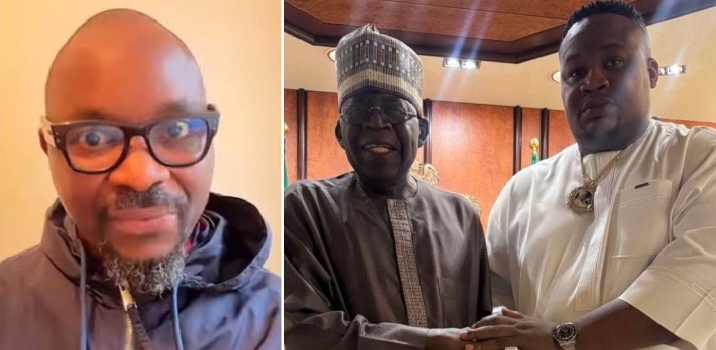
Within days, on 9 February 2026, the narrative shifted sharply. Businessman and political commentator Isaac Fayose posted a video on Instagram that would trigger one of the most widely debated controversies of the month. In the video, Fayose questioned why influential Igbo figures were aligning themselves with the Tinubu administration while Nnamdi Kanu, the leader of the Indigenous People of Biafra, remained detained. His comments suggested a disconnect between political allegiances and community sentiments, framing the discussion in terms of accountability, principle, and ethnic solidarity.
Although Fayose did not explicitly mention Cubana Chief Priest in the video, the timing of the criticism made it impossible for the public not to associate it with the newly appointed celebrity supporters of the City Boy Movement. His statement implying that Igbo leaders were “easy to buy” politically became a viral talking point and ignited debate across social media, traditional news platforms, and among political analysts. The video highlighted tensions that had been quietly simmering around celebrity involvement in politics and the intersection of wealth, influence, and political alignment in the South-East region. Fayose’s framing emphasized ethical and political questions rather than personal attacks, yet the rapid amplification of his comments made the discourse intensely personal for the celebrities involved.
The Controversy Erupts Publicly
The situation escalated on 11 February 2026, when Cubana Chief Priest responded publicly to Fayose’s remarks. In a series of statements, he defended his political engagement, emphasizing his responsibilities as a businessman who employs hundreds of Nigerians and his belief that working with the government in power is a practical necessity.
His response was firm and confident, dismissing Fayose’s criticism with phrases such as “Power pass power” while simultaneously challenging the commentator’s credibility and questioning his own business accomplishments. This public confrontation transformed what had initially been a commentary into a high-profile feud that dominated social media discourse for days.
Fayose’s reply was equally assertive. He accused Cubana Chief Priest of unexplained wealth, suggested that in a properly functioning political system he would face investigation, and questioned the legitimacy of his financial success. The exchange was not limited to personal credibility but quickly evolved into a broader debate about transparency, political ethics, celebrity influence, and the broader implications of aligning with political structures that have contentious community support.
The public feud reflected deep undercurrents in Nigerian society, including the tension between traditional political actors, rising social media influencers, and the expectations of accountability in high-stakes political environments.
Celebrity Influence and Political Backlash
The controversy surrounding Isaac Fayose and Cubana Chief Priest demonstrated the double-edged nature of celebrity involvement in politics. On one hand, celebrities bring visibility, mobilization capacity, and social media reach that can be highly beneficial to political movements. On the other, their involvement exposes them to intense scrutiny from commentators, traditional political actors, and the public at large. The rapid escalation of the feud was emblematic of a new political era where social media amplification can magnify perceived slights, moral critiques, and ideological challenges into national discussions.
Moreover, the timing of the controversy underscored the fragile balance between strategic political engagement and community perception. The South-East region has historically maintained complex political dynamics and sensitivities around representation and alignment with federal authorities.
Celebrity appointments, while designed to modernize engagement and attract youth attention, can inadvertently provoke criticism when perceived to be disconnected from local sentiments or political principles. Fayose’s remarks crystallized this tension, highlighting how public alignment with powerful political networks can clash with community expectations and perceptions of loyalty.
The Role of Social Media in Shaping the Discourse
Social media played a central role in accelerating the dispute between Fayose and Cubana Chief Priest. Platforms such as Instagram and Twitter allowed for instant dissemination of statements, reactions, and opinions. Memes, reposts, and comment threads amplified the discussion and transformed it from a localized disagreement into a nationwide topic of debate. The speed at which the video and subsequent responses circulated demonstrated the modern realities of Nigerian political discourse, where digital presence can rival formal news reporting in influence.
The debate also illustrated the participatory nature of online political engagement. Ordinary citizens, journalists, and opinion leaders weighed in, providing perspectives that ranged from ethnic loyalty and political principle to commentary on celebrity culture and wealth accumulation.
The public reaction was not just commentary but a reflection of the complex expectations that Nigerian society places on public figures, celebrities, and political actors simultaneously. Social media amplified voices that might otherwise remain marginal and made the controversy a barometer of national sentiment, particularly among young Nigerians who actively consume and react to online political content.
Broader Political Implications
Beyond the personalities involved, the feud carried implications for Nigeria’s political trajectory ahead of the 2027 elections. The City Boy Movement, as a pro-Tinubu youth organization, relied on visible supporters to demonstrate momentum and legitimacy. The public criticism and subsequent defense by celebrity directors highlighted both the opportunities and vulnerabilities inherent in using well-known personalities to convey political messages.
The timing of the appointments and the feud suggested that political strategists must consider not only the reach and popularity of appointees but also their susceptibility to public criticism and the broader narrative of community engagement. In volatile political climates, misalignment between public perception and strategic intentions can have significant consequences for political campaigns, particularly in regions with strong ethnic and historical political identities.
The Ethical Debate
A deeper layer of the controversy was ethical in nature. Fayose’s questioning of the motivations behind celebrity involvement in politics raised questions about whether wealth, fame, and personal gain overshadow public service and accountability. Cubana Chief Priest’s defense rested on practical considerations: working with the government in power to maintain influence, employ citizens, and safeguard business interests. These competing frameworks—principled critique versus practical engagement—highlighted enduring debates in Nigerian politics about the role of public figures, ethical responsibility, and the intersection of economic power with political alignment.
The ethical discussion resonated widely because it touched on concerns familiar to many Nigerians: trust in leadership, transparency, and the perceived commodification of influence. When high-profile individuals publicly justify their political alignments, the discourse inevitably extends beyond their personal choices and enters the realm of societal expectations and historical memory.
Understanding the Timeline
When the events are considered chronologically, the sequence clarifies how quickly tensions escalated. On 3 February 2026, Obi Cubana’s appointment laid the foundation for celebrity visibility within the movement. On 7 February 2026, Cubana Chief Priest’s formal entry into the political structure in Imo State further reinforced the movement’s strategy. Within two days, 9–10 February 2026, Isaac Fayose’s video introduced criticism that connected directly to the recent appointments, whether intended or inferred. By 11 February 2026, the public exchange between Fayose and Cubana Chief Priest had reached its peak, sparking nationwide discussion.
This rapid progression underscores the high-stakes nature of modern celebrity political involvement, where decisions and alignments can catalyze public discourse almost immediately. In a broader sense, the timeline shows the interplay between formal political announcements, social media amplification, and public perception, revealing the speed with which controversy can become national conversation in Nigeria.
The Human Element
Amid the political calculations and online debate, the human element remains central. Cubana Chief Priest’s statements reflected a personal logic: his businesses provide employment, and engagement with the government offers practical benefits. Fayose’s video articulated a sense of communal accountability and moral concern for constituents and ethnic solidarity. Both perspectives were rooted in lived experiences, professional realities, and perceptions of responsibility.
For observers, understanding the controversy requires recognizing these human motivations. The clash was not solely about politics but also about how individuals navigate power, responsibility, and visibility within the context of a society with high expectations and persistent political tensions. Social media amplified these motivations, making private reasoning part of public spectacle and turning personal decisions into communal debates.
Reflection
The Isaac Fayose versus Cubana Chief Priest controversy in February 2026 is emblematic of a changing political culture in Nigeria. It illustrates how celebrity involvement, social media, political appointments, and public perception intersect to create high-stakes discourse that unfolds in real time. From 3 February 2026 through 11 February 2026, a sequence of strategic appointments, public critique, and defensive responses demonstrates how quickly public opinion can be mobilized and contested.
The events highlight broader themes including the ethical responsibilities of public figures, the mobilizing power of social media, the dynamics of political alignment in the South-East, and the ways celebrity engagement can both strengthen and complicate political messaging. Beyond the spectacle, the controversy offers lessons about accountability, perception, and the human factors that influence political behavior in contemporary Nigeria.
By examining the timeline, the public response, and the motivations of those involved, one can understand not only the specific dispute but also the evolving dynamics of political engagement, celebrity influence, and societal expectation in the 2026 Nigerian political landscape.