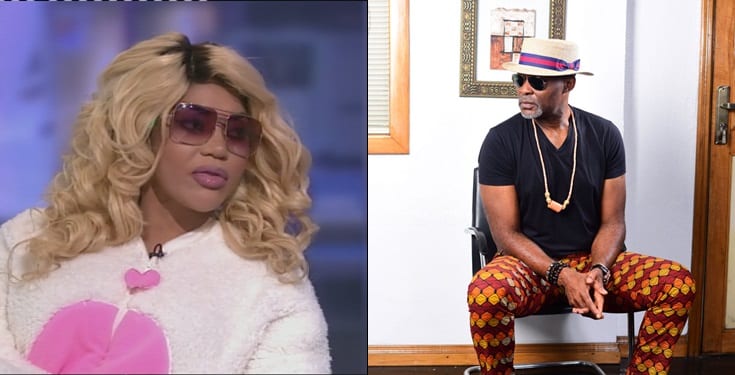
At a time when many remember her as the vibrant voice behind an anthem that once filled church auditoriums and reverberated across Nigerian airwaves, Busola Oke, affectionately known as Eleyele, showed a side of her journey few had seen.
In a recent live broadcast that quickly went viral, the gospel singer broke down in tears, apologising to her supporters and admitting she had reached a breaking point in her career.
With palpable emotion, she questioned how one could persevere in an industry that seems to reward trends over substance, lamenting that “good music doesn’t sell anymore” and exposing the financial strain and isolation underlying her struggles. Her raw honesty has ignited a wide conversation about the realities behind the glamour of music fame and the challenges faced by artists who devote their lives to meaningful art.
Who Is Busola Oke?


Busola Oke widely recognized as Eleyele is a celebrated Nigerian gospel and inspirational singer whose name has become synonymous with spiritually uplifting music in Yoruba and beyond.
Born into a polygamous family where her father had seven children and her mother four; her parents later divorced.
Busola Oke grew up in the Idi-oro area of Mushin, Lagos, and has spoken about a “tough” childhood where she had to hawk goods to survive.
She attended the University of Lagos Staff Nursery and Primary School, then secondary schools in both Jos and Lagos (Reagan Memorial Baptist Girls Secondary School). She eventually earned a degree in Mass Communication from the University of Lagos and a second degree in English Language from Redeemers University.
Oke began her musical journey in 1998 with the album, Moyege, steadily honing her craft with early recordings before her breakout moment came in 2004 with the release of Eleyele. The song was originally a movie soundtrack that became so popular she adopted it as her stage name.
‘Eleyele’, which blends traditional Nigerian rhythms with powerful spiritual themes became a defining hit, turning her into a household name and setting the stage for a flourishing music career that spanned churches, concerts, and gatherings across Nigeria and in the diaspora.
Known for her deep, soulful vocals and culturally rooted style, Busola carved a niche in inspirational and gospel music, often using indigenous beats and melodies to communicate messages of faith, hope, and resilience. Her catalogue over the years has included beloved tracks like Ogo Tuntun, Asoro Ma Tase, Alanu, and Adaba, which further solidified her presence in Nigeria’s spiritual music scene.
Beyond Eleyele, Oke has experienced periods of both prominence and challenge, including an extended hiatus abroad between 2014 and 2017, to focus on family before returning to Nigeria to revive her career. She describes herself not just as a gospel singer, but as an inspirational artist whose work transcends strict genre boundaries.
The Rise: The Bayowa Era and the Making of ‘Eleyele’


The story of Busola Oke’s rise cannot be told without mentioning her early partnership with Gbenga Adewusi, the CEO of Bayowa Films.
In the early 2000s, Adewusi is widely credited with discovering and promoting Oke at a time when she was still finding her footing in the industry. Through Bayowa Films and Records International, he strategically positioned her within the Yoruba movie soundtrack circuit. This was a powerful distribution channel at the time, and it helped her gain visibility across Southwestern Nigeria.
The turning point came in 2004.
According to Oke, “Eleyele” was recorded during what she believed was a rehearsal session at Eko Reel Mix studio. That take, however, would later become the official soundtrack for a film project after Adewusi chose to use it commercially. The song exploded in popularity. Its infectious refrain and culturally resonant sound quickly transformed her into a household name.
“Eleyele” was no longer just a song, it became a movement. The album sold widely, her name traveled beyond church walls, and the nickname “Eleyele” permanently attached itself to her identity.
But behind the meteoric ascent, deeper tensions were already forming.
From Career-Defining Partnership to Public Dispute


While the “Eleyele” era cemented Busola Oke’s fame, she has repeatedly alleged that the financial rewards of that success never fully reached her.
Oke claims she was paid as little as ₦4,000 for albums that went on to sell massively, alleging that Bayowa Films retained the bulk of the profits from her projects. She has further accused Adewusi of personal harassment, stating that her refusal to grant sexual favours created tension that ultimately affected her compensation and position within the label.
Adewusi has consistently denied these allegations.
In public rebuttals, he has described their eventual split which occurred around 2014/ 2015 as amicable, insisting that he supported her transition to independence and even purchased a car for her at the time. He has argued that he elevated her from obscurity to stardom and rejected claims of exploitation or misconduct.
He has also suggested that her later financial struggles stem from personal decisions rather than label management, questioning why his name continues to surface more than a decade after their separation.
The dispute resurfaced intensely between late 2023 and early 2026 as Oke began speaking more openly about her experiences in the industry. In February 2026, she cited the prolonged conflict and emotional strain as part of what left her exhausted and questioning her future in music.
Behind the Struggles: Busola Oke’s Emotional Revelation


On February 23, 2026, Busola Oke left fans and the Nigerian music community deeply concerned after an emotional live session on social media where she openly shared the challenges she has been facing in her career.
During the broadcast, Oke broke down in tears as she reflected on years of dedication to her craft and the harsh realities of sustaining a music career today. Apologising to her supporters, she confessed that she had reached a breaking point and could no longer cope with the pressure. “To my fans, I’m sorry. I never planned to do this, but I can’t take this anymore. I’m done,” she said, visibly emotional, before lamenting that “good music doesn’t sell anymore.”
She also highlighted feelings of isolation and lack of support, suggesting that many people who were once close to her earlier in her career were no longer present, leaving her to confront challenges largely on her own. Her remarks sparked public discussion about the struggles of artists who devote their lives to meaningful music while navigating an industry that can undervalue their work.
Clarification in Biola Bayo’s Interview

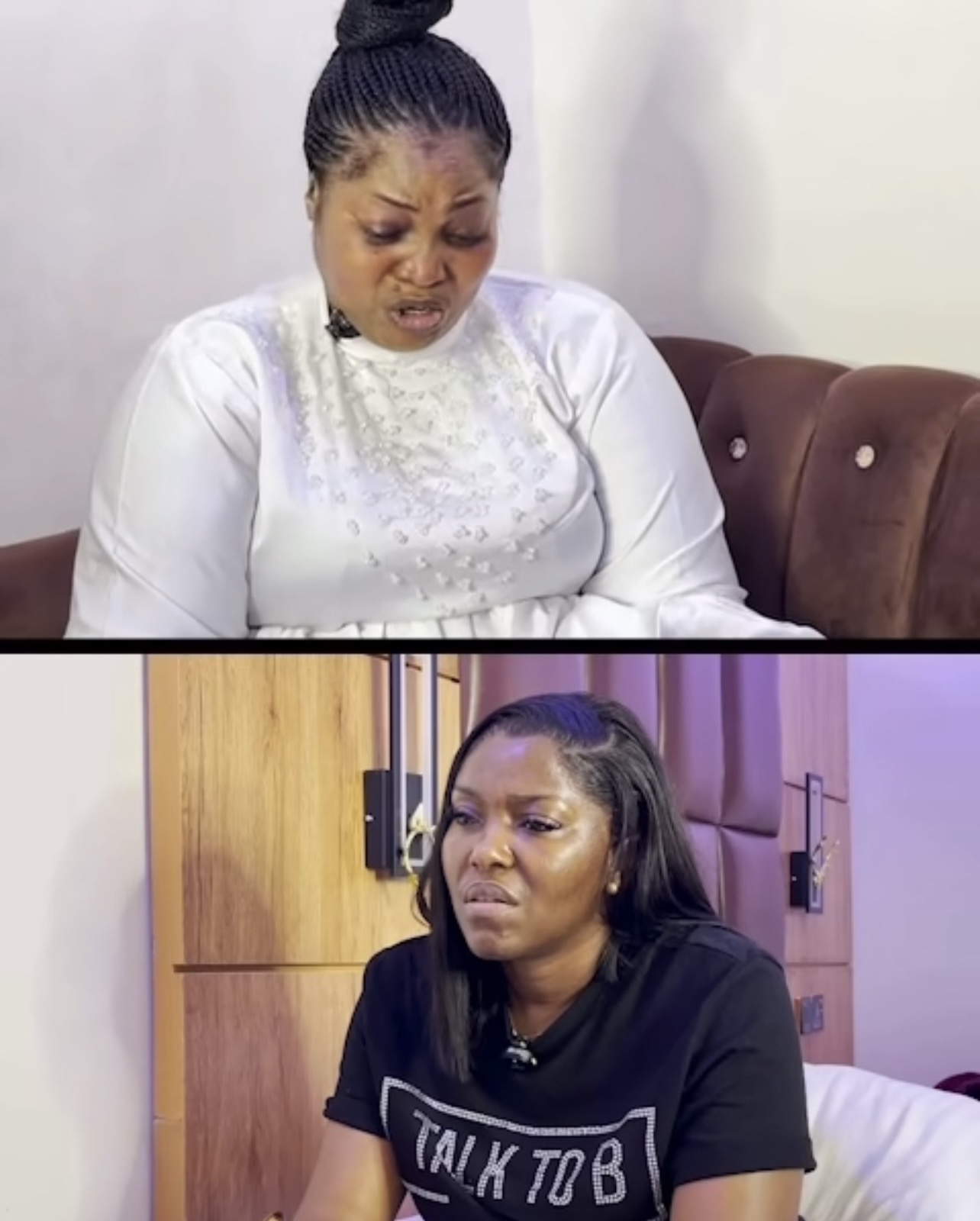
In a subsequent interview with actress and media host Biola Bayo on the TalkToB Podcast, Oke provided deeper context. She revealed that her emotional outburst was fuelled by hunger, financial strain, and emotional exhaustion, clarifying that she is a committed Christian who values her life and faith. She also made it clear that “I never said that I was going to commit suicide”, easing the minds of some netizens who got worried based off her earlier outburst.
She highlighted the realities of today’s music industry where live shows barely cover her transport costs, and consistent support is hard to come by. While some speculated she might quit music altogether, Oke suggested her concerns were about survival rather than final retirement.
This moment, she explained, is a career inflection point that could redefine how she engages with music, mentorship, or media, depending on the support she receives and opportunities that arise. She pleaded with Nigerians to come to her rescue as she has no car, no accommodation and barely any food to eat. She said:
“I cried on my live video because I was lonely, depressed, frustrated and hungry. I didn’t ask for help from people because that is not who I am. I kept quiet about my situation since 2020 because I didn’t want people to mock me.
I know a lot of people but nobody helped me.
At a point I couldn’t pay my house rent again which was N1million and I was struggling to eat. Right now, I have no car and I am in a lot of debt. I don’t want to live my life in debt.
The last time I had a car was 2020. I need to pay my debts. I struggle to pay for the hotel I stay now. It’s ₦35,000 a day. I need shelter and I need a car even if it is a jalopy car. The money I am supposed to use for food, I use it to take uber around.”
Biola Bayo urged her followers to come to the aid of the singer and help her financially.
Conclusion
For years, Busola Oke was simply “Eleyele”, the vibrant gospel voice whose song echoed through churches, revival grounds, and celebration halls. To many, she symbolised spiritual energy, resilience, and success. But behind the applause was a woman navigating an industry that does not always reward legacy, depth, or devotion.
Her emotional revelation, amplified further in her conversation with Biola Bayo stripped away the illusion that visibility equals stability. It exposed the fragile economics of gospel music, the loneliness that can follow faded spotlight moments, and the silent battles many veteran artists fight long after their biggest hits.
Yet, this moment is not just about struggle; it is about honesty. By speaking openly about hunger, discouragement, and isolation, Busola Oke has humanised success and reminded people that artists are not sustained by applause alone. Whether this season marks a reinvention, revival, or pause, one truth remains: Eleyele may have introduced her to the world, but it does not define the entirety of her story. The next chapter will depend not only on her resilience but also on how an industry and a public that once danced to her voice chooses to respond.
Because beyond the anthem, there is an artist still fighting to be heard.