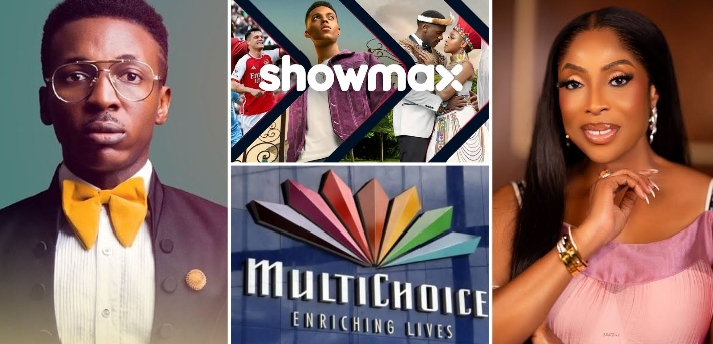
In March 2026, the African media industry was jolted by news that MultiChoice Group would discontinue Showmax, a platform that had grown over more than a decade into a key outlet for African entertainment. The announcement triggered a cascade of reactions across social media and industry circles, reflecting both surprise and concern from creators, producers, and fans. Among Nigerians, two prominent voices emerged in the public discourse: gospel singer Frank Edwards and media executive Mo Abudu. Their responses, verified and reported by Nigerian media, provide insight into how industry leaders and creative minds perceive the decision, its implications, and the potential paths forward for African content creators.
The reactions from Frank Edwards and Mo Abudu are particularly significant because they bridge both the artistic and business sides of Nigeria’s entertainment ecosystem. They highlight the emotional and practical concerns stemming from the shutdown while also pointing to potential opportunities that such transitions may offer. Understanding their perspectives requires a careful examination of what they said, why they said it, and how these statements reflect broader conversations about sustainability and local content creation.
Frank Edwards Responds
Frank Edwards, one of Nigeria’s most influential gospel singers, provided a brief but thoughtful comment in response to the . His reaction was posted on social media shortly after MultiChoice’s public announcement in March 2026, reflecting a blend of curiosity and practical reasoning.
In his post, Edwards posed an implicit question about alternatives for Showmax’s continuation, writing:
“I was going to say why not sell it but licensing issue might be a lot deal with.”
This short statement reveals several layers of understanding. First, Edwards recognizes the intrinsic value of the Showmax platform. He suggests that rather than shutting down the service entirely, a sale could have preserved its operations, which reflects an awareness of business strategy. Second, his reference to licensing challenges acknowledges the complex legal and contractual frameworks underpinning content streaming. For a platform operating across more than forty countries, these issues can be substantial, influencing decisions about ownership transfer or operational continuity.
Edwards’ comment resonated with many followers because it captures both frustration and curiosity. As an artist whose works might have been showcased on Showmax, he represents a wider community of creators concerned with access, visibility, and sustainability in African digital entertainment. His reaction also emphasizes that while financial and corporate factors drive decisions like the Showmax shutdown, creative professionals often weigh the impact on their own livelihoods and audience engagement.
Mo Abudu’s Strategic Perspective
In contrast to Edwards’ brief comment, Mo Abudu offered a longer, more structured response that combined analysis with encouragement. Abudu, a media executive and entrepreneur with deep experience in television production and content distribution, framed her commentary in terms of opportunity, responsibility, and African self-reliance.
On her verified Instagram account, Abudu wrote several key statements emphasizing the importance of local solutions:
“No one is coming to save us. It is up to us to build sustainable business models that truly work for our market.”
“The future is in our hands. Let us build it with confidence, collaboration, and belief.”
“Personally, I see this as an opportunity rather than a challenge.”
These words highlight a dual perspective: one that acknowledges the disruption caused by Showmax’s closure and one that encourages African creatives to act proactively. Abudu’s framing positions the shutdown not as an end, but as a moment to reflect on systemic weaknesses in African content distribution and to imagine sustainable alternatives. Her statements also suggest a broader vision for content ownership, emphasizing local leadership, market-aligned strategies, and self-sufficiency.
By encouraging the creative community to embrace the situation as an opportunity, Abudu implicitly critiques dependency on multinational corporations. Her message resonates with ongoing conversations in African media about control over intellectual property, revenue generation, and the strategic positioning of African platforms in the global entertainment landscape.
Broader Industry Reactions
While Nigerian celebrities’ verified reactions have been largely limited to Edwards and Abudu, the Showmax shutdown has sparked commentary from other African creators, including actors, producers, and executives. Social media posts and interviews reveal concerns about the impact of the closure on content distribution and audience reach.
For example, actor Sybil Colette, known for participating in Showmax productions, wrote on Instagram:
“What is going on at Showmax? We as filmmakers deserve to know why there are plans to discontinue the service and what it means for the industry. An email is not enough.”
Producer Njue Kevin also shared a comment on Twitter, reflecting frustration with corporate restructuring:
“And so yet again, Africa is on the receiving end of multinational restructuring. Amazon = Left, Netflix = Unknown, Showmax = Left…”
These reactions, while not from Nigerian celebrities, underscore the broader industry anxiety. They illustrate the uncertainty creators feel about content sustainability and visibility, particularly when multinational business decisions affect platforms that have become crucial to their work.
The Context of Celebrity Reactions
Understanding why Frank Edwards and Mo Abudu reacted the way they did requires acknowledging the timeline and context of the Showmax shutdown announcement. MultiChoice publicly confirmed the discontinuation in March 2026, following a strategic review under Canal+ ownership.
Key factors influencing celebrity perspectives include:
Financial challenges: Showmax reportedly experienced significant losses, with R4.9 billion lost in the 2025 financial year, representing an 88 percent increase from the previous year. Even with growing subscriber numbers, revenue could not match operational costs.
Corporate restructuring: The Canal+ acquisition of MultiChoice in 2025 included a comprehensive strategic review of the company’s digital platforms. The review concluded that Showmax was financially unsustainable.
Creative impact: Many Nigerian artists, producers, and content creators had used Showmax as a distribution platform. The shutdown prompted concern over how their work would reach audiences and how royalties, licensing, and visibility would be maintained.
Within this context, Edwards’ pragmatic suggestion about selling the platform and Abudu’s encouragement to build sustainable alternatives reflect complementary responses: one focusing on immediate practical solutions, and the other emphasizing long term strategy and community empowerment.
Implications for Nigerian Creatives
The reactions of Edwards and Abudu highlight several implications for Nigerian content creators in particular:
Platform Dependence: Many creatives rely heavily on established streaming platforms for audience reach and revenue. A sudden closure can disrupt distribution channels and delay projects.
Local Ownership: Abudu’s comments reinforce the need for African-led platforms that understand the market and can operate sustainably without over-reliance on multinational corporations.
Opportunity Mindset: While closures create challenges, they also present opportunities to rethink business models, form collaborations, and innovate in content delivery.
Licensing Awareness: Edwards’ statement reminds creators that licensing agreements and contracts are critical factors in platform operations, influencing decisions on acquisition, sale, or closure.
Together, these perspectives offer a nuanced understanding of how Nigerian celebrities perceive the Showmax shutdown beyond immediate reactions of frustration or concern.
What We Can Confirm
Based on verified media reports and public social media posts:
Frank Edwards commented briefly about potential alternatives to the shutdown and acknowledged licensing complexities.
Mo Abudu offered a structured response encouraging African creatives to take ownership of the future and build sustainable platforms.
Other reactions from African creators exist but are largely outside Nigerian celebrity reporting or involve industry figures not widely covered in mainstream Nigerian media.
These facts help separate confirmed insights from speculation or fan commentary circulating online, ensuring a clearer understanding of how Nigerian public figures perceive the closure.
Closing Thoughts
The public responses from Frank Edwards and Mo Abudu illustrate the complexity of reacting to a major streaming platform closure. Edwards’ comment shows pragmatic thinking about alternative solutions, while Abudu’s statement encourages strategic foresight and collective action among African creatives. Both responses highlight the interplay between financial realities, corporate strategy, and creative opportunity in Nigeria’s media industry.
The Showmax shutdown serves as a pivotal moment for Nigerian content creators. It signals the importance of sustainable business models, local ownership, and adaptability in a rapidly evolving media landscape. While the immediate news may feel disruptive, Edwards and Abudu offer a perspective grounded in problem solving, empowerment, and long term vision.
For audiences and creators alike, the conversations sparked by their insights reaffirm that African storytelling remains vibrant, resilient, and capable of evolving even when major platforms undergo significant change.