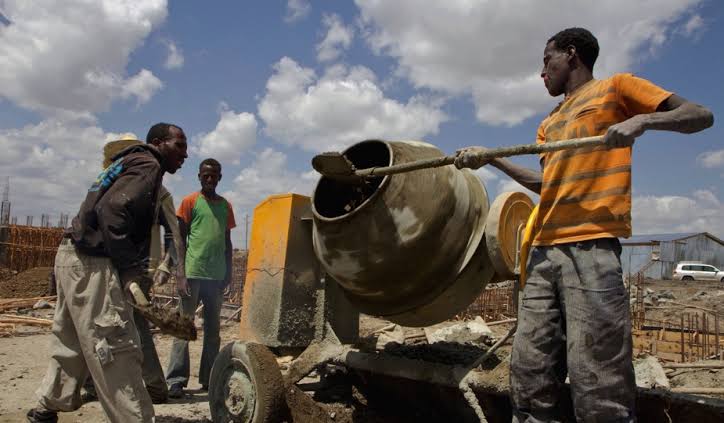
Nigerian workers who earn less or slightly above the national minimum wage continue to face hardship or difficulty improving their living conditions, WITHIN NIGERIA gathered.
Recall that President Bola Tinubu on July 29, 2024, signed the National Minimum Wage Amendment Bill, 2024, which replaced the previous ₦30,000 minimum wage introduced in 2019.
A check by WITHIN NIGERIA revealed that some states like Lagos, Rivers, Ogun, Ondo, Kogi, Kaduna, Delta, Benue, Ekiti, Kano, Osun, Enugu, Akwa Ibomi, Bayelsa, Niger, and Oyo implemented a figure higher than the national minimum wage, while states like Anambra, Katsina, Ebonyi, Borno, Taraba, Yobe, Kwara, Edo, Jigawa, Adamawa, Abia, FCT among others implemented the precise figure (N70,000) as minimum wage, while Zamfara state is planning to effect the new minimum wage March 2026.
Some private enterprises, particularly banks and multinational organizations, have implemented the N70,000 minimum wage and increased pay across the board by 100%. However, some businesses, such as private schools, hotels, gas stations, radio stations, and others, have not followed suit.
Despite the new minimum wage of #70,000, rising living costs continue to negatively impact Nigerian workers, both public and private. A check by WITHIN NIGERIA revealed that most workers rely on loans from banks, loan sharks, and private individuals to survive.
A further check revealed that inflation caused by the withdrawal of fuel subsidies, currency depreciation, rent rises, and service fee increases had reduced the real value of earnings, making it more difficult for workers to pay for necessities like clothing, food, and shelter.
Recall that President Bola Tinubu had publicly stated that things are difficult for Nigerians as a result of critical reforms being implemented in the country, but he assured them that things would improve.
Saheed Adegbite, a financial guru, told WITHIN NIGERIA that minimum-wage workers require critical and careful planning to survive the country’s current economic crisis.
Workers, according to Adegbite, must prioritize critical or basic requirements such as food, rent, transportation, and utilities in order to live.
He also recommended that needless expenses such as impulse purchases, useless subscription services, or reckless usage of restaurants and bars, among others, be reduced or eliminated.
Nafisat Olateju, an economist, told WITHIN NIGERIA that workers should prioritize home-cooked meals and seek bulk purchasing of supplies to save money.
Olateju, while lamenting the cost of fuel and its impact on wages, recommended workers to use public transportation or travel in groups to save on fuel and maintenance costs.
Pelumi Adeoye, an entrepreneur, told WITHIN NIGERIA that any worker earning #70,000 or less who do not prioritize key budgeting will wind up chasing loans.
“It is financially risky to rent an apartment if you cannot pay the bill with one or two months’ wages. Workers should avoid renting apartments if they struggle to pay the rent.
Adeoye suggested that workers should try sharing accommodations or negotiating lower rent arrangements.
She also claimed that she lives in a self-contained room and parlor rather than a two or three bedroom apartment because it is more convenient for her to pay her preferred rent.
Tunji Adeolu, another economist, recommended people to broaden their horizons and seek side hustles or businesses in order to endure the harsh realities of the Nigerian economy.
According to Adeolu, relying solely on salary or wages in the current economic situation is suicidal because it cannot promise better living conditions, let alone wealth.
“Supervised farming, poultry, or trading can be considered as alternatives. “It will only take more time and energy,” he explained.