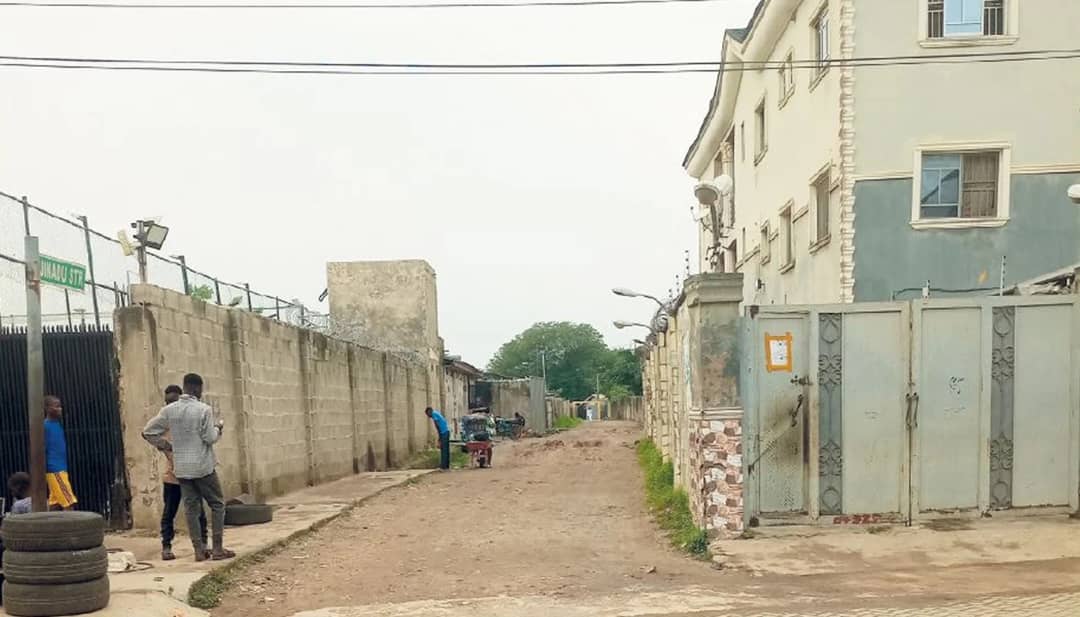
Before sunrise in Lagos, cemetery workers arrive at burial grounds to begin routines that rarely attract public attention but remain critical to urban life.
These workers are responsible for grave preparation, environmental maintenance and orderliness within spaces designated for the dead.
Public and private cemeteries across the metropolis rely heavily on manual labour to meet daily operational demands.
Many workers begin their tasks by clearing vegetation, marking plots and preparing burial sites ahead of scheduled interments.
Employment arrangements within cemeteries are largely informal, with a significant number of workers engaged on daily or task-based payment structures.
Income levels are unstable, as earnings often depend on burial frequency rather than fixed monthly salaries.
The physical demands of grave digging in dense and compact soil expose workers to persistent bodily strain.
Long-term exposure to repetitive lifting and digging contributes to chronic back pain, muscle fatigue and joint problems.
Working conditions are further complicated by limited access to protective equipment in several burial grounds.
Basic safety items such as gloves, boots and protective clothing are not consistently provided across all cemeteries.
The absence of adequate protective gear increases exposure to sharp objects, decaying materials and soil instability.
Health risks are heightened during periods of increased mortality, when burial activities rise sharply.
During public health emergencies, cemetery workers often continue their duties despite elevated exposure risks.
Emotional strain forms a less visible but consistent aspect of cemetery work in Lagos.
Daily interaction with grieving families places workers in emotionally charged environments without structured support systems.
Repeated exposure to mourning and loss contributes to psychological fatigue that often goes unaddressed.
Social perception of cemetery work presents another layer of difficulty for those employed in the sector.
Cultural beliefs surrounding death sometimes lead to stigma and social distancing from cemetery workers within their communities.
Religious diversity in Lagos introduces additional responsibilities, as workers must accommodate varying burial rites and customs.
Cemeteries frequently host Christian, Muslim and traditional burials within shared spaces, requiring careful coordination.
Urban expansion has intensified pressure on cemetery infrastructure across the state.
Limited land availability has resulted in overcrowded burial grounds and accelerated turnover of grave spaces.
In some locations, workers are required to manage exhumations and reburials as part of space management efforts.
Such processes demand precision and compliance with regulations to avoid disputes and administrative complications.
Operational oversight varies between public and privately managed cemeteries.
Private cemeteries generally maintain more structured systems, though challenges persist across both sectors.
Wage disparities exist within the industry, with compensation often failing to reflect occupational risks.
Training for cemetery workers is largely informal and experience-based.
New entrants typically learn through observation rather than through formal instruction on safety and best practices.
The absence of standardised training limits awareness of occupational health measures.
Unionisation within the sector remains minimal, reducing opportunities for collective bargaining.
Administrative authorities have acknowledged the need for improved cemetery management and sanitation.
Implementation of reforms has been gradual, constrained by funding and bureaucratic processes.
Despite the demanding nature of the work, many cemetery workers remain in the role due to limited employment alternatives.
The occupation continues to function as a critical service within a densely populated and expanding city.
As Lagos grows, the conditions faced by cemetery workers reflect broader challenges of labour welfare in essential but overlooked sectors.
Their daily realities underscore the human effort required to preserve dignity in death amid the pressures of urban living.