On March 5 2026, a highly anticipated event took place at the White House in Washington DC as Lionel Messi, widely regarded as one of the greatest soccer players of all time, visited the East Room alongside his Inter Miami CF teammates to celebrate their victory in the 2025 Major League Soccer Cup. The event was part of a long standing tradition in the United States where sports champions are formally welcomed by the sitting president and honored for their accomplishments in front of the nation.
Unlike the typical sports ceremony, this visit drew extraordinary attention because of the presence of former President Donald Trump, the unexpected mentions of global political issues, and references to Messi’s long time rival Cristiano Ronaldo, whose name entered the conversation alongside Messi’s.
The visit was notable not only because of Messi’s first official visit to the White House but also because it juxtaposed sports celebration with political commentary. Observers across social media, news outlets, and sports forums dissected every gesture and word, attempting to interpret what was intended as a ceremonial moment. Fans debated whether Messi’s attendance implied political alignment or if the event remained purely a recognition of athletic achievement.
While Messi remained silent for the majority of the event, standing politely beside Trump, the reactions to both the speech and the context of his presence provide a detailed picture of how sports, politics, and global personalities intersect in unexpected ways.
The Purpose of Messi’s Visit
Messi’s visit on March 5 2026 was officially to honor his team Inter Miami CF for winning the 2025 MLS Cup. The Major League Soccer championship is an important event in American sports and has gained significant international recognition, attracting global stars like Messi who recently joined the league from Paris Saint Germain. The White House traditionally hosts champions of major American sports leagues as a gesture of national pride and recognition of excellence. This event continued that custom while providing an opportunity for fans and media to celebrate Messi’s achievements and the growing prominence of soccer in the United States.
Messi had previously received invitations from past administrations, including under President Biden, to attend formal honors such as the Presidential Medal of Freedom. Scheduling conflicts prevented him from participating in those earlier ceremonies. However this visit represented the culmination of years of achievements in the American soccer landscape and offered a symbolic moment highlighting both the global reach of soccer and the increasing visibility of international players in U S sports culture.
Meeting with President Trump
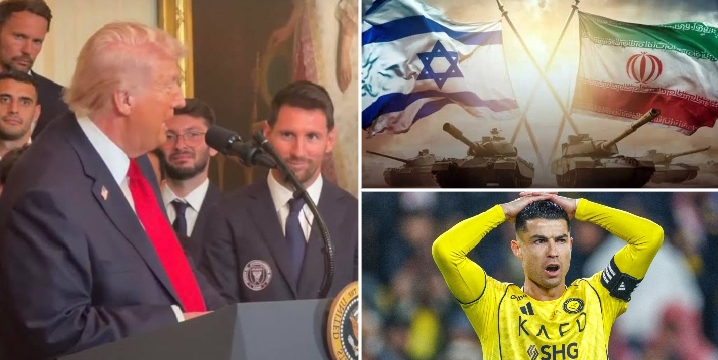
The ceremony took place in the East Room of the White House, where Messi and his Inter Miami teammates were formally introduced to former President Donald Trump. The team presented Trump with gifts including a pink Inter Miami soccer ball and a customized team jersey, honoring the ceremonial nature of the visit. Messi shook hands with Trump, maintaining a composed demeanor, and stood alongside his teammates as Trump addressed the gathered audience.
While the formal aspect of the meeting followed traditional protocol, the tone of Trump’s speech introduced additional elements beyond typical sports recognition. Trump not only praised Messi’s accomplishments in Major League Soccer but also referenced broader topics ranging from U S foreign policy to global conflicts, drawing attention from viewers who expected a sports focused discussion. His remarks reflected a blend of celebration and personal commentary, highlighting both Messi’s achievements and other issues of interest to the former president.
Trump’s Remarks and Mentions of Messi and Ronaldo
During the ceremony, Trump spoke about Messi’s remarkable impact on Inter Miami and Major League Soccer, noting the skill, leadership, and competitive excellence he brought to the team. At one point he acknowledged that his son Barron is a devoted soccer fan, explaining that Barron follows both Messi and Cristiano Ronaldo, the Portuguese superstar who has long been considered Messi’s greatest rival. Trump praised both athletes, calling them “great” and noting their influence on young fans and global audiences.
By bringing up Ronaldo in addition to Messi, Trump appeared to make an effort to appeal broadly to soccer fans rather than exclusively focusing on Messi supporters. The mention of both athletes created a moment of heightened attention due to the longstanding rivalry between Messi and Ronaldo, a rivalry that has dominated headlines and sports commentary for over a decade. The inclusion of Ronaldo’s name in a White House event combined with Trump’s references to global issues created a mix of sports celebration and political commentary that few attendees had anticipated.
Messi’s Reaction
Throughout the ceremony, Messi remained silent, smiling and standing attentively as Trump delivered his remarks. Observers noted that Messi did not provide any verbal response or make gestures indicating political opinion. When Ronaldo’s name was mentioned Messi smiled politely, maintaining a composed and professional demeanor. His behavior aligned with his long standing pattern of avoiding political commentary in public appearances and focusing instead on his role as a professional athlete.
Messi’s silence and politeness helped maintain the ceremonial nature of the event, even as Trump diverged into discussions about geopolitical matters such as U S involvement in the Middle East and the ongoing tensions between Israel and Iran. While fans and media speculated about possible interpretations of his presence, Messi’s behavior reinforced the understanding that his visit was about sports recognition rather than political endorsement.
The Geopolitical References
One of the most unusual aspects of the event was Trump’s digression into global politics. During his speech, Trump briefly referenced conflicts in the Middle East, including tensions involving Israel and Iran. While these remarks were not directly related to the purpose of the event, they received extensive media coverage due to the high profile nature of the speakers and attendees.
The inclusion of geopolitical commentary at a sports ceremony prompted debate among analysts and fans. Some interpreted it as an attempt by Trump to connect broader issues with popular culture, while others viewed it as an unconventional mixing of politics with a traditional sports honor. Messi’s role remained consistent, he did not speak on these topics and focused on the ceremonial aspects of the visit, presenting a neutral presence amid the discussion of sensitive international issues.
Tradition and Context of White House Visits
In the United States, inviting sports champions to the White House is a long standing tradition that dates back decades. Presidents from both political parties have welcomed championship teams from football, baseball, basketball, and soccer to recognize excellence and connect with American culture. These events are symbolic opportunities to celebrate achievement, inspire fans, and provide media coverage highlighting success stories in sports.
Messi’s March 5 2026 visit followed this tradition closely despite the additional attention caused by Trump’s remarks and the mention of Ronaldo. While the visit became viral due to these factors, the primary purpose remained consistent with historical precedent, honoring a team that achieved the highest level in its league and celebrating individual accomplishments within a larger cultural context.
Public and Media Reaction
The event quickly became a topic of discussion across social media platforms and international news outlets. Fans and analysts debated whether Messi’s presence at the White House represented a political statement or merely a continuation of sports tradition. Some highlighted the unusual nature of Trump’s speech, noting the combination of soccer commentary and references to international conflict, while others focused on Messi’s calm and silent demeanor as a model of professionalism.
Media coverage also emphasized the mention of Ronaldo, interpreting it as a strategic inclusion to appeal to wider soccer audiences and generate attention given the global rivalry between the two players. Observers noted that these factors contributed to increased virality of the event, with commentary ranging from sports analysis to political speculation.
Impact on Fans and Soccer Culture
Messi’s visit to the White House provided a unique intersection between soccer culture, political presence, and global media attention. Fans of Major League Soccer and international audiences saw this as both a celebration of achievement and a moment that underscored the global influence of Messi and Ronaldo. The event highlighted the increasing relevance of soccer in American sports culture and the ways in which athletes are recognized beyond the playing field.
Social media users shared highlights, debated interpretations, and posted analyses about Trump’s remarks, Messi’s demeanor, and the broader context of the visit. Memes, opinion pieces, and news segments proliferated as viewers tried to make sense of the combination of sports, politics, and personality that characterized the ceremony.
Takeaway
Messi’s March 5 2026 visit to the White House represents a complex moment in modern sports culture. While the primary purpose was to honor Inter Miami CF for winning the 2025 MLS Cup, the presence of former President Donald Trump, the mention of Cristiano Ronaldo, and references to geopolitical tensions added layers of public interest and media attention. Messi maintained a composed and silent presence, demonstrating professionalism and respect for the ceremonial tradition while avoiding political commentary. Trump’s remarks highlighted both his personal engagement with sports and his broader interests in international affairs.
The event underscores how global figures like Messi navigate public appearances that blend recognition, media spectacle, and political context. Fans, analysts, and observers will continue to discuss the significance of the visit for years to come, not only as a celebration of athletic achievement but also as a moment illustrating the intersection of sports, media, and public attention in a globalized world.